

Case Study: How a GCC Distributor Improved Shelf Velocity with Odor-Control Bentonite Cat Litter (MOQ, Lead Time & Packaging Specs)
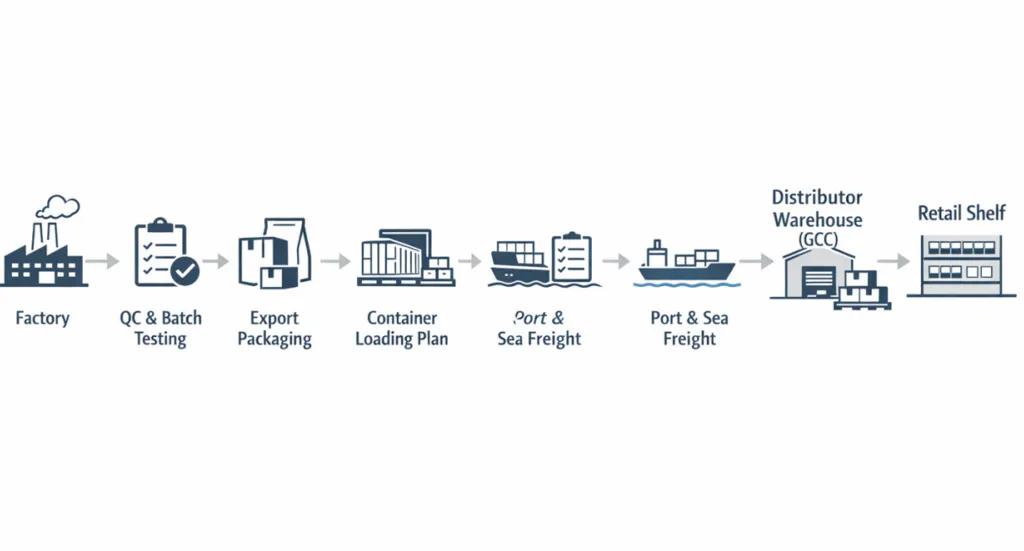
Odor-related dissatisfaction is one of the quickest ways to stall shelf velocity in the GCC pet category. In warmer months and high-heat indoor settings, consumers tend to judge litter performance less forgivingly: lingering smells translate into negative reviews, lower repeat purchase, and higher pressure on retailers to de-list or narrow facings. Dust perception compounds the problem—once shoppers associate a litter with mess or irritation, the category becomes “high friction,” and turnover slows.
This case study summarizes a GCC distributor program supported by Bastet Pet, a manufacturer focused on clumping bentonite cat litter for export markets. The effort prioritized trade outcomes over slogans: align odor-control performance, packaging durability, and replenishment discipline to stabilize sell-through while reducing claims and retailer objections.
1) Buyer Context: What the GCC Distributor Needed (And Why)
1.1 Channel scenario
The distributor supplied a mix of modern trade, pet specialty, and neighborhood retail. Across these channels, the commercial objective was consistent: higher weekly movement per SKU with fewer operational issues. The distributor’s growth plan depended on three deliverables:
lFaster sell-through per store to justify additional facings and repeat orders
lLower operational friction (fewer returns, fewer damaged units, less warehouse cleanup)
lA replicable SKU architecture that could scale across cities without redesigning the assortment
1.2 The constraints
Several constraints shaped the plan:
lHigh-heat sensitivity: odor perception escalates in warmer conditions; “good enough” becomes “not acceptable” more quickly.
lExport handling realities: sea freight and downstream warehousing increase exposure to compression, abrasion, and repeated handling.
lPrice ladder requirements: the line had to support value-to-mid positioning while protecting distributor margin and retailer willingness to stock.
2) The Problem: Shelf Velocity Was Stalling
2.1 Symptoms in trade terms
The distributor observed trade-facing signals typical of a line that is not converting consistently:
Reorders were uneven across stores, with many locations failing to hit steady replenishment cycles.
Retail feedback pointed to recurring odor complaints, especially in higher-traffic households and during warm periods.
Operationally, instances of bag damage and dust leakage created warehouse cleanup and occasional disputes over responsibility and credit.
2.2 Root-cause analysis framework
Rather than treating the issue as purely “marketing,” the diagnosis used three lenses:
Product performance lens
lIf clumping speed and clump integrity were inconsistent, cleaning became harder and odor lingered.
lIf dust perception increased during pouring or handling, consumers blamed the product even when storage and transit contributed.
lIf odor-control outcomes varied by batch or usage scenario, “first-bag satisfaction” did not translate into repeat purchase.
Packaging lens
lWeak sealing and insufficient film strength increase damage probability under stacking pressure and handling.
lOnce leakage occurs, the problem becomes operational: mess, complaints from retailers, and higher cost-to-serve.
Supply discipline lens
lEven strong SKUs lose shelf momentum when lead times fluctuate or stockouts occur.
lRetailers typically reduce facings when replenishment is unreliable, lowering shelf velocity further.
3) The Solution: Odor-Control SKU Strategy + Export-Grade Packaging
3.1 SKU architecture designed for sell-through
The implementation centered on a simplified SKU ladder that retailers could merchandise easily and distributors could replenish predictably.
lHero SKU (Odor-Control Clumping Bentonite): positioned as the default choice for odor-sensitive environments, where “odor confidence” is a primary purchase driver.
lSupport SKU (Unscented / Light-scent): maintained to serve scent-sensitive buyers and channels that prefer minimal fragrance messaging.
Pack-size logic aligned to channel:
lModern trade: larger packs to emphasize value perception and repeat cycles
lPet specialty: mid packs to support trade-up and premium cues
lMixed/wholesale distribution: sizes and cartons optimized for handling efficiency and container utilization
The distributor’s key objective was assortment clarity: fewer confusing options, clearer roles per SKU, and stronger probability of repeat ordering once the hero SKU established itself.
3.2 Odor-control positioning moved from “scent” to “performance bundle”
The program intentionally avoided relying on “stronger fragrance” as the lead. Instead, the proposition was structured as a performance bundle that trade stakeholders can understand:
lOdor-management confidence (framed as odor control, not perfume)
lFast, strong clumping (reduced residue and easier cleaning supports odor outcomes)
lLow-dust handling (lower complaint sensitivity and better user experience)
This approach helped align expectations: odor-control was treated as a repeatable product-and-process outcome rather than a marketing line.
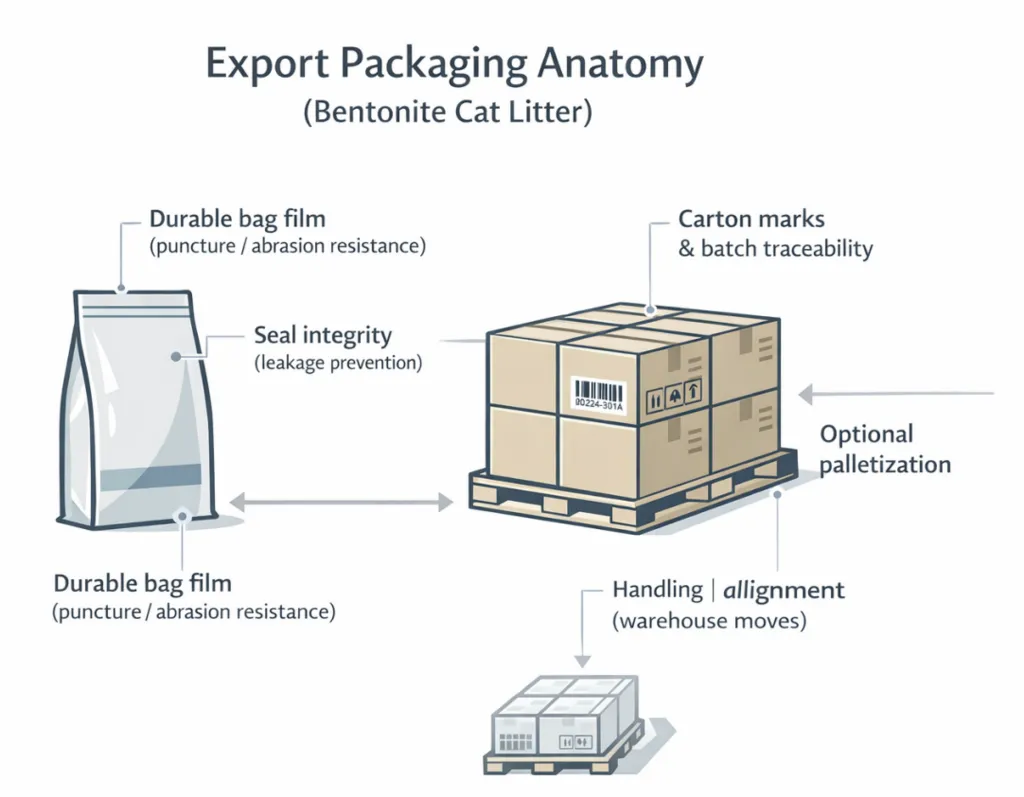
3.3 Packaging specs upgraded to reduce breakage and claims
Packaging was treated as a trade lever, not a cosmetic detail. Improvements focused on durability and transit stability:
lBag film durability: resistance to puncture and abrasion under stacking and handling
lSealing integrity: stronger closure to reduce leakage risk during transit and warehouse movement
lCarton marking and traceability: clear carton marks and batch identification to support distributor operations and downstream allocation
The distributor’s internal logic was simple: fewer damaged units reduce claims, warehouse labor, and retailer resistance—each of which directly affects shelf momentum.
4) Execution: Quality Control & Batch Consistency (What Trade Buyers Measure)
4.1 QC checkpoints in trade language
The QC approach emphasized repeatable checkpoints rather than subjective impressions:
lDust control: align on a practical evaluation method (pouring/handling conditions) and define what “acceptable” means operationally.
lClumping evaluation: confirm speed and integrity with a consistent test method; avoid “looks good” assessments that vary by evaluator.
lOdor-control evaluation: test under representative scenarios (multi-cat usage, warmer indoor conditions), not only ideal conditions.
4.2 Batch-to-batch consistency as a sell-through stabilizer
Shelf velocity gains tend to collapse if performance drifts across shipments. The implementation emphasized:
lBatch traceability to isolate issues quickly
lPre-shipment sampling alignment during early orders or after packaging changes
lConsistency expectations around granule feel, clumping behavior, and dust perception
For distributors, consistency is not a “nice to have.” It underpins retailer confidence and enables repeat orders without repeated renegotiation.
5) Logistics: Container Loading Plan & Export Delivery Parameters
Trade performance is often decided by execution details—how the product survives transit, how it is handled in warehouses, and how quickly replenishment can be planned.
Supplier Profile (trade summary)
lSupplier: Bastet Pet
lCategory focus: clumping bentonite cat litter (odor-control and low-dust configurations)
lTrade support: packaging specs, container loading notes, private label configuration
lCore export focus: GCC and LATAM-oriented programs
lAvailable upon request: technical spec sheet, packaging spec summary, MOQ/lead time confirmation, sample pathway
5.1 Container loading and stowage notes
Export-ready practices typically address:
lMoisture risk management during sea freight and port-to-warehouse transitions
lStacking logic to reduce seal stress and bag deformation
lHandling realism (manual stacking, forklift moves, repeated transfers) so packaging choices match operational conditions
A practical container plan reduces the risk of damage-related claims and helps preserve product condition through the full trade chain.
5.2 Documentation kept trade-aligned
Documentation was framed as “supporting trade flow,” not paperwork for its own sake. Standard commercial documents and carton marks support clearance, inventory control, and downstream traceability—especially in multi-city distribution.
5.3 How MOQ and lead time were communicated
Rather than presenting a single rigid figure, the trade communication used scenario logic:
lMOQ varies by pack size, private label requirements, and finalized packaging configuration.
lLead time varies by first order vs. repeat order, and the complexity of packaging/label procurement and approval cycles.
This approach reduced back-and-forth and improved the quality of inbound RFQs, because inquiries arrived with the information needed to provide an accurate delivery plan.
6) Results: What Improved (Trade Outcomes Without Over-claiming)
The distributor reported improvements in operational and commercial signals that typically correlate with healthier shelf velocity:
More stable reorders for the hero odor-control SKU once retailer confidence increased and complaint sensitivity decreased.
Lower operational friction, as fewer packaging incidents reduced cleanup workload and disputes over damaged goods.
Clearer SKU roles in-store, helping retailers maintain the line with less confusion and better merchandising consistency.
The broader takeaway is structural: performance-led positioning plus export-grade packaging and delivery discipline can stabilize sell-through more effectively than “messaging” alone.
7) Practical Checklist for GCC Importers & Distributors
The following checklist is commonly used to align expectations across importer, distributor, and supplier:
Product parameters to confirm
lClumping speed and clump integrity expectations
lDust evaluation method and acceptance thresholds
lOdor-control approach (odor management vs. fragrance-only cues)
lGranule size feel and tracking sensitivity
lScent strategy (odor-control, light scent, unscented) by channel
lPack-size ladder aligned to modern trade vs. pet specialty vs. mixed retail
Packaging parameters to confirm
lBag film durability and sealing integrity
lLeakage control during stacking and handling
lCarton marks, batch traceability, barcode/label requirements
lPalletization vs. non-pallet stowage (destination dependent)
lHandling notes aligned to warehouse operations
Delivery parameters to confirm
lMOQ logic (standard vs. private label; by pack size)
lLead time scenarios (first vs. repeat; customization complexity)
lContainer loading plan (moisture + stacking + protection)
lDocumentation flow and carton mark discipline
8) How to Request MOQ, Lead Time & Packaging Specs
Trade buyers typically request a compact “evaluation pack” to accelerate supplier alignment:
lTechnical spec sheet (TDS) / performance notes
lPackaging specs (bag structure, sealing approach, carton marking options)
lContainer loading plan (stowage notes aligned to destination handling)
lMOQ and lead time confirmation for target pack sizes
lSample pathway and recommended evaluation steps for GCC conditions
FAQs
Q1: What information helps confirm MOQ and lead time for GCC orders fastest? A: Trade confirmations tend to move quickest when an inquiry includes destination country/port, target pack size(s), private label requirements (if any), estimated monthly volume, and preferred Incoterms (FOB/CIF). If labeling language, barcode format, or carton mark standards are required, those details typically reduce revision cycles. With these inputs, suppliers can return a realistic MOQ/lead time scenario and the corresponding packaging specification set.
Q2: Which export packaging specs most reduce breakage and dust leakage in sea freight? A: Export performance usually depends on three areas: bag durability (puncture/abrasion resistance), sealing integrity (leakage prevention under compression and repeated handling), and a stowage plan aligned with origin/destination handling conditions. Many importers request a packaging spec summary (bag structure + seal approach), carton mark guidance for warehouse traceability, and a container loading plan covering moisture management and stacking logic to reduce damage-related claims.