

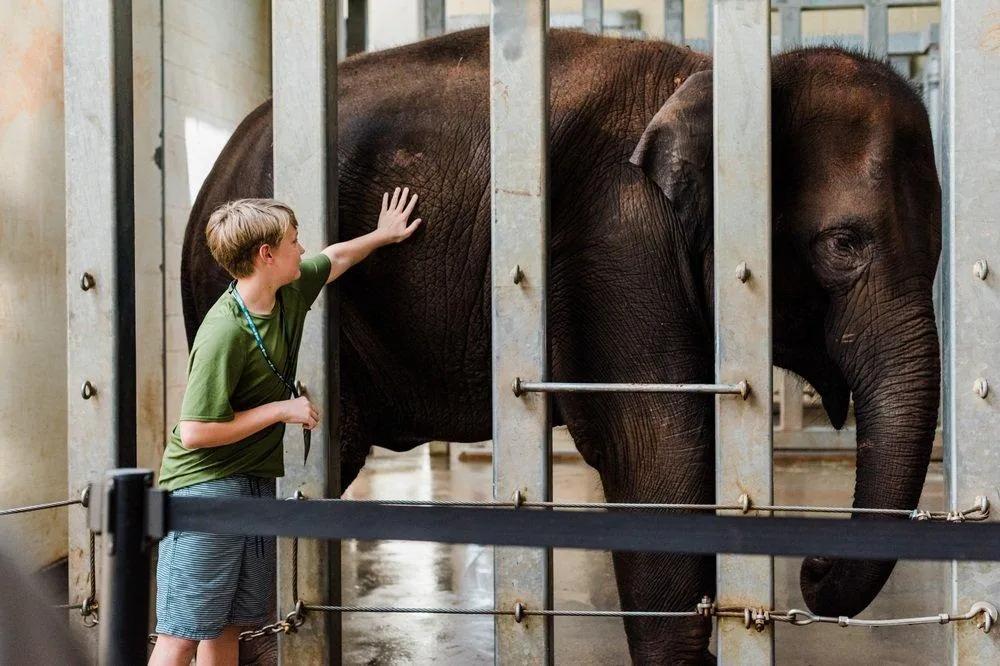
Can you guess which mammal has the longest pregnancy?
Elephants hold this remarkable record. Read the article to discover what makes elephant pregnancy length extraordinary and exactly how long these gentle giants carry their calves.
How Long Is an Elephant Pregnant?
Pregnancy duration varies widely among mammals. For example, mice typically carry their young for about 19–21 days, while rabbits have a gestation period of approximately 28–32 days.
In contrast, elephant pregnancy length is remarkably long. A published study on elephant reproductive biology reported an average gestation period of approximately 640 days, or around 21 months. However, elephants' pregnancy time can vary between individuals, and both African and Asian elephants typically remain pregnant for about 20–22 months.
This extended period allows the calf's brain, nervous system, and other organs to develop substantially before birth. As a result, newborn elephants are relatively well developed and can usually stand and begin nursing soon after delivery.
How Do Veterinarians Monitor Elephant Pregnancy?
Detecting elephant pregnancy is not always straightforward because early signs can be subtle. Veterinarians may monitor reproductive hormone levels, particularly progesterone, to assess reproductive status and identify hormonal changes associated with pregnancy. Physical changes, such as abdominal enlargement, may become more noticeable as pregnancy progresses, but these signs alone cannot reliably confirm pregnancy.
Ultrasound provides another way to assess pregnancy and observe embryonic development. Depending on the pregnancy stage and the examination, veterinarians may use different new or refurbished veterinary ultrasound probes to visualize reproductive structures and monitor fetal development. Research has demonstrated that transrectal ultrasound can detect early pregnancy in elephants, making it a useful tool for reproductive monitoring alongside hormone testing.
Why Is the Elephant Pregnancy Length So Long?
Several biological and evolutionary factors influence elephant pregnancy length, including fetal development, maturity at birth, and reproductive biology. Although larger mammals generally have longer gestation periods, body size alone cannot explain why elephants remain pregnant for around 22 months.
Body size: Larger mammals tend to have longer gestation periods, although this relationship varies between species.
Brain development: Elephant calves develop relatively large, complex brains before birth, supporting their early movement and interaction with their surroundings.
Maturity at birth: Calves need to be sufficiently developed to stand, nurse, and begin following their mothers soon after delivery.
Reproductive biology: Species-specific patterns of embryonic development and hormonal regulation also influence gestation length.
One important explanation for elephant pregnancy length is the development of the calf's brain and nervous system. However, this alone does not account for the exceptionally long gestation period.
Researchers have also identified a distinctive reproductive system involving multiple corpora lutea, hormone-producing structures in the ovaries that help maintain pregnancy. Combined with relatively slow early embryonic development, this unusual reproductive biology contributes to the extended gestation period.
How Does an Elephant Calf Develop Before Birth?

Elephant development begins with an embryo inside the uterus, where cells progressively differentiate into tissues, organs, and supporting structures such as the placenta. Ultrasound studies have detected the embryo at around day 62 of gestation and its first heartbeat at approximately day 71. By about day 95, the head and limbs become distinguishable, and the trunk begins to take shape. As pregnancy continues, the organs and nervous system mature while the calf grows in preparation for birth.
What Happens When an Elephant Finally Gives Birth?
So far, we have explored elephant pregnancy length and why elephants have one of the longest gestation periods among mammals. But what happens when those months of pregnancy come to an end? Do elephants give birth alone, how long does labor last, and can a mother become pregnant again?
In the wild, elephants generally give birth without human assistance, often with other females in their social group nearby. Labor duration varies considerably. In a study of Asian elephants in North America, the median labor duration was 13 hours, although the mean was 36 hours, highlighting the variation between births.
After delivery, the mother typically begins caring for her calf, which usually stands and starts nursing relatively soon after birth. Although an elephant can become pregnant again, conception does not usually happen immediately. The interval between births often spans several years, influenced by factors such as reproductive recovery, lactation, nutrition, and environmental conditions.
Conclusion
In conclusion, elephant pregnancy length typically ranges from 20 to 22 months, allowing the calf's brain and other organs to develop substantially before birth. As discussed, several biological factors influence this extended gestation, including fetal development and the elephant's unique reproductive system. Understanding these processes also highlights the importance of veterinary monitoring, particularly in managed-care settings where reproductive health needs to be assessed.
To support this monitoring, ultrasound helps veterinarians detect pregnancy and observe embryonic development as gestation progresses.
With this in mind, Elzhen offers refurbished ultrasound machines and veterinary ultrasound probes for a range of animal imaging applications. As a supplier of veterinary medical imaging equipment, we aim to help veterinary professionals access reliable imaging solutions to support animal healthcare and reproductive monitoring.