

Best Packaging Companies for Lean Manufacturing: MOQs, JIT Delivery, and Waste

Image source: freepik
You’ve trimmed changeovers to seconds and leveled production to a steady pulse. Yet one corner keeps stalling the flow: cartons, pouches, and pallets that land late and in quantities you never asked for.
Packaging must march with your kanban cards, not tie up cash or swallow floor space. One delayed truck can idle an entire value stream. Lean packaging fixes that waste—fewer touches, fewer defects, faster flow from press to dock.
We analyzed about twenty suppliers and scored them on three critical levers: MOQ flexibility, 95–99 percent on-time-in-full delivery, and designs that cut material and freight. Ten clear leaders emerged, each protecting your takt time instead of threatening it.
How we evaluated and ranked the suppliers
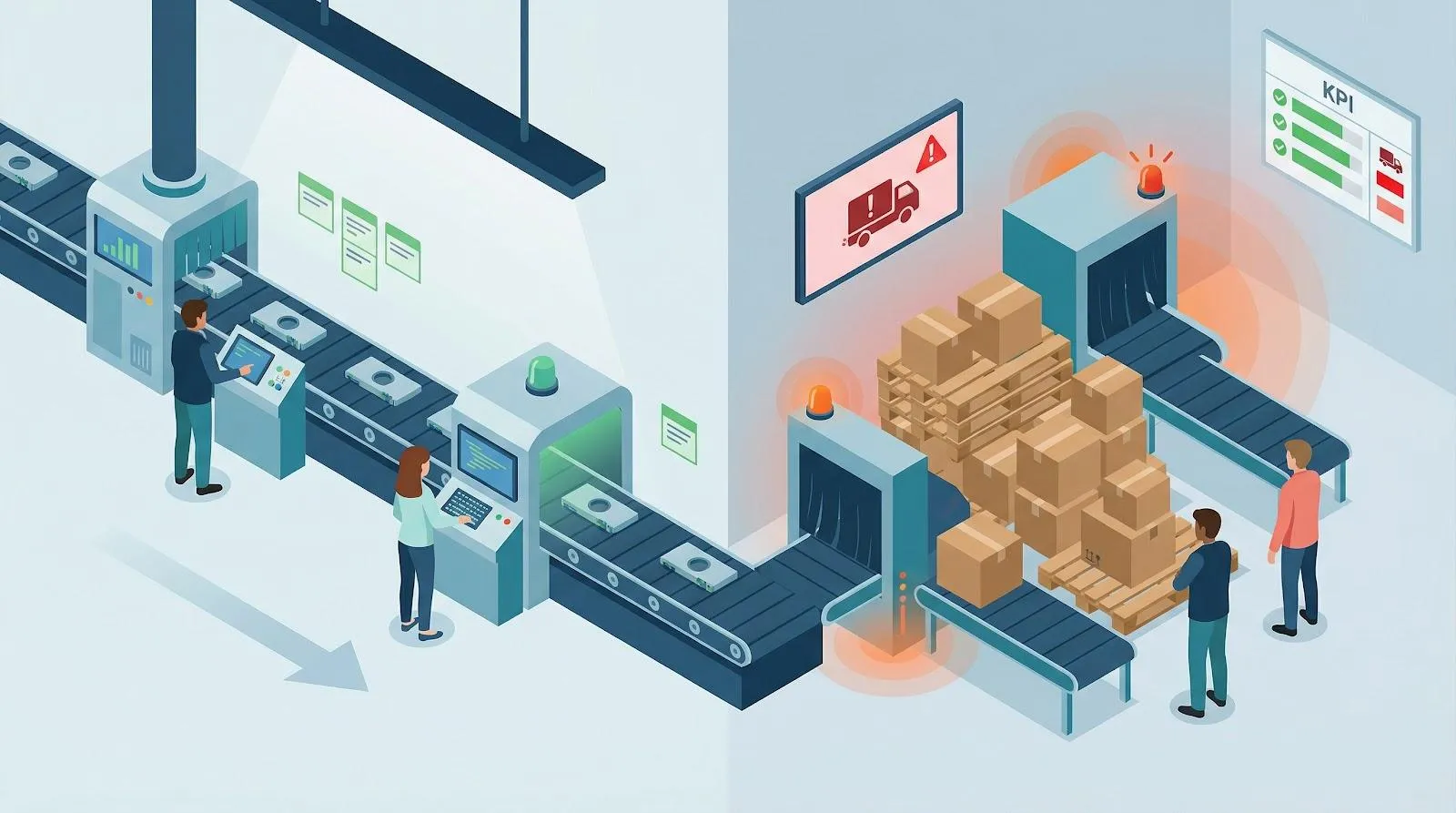
Before building a top-ten list, we defined what “best” means for a lean operation. We gathered public data, case studies, and customer references on about twenty contenders, then scored each one against six criteria that match everyday shop-floor pain points.
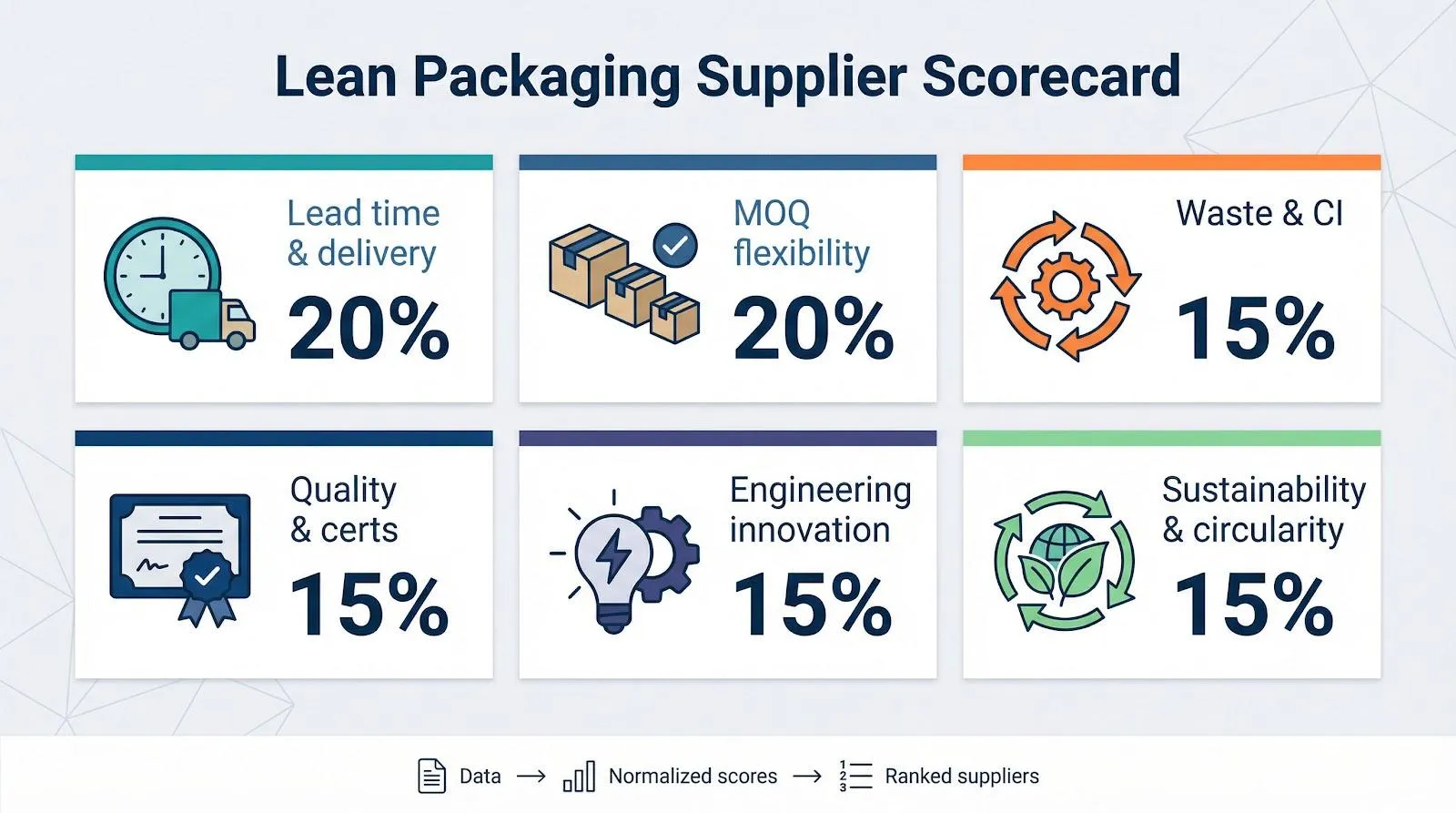
Lead-time and delivery reliability (20 percent): A late box can stall an entire value stream. We set 95 percent on-time-in-full as the minimum and highlighted Berlin Packaging’s 99 percent streak that spans more than a decade.
Minimum order quantity flexibility (20 percent): Small lots free cash and prevent obsolete packaging from piling up.
Waste reduction and continuous improvement (15 percent): Six Sigma work, 5S audits, and design tweaks that trim material, motion, or freight all earn credit.
Quality and certifications (15 percent): ISO 9001, ISO 14001, and G7 color mastery prove process control.
Engineering innovation (15 percent): Digital twins, quick-changeover tooling, and returnable systems raise the bar.
Sustainability and circularity (15 percent): Recycled content and closed-loop programs cut landfill waste and align with lean’s focus on removing excess.
Raw figures—average lead time, percent scrap reduction, and more—fed into a normalized scoring sheet. We weighted, tallied, and ranked, then checked the math against feedback from plant managers who work with these suppliers every day.
Ten companies stood out for small MOQs, dependable JIT service, and a culture of relentless improvement. We will meet them one by one in the next section.
Zenpack packaging: agile, end-to-end partner for global JIT.
Zenpack treats packaging like a single-piece-flow cell. Design, engineering, and production share one roof, so ideas move from sketch to finished box without the hand-offs that slow you down. Because Zenpack Packaging can prototype a single custom unit before scaling to typical 5,000-piece runs, you validate fit and finish without tying up cash.
Tiny minimums are standard. Order fifty cartons for a trial or a million for a launch; the run always matches your takt time. That low lot size frees cash, clears floor space, and eliminates blanket orders.
Five ISO-certified plants in North America and Asia keep lead time in the single-digit days. G7 printing means the first article mirrors the final shipment, avoiding costly color rework. A shared ERP lets the team stage inventory near your sites and release it the moment your kanban card flips.
For high-mix manufacturers that ship worldwide, Zenpack keeps packaging as responsive as the rest of your lean value stream.
Smurfit Kappa: global muscle with data-driven lean tools.
Scale helps only when it keeps pace with you. Smurfit Kappa does just that. More than 350 plants produce corrugated boxes near your facilities, then schedule deliveries to match your production rhythm instead of forcing you to adapt.
SupplySmart is the standout service. It builds a digital twin of your supply chain, letting engineers stress-test every route, pallet pattern, and pack dimension before a single box is cut. The simulation spots wasted space and hidden bottlenecks long before they reach your dock.
Because design and conversion stay inside one network, minimums can drop to a few hundred units, and quick-change equipment keeps lead time in the low single-digit days. Add Six Sigma black belts chasing scrap at each plant, and you receive packaging that is right-sized, on time, and ready to flow straight onto the line.
If you run multi-site operations and want one partner to mirror your footprint while trimming miles, minutes, and material, Smurfit Kappa moves with a sprinter’s cadence.
Nefab: industrial packaging that shrinks total cost, not just box cost.
Nefab begins every project with a value-stream lens. Engineers trace the trip from your machining center to the customer’s plant and ask one clear question: where do we pay for air, motion, or damage?
The solution often becomes a multi-use crate, a lighter insert, or a redesigned pack-out that fits twice as many units per pallet. One European telecom client cut freight and scrap by 18 percent after a week-long Kaizen event.
Sites in 30 countries let Nefab hold stock near your factories and release it only when your kanban triggers. The result is fewer surprises, less capital tied up in packaging, and savings you can show on the P&L.
Orbis Corporation: reusable containers that close the loop on waste.
Cardboard lands in the dumpster after one trip. Orbis containers cycle for years. Swap a single-use box for a returnable tote and you cut landfill waste along with the labor spent breaking down dunnage.
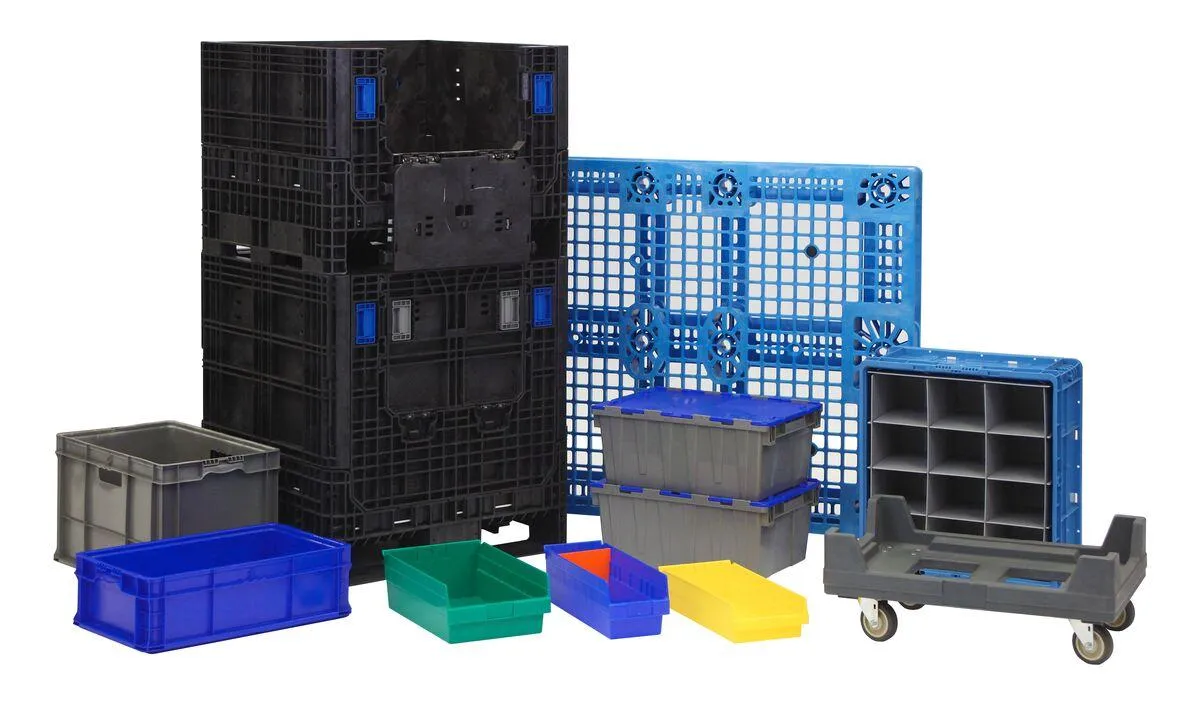
Automotive and appliance plants feed sequenced parts straight to the point of use with Orbis totes. Empty bins nest, return, and refill, keeping material, information, and cash moving in a tight loop.
Design engineers run cube-utilization simulations before tooling a container, so you load more product per truck and touch each part fewer times. Add optional tracking tags and every tote becomes a visible kanban card.
If zero packaging waste sits on your lean scorecard, Orbis lets you start checking boxes without using any boxes at all.
Ernest Packaging Solutions: managed inventory that keeps your floor clear.
Ernest treats packaging like a service: always ready, never in the way. The Managed Inventory program tracks your carton burn rate, stores safety stock off-site, and triggers replenishment the moment your kanban signal fires.
With more than 20 regional hubs, most customers receive next-day delivery on high-volume items and two-day turnaround on custom runs. That speed lets you cut packaging days-on-hand without risking a stockout.
In-house engineers hunt waste in your SKU list, often standardizing several products into one right-sized carton and automating pack-out to trim labor minutes. When you need a partner who removes both boxes and busywork, Ernest delivers.
SupplyOne: outsourced packaging department for the mid-market.
Lean works best when every link in the chain moves together, yet many mid-sized manufacturers lack the staff to manage packaging at that level. SupplyOne closes the gap.
The team starts with a forensic audit of your spend, line layouts, and SKU sprawl. They then bundle sourcing, design, and replenishment into one managed program tailored to your plants. You release packaging in small drops that mirror production; they pool volume behind the scenes to keep unit costs sharp.
Because SupplyOne controls both manufacturing and distribution, it flexes when demand spikes. Multiple facilities switch on, while vendor-managed inventory balances stock across sites so no plant drowns in overage or stalls for cartons.
One electronics customer cut packaging spend by 12 percent in six months. Think of SupplyOne as an off-site department that hunts every gram, minute, and dollar hiding in your current packs while you focus on core operations.
ePac flexible packaging: digital presses for micro-runs at mach speed.
Digital printing shook up marketing, and ePac applies the same pace to flexible packaging. Traditional pouch suppliers ask for five-figure minimums and eight-week lead times. ePac starts at 1,000 bags and ships within 10–14 days.
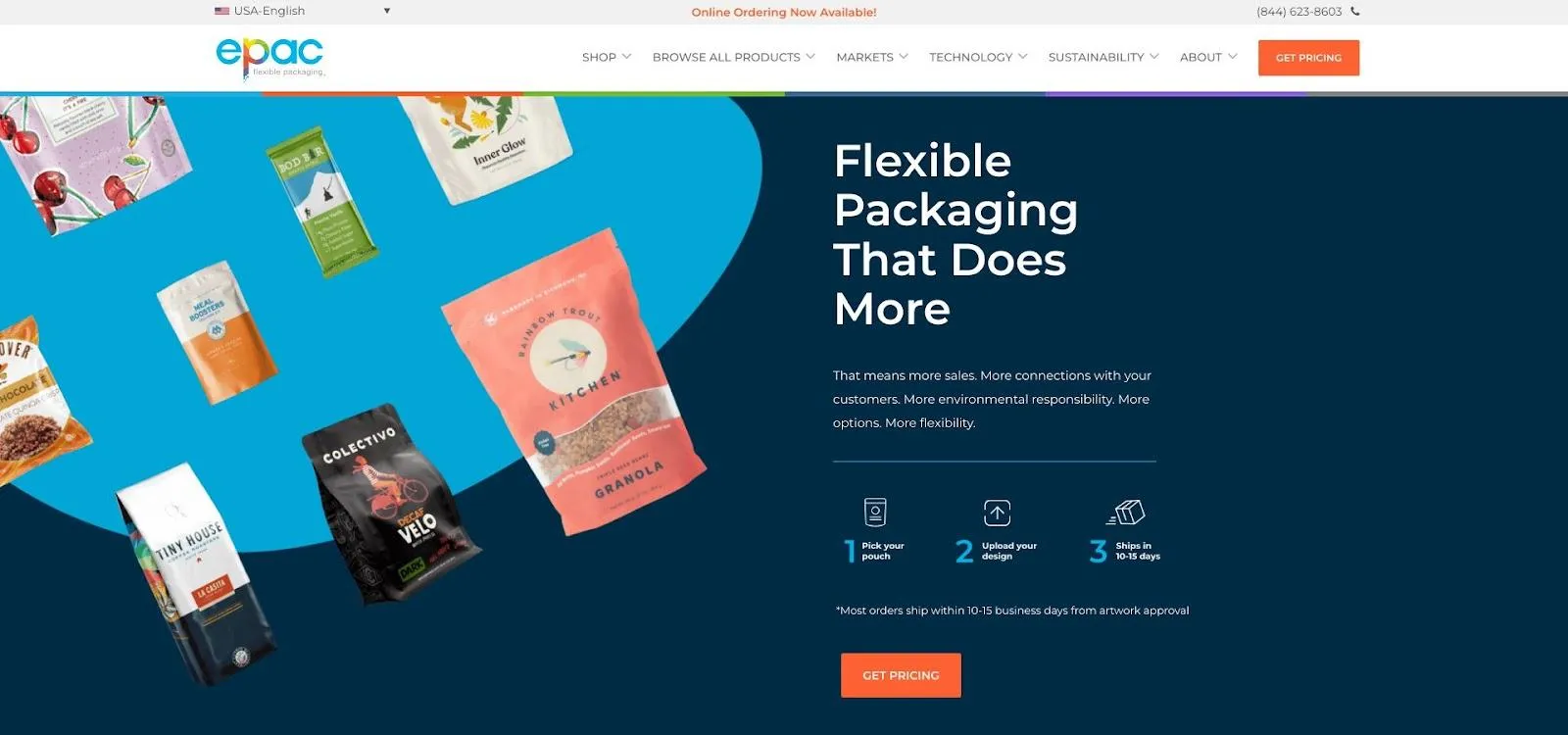
That gives you freedom to print only what the next sprint needs, not a year’s inventory that can turn obsolete. Small lots free cash, cut waste, and let you test new flavors, SKUs, or seasonal promotions without excess risk.
Setup time is near zero. No plates, no long changeovers, and no idle tooling when graphics change. The approach aligns with PDCA cycles: design, run, learn, and iterate again before competitors approve their proofs.
Plants across North America, Europe, and Asia keep freight lanes short, emissions low, and lead times steady. For agile food, supplement, or consumer-goods lines, ePac keeps packaging as quick as your product roadmap.
Packsize: on-demand box making for one-piece flow.
Picture cutting a custom carton the moment a pick ticket prints. That is Packsize in action. A compact machine at the end of your line feeds on fanfold corrugate and cuts a right-sized box for each order in seconds.
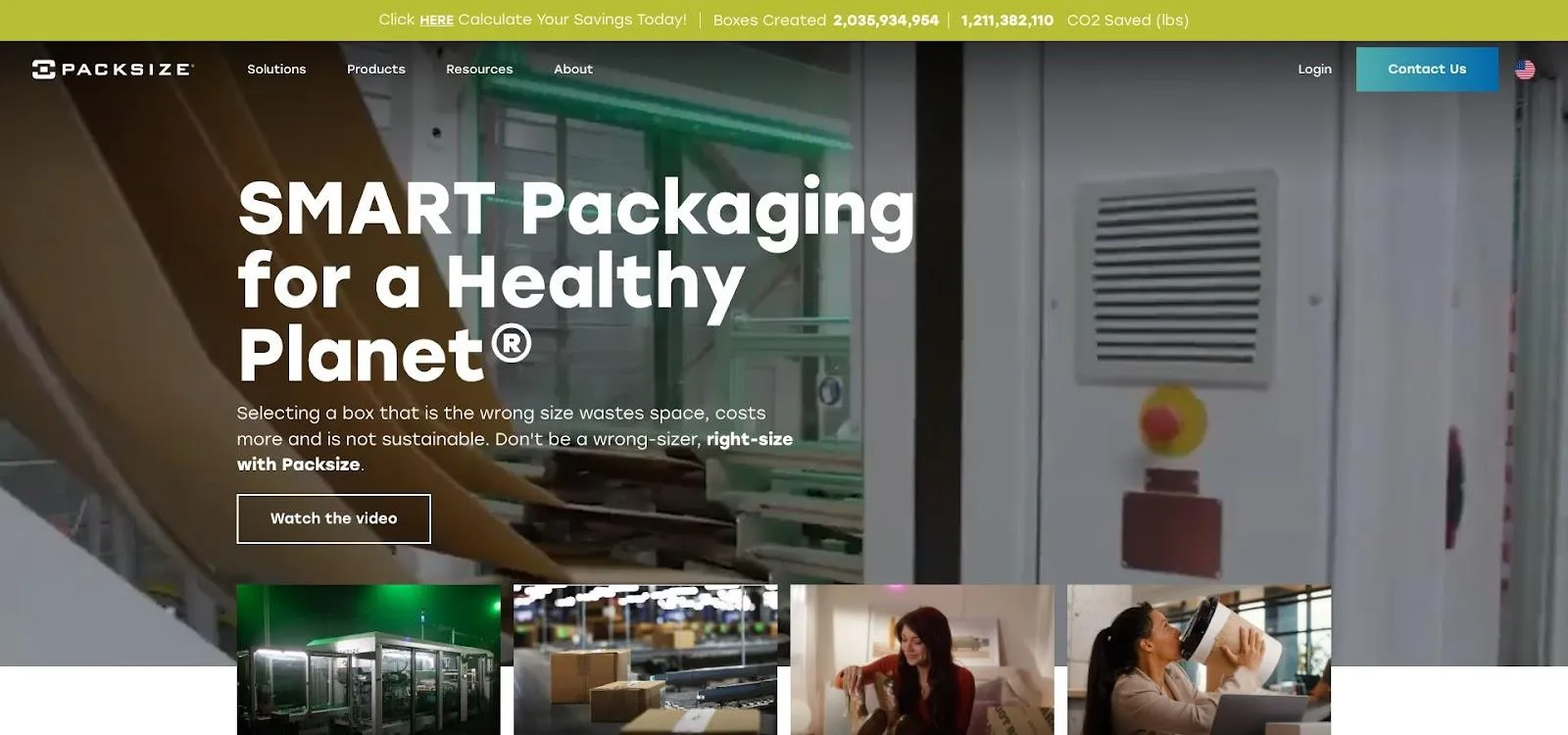
The lean payoff is measurable. Customers often free up 20 percent of warehouse space by removing stacks of pre-made cartons. Operators fold, pack, and ship in one motion, trimming touches and travel time.
Right-sizing cuts void fill and lowers damage rates. Software tracks every box, then suggests templates that save even more board. You buy one generic corrugate SKU instead of twenty, so inventory stays simple and cash-light.
For high-mix distributors and e-commerce lines, Packsize turns packaging into a one-piece-flow workstation that matches the pace of every pick.
Arka: custom branded boxes in batches of ten.
Start-ups and small makers rarely need pallet loads of packaging. Arka’s web platform lets you design and order as few as 10 fully branded mailer boxes, then ships them within 5–7 days.

The tiny minimum prevents overproduction. You test, learn, and pivot branding without shelves of obsolete cartons. Digital printing keeps setup costs near zero, and a focused menu of finishes speeds approval.
For e-commerce launches, limited-edition drops, or seasonal kits, Arka turns packaging into a variable expense that tracks your sales curve—no storage lease, no sunk cash, just fresh boxes when you need them.
DS Smith: circular design that aligns lean with green.
DS Smith views packaging as part of a closed loop. Designers follow circular principles that trim every gram of board, simplify recycling, and raise pallet density so trucks move product, not air.
PackRight and SupplyCycle workshops bring your cross-functional team into the studio. In a single session you test prototypes, run drop tests, and model line ergonomics. Most customers leave with a design that cuts board weight by 10–15 percent and lifts line throughput at the same time.
Local plants across Europe and North America shift these designs into production within five days, then replenish on a kanban schedule. Closed-loop programs collect your used boxes, pulp them, and feed the fiber back into new ones, closing both the physical and financial loop.
For manufacturers who want lean efficiency and sustainability metrics to rise together, DS Smith proves the two goals can reinforce each other.
Lean packaging FAQs
What exactly is “lean packaging”?
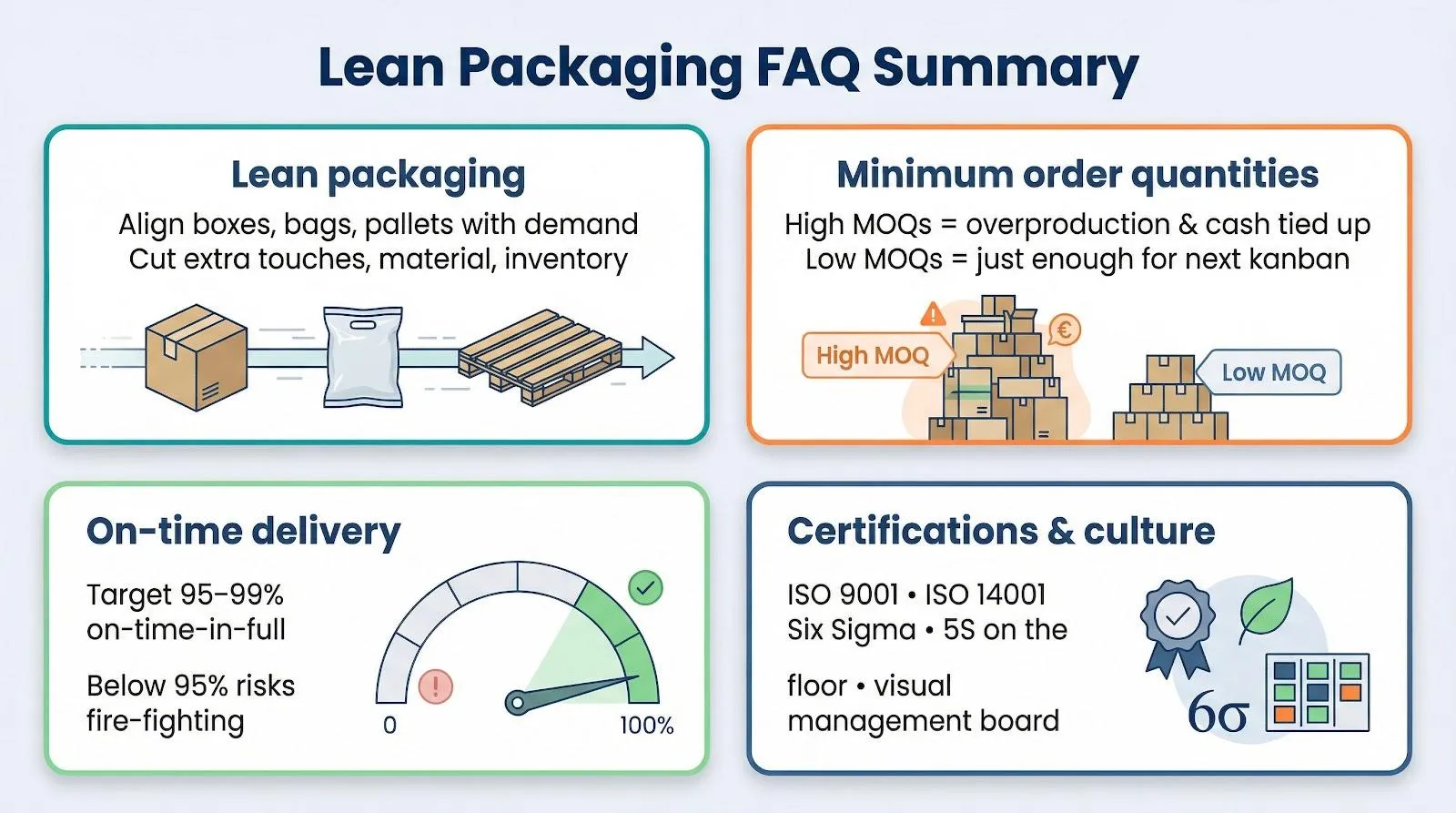
Lean packaging applies the same discipline you use on the line to every box, bag, and pallet. It removes extra touches, excess material, and inventory so packaging moves at the speed of demand and adds value for the customer—nothing more and nothing less.
Why fuss over minimum order quantities?
High MOQs create overproduction. You lock cash and rack space into thousands of cartons you do not need today. Low or zero minimums let you buy just enough to cover the next kanban trigger, keep designs current, and pivot fast when specs change.
What on-time delivery rate should we demand?
Aim for at least 95 percent, and push leading suppliers closer to 99 percent. Anything lower sparks expedites, line stoppages, and firefighting that erase the gains you made with SMED or Heijunka.
Which certifications signal a supplier’s continuous-improvement culture?
ISO 9001 shows they manage quality with data rather than hope. ISO 14001 confirms an environmental mindset that often uncovers material savings. Add Six Sigma belts or visible 5S boards during a plant tour and you are talking to a team that lives Kaizen, not just talks about it.
Conclusion
Ready to eliminate the packaging bottleneck? Let’s solve it together.