

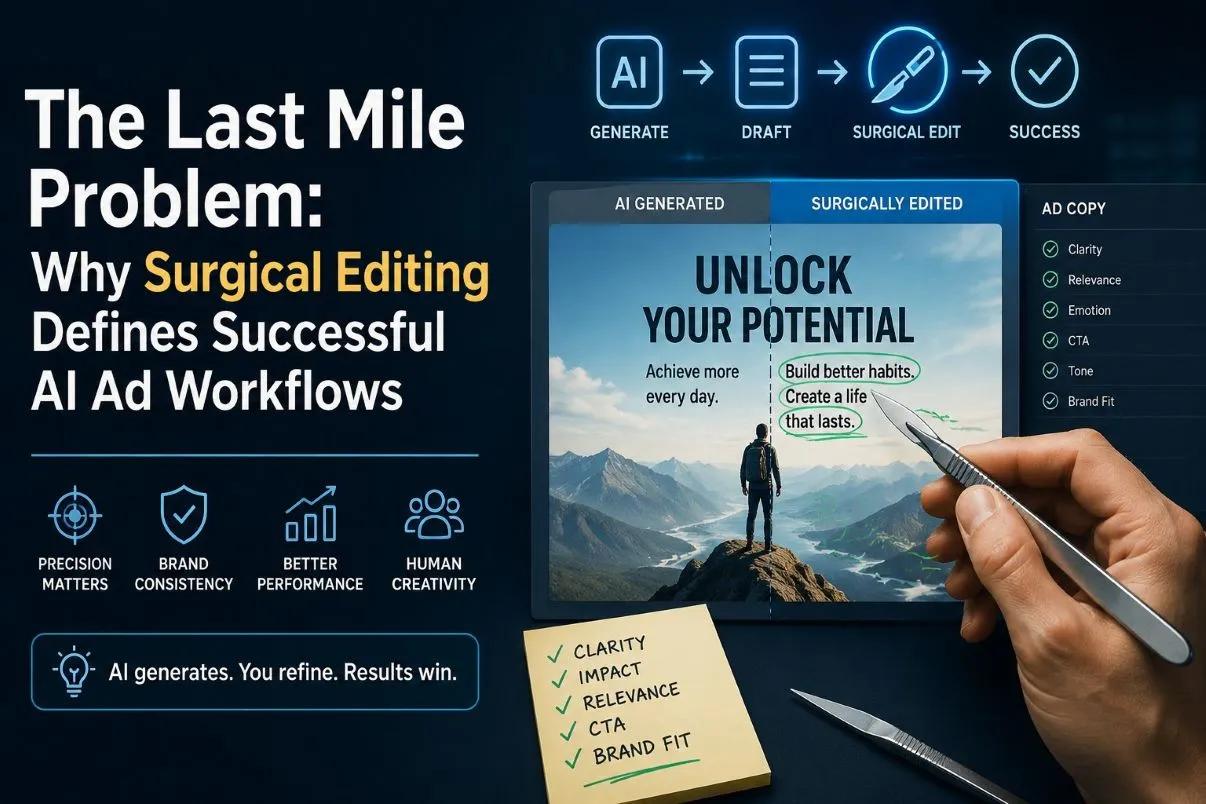
The current state of generative media is often characterized by a "lottery" mindset. Marketers and product teams enter a prompt, wait twenty seconds, and hope the output aligns with a brand’s aesthetic guidelines. While the technology has advanced to the point where an initial generation can be visually stunning, it rarely meets the rigorous requirements of a launch-ready asset on the first try. There is a persistent gap between a high-fidelity image and a commercially viable ad creative—a gap often referred to as the "last mile problem."
For teams tasked with shipping ad creatives at scale, the value of AI is no longer found in the ability to generate a random "pretty" image. Instead, the value lies in the workflow: the ability to iterate, refine, and perform surgical corrections without restarting the creative process from scratch. This move from generation to curation and remediation is where professional-grade workflows are currently being won or lost.
Beyond the 'One-Prompt' Fallacy
There is a common misconception among those who haven't spent hundreds of hours in a production pipeline that the goal of AI is to find a "magic" prompt. In reality, relying on a single prompt to produce a deployment-ready asset is a recipe for inefficiency. Raw outputs from even the most advanced models frequently fail internal brand audits for subtle reasons—a misplaced shadow, an anatomical anomaly in a hand, or a background element that inadvertently violates a trademark.
Furthermore, "creative inspiration" is fundamentally different from "deployment-ready" assets. An AI Image Editor can provide the former in seconds, offering a visual metaphor that the marketing team might not have considered. However, taking that metaphor and making it fit a specific 9:16 aspect ratio with enough negative space for a headline requires more than just better prompting. It requires an acknowledgment that the first generation is merely a baseline.
The cognitive load of re-prompting is often underestimated. When a marketer tries to fix a small detail by changing the prompt, they risk "collapsing" the parts of the image that were already perfect. This unpredictability is the enemy of a tight production schedule. Professional workflows are shifting toward a modular approach where the initial generation is just the starting point for a series of targeted edits.
High-Volume Iteration with Nano Banana
Speed is the primary currency of the concepting phase. When a product team is exploring visual directions for a new launch, they need to see fifty variations of a concept, not just five. This is where high-speed, low-latency engines like Nano Banana become essential. In this stage, the goal isn't final-pixel polish; it is the rapid testing of visual metaphors across different demographic targets.
Using a tool like GPT Image 2 or a fast iteration engine allows a team to establish a "baseline" composition. For example, if you are testing an ad for a sustainable water bottle, you might use these faster models to see if the product resonates better in a high-end kitchen setting versus a rugged outdoor environment.
At this stage, the operator is looking for:
Compositional balance: Does the eye lead to the intended focal point?
Color palette resonance: Do the generated hues align with the brand's seasonal guide?
Demographic fit: Does the lifestyle context feel authentic to the target audience?
One must remain cautious here: low-latency models often trade off fine-grained detail for speed. It is common to see blurred textures or "melted" background objects in these early drafts. However, as a prototype for a layout that will eventually be refined, this speed is more valuable than perfection. Trying to generate "perfect" images during the brainstorming phase is a waste of both computational resources and creative time.
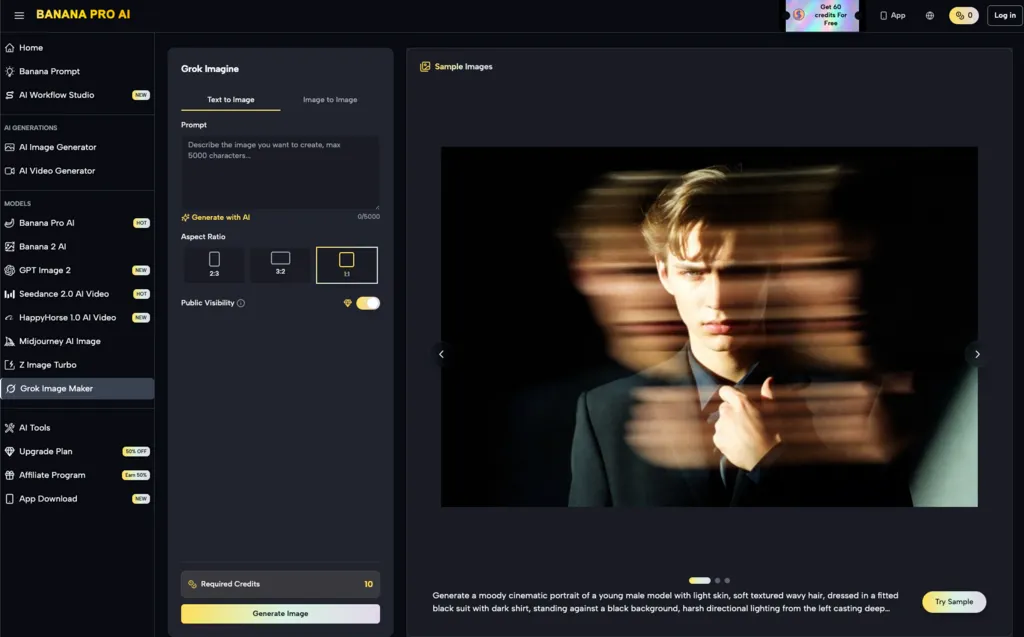
Surgical Correction: The AI Photo Editor as a Finisher
Once a concept is approved, the workflow moves from broad strokes to surgical precision. This is where an AI Photo Editor becomes the primary tool. The "last mile" of ad production is almost entirely about remediation—fixing the artifacts that the initial AI generation inevitably leaves behind.
Common tasks in this phase include in-painting to fix lighting inconsistencies or using object removal to clear out distracting elements that the model hallucinated. If an image is 90% perfect but has a bizarrely shaped cloud or a distorted hand, it is far more efficient to use a targeted editor than to roll the dice on a new prompt.
There is a technical distinction to be made between a broad AI Image Editor and a specialized photo-finishing tool. While an AI Image Editor might be used to change the entire background from a forest to a desert, the photo-centric tools are used for textural and color-grade consistency. For a product launch, the texture of the product itself is non-negotiable. If the AI-generated version of your product looks "almost" right but the metallic finish is off, the ability to mask that specific area and refine it without touching the rest of the composition is critical.
We should be clear about a current limitation: even with the best surgical tools, achieving 100% photorealism on complex, non-standard items is still a significant hurdle. If your product features a very specific, patented geometric pattern, current AI tools may struggle to replicate it with the precision required for high-resolution print or 4K digital displays. In these cases, the AI serves as the environment creator, while the product is often composited in by a human designer later.
Integrating Kinetic Elements via Seedance
The modern ad campaign is rarely static. A successful launch requires a cohesive visual identity across Facebook carousels, Instagram Reels, and YouTube bumpers. This necessitates a workflow that can translate static assets into video snippets without losing visual continuity.
Tools like Seedance 2.0 or Gemini Omni are increasingly being used to add motion to the "hero" images created in the static phase. The challenge here is maintaining "seed" references—ensuring that the person in the static ad looks like the same person in the 5-second video clip.
A common operator-led tactic involves:
Generating the hero image using a model like Gemini 3 Pro.
Refining the image in a specialized editor.
Using that refined image as an "Image-to-Video" prompt in a Banana AI workflow to create a scroll-stopper.
This ensures that the "aesthetic DNA" remains consistent across the entire funnel. However, marketers should manage expectations regarding AI video. We are currently in a phase where motion can sometimes appear "rubbery" or physics-defying. For a professional ad, it is often better to aim for subtle kinetic movements—cinemagraph-style hair movement or light shifts—rather than complex character actions that are prone to glitching.
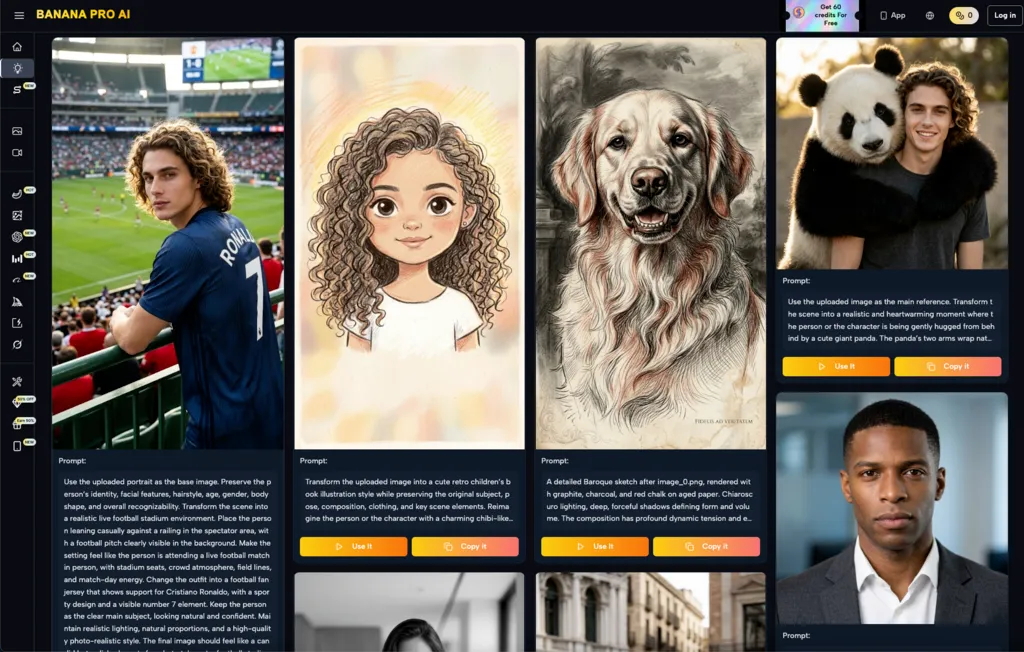
The Hard Limits of Automated Creative
Despite the efficiency gains, we must ground these workflows in the current technical reality. There are several areas where AI is not yet a "push-button" solution for marketers.
The Typography Struggle
Text rendering remains a significant friction point. While some newer models have improved their ability to spell, they still lack the typographic nuance required for professional layout. Leading, kerning, and specific brand fonts are almost always better handled in traditional design software. Most successful teams use AI to generate the background and environment and then overlay the copy and branding using vector-based tools.
Brand-Specific Nuances
AI models are trained on general concepts. They know what a "red sports car" looks like, but they don't know the exact curve of a specific 2024 model's headlight unless they have been fine-tuned on that specific dataset. For product launches involving hardware with specific textures—like the knurling on a high-end camera dial—AI often falls short. It can create a "vibe," but it cannot yet replace high-end product photography for technical specifications.
Legal and Ethical Oversight
Finally, there is the layer of human oversight. The legal landscape regarding training data and copyright is still shifting. Every public-facing launch asset must be vetted not just for aesthetic quality, but for potential compliance issues. This is why the "human-in-the-loop" model isn't just a suggestion; it is a business necessity.
In the end, the marketers who are shipping the fastest aren't the ones with the most clever prompts. They are the ones who have built a repeatable pipeline that uses high-speed concepting engines for volume and surgical editing tools for the final, difficult 10% of the creative process. The "last mile" is where the brand is protected, and currently, that mile still requires a steady human hand on the digital brush.