

Why Asia (and China) Dominates Disposable Coverall Manufacturing: The Real Supply Chain Story Behind the Low Prices
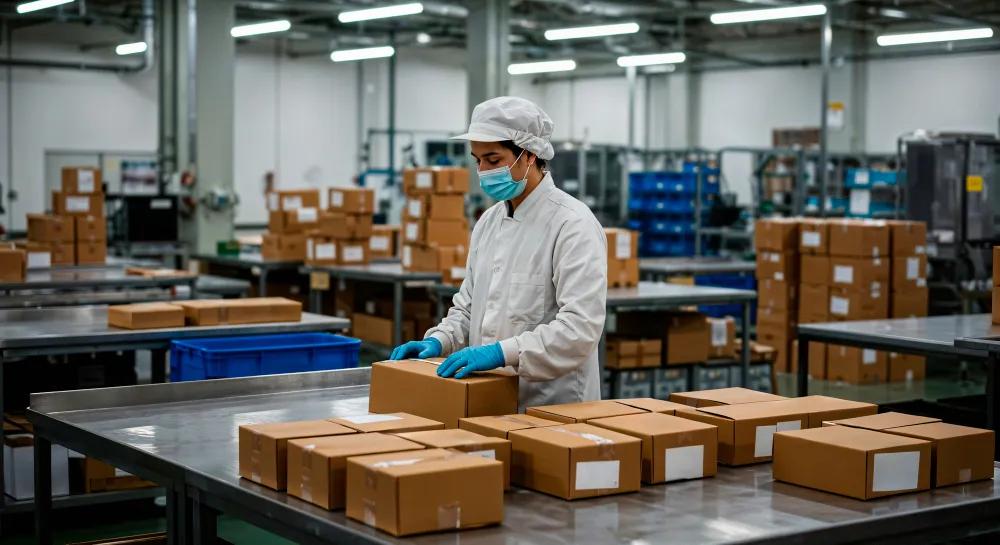
Every year, billions of disposable coveralls ship out of Asian ports to construction sites, chemical plants, and cleanrooms across Europe, North America, and beyond — yet most buyers never stop to ask why.
The answer goes much deeper than "cheap labor." Behind every low-priced disposable coverall manufacturer quote sits a decades-long buildup of raw material dominance, tight end-to-end supply chains, and an OEM manufacturing ecosystem no other region has come close to matching.
Three things drive this reality: - Raw material control — Asia holds a strong grip on the nonwoven fabrics that make up most Disposable coveralls - Integrated supply chains — fabric, cutting, sewing, and packaging often happen within the same region, sometimes within the same facility - OEM scale — factories here have spent decades refining high-volume production for global buyers
So, are you sourcing protective workwear at scale? Or checking whether an Asian supplier can meet your quality and compliance standards? Either way, what follows gives you a clear, ground-level picture of how this industry is structured — and what that means for your next bulk order.
Global Manufacturing Distribution of Disposable Coveralls
Step back, and the picture is simple: Asia makes disposable coveralls, and the rest of the world buys them.
China sits at the center of this map. Industry estimates put Chinese factories at 50–60% of global disposable coverall production capacity. That share was built over decades of investment in nonwoven fabric infrastructure, garment manufacturing scale, and export logistics. The key production provinces are Hubei, Henan, Shandong, and Guangdong. Each one runs as a tight industrial cluster — fabric mills, cutting floors, and container ports all close together.
Here's how production breaks down across regions:
Region | Estimated Production Share |
China | 50–60% |
Southeast Asia (Vietnam, Indonesia, etc.) | 10–15% |
India | 5–10% |
United States | 5–10% |
Europe | 5–10% |
Others (Turkey, Mexico, Middle East) | Remainder |
The table shows the numbers. It doesn't show the relationships between these regions. The U.S. and Europe are not competing manufacturers. They are brand owners and distributors. Companies like PIP Global, Global Industrial, and Global glove carry well-known labels and own the end-customer relationships. Trace those products back up the supply chain, and the manufacturing trail points to China and Vietnam almost every time.
The demand side has its own story. North America and Europe together consume 45–55% of all disposable coveralls worldwide. That's the highest per-capita PPE usage anywhere, driven by strict workplace safety regulations. Asia-Pacific (excluding China) accounts for another 25–30%. Latin America, the Middle East, and Africa make up the rest, most of it supplied through Chinese exports.
The pattern is clear: fabrication in Asia, branding in the West, consumption everywhere.
Reason #1 — Cost Efficiency and Labor-Intensive Production Structure
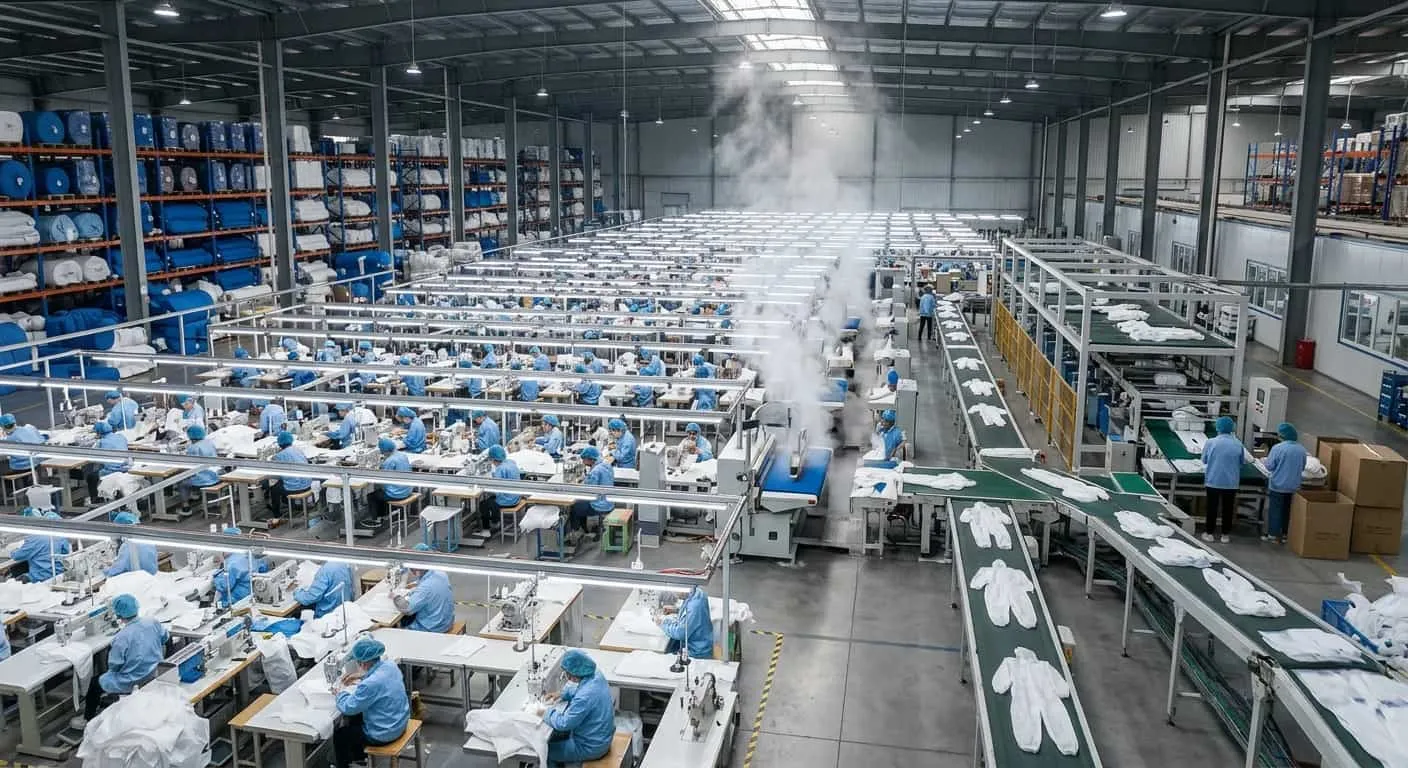
Labor is the engine of disposable coverall manufacturing. Asia runs that engine cheaper than anywhere else on earth.
Here's the reality: in a typical disposable coverall factory, direct labor accounts for 45–55% of total conversion cost. That's not a small line item. It's the single largest variable expense in the entire production process. Control that cost, and you control the price your buyer sees on the quote sheet.
Asian manufacturers — China in particular — control it well.
Why Labor Cost Dominates This Industry?
Disposable coverall production is, by nature, a labor-intensive process. Cutting fabric panels, seaming seams, attaching hood closures, and inspecting finished garments — none of these steps have been automated away. They require hands. Skilled, trained, fast hands.
That dependency on human labor is why geography matters so much:
At wage rates below $3–5/hour , manual labor is almost always cheaper than deploying and maintaining automation for these tasks
Capital costs — machines, robots, depreciation — make up just 5–15% of unit cost in labor-intensive coverall factories, keeping fixed overhead low
Low fixed costs mean a lower break-even volume — factories can run smaller orders and still price well
Compare that to a hypothetical U.S.-based factory. Direct labor runs $8 per unit there versus $3 in an Asian facility. Labor sits at 50% of variable cost. Moving that production cuts unit variable cost by 31–40%. That's not a marginal difference. That's the gap between winning and losing a procurement bid.
Productivity, Not Just Cheap Wages
This is the part most buyers overlook. Asian disposable protective clothing OEM factories aren't just cheaper — many of them run tighter operations than their Western counterparts.
Decades of high-volume export production have pushed these facilities to sharpen their processes:
Process standardization across cutting and sewing lines can lift labor productivity by 15–25% without extra capital investment
Lean layout optimization — rearranging workstations to cut wasted motion — delivers 20–30% throughput improvements on a regular basis
Dynamic scheduling , matching workers to tasks by skill level, squeezes another 5–15% more output from the same headcount
Run the math. A white coverall manufacturer in China with a 500-worker production floor that achieves a 20% productivity gain through standard work cuts labor cost per unit by around 10%. On a bulk order of 50,000 units, that's real money — both for the factory's margin and for your landed cost.
The Cost Structure Advantage in Plain Terms
Cost Component | Labor-Intensive Asian Factory | Automated Western Plant |
Direct labor share of unit cost | 45–55% | 10–20% |
Capital/depreciation share | 5–15% | 30–50% |
Flexibility for product changes | High | Low |
Break-even volume | Lower | Higher |
The table above makes one thing clear: Asian PP non-woven coverall factories and SMS disposable coverall manufacturers carry lower fixed costs. That gives them real structural flexibility. They can take your custom OEM spec, adapt fast, and still hit the price point that makes a disposable coverall bulk order work for your business.
That flexibility — built on a labor cost foundation — is hard to replicate anywhere else.
Reason #2 — Integrated Nonwoven and PPE Supply Chain in Asia
The COVID-19 pandemic exposed something supply chain professionals had known for years. The world ran out of PPE because it couldn't produce nonwoven fabric fast enough. Almost all of that fabric capacity sat in Asia.
That's not a coincidence. It's the result of decades of deliberate industrial integration.
Everything Under One Roof
A disposable coverall manufacturer in coastal China doesn't just sew garments. In many cases, it controls the entire upstream chain. That includes:
PP resin procurement on long-term contracts from petrochemical giants like Sinopec or PetroChina
In-house spunbond and meltblown extrusion lines producing SMS composite fabric (35–60 gsm)
On-site lamination and converting
Export logistics within 50 kilometers of the factory gate
This vertical setup matters a great deal for cost and speed. Nonwoven production and PPE converting happen inside the same industrial cluster. The numbers shift in your favor:
Fabric costs drop 10–25% vs. importing nonwoven from a separate supplier — no import duties, no freight, no weeks of waiting
End-unit cost for coveralls falls 10–20% compared to a split supply chain
Lead times compress from 8–12 weeks down to 2–4 weeks for finished goods
Placing a disposable coverall bulk order of 200,000 units? That lead-time difference alone can decide whether you stock out or stay ahead of your customers.
What COVID Proved About Asian Supply Chain Depth?
In early 2020, China added more than 200 new Meltblown lines. These are the machines that produce the filtration core of masks and the critical inner layer of SMS coveralls. National meltblown output rose by over 3x versus 2019 levels. North America and Europe couldn't match that response. They lacked the upstream infrastructure.
Asian factories retooled nonwoven lines from hygiene and diaper applications to medical PPE-grade SMS fabric in 1–3 weeks. Fill rates on critical PPE orders climbed from below 30% to over 70–80% within months.
That kind of surge capability requires deep integration. Large integrated clusters in Asia were producing 50,000–200,000 coveralls and gowns per day per facility at peak output. The Asia-Pacific medical nonwoven market — the raw material foundation underneath all of it — is projected to grow at a 7.10% CAGR through 2028. This infrastructure is expanding, not shrinking.
The Speed Advantage in Plain Terms
Supply Chain Model | Fabric-to-Finished-Coverall Lead Time | Unit Cost Impact |
Integrated Asian cluster (fabric on-site) | 7–14 days (100K–500K units) | Baseline |
Split model (imported fabric) | 8–12 weeks | +10–20% per unit |
Western domestic production | 12+ weeks | +25–40% per unit |
For a China PPE manufacturer or SMS disposable coverall manufacturer operating inside one of these clusters, a new customer order doesn't trigger a fabric sourcing process. It triggers a production schedule. The resin is already under contract. The meltblown and spunbond lines are already running. The SMS fabric rolls are already on the floor.
No labor wage comparison captures that structural advantage. It's not just cheaper — it's faster, more resilient, and harder to replicate from scratch .
Reason #3 — OEM Disposable Coverall Manufacturing Ecosystem and Flexibility
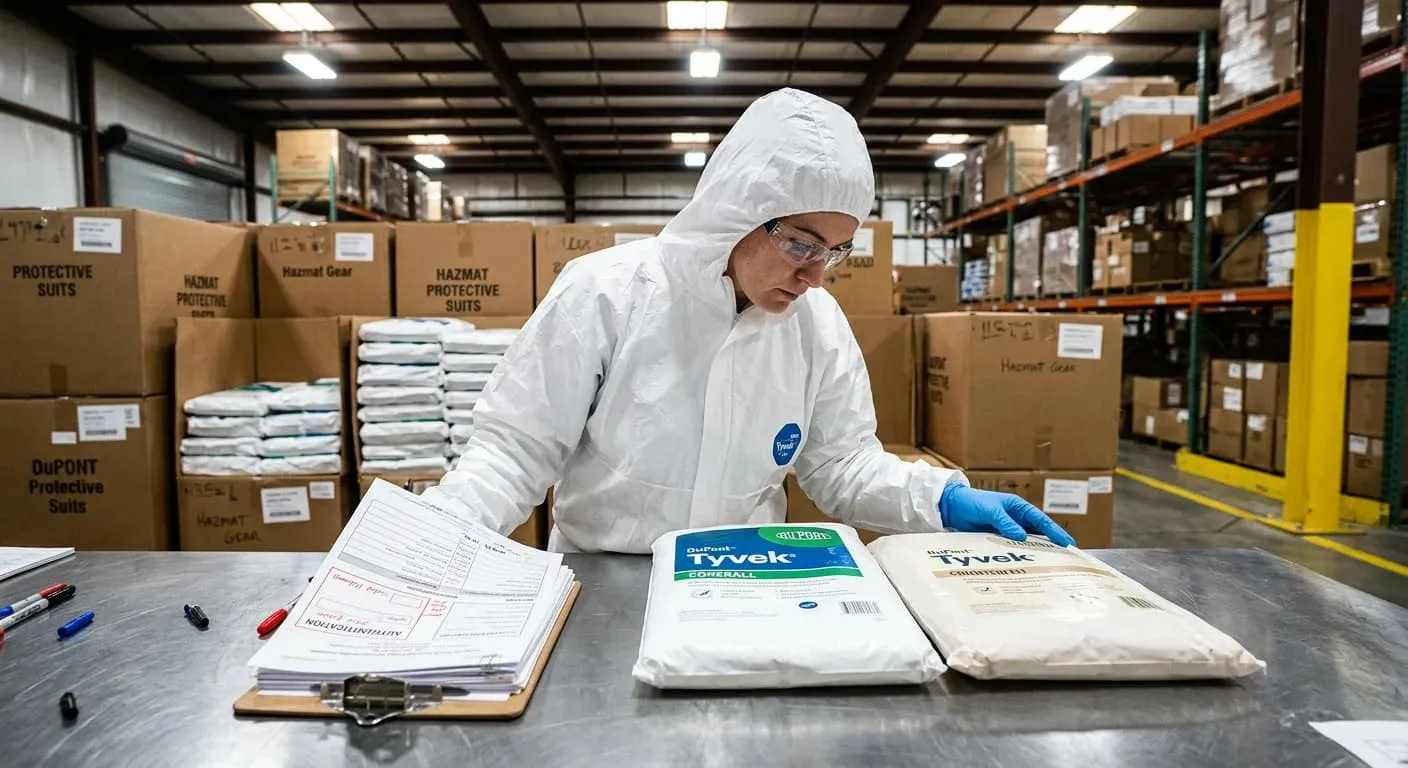
Visit a mature disposable protective clothing OEM facility in Hubei or Shandong. You'll notice something the numbers don't show: the whole operation is built for change.
That's the third structural advantage Asian manufacturers hold. It's also the one most buyers get wrong.
Built to Flex, Not Just to Scale
The OEM ecosystem in Asia isn't just large. It's configurable . Factories across China's core PPE clusters have spent years building production systems that absorb shifting demand. They handle custom specs. They switch between product variants fast, without stopping the line.
Here's what that looks like in practice:
Volume flexibility : Mature OEM facilities scale output ±30–50% within a single quarter — up or down — without major capital investment or quality loss
Changeover speed : Multi-product lines switch between variants in under 30 minutes. A factory can run both Type 5 and Type 6 coveralls on the same floor in the same week
New product launch : Bring a new custom spec to a capable OEM. They move from design freeze to start of production in under 6–9 months, using modular line setups
Placing a disposable coverall bulk order with tight lead times or seasonal demand spikes? That kind of responsiveness isn't a bonus. It's a baseline requirement.
Ecosystem Depth Drives Flexibility
Individual factory capability matters. But the real edge Asian hazmat suit manufacturers and white coverall manufacturers hold comes from the ecosystem around them .
Supplier networks are tight. Contract manufacturers keep inventory buffers ready. Cross-trained labor pools let factories move workers across lines within hours. Quick-changeover programs targeting 50–70% reductions in setup time are standard practice, not exceptions.
The result: a China PPE manufacturer inside one of these clusters can absorb your revised forecast, handle a logo change, or shift between SMS weights mid-run — all without throwing off the production schedule. That level of operational agility, built into a supplier network at scale, is something buyers outside these clusters can't match.
Reason #4 — Export Infrastructure and Global PPE Demand Shift
The global PPE market hit $68.4 billion in 2025. It's headed to $112.6 billion by 2034. That's a 5.7% annual growth rate — steady, structural, and export-driven. Asian manufacturers didn't just build capacity to serve this market. They built the infrastructure to own the delivery side of it.
Demand Didn't Return to Normal. It Reset Higher.
After 2020, healthcare systems worldwide locked in higher baseline stockpiles of protective apparel — and kept them there. Hospitals that once ran lean PPE inventories now hold rolling reserves as standard practice. That shift created a lasting export pull. It runs straight through China's PPE manufacturers and their established freight corridors.
Healthcare is just one piece of the picture. The global construction industry is on track to hit $15.2 trillion by 2030. The biggest growth sits in Asia Pacific, the Middle East, and Sub-Saharan Africa. These regions burn through huge volumes of disposable workwear — hard hats, hi-vis gear, and protective coveralls by the container load. India alone has committed over $1.4 trillion in infrastructure spending through its National Infrastructure Pipeline. That capital flows into construction-grade PPE demand at a serious scale.
China's Belt and Road Initiative pushes that reach even further. Active projects span 140+ countries. Chinese contractors procure PPE for their deployed workforce on each of those sites — so export demand literally travels with the construction work itself.
What the COVID Shock Proved?
Global PPE demand surged 40% overnight in 2020. N95 prices climbed over 1,000%. That exposed a hard truth: countries with no upstream manufacturing base couldn't respond fast enough. The U.S. — the world's largest importer of face masks, eye protection, and medical gloves — felt that gap hard and fast.
Asian export infrastructure held up better than anywhere else. It wasn't perfect. Air cargo demand spiked as buyers skipped slow sea freight. But the core capacity was there to absorb the shock. The takeaway for buyers was clear:
Being close to manufacturing matters
Having established export logistics in place matters even more
Without both, you're exposed on every disposable coverall bulk order you place
That's not a supply chain preference. It's your insurance policy.
Conclusion — Why Asia Dominates OEM Disposable Coverall Manufacturing
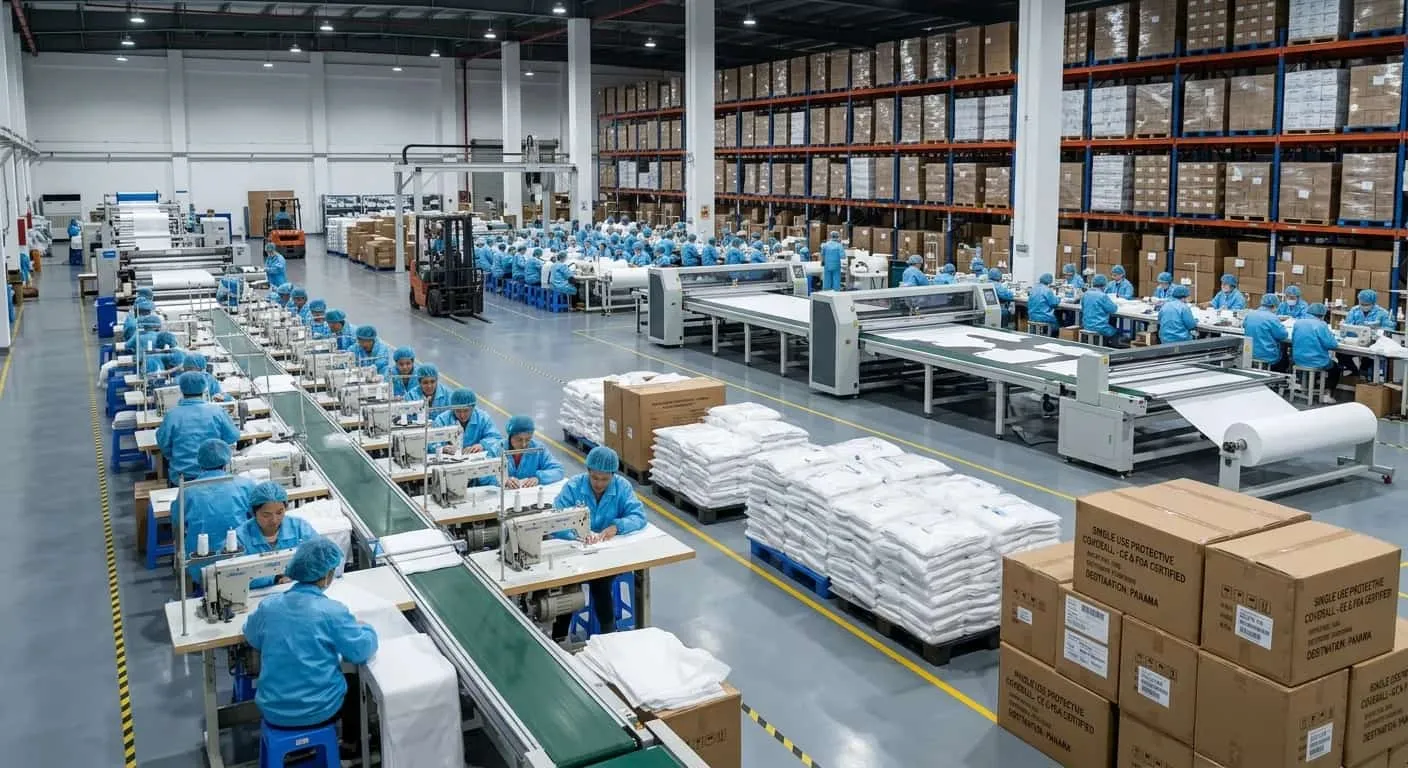
The numbers don't lie. Asia-Pacific's disposable protective clothing market hit USD 1.2 billion in 2020. It's growing at 6.4% per year through 2028. China alone holds 67.8% of that regional market. This isn't optimism — it's the result of a manufacturing base that spent decades mastering one thing: making disposable coveralls at scale, for any buyer, at prices no other region can match.
Four forces built that dominance. They each push the others forward:
Raw material control keeps input costs low and supply chains short
Integrated production clusters cut lead times from months down to weeks
OEM ecosystem flexibility handles custom specs, volume changes, and private-label needs without delay
Export infrastructure ships finished goods from the factory floor to your warehouse through freight corridors that are already up and running
Eastern Asia produces disposable-to-reusable suits at a 3:1 unit ratio. That's not just a market preference. It's a production system built for high-volume, standardized OEM output. Line utilization stays high. Material purchasing runs in bulk. Unit costs stay low.
For any disposable coverall bulk order buyer, the picture is clear. The supply chain you need already exists here. It already runs at the scale you require. It already carries the ISO and CE certifications your import markets demand. The real question was never whether to source from Asia. It's always been which supplier inside that system earns your order.