

Choosing a career during college doesn't mean you must follow that path forever. Many professionals eventually discover that their interests, priorities, or expectations have changed. For some, healthcare becomes appealing because it combines scientific knowledge, practical problem-solving, and meaningful interactions with people.
However, moving into nursing after earning a degree in another field requires more than enthusiasm. You need to understand educational pathways, clinical training, licensing requirements, and the realities of working in healthcare.
A successful transition begins with recognizing what your previous education offers and identifying the preparation needed to develop an entirely new professional skill set.
Understand How Your Existing Degree Can Support a Nursing Career
A bachelor's degree in business, psychology, biology, or another discipline may seem unrelated to nursing. However, the knowledge and skills developed through previous education can remain valuable.
Communication, research, organization, and critical thinking are important in healthcare environments. Professionals who have worked in other industries may also bring experience managing responsibilities, resolving problems, and collaborating with different personalities.
For graduates exploring accelerated pathways, direct entry MSN programs offer an educational route into nursing without requiring an existing nursing degree. These programs are designed for individuals with bachelor's degrees in other disciplines and combine nursing coursework with supervised clinical preparation.
However, program structures vary. Some require full-time enrollment, in-person laboratories, and substantial clinical placements.
Graduates must also satisfy applicable licensing requirements, including passing the NCLEX-RN examination to become registered nurses.
Understanding these expectations helps career changers evaluate whether graduate nursing education matches their goals.
Recognize That Nursing Requires More Than a Desire to Help People
Wanting to make a difference is a meaningful motivation, but nursing involves responsibilities that extend beyond compassionate intentions.
Registered nurses assess patients, administer medications, monitor changes in health, communicate with medical teams, and respond to unexpected situations.
These duties require clinical knowledge, attention to detail, and the ability to make informed decisions under pressure.
Before committing to a career change, learn what nurses actually do throughout their shifts.
Consider speaking with practicing nurses from different specialties or exploring appropriate healthcare volunteering opportunities.
Hospital nursing, community health, long-term care, and outpatient practice can involve substantially different responsibilities.
You should also think about your comfort with physical tasks, emotionally difficult situations, and schedules that may include nights or weekends.
Understanding the profession realistically helps ensure that your decision reflects genuine interest rather than an idealized picture of healthcare.
Prepare for Science Courses Before Entering an Accelerated Program
Returning to school can be challenging, particularly when your previous degree involved limited scientific coursework.
Nursing education relies heavily on subjects such as anatomy, physiology, microbiology, and pharmacology.
These disciplines provide the foundation for understanding how the body functions, how illnesses develop, and how treatments affect patients.
Depending on the institution, applicants may need to complete specific prerequisite courses before admission.
Review these requirements early rather than assuming your previous degree automatically satisfies them.
If you haven't studied science recently, consider refreshing your understanding of biological systems and basic medical terminology.
Developing effective study habits is equally important.
Instead of memorizing isolated facts, practice explaining how different concepts connect to patient care.
This approach can make unfamiliar material easier to understand and apply.
Strong academic preparation reduces unnecessary pressure once demanding nursing coursework begins.
Learn Why Clinical Training Is Central to Nursing Education
Classroom instruction introduces essential concepts, but nursing students must also learn how to apply their knowledge in real healthcare environments.
Clinical education provides supervised opportunities to practice assessment, communication, patient safety, and care coordination.
Students may encounter patients with different medical conditions, cultural backgrounds, and personal circumstances.
These experiences help connect theoretical learning with the practical demands of nursing.
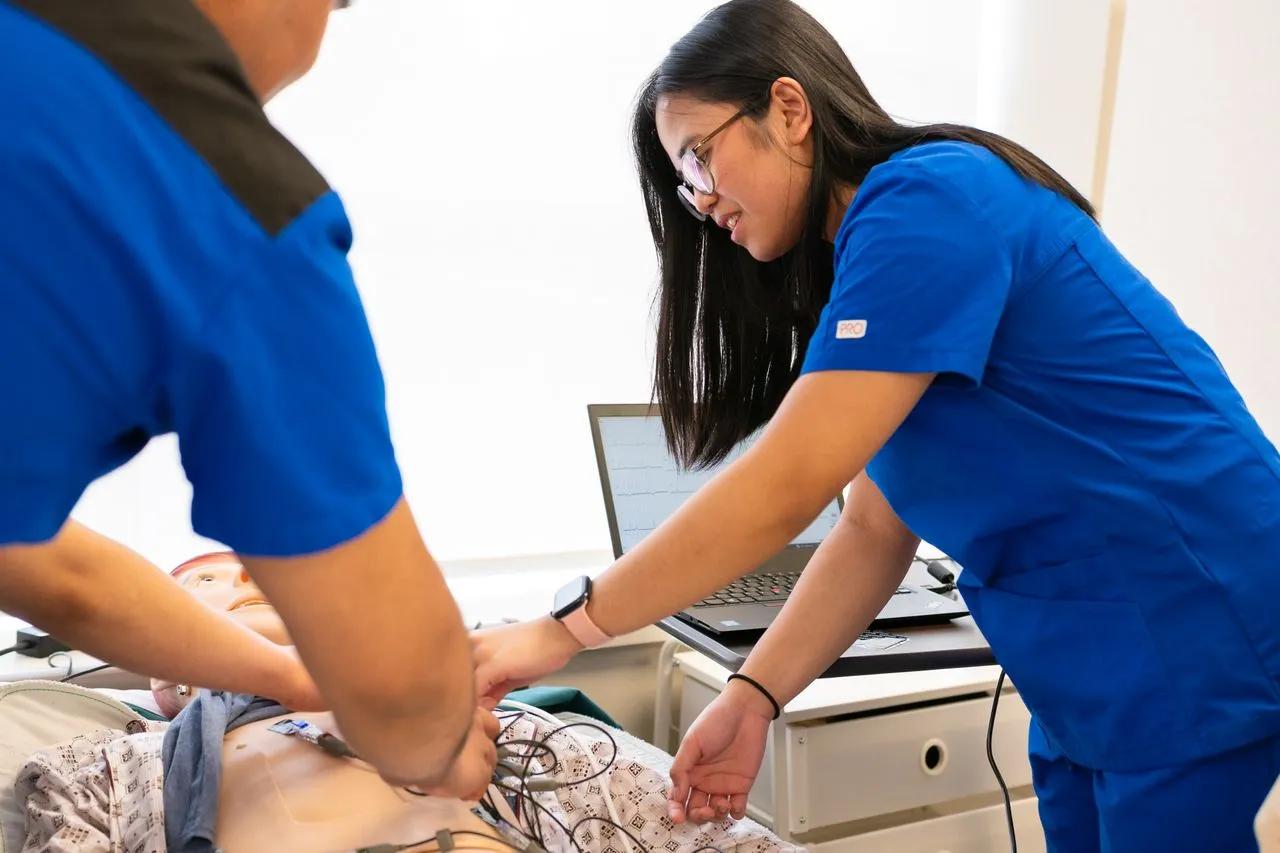
Skills laboratories and simulation exercises also allow students to develop techniques in controlled environments before performing them in clinical settings.
Career changers should carefully examine how prospective programs organize these experiences.
Ask about clinical placement arrangements, supervision, scheduling expectations, and opportunities to practice essential skills.
Some programs provide placement coordination, while others require students to take greater responsibility for securing suitable sites.
Understanding the clinical component is especially important because nursing cannot be learned entirely through independent online coursework.
Build Study Habits That Fit an Intensive Academic Schedule
Accelerated nursing education often requires students to absorb substantial amounts of information within relatively short periods.
Approaching this workload with the same habits used during a less demanding academic program may prove difficult.
Start by creating a weekly schedule that includes lectures, reading, assignments, practical training, and review sessions.
Break complicated subjects into manageable topics rather than waiting until examinations approach.
Practice questions can help identify gaps in understanding and strengthen clinical reasoning.
Study groups may also be useful when participants explain concepts, compare approaches, and discuss unfamiliar material.
However, avoid relying entirely on passive activities such as rereading notes.
Active recall, case-based exercises, and explaining information aloud can support deeper learning.
Protecting time for sleep, meals, and regular breaks matters as well.
A sustainable study routine helps students maintain concentration throughout the program rather than depending on occasional periods of intense preparation.
Prepare for the Emotional Demands of Patient Care
Nursing involves frequent contact with people experiencing pain, uncertainty, illness, and significant life changes.
For someone entering healthcare from another profession, these encounters may feel unfamiliar.
Patients and families sometimes express fear, frustration, or confusion, particularly during serious medical situations.
Nurses must communicate compassionately while maintaining professional boundaries and following clinical responsibilities.
Developing emotional resilience doesn't mean becoming indifferent to suffering.
Instead, it involves recognizing difficult experiences, using appropriate support systems, and maintaining the ability to provide safe care.
Reflective practice, constructive feedback, and conversations with qualified supervisors can help students process challenging situations.
Career changers should also understand the importance of teamwork.
Nurses collaborate with physicians, therapists, social workers, and other professionals when addressing patient needs.
Learning to ask questions and seek assistance appropriately is an essential part of developing professional confidence.
Evaluate Your Financial and Personal Responsibilities Before Enrolling
Changing careers often involves adjusting more than your academic schedule.
Tuition, textbooks, transportation, clinical requirements, and reduced working hours can affect household finances.
Before enrolling, review the complete cost of attendance rather than concentrating exclusively on advertised tuition.
Ask about financial aid eligibility, additional program fees, and expenses associated with clinical training.
Consider how your existing responsibilities will fit around coursework and supervised placements.
Parents and caregivers may need dependable arrangements for childcare or other family obligations.
Professionals currently employed full-time should investigate whether their intended program allows sufficient scheduling flexibility.
Accelerated programs can be particularly demanding because academic and clinical commitments may occupy much of the week.
Creating a realistic plan before starting can reduce avoidable disruptions later.
The goal is to make an informed commitment that supports both educational progress and personal stability.
Think Beyond Graduation When Planning Your Nursing Career
Completing a nursing degree represents an important achievement, but it is only one stage of entering the profession.
Graduates pursuing registered nurse licensure must meet their state nursing board's requirements and successfully complete the NCLEX-RN examination.
Once licensed, new nurses continue developing their abilities through supervised workplace experience, professional guidance, and ongoing education.
Your first position may help you discover which patient populations and clinical environments suit your interests.
Some nurses prefer fast-paced hospital settings, while others find satisfaction in community health, outpatient services, or long-term care.
Additional certifications and specialized education may become relevant as your career develops.
However, advanced practice positions generally require further education and specific credentials beyond initial registered nursing preparation.
Approach your career change as a gradual professional transition rather than a single academic milestone.
Your previous education remains part of your professional identity, but nursing introduces new responsibilities that require dedication and continued learning.
With realistic expectations, appropriate preparation, and a willingness to develop unfamiliar skills, switching fields can become a purposeful step toward a rewarding healthcare career.