

How Learning a Foreign Language Can Be a Silver Lining in the Age of Artificial Intelligence
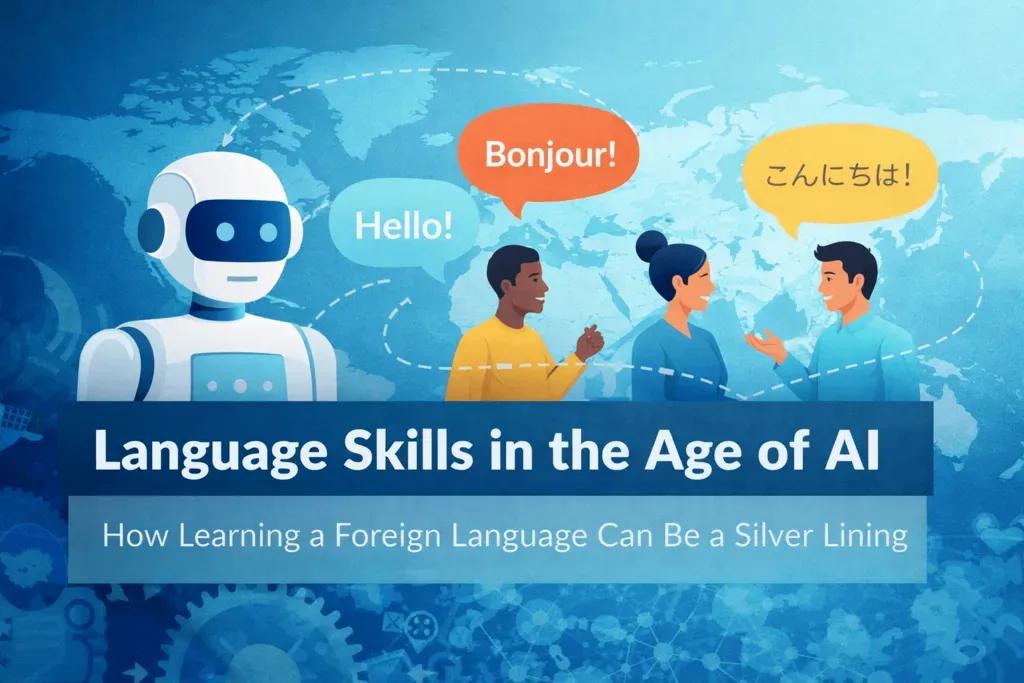
Artificial intelligence is rapidly transforming industries across the world. From automated customer support to AI-driven data analysis, technology is reshaping the way people work and communicate. Many professionals worry about job security as automation becomes more capable each year. Yet, amid this transformation, one skill continues to hold strong value: the ability to communicate in multiple languages.
While AI tools can translate text instantly, learning a foreign language remains a powerful human advantage. In fact, language skills may become even more important in the AI era because they combine communication, cultural intelligence, and human understanding—qualities machines cannot fully replicate.
AI Can Translate Words, But Not Human Meaning
Artificial intelligence has made impressive progress in language processing. Modern translation systems can convert emails, documents, and web pages into multiple languages within seconds. These tools help people communicate across borders more easily than ever before.
However, language is much more than vocabulary and grammar. It also includes cultural context, emotions, tone, and subtle meanings that technology often struggles to capture. Experts note that AI systems still face difficulties with idioms, cultural nuance, and contextual interpretation. Even advanced systems can misinterpret the tone of a conversation or the intent behind certain phrases.
Human language skills remain essential for activities such as negotiations, business meetings, diplomacy, and relationship building. In these situations, understanding cultural context and emotional tone is often more important than simply translating words.
The Human Advantage in a Global Economy
The modern economy is increasingly international. Businesses collaborate with partners, customers, and employees across different countries and cultures. As companies expand globally, the demand for professionals who can communicate across linguistic and cultural boundaries continues to grow.
Foreign language skills enable professionals to interact more effectively with international clients, understand cultural expectations, and build trust in business relationships. These abilities are difficult for machines to replicate because they depend on human empathy and social awareness.
Many global employers view multilingual professionals as valuable assets because they can bridge cultural gaps and help organizations operate smoothly across different regions. Studies also show that language skills improve communication abilities and open new career opportunities in global markets.
AI and Language Learning: A Complement, Not a Replacement
Interestingly, artificial intelligence is not only transforming jobs—it is also transforming education. AI-powered learning platforms can now provide personalized lessons, real-time feedback, and interactive exercises for language learners. These tools make language learning more accessible and flexible than ever before.
Instead of replacing language learning, AI may actually encourage more people to learn new languages. By providing pronunciation practice, vocabulary training, and conversational simulations, AI tools help learners develop their skills more efficiently.
However, technology is most effective when combined with human instruction and real-world practice. True fluency requires the ability to think, respond, and interact naturally in social situations—skills that develop through experience and human interaction.
Career Opportunities in Multilingual Professions
In an AI-driven economy, many routine tasks may become automated. However, jobs that require complex communication, cross-cultural collaboration, and human judgment will remain valuable.
Foreign language skills can open doors to careers in international business, diplomacy, tourism, education, global marketing, and multinational corporations. Even in technology companies, professionals who understand multiple languages can work with global teams and international clients.
For example, professionals who speak German can access opportunities in engineering, automotive industries, and European business markets. Learners interested in German can explore structured training through programs like.
Cultural Intelligence: A Skill AI Cannot Replicate
Another reason language learning remains valuable is cultural intelligence. When people learn a new language, they also learn about traditions, history, communication styles, and social norms of another culture.
This cultural awareness allows individuals to build stronger relationships and navigate international environments more effectively. AI tools can translate words, but they cannot fully understand the cultural background that shapes communication.
In international business, diplomacy, and global collaboration, cultural understanding often determines the success of negotiations and partnerships.
Preparing for the Future
Artificial intelligence will undoubtedly continue to transform the global workforce. Some tasks will become automated, and new roles will emerge. However, the most resilient professionals will be those who combine technical knowledge with human skills.
Language learning is one of the most powerful ways to build these human skills. It improves communication, expands cultural awareness, and opens access to international opportunities. Rather than competing with AI, multilingual professionals can use technology as a tool while maintaining the human abilities that machines cannot replace.
Conclusion
The rise of artificial intelligence may seem intimidating at first, but it also creates new opportunities. Learning a foreign language can be a silver lining in the AI era because it strengthens uniquely human capabilities such as communication, cultural understanding, and relationship building.
In a world where technology continues to evolve, the ability to connect with people across cultures will remain one of the most valuable skills anyone can develop.