


How to Become a Dermatologist
The Reality Check
“Everyone thinks dermatology is chill. It’s not chill to get into.” If we’re being honest with each other, derm is one of the most competitive matches in medicine. You don’t stumble into it. You plan early, you stay consistent, and you don’t give programs a reason to doubt your commitment.
Med School Is the Filter
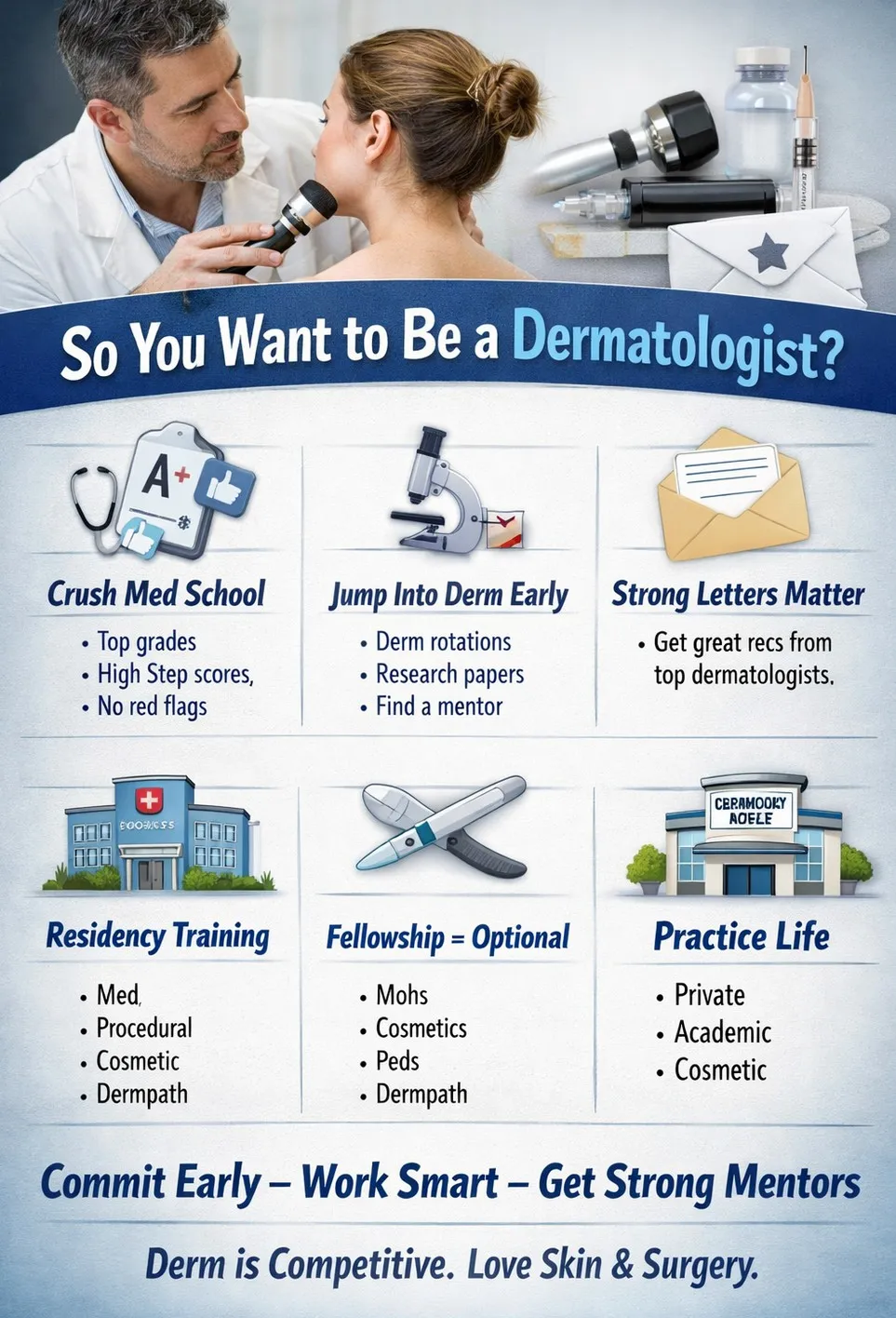
“Derm starts selecting you before residency applications even open.” Grades matter. Clinical evals matter. Professionalism matters more than people admit. You don’t need to be flawless, but you can’t be sloppy. If you’re average early on, you have to show a strong upward trend. No shortcuts here.
You Have to Show You Actually Like Skin
“Programs can smell a lifestyle-chaser from a mile away.” Do derm rotations early. Work in clinics. Sit with attendings and learn pattern recognition. If your CV suddenly screams ‘derm’ in fourth year only, that’s a red flag. Long-term interest beats last-minute enthusiasm every time.
Mentors Open Doors
“One good mentor can change your entire application.” You need dermatologist who knows you well enough to vouch for you without hesitation. A strong letter that says, “I would train this person without question,” carries more weight than almost anything else. Big names help, but credibility and honesty help more.
Research Is the Currency
“You don’t need a Nobel Prize, but you need receipts.” Case reports, chart reviews, posters, publications—it all counts. Derm is academic by nature, even if you plan on private practice. Research shows discipline, follow-through, and real interest in the field.
Residency Is Where You’re Forged
“Derm residency is lighter on call, heavier on expectations.” You’ll learn medical dermatology, procedures, cosmetics, dermpath fundamentals, and how to think visually and diagnostically. The learning curve is real. The good programs expect you to grow fast and stay sharp.
Fellowship Is a Choice, Not a Requirement
“Fellowship should solve a problem, not delay real life.” Mohs, mole removal, cosmetics, pediatrics, dermpath—do it if you want a niche or academic leverage. Skip it if your goal is general or hybrid practice. Plenty of excellent dermatologists never do a fellowship.
Practice Looks Different for Everyone
“There’s no single ‘derm life’ anymore.” Private practice, employed models, academics, cosmetics-heavy clinics, mixed medical-aesthetic setups—it’s flexible if you build it right. Lifestyle can be great, but only if you like the work itself.
Final Word
“If you love skin, procedures, and long-term patients, derm is worth the fight.” If you’re chasing hours or income alone, you’ll burn out or regret it. Dermatology rewards commitment, consistency, and genuine interest. The path is hard, but the specialty is solid—if it fits you.
If you want, I can rewrite this from a resident’s POV, an academic attending’s angle, or tailor it for a dermatology clinic blog or med student guide.