

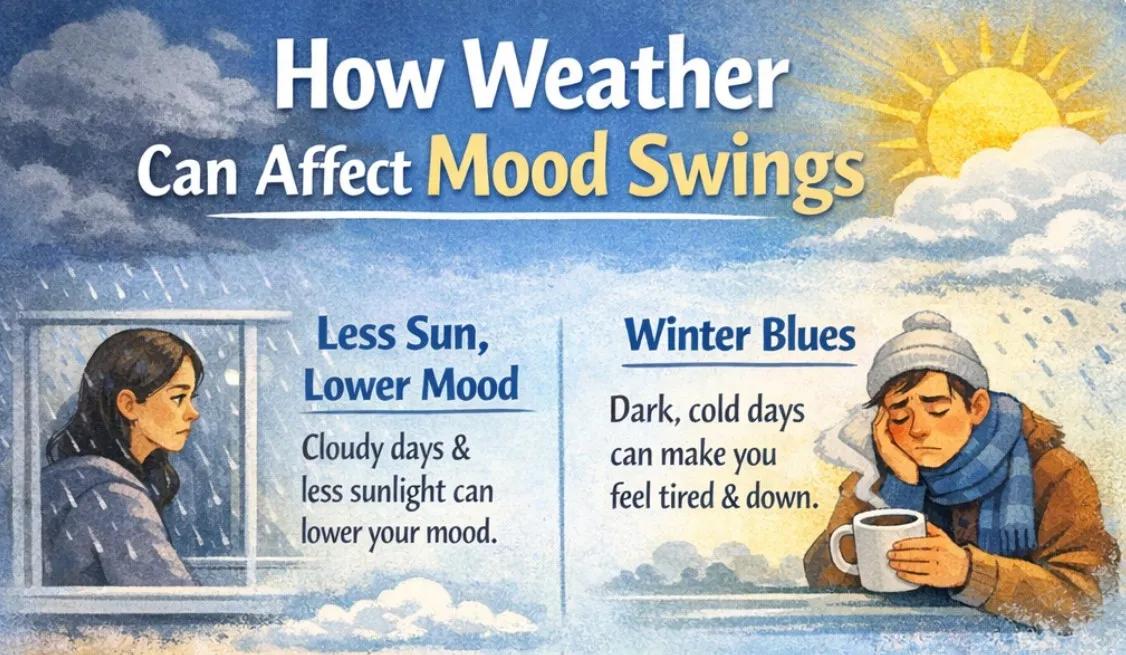
How Weather Can Affect Mood Swings
Most people don’t realize how much the weather can influence their mood. One day you feel fine, the next you’re tired, irritable, or emotionally drained — and often, the weather is playing a role.
Less Sun, Lower Mood
Sunlight helps regulate serotonin, the chemical in the brain that supports emotional balance. During cloudy days and shorter winter daylight hours, serotonin levels can drop.
This is why many people feel more tired, sad, or unmotivated in the winter.
Wintertime Example: Why January Feels Harder
Think about a typical winter day. You wake up while it’s still dark, spend most of the day indoors, and by the time work is over, the sun is already gone. Over time, this lack of natural light can affect sleep, energy levels, and mood.
Many people notice they become more irritable, emotionally sensitive, or withdrawn during the winter months — even if nothing else in their life has changed.
For some, this can turn into seasonal mood changes or even Seasonal Affective Disorder (SAD), where low mood, fatigue, and lack of motivation appear almost every winter.
Cold Weather Can Affect Motivation
Cold temperatures often reduce physical activity and social interaction. People tend to stay home more, move less, and break routines that normally help regulate mood. Less movement and less social contact can quietly increase stress and emotional ups and downs.
Sleep Disruption Makes Mood Swings Worse
Winter weather in Ukraine can also interfere with sleep patterns. Longer nights, less daylight, and staying indoors more often can throw off the body’s internal clock. Poor or irregular sleep makes mood swings more intense and harder to control.
Pressure Changes and Emotional Sensitivity
Rapid weather changes — like winter storms or sudden drops in air pressure — can cause headaches, fatigue, brain fog, or anxiety in sensitive individuals. These physical symptoms often show up as emotional irritability or mood swings.
Why Some People Feel It More Than Others
People who already deal with stress, anxiety, depression, or hormonal changes may feel winter-related mood shifts more strongly. The weather doesn’t create the problem — it often amplifies what’s already there.
Small Habits That Help During Winter
Getting outside during daylight hours, even briefly, can help. Keeping a consistent sleep schedule, staying active indoors, and maintaining social connections all make a difference. Light therapy, movement, and simple routines can go a long way during darker months.
Winter can be tough, but understanding how weather affects mood helps make those changes feel less confusing — and more manageable.