

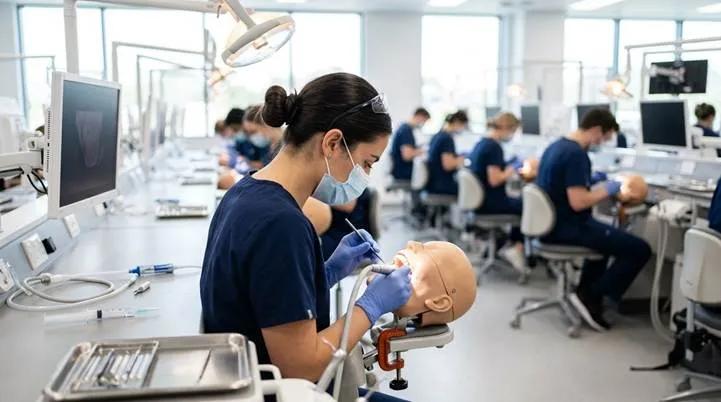
Modern dental education combines hands-on practice with advanced simulation technology.
Becoming a dentist is a tough path. It takes a lot of time, money, and effort. Many future students think about the high cost versus the good job security. But the old idea of a dentist is changing. It's about more than just drills and x-rays now.
The field is changing in a big way. This is because of new technology and a better understanding of how mouth health affects overall body health. This change affects how students learn and improves the care patients get. The career outlook is still strong. The U.S. Bureau of Labor Statistics expects 6% job growth and a median yearly pay of $176,110. However, the skills needed to succeed are changing fast. A modern school of dentistry is a center for technology and total health, not just a place to learn old skills.
Choosing a school is about more than learning to do fillings and crowns. It means learning to use digital tools, work with other health experts, and help all kinds of patients. Understanding this change is the first step to making a smart choice that will affect your whole career.
❝ Quick answer: Today’s dental education is more than just learning old skills. It includes digital tools like 3D modeling, teamwork with other medical experts, and real experience in community clinics. Choosing the right school means looking past its name to see how well it gets you ready for the future of dentistry.
What's inside
· What Is the True Cost vs. Financial Outlook?
· How Do Dental Schools Impact Community Health?
· What Should You Look for in a Modern Curriculum?
· Frequently Asked Questions About Dental Education
· Beyond the Degree: Choosing a Path, Not Just a Program
What Is the True Cost vs. Financial Outlook?
Going to dental school costs a lot of money, but the career is stable and offers a high salary. Future students must think carefully about the high costs versus how much they can earn later. This cost is more than just tuition. It includes living expenses, equipment fees, and the money you could have earned working for four years.
It is important to understand how big this debt can be. According to a 2024 survey by the American Dental Education Association (ADEA), about 80% of 2024 dental graduates had education debt, and those with debt owed an average of $312,700. This debt has a big effect on career choices, such as which specialty to choose and whether to own a practice or join a group. This money pressure is a real issue that often shapes the first 10 years of a dentist's career.
On the other hand, dentistry provides a steady and high income. The U.S. Bureau of Labor Statistics reports a median yearly pay of $176,110 for dentists, but this figure can vary. For instance, income often increases when a dentist specializes in advanced fields like orthodontics or oral surgery. These specialties, learned in advanced programs offered by a school of dentistry, involve more complex dental treatment and command higher fees. Where you work and whether you own the practice also affect your pay.
❝ When looking at a school's cost, ask about the careers of its graduates. Compare how many go into specialty programs versus how many become general dentists. A more expensive school might be worth it if it helps graduates get into high-paying specialty programs. This can help you pay back loans faster and earn more over your lifetime.
In the end, the choice is up to you. While the debt is large, the job is very stable and pays better than many in healthcare. It is important to look past the listed tuition price and make a real financial plan that matches your future goals, whether that means working in a public health clinic or building a large private practice.
How Do Dental Schools Impact Community Health?
Dental schools are often a main source of low-cost dental care for people in need through their clinics. These schools have two goals: to train new dentists and to serve the public. This system creates a special healthcare setting where students provide needed care to the community as part of their training. By treating patients to meet their graduation rules, students offer a great service at a much lower cost.
Care is usually offered at different levels. Understanding them can help you know your options.
· Student Clinics: Here, dental students do basic work like exams, cleanings, fillings, and crowns. Every step, from the first plan to the final check, is carefully watched and approved by licensed teachers.
· Resident Clinics: These clinics are run by licensed dentists who are getting special training in one area. You will find residents in fields like endodontics (root canals), prosthodontics (dentures and implants), and oral surgery. They handle tougher cases with help from expert teachers.
· Faculty Practices: Many schools also have clinics where teachers treat patients. These practices work like a private office, often charge normal prices, and let you get care from top experts in the field.
❝ When thinking about a student clinic, ask about appointment times. A two-hour visit for one filling may seem long, but it includes many quality checks by teachers. This close watch is a special benefit that makes sure you get high-quality care.
A school's effect on the community goes beyond its campus. Many schools run mobile dental vans that visit schools, nursing homes, and neighborhoods in need. They often team up with public health groups for free check-ups, which help find problems like oral cancer early. These programs are key for connecting people with a regular dentist and fixing issues before they get worse. This relationship helps everyone: communities get care they might have skipped, and students get useful real-world experience.
What Should You Look for in a Modern Curriculum?
A modern dental school program must do more than teach hands-on skills. It must get graduates ready for a fast-changing career. Look for programs that include digital tools, focus on teamwork with other health experts, and are based on proven science. These three key parts make modern training different from older, skill-based models.
Digital dentistry is no longer an extra class. It should be a key part of all classes. Students should use intraoral scanners to take digital pictures of teeth, which are more accurate and comfortable for patients than old physical molds. They should get good at using CAD/CAM systems to design and make things like crowns in just one visit. Training should also include 3D modeling to plan difficult cases, like placing implants and doing surgery. The goal is to become skilled in the whole digital process, from the first patient scan to the final crown or filling.
A school's focus on teamwork with other health experts is just as important. It teaches students from different health fields to work together well. The link between mouth health and body-wide problems like diabetes, heart disease, and Alzheimer's is well-known. A modern program shows this by having dental students work with medical, nursing, and pharmacy students. This is more than just a shared class. It means teams work together to create complete care plans for patients.
❝ Ask how a school includes teamwork with other health students. Is it just one class, or are there real chances to work together on patient cases with other health students? The answer shows if teamwork is a key value for the school.
Finally, the program must be based on solid research. This teaches students how to carefully study new research to find the best treatments, materials, and tools. The field is always changing, and a new dentist will see many new developments in their career. A good education should teach you how to think, not just what to do. This prepares you to use new science in your practice for years.
Frequently Asked Questions About Dental Education
How long does it take to become a dentist? Becoming a dentist usually takes eight years of college and university after high school. This includes a four-year bachelor's degree with certain science classes, then four years of dental school to earn a Doctor of Dental Surgery (DDS) or Doctor of Dental Medicine (DMD) degree. To become a specialist, you need two to six more years of training after dental school.
Is there a difference between a DDS and a DMD degree? No, there is no difference in their skills or training. Graduates with either a DDS or a DMD have passed the same national exams and must meet the same tough rules to get a license. The degree they get just depends on the university's tradition.
Do dental schools offer free dental work? Dental schools provide care at a much lower cost, but it is usually not free. The fees help pay for materials, lab work, and clinic equipment. This system makes care more affordable while keeping the clinic safe and professional.
Can you get advanced treatments like dental implants at a school? Yes, most dental schools offer many advanced services, including dental implants, root canal therapy, and difficult oral surgery. These are often done in resident clinics by licensed dentists who are training in a specialty while being watched closely by expert, certified teachers.
What is the long-term career outlook for dentists? The career outlook for dentists is very strong. The U.S. Bureau of Labor Statistics expects 6% job growth, which is faster than the average for all jobs. This demand is driven by an older population and more research that connects mouth health to overall body health.
Beyond the Degree: Choosing a Path, Not Just a Program
Choosing a dental school is a choice that is about more than just cost or the type of degree. The choice now depends on things that will deeply affect a graduate's career. A top program gets you ready for the business side of dentistry, teaches you to use new technologies, and makes your role in the larger healthcare system clear. It is an investment in your future ability to change and succeed, not just your current skills.
You can spot a modern school by its classes. Does it include digital tools from the start? Does it give you real chances to work with medical students? These things are no longer optional. They are the base for giving complete, modern patient care.
The main goal is to find a program that teaches you how to think, not just what to do. The skills and tools you learn will definitely change over your career. The ability to study new research, use new tools, and understand a patient's total health is what will keep your practice successful and shape your career.