

Image source: freepik
Key Takeaways
Anyone can begin Quran reading learning in 2026—children, adults, and seniors—using clear step-by-step methods both online and in person with qualified teachers.
Three pillars drive progress: mastering the Arabic alphabet, learning essential tajweed rules, and maintaining consistent daily practice (15–20 minutes).
One-to-one online Quran classes with certified male or female tutors offer flexible scheduling for families worldwide, including the UK, USA, and Canada.
Beginners usually progress from primers such as Noorani Qaida or Noor Al Bayan to short surahs from Juz’ Amma, then onward to full Quran recitation with tajweed.
This guide provides a clear action plan, learning roadmap, and FAQs addressing age, pace, and time commitment.
Why Quran Reading Learning Matters for Every Muslim
Connecting with the words of Allah by reading the Quran in Arabic is a deeply meaningful act of worship. From the time of the Prophet Muhammad ﷺ in 7th-century Arabia, Muslims have preserved this tradition by teaching Quran recitation from one generation to the next. More than fourteen centuries later, that connection remains just as essential.
Quran reading learning is not limited to children attending weekend classes at the masjid. In 2026, adults across the world are starting—or restarting—their Quran journey through structured online programs and supportive teachers. Whether you heard Quran recitation growing up but never learned to read, or you are a revert encountering the Quran for the first time, modern learning paths make this goal achievable for everyone.
The well-known hadith, “The best of you are those who learn the Qur’an and teach it,” highlights the honor of studying the Quran. Beyond reward, practical benefits follow naturally: stronger focus (khushūʿ) in salah, confidence reciting Surah Al-Fātiḥah and other daily surahs without transliteration, and a stronger Islamic identity within the family—especially when parents and children learn together.
With that purpose in mind, let’s explore exactly how to begin.
How to Start Quran Reading Learning as a Complete Beginner
Most beginners start with a foundational reading curriculum before reading directly from the Mushaf. Structured primers such as Noorani Qaida or Noor Al Bayan build skills gradually and remove confusion.
Stage One: Recognising Arabic Letters
You begin by learning the Arabic letters from alif to yā’, both in isolation and in connected forms. This stage focuses on visual recognition and understanding how letters change shape at the beginning, middle, or end of a word.
Stage Two: Vowels and Letter Joining
Next, you learn short vowels (fatḥah, kasrah, ḍammah), sukūn, tanwīn, and shaddah. You practice joining letters into short words and sounding them out correctly. At this point, Arabic starts to feel readable rather than symbolic.
Daily Practice Matters
A short daily habit is far more effective than long, irregular sessions. Fifteen minutes every day—perhaps after Fajr or before ʿIshāʾ—creates steady progress. Consistency always outweighs intensity.
Setting Realistic Goals
A sensible early target is the ability to read basic Quranic words from Juz’ Amma within three to four months. Adjust expectations based on your schedule and prior exposure.
Quran Reading Learning for Children
Many children are ready to begin Quran reading between ages 4 and 6, though readiness matters more than age. Some children flourish early, while others benefit from waiting until they can focus comfortably.
Children’s programs usually start with colorful Qaida books, repetition, and interactive activities. Lessons are designed to feel engaging rather than overwhelming.
Lesson Structure
Short, frequent lessons work best—10 to 20 minutes, three to five times per week. This prevents burnout and helps children associate Quran learning with positive experiences.
The Role of Parents
Even with a teacher, parental involvement is vital. Listening to practice, encouraging effort, and showing interest signals that Quran learning is a family priority.
Expected Progress
With consistency, many children can fluently read short surahs such as Al-Ikhlāṣ, Al-Falaq, and An-Nās within six to nine months—an important confidence boost.
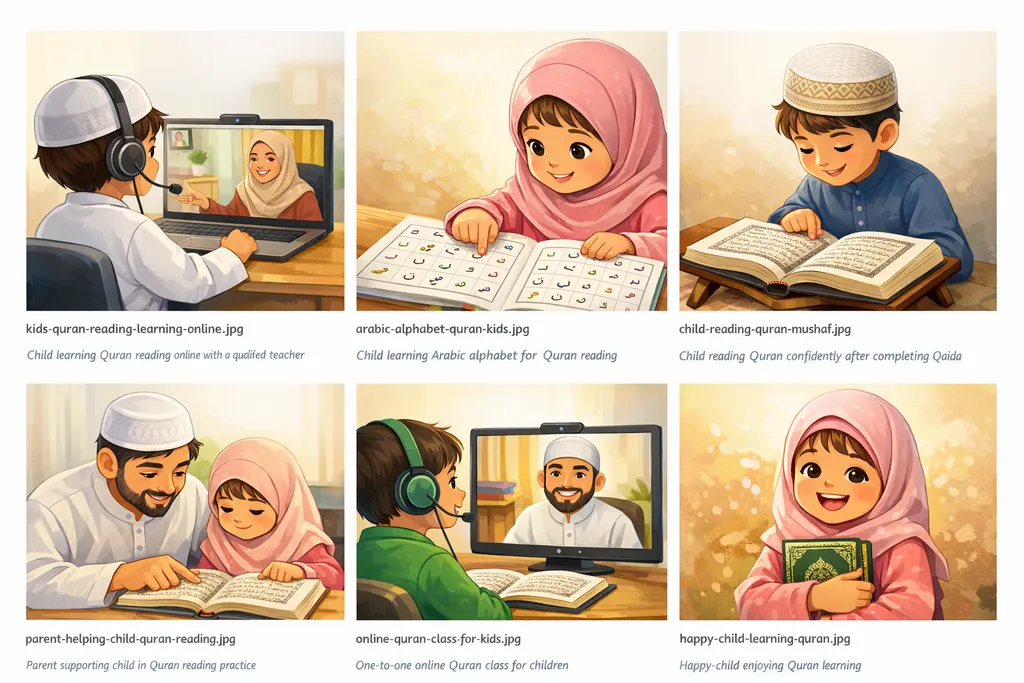
Choosing Safe and Effective Online Quran Classes for Kids
When selecting online Quran classes for children, look for the following:
Qualified teachers with formal Quranic study and experience teaching children
One-to-one lessons for personalised correction and pacing
Screen sharing to follow Qaida or Mushaf pages together
Flexible scheduling for families in the UK, USA, and Canada
Trial lessons to assess rapport and teaching style
Secure platforms with safe, password-protected sessions
This checklist helps parents make confident, informed decisions quickly.
Quran Reading Learning for Adults
Adults of all ages successfully learn Quran reading every year. Whether you are restarting after a long gap or beginning for the first time, modern learning methods make the journey realistic and supportive.
The Typical Adult Path
Adults usually progress quickly through the alphabet, then move on to short surahs from Juz’ Amma before tackling longer passages. Many also study translation alongside recitation to deepen understanding.
Common Challenges
Adults often struggle with embarrassment, lack of time, or past negative learning experiences. Online one-to-one classes help overcome these barriers by offering privacy, flexibility, and patient instruction.
Tracking Progress
Monthly milestones keep motivation high—for example:
Month 1: Full letter and vowel recognition
Month 2: Reading simple words and phrases
Month 3: Independent recitation of several short surahs
Seven Practical Steps to Master Quran Reading as an Adult
Master the Arabic alphabet in all its forms and articulation points.
Learn basic tajweed gradually, applying rules as you encounter them.
Begin with familiar short surahs like Al-Fātiḥah and Al-Ikhlāṣ.
Commit to daily recitation (15–20 minutes) plus listening practice.
Study with a qualified teacher, even once a week.
Shadow expert reciters by listening and repeating verse by verse.
Connect recitation to meaning through simple translation or tafsir.
Mistakes are part of learning. The effort itself carries great reward.
Course Structure: From Qaida to Fluent Quran Reading
Most programs follow four clear stages:
Foundation (2–6 months): Letters, vowels, joining, and basics
Beginner (3–6 months): Short surahs with applied tajweed
Intermediate (6–12 months): Longer surahs, smoother flow
Advanced (ongoing): Full Quran recitation, refined tajweed, reflection
Each stage builds naturally on the one before it.
Online vs. In-Person Quran Reading Learning
Online Learning Benefits
Access to global teachers
Flexible scheduling
Learn from home
Often includes recorded sessions
In-Person Learning Benefits
Clear observation of mouth movements
Community atmosphere
Structured classroom focus
Choose the method that supports consistency and correct tajweed feedback. Many learners combine both.
Staying Motivated and Overcoming Difficulties
Common challenges include confusing similar letters, slow progress, and busy schedules. Helpful strategies include setting small daily goals, recording your recitation, and celebrating milestones like completing your Qaida or first juz’.
Consistency over time always wins.
Frequently Asked Questions
How long does it take to learn Quran reading from scratch? Most learners take 6–12 months with regular study and a teacher.
Do I need to know Arabic first? No. Quran reading starts from the alphabet and builds up gradually.
Should I memorise or learn reading first? Reading with tajweed should come first; memorisation becomes easier afterward.
Can apps replace a teacher? Apps help, but a teacher is essential for correcting pronunciation accurately.
Is it too late to start as an adult? Never. Many learners begin later in life and progress beautifully.
Final Thoughts
Choosing to begin Quran reading learning is a powerful step toward spiritual growth. Whether you’re guiding your child or fulfilling a personal goal you’ve held for years, the path is clear: start with the basics, practise consistently, learn with a qualified teacher, and trust the process.
Begin with just 15 minutes today. In shā’ Allāh, you’ll look back with gratitude on the journey you started.