

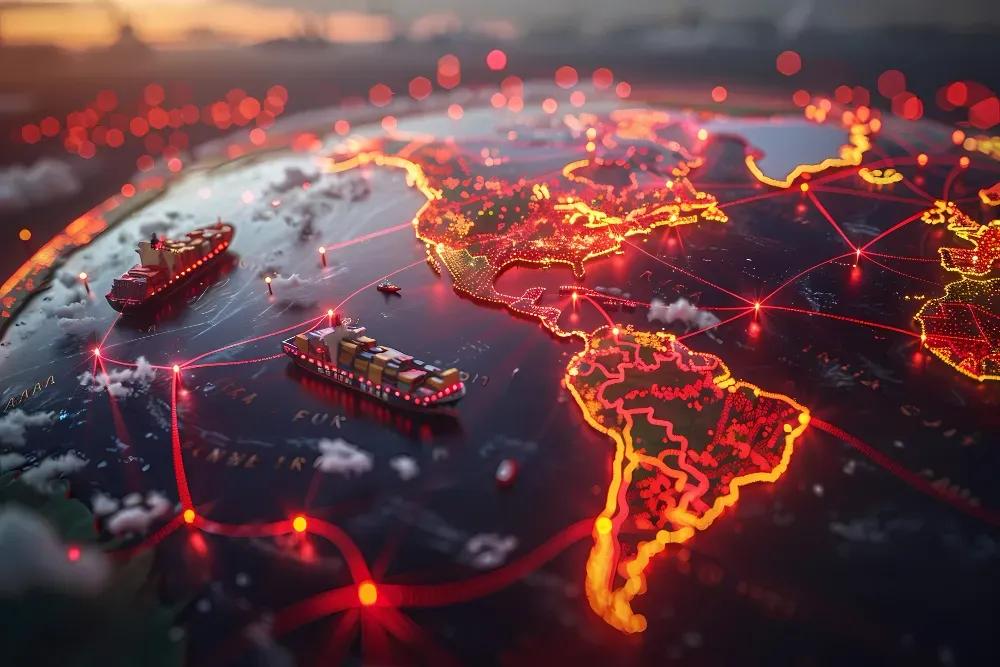
Image source: freepik
Introduction to the Global Shipping Industry
The global shipping industry is the backbone of international trade. It enables the movement of raw materials, finished goods, food, fuel, and essential commodities across continents. Around 80 to 90 per cent of global trade by volume is carried by sea, making maritime shipping one of the most critical components of the modern economy.
From container vessels transporting consumer goods to bulk carriers delivering coal, grain, and minerals, shipping connects producers and consumers across vast distances. Without it, globalisation as we know it would not exist. However, in an increasingly uncertain world shaped by political instability, economic rivalry, and regional conflicts, maritime shipping is facing growing challenges.
Understanding how geopolitical tensions influence global shipping is essential for businesses, policymakers, and consumers alike. This article explores the role of maritime shipping in global trade, the strategic importance of key routes, and how the industry is adapting to a more volatile geopolitical landscape.
Overview of Maritime Shipping in Global Trade
Maritime shipping plays a foundational role in enabling global commerce. It offers a cost-effective and efficient way to transport large volumes of goods over long distances. Compared to air freight, shipping is significantly more economical, making it the preferred option for bulk and non-urgent cargo.
The industry supports a wide range of sectors including manufacturing, agriculture, energy, and retail. Everything from electronics and clothing to oil and liquefied natural gas relies on maritime transport at some stage in the supply chain.
Ports serve as vital hubs in this ecosystem, facilitating the transfer of goods between ships, trucks, and rail networks. Major ports such as Shanghai, Singapore, and Rotterdam act as gateways to regional and global markets, ensuring the smooth flow of trade.
The importance of maritime shipping is also reflected in its economic contribution. According to insights highlighted in this article on the importance of the shipping industry on the UK economy, the sector supports millions of jobs and contributes significantly to national GDP through trade facilitation, logistics, and related services.
Key Shipping Routes and Their Strategic Importance
Global trade depends heavily on a network of key maritime routes that connect major economic regions. These routes are not only vital for commerce but also hold immense strategic and geopolitical significance.
Some of the most important shipping routes include:
The Strait of Hormuz
This narrow passage between the Persian Gulf and the Gulf of Oman is one of the world’s most critical oil transit chokepoints. A significant portion of global oil supply passes through this route, making it highly sensitive to regional tensions.
The Suez Canal
Connecting the Mediterranean Sea to the Red Sea, the Suez Canal provides a direct route between Europe and Asia. It significantly reduces travel time compared to circumnavigating Africa. Disruptions here can have immediate global consequences, as seen during the Ever Given blockage in 2021.
The South China Sea
This region is a major artery for global trade, with trillions of dollars worth of goods passing through annually. It is also a hotspot for territorial disputes, making it a focal point for geopolitical tensions.
The Panama Canal
Linking the Atlantic and Pacific Oceans, the Panama Canal is essential for trade between the Americas and Asia. It plays a key role in reducing shipping times and costs.
These routes are not just economic lifelines but also geopolitical flashpoints. Control, access, and security of these corridors are often at the centre of international disputes.
How Geopolitical Tensions Affect Maritime Trade
Geopolitical tensions can significantly disrupt maritime shipping operations, leading to delays, increased costs, and supply chain uncertainty.
Trade Restrictions and Sanctions
Governments may impose sanctions or trade restrictions on certain countries, limiting the flow of goods. This can force shipping companies to reroute vessels, find alternative suppliers, or halt operations altogether.
Armed Conflicts and Security Risks
Conflicts in key regions can pose direct threats to vessels and crews. Piracy, naval blockades, and military activity increase the risk of attacks and accidents. Shipping companies must invest in security measures and may avoid high-risk areas entirely.
Port Disruptions
Political instability can lead to strikes, port closures, or reduced operational capacity. This creates bottlenecks and delays in cargo handling, affecting global supply chains.
Rising Insurance and Operational Costs
Shipping through high-risk areas often requires additional insurance coverage, which increases costs. Fuel prices may also rise due to geopolitical uncertainty, further impacting shipping expenses.
Supply Chain Volatility
Geopolitical events can disrupt the availability of goods, leading to shortages or price fluctuations. For example, tensions affecting energy exports can have a ripple effect across multiple industries.
For a broader perspective on global shipping dynamics and logistics challenges, this guide on shipping without borders - the ultimate guide to worldwide parcels offers valuable insights into international shipping processes and considerations.
The Role of Maritime Shipping in Global Trade
Despite these challenges, maritime shipping remains indispensable to global trade. Its role extends beyond transportation to supporting economic stability and resilience.
Enabling Global Supply Chains
Shipping connects producers and consumers across continents, allowing businesses to source materials and sell products internationally. It supports just-in-time manufacturing and global distribution networks.
Supporting Economic Growth
By facilitating trade, maritime shipping contributes to economic development and job creation. Developing countries, in particular, rely on shipping to access global markets and grow their economies.
Ensuring Energy Security
A large portion of the world’s energy resources, including oil and gas, is transported by sea. Reliable shipping routes are essential for maintaining energy supply and preventing shortages.
Enhancing Trade Efficiency
Advancements in vessel design, port infrastructure, and logistics technology have improved the efficiency of maritime shipping. Larger ships and automated ports reduce costs and increase capacity.
Adapting to Challenges
The industry is continuously evolving to address geopolitical risks. Shipping companies are diversifying routes, investing in risk management, and leveraging technology to enhance resilience.
Future Outlook for Maritime Shipping Amid Global Tensions
Looking ahead, the maritime shipping industry is expected to face ongoing geopolitical challenges. However, it is also well-positioned to adapt and innovate.
Diversification of Trade Routes
Countries and companies are exploring alternative routes to reduce reliance on high-risk routes. For example, Arctic shipping routes are gaining attention as ice melts due to climate change, although they come with their own risks and environmental concerns.
Digital Transformation
Technology is playing a key role in mitigating risks. Real-time tracking, predictive analytics, and AI-driven logistics planning help companies respond quickly to disruptions.
Strengthening International Cooperation
Global organisations and governments are working to ensure the safety and stability of maritime trade. Collaborative efforts aim to address piracy, enforce maritime laws, and maintain open shipping lanes.
Sustainability and Regulation
Environmental regulations are shaping the future of shipping. The industry is investing in cleaner fuels, energy-efficient vessels, and sustainable practices to meet global climate goals.
Resilience and Risk Management
Shipping companies are placing greater emphasis on resilience. This includes diversifying suppliers, building buffer inventories, and developing contingency plans for geopolitical disruptions.
Conclusion
Maritime shipping is a cornerstone of global trade, enabling the movement of goods and supporting economic growth worldwide. While geopolitical tensions present significant challenges, the industry continues to adapt through innovation, diversification, and collaboration.
Understanding the interplay between geopolitics and maritime trade is essential for navigating today’s complex global landscape. As the world becomes more interconnected, the resilience and adaptability of the shipping industry will be more important than ever.
Frequently Asked Questions
How do geopolitical tensions affect maritime shipping?
Geopolitical tensions can disrupt shipping routes, increase security risks, and lead to trade restrictions or sanctions. These factors can cause delays, higher costs, and supply chain instability.
Which regions are most affected by shipping disruptions?
Key regions include the Middle East, particularly the Strait of Hormuz, the South China Sea, and major canals such as the Suez and Panama. These areas are strategically important and often subject to political or military tensions.
Can technology help mitigate geopolitical risks in shipping?
Yes, technology plays a crucial role. Tools such as real-time tracking, data analytics, and automated logistics systems help shipping companies anticipate disruptions, optimise routes, and improve overall resilience in the face of geopolitical uncertainty.