

After a war that devastated much of the world, countries look for ways to mark the moment, to signal that something genuinely different has begun. Monuments get built, ceremonies get held, and sometimes, in a much smaller and more personal way, an ordinary object gets asked to carry that same symbolic weight.
That's an unusual job for a coin. Currency typically exists for purely practical reasons, moving through commerce without carrying any particular emotional message. Turning a coin into a symbol of national hope required a very different kind of thinking, one focused on meaning rather than pure function.
The 1922 Peace Dollar grew directly out of that ambition. Conceived in the years following World War I, it attempted something coins rarely try, compressing an entire nation's optimism about the future into a small silver surface meant for everyday circulation.
The Coin Was Born in the Shadow of a World War
World War I left the country and much of the world grappling with loss on a scale few had experienced before. In that environment, numismatists and officials began pushing for a coin that could commemorate peace directly rather than simply continuing existing designs without acknowledgment.
That idea gained traction relatively quickly given the emotional weight behind it. A design competition followed, inviting artists to submit concepts that could capture something as abstract as national hope within the practical constraints of coin production. Few design briefs carry that kind of symbolic pressure.
The resulting coin wasn't meant to replace existing silver dollars for purely functional reasons. It was meant to say something, marking a specific historical moment through imagery rather than through any change in the coin's actual monetary function or denomination.
Liberty Looked Toward a Different Future
Anthony de Francisci won the competition, and his Liberty portrait departed noticeably from earlier, more classical interpretations. His design felt more contemporary, more forward-looking, moving away from rigid historical formality toward something that read as genuinely hopeful rather than simply traditional.
That artistic choice mattered given the coin's purpose. A backward-looking, classical Liberty might have suited earlier coinage just fine, but this particular moment called for something that felt like it belonged to a new era rather than echoing designs from decades before the war even began.
De Francisci's approach succeeded in giving the coin a distinct visual identity within the broader history of American silver dollars. It doesn't look like earlier Liberty designs, and that difference was entirely intentional, reflecting the specific historical moment the coin was created to represent.
An Eagle Watched the Sunrise
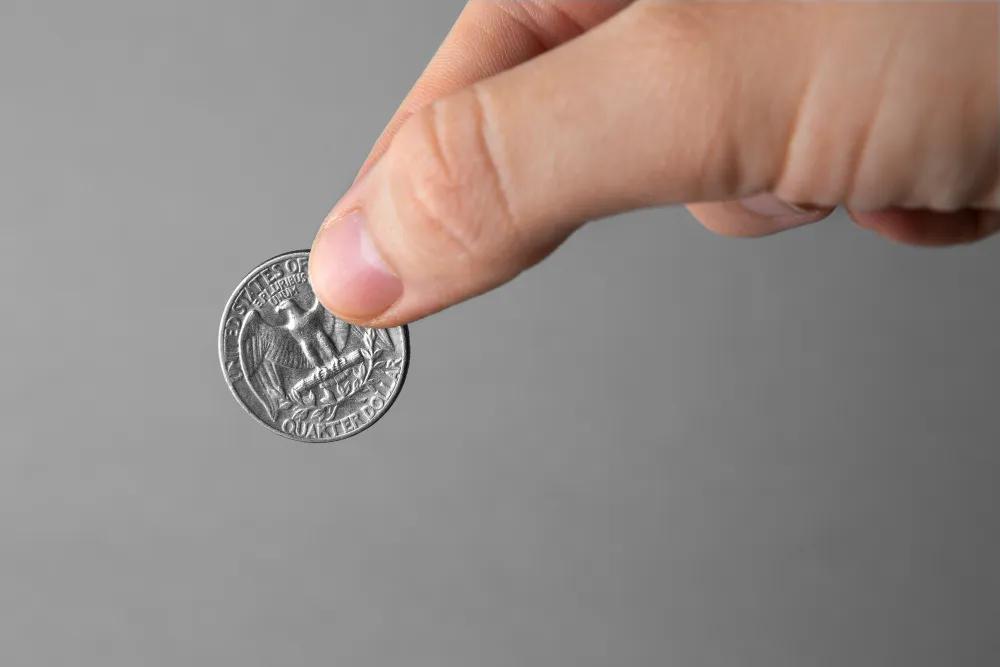
The reverse carries just as much symbolic weight as the obverse. An eagle sits perched on a mountain, watching rays of a rising sun, with the word "PEACE" placed directly beneath. Every element was chosen deliberately to communicate optimism rather than simply filling space with standard eagle imagery.
That sunrise imagery wasn't accidental. Rising suns commonly symbolize new beginnings, and pairing that image with the word "PEACE" made the coin's message about as direct as coin design allows. Few American coins state their intended meaning quite this openly through imagery and text combined.
It's a lot of symbolic weight for such a small surface to carry. Yet the design manages to communicate its intended message clearly, giving the reverse a sense of purpose beyond typical decorative eagle imagery found on other American coinage from surrounding decades.
1922 Turned the Peace Dollar Into a Mass-Minted Coin
The very first Peace dollars, struck in 1921, used exceptionally high relief that gave the design remarkable sculptural depth. That depth came at a cost, though. High relief designs wear dies down quickly and slow production, making large-scale minting genuinely impractical over time.
By 1922, officials adjusted the design to lower relief, sacrificing some sculptural drama in exchange for practical, sustainable production. That change allowed the coin to be struck in enormous quantities, and 1922 became a massive mintage year as a direct result of that adjustment.
That shift makes 1922 particularly significant within the series. It represents the moment the Peace dollar transitioned from a limited artistic statement into a genuinely circulating coin, produced at a scale the original 1921 design simply couldn't have supported.
Conclusion
Few coins attempt to carry this much symbolic weight, and fewer still manage to pull it off convincingly. Between de Francisci's forward-looking Liberty, the sunrise imagery on the reverse, and the word "PEACE" placed directly on the coin's surface, the message comes through clearly.
The shift toward lower relief in 1922 doesn't undercut that meaning. If anything, it helped the coin reach far more hands, spreading its message of postwar optimism across a much wider circulation than the original high-relief design ever could have achieved on its own.
A small silver dollar isn't usually asked to carry that kind of national sentiment, but this one did, turning an object meant for ordinary commerce into a lasting physical reminder of hope during a genuinely difficult period in history.