

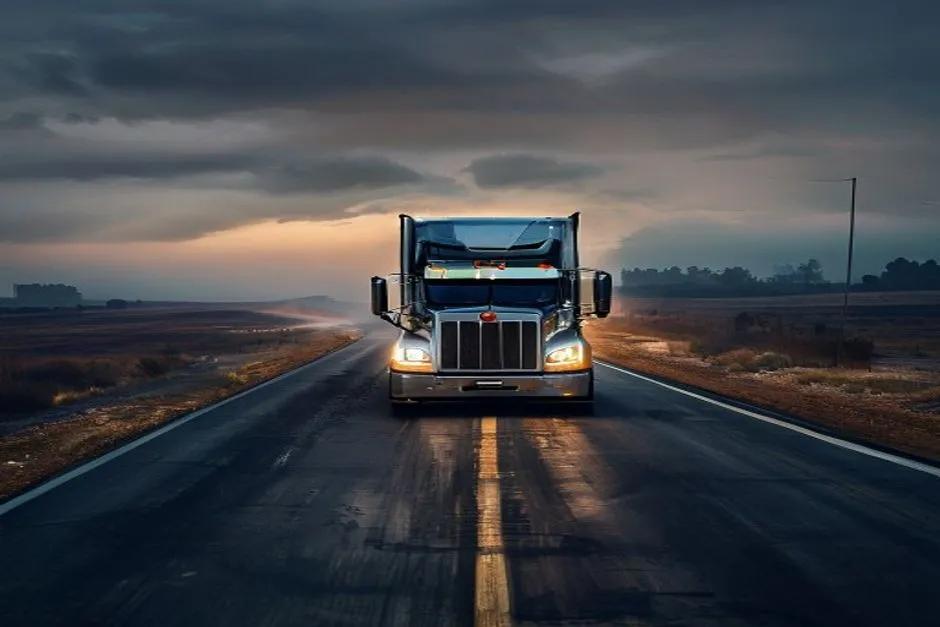
Anyone who has ever driven a vehicle knows that not all highways are created equal, and some are more dangerous than others. Highways in rural areas are particularly prone to vehicle accidents, especially those involving large trucks.
According to the Federal Highway Administration, rural roads had 100,000 fewer miles traveled than urban highways, but caused 1,100 more fatalities in 2010.
Let's take a look at a few of the biggest reasons why rural highways present unique risks for truck accidents.
Lack of Regular Maintenance
Highways (and roads in general) located in urban areas tend to be better maintained than their rural counterparts for several reasons. First, the higher traffic levels mean they need both functional and cosmetic repairs more frequently.
Second, most road maintenance throughout a state is done through a combination of state appropriations and matching federal funds. Since states are only given a limited amount of federal funding, it makes sense that these states must prioritize roads and highways that receive more traffic.
This means that most maintenance on these roads is handled by the nearest city or town instead of the state DOT. As a result, they tend to have less lighting, fewer guardrails, and lower safety precautions than roads maintained and serviced with federal funding.
Driver Behavior and Geography
Another major reason is related to the location of the roads themselves. Unlike urban highways that often feature long straightaways, those in rural areas tend to have more twists and turns, sharper curves, and
With massive 18-wheel trucks, these dangers are compounded because those vehicles are naturally less maneuverable than a 4-door sedan. If a truck driver takes a sharp turn too quickly or their brakes go out in the middle of a downhill stretch, there's a low probability that they'll be able to get out of it.
Fewer Lanes and More Two-Lane/Two-Way Construction
Many urban highways consist of 5 or 6 lanes of traffic (2 or 3 in each direction) because they were specifically constructed to handle large amounts of traffic at any given time. Rural roadways, on the other hand, tend to have fewer, narrower lanes as they aren't expected to have as many drivers on the road at the same time.
Many of these are two-lane highways (one on each side) with no median or divider, which means passing another vehicle requires driving in a lane occupied by oncoming traffic. One small mistake, like being distracted for just a second or two, in this situation by a driver going in either direction, can lead to a head-on collision.
Head-on collisions are one of the most deadly types of vehicle accidents, and they're even more dangerous on rural roadways because it will take a lot longer to get to a hospital compared to an accident in an urban area.
In some cases, the nearest medical facility might be 50 miles away, which means you'll have to wait longer for an ambulance to arrive and even longer to make it to the hospital.
Higher Speed Limits and Less Congestion
Perhaps the biggest reason for increased accidents is that rural highways were designed for lower levels of traffic, which means they have higher speed limits. Combined with sharp turns and narrow lanes, this can easily lead to traffic accidents, especially when large trucks are involved.
Less congestion might seem like it would lead to fewer accidents, but it's actually one of the biggest contributing factors. On a 7-lane Interstate Highway, for example, drivers know there are hundreds of other cars in a one-mile radius, and most people become more vigilant.
However, on a rural highway where they haven't seen another driver in either direction for five minutes, they might tend to get a little more relaxed. When they finally do come across another vehicle in front of them, let's say one that's "only" going 55 in a 60 mph zone, they might immediately go to pass and cause a head-on collision.
What to Do If You've Been in a Truck Accident on a Rural Highway
If you've been involved in a truck-related accident on a rural highway, you'll want to document everything you can. Write down as much information as you can about the accident, how fast you were going, what your destination was, what caused the accident, and anything else you can remember.
Next, you'll want to seek immediate medical attention, even if it was a minor accident and you feel fine. Some injuries don't present right away, and early detection can help prevent the situation from getting worse.
A good truck accident lawyer can provide quality truck accident injury representation and help you file a claim and receive monetary compensation from the driver, the trucking company, and/or anyone else who might have been involved. You shouldn't have to pay out-of-pocket for medical expenses incurred because of another driver's mistake.
Why Rural Highways Present Unique Risks for Truck Accidents
Although truck accidents can happen on any road, rural highways are a higher risk location due to geography, driver habits, lower standards of maintenance, and higher speed limits.
These accidents also have a higher risk of fatalities because their remote locations make it more difficult for ambulances to arrive in time and convey victims to medical facilities promptly.
Truck accidents on rural highways aren't always avoidable, but there are a few ways to reduce your chances of being involved in one. Always pay attention to your surroundings while driving and try to avoid 18-wheel trucks when possible.
If you can't pass these trucks safely, let them go ahead of you when possible. It's better to arrive two minutes late than to never arrive at all because you've been in a terrible accident.
Similarly, if you see a truck driving erratically or dangerously on a rural highway, you should always call the number on the back of the truck to report the incident. It might not be a pleasant conversation, but you could save someone's life.