

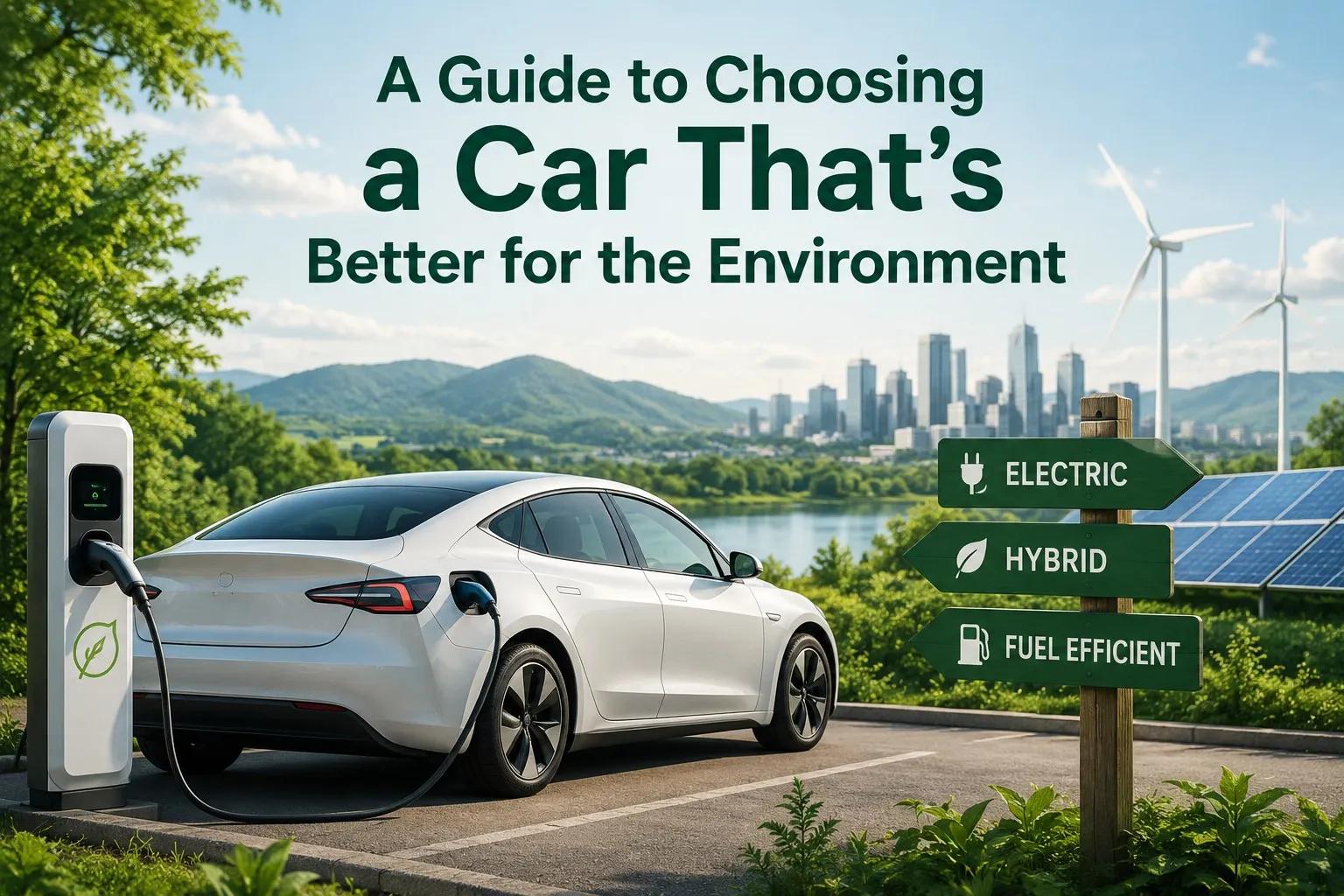
Choosing a more environmentally friendly car is one practical way to reduce the impact of your everyday travel. However, with electric, hybrid, and fuel-efficient gas-powered models all available, deciding which option is genuinely better for the environment can feel complicated.
The right choice will depend on how far you drive, where you live, your access to charging, and how you plan to use the vehicle. Looking beyond the headline figures can help you find a car that suits your lifestyle while reducing emissions and energy consumption.
Compare Different Powertrain Options
Battery-electric vehicles produce no tailpipe emissions, making them an appealing choice for drivers who want to reduce local air pollution. They can be especially effective for regular commuting, school runs, and other predictable journeys.
Plug-in hybrids combine an electric motor with a gasoline engine. They can complete shorter trips using electricity while offering the flexibility of a traditional engine for longer journeys. Standard hybrids recharge their batteries while driving and may improve fuel economy without requiring external charging.
Modern gas-powered vehicles can also vary significantly in efficiency. A smaller, lighter car with a fuel-efficient engine may have a lower environmental impact than a large, heavy vehicle that uses more energy, regardless of its power source.
Consider Your Typical Driving Habits
Think carefully about how you use your current car. Drivers who mainly complete short urban journeys may benefit most from an electric vehicle because these trips can often be covered on a single charge.
Those who regularly travel long distances should review driving range, charging availability, and charging times. Choosing a vehicle with far more range than you realistically need may also mean paying for a larger, heavier battery that consumes additional resources during production.
Searching for Honda EVs near me can help you compare locally available models, arrange test drives, and ask dealerships practical questions about range, charging, and everyday ownership.
Check Energy Efficiency
Not all electric or hybrid cars use energy at the same rate. Compare official efficiency ratings rather than assuming every electrified vehicle is equally sustainable.
Vehicle size matters, too. Large SUVs generally require more energy to manufacture and move than compact cars. Choosing the smallest model that comfortably meets your passenger and cargo needs can help reduce energy use throughout the vehicle’s life.
Look at the Full Ownership Cycle
Environmental impact extends beyond what comes out of the exhaust. Vehicle manufacturing, battery production, maintenance, and eventual disposal all use materials and energy.
Keeping a reliable vehicle for longer can sometimes be more sustainable than replacing it frequently. When buying another car, consider durability, repairability, battery warranties, and whether components can be recycled or reused.
Plan for Charging
Before choosing an EV, work out where you will charge it. Home charging is often the most convenient option, but public charging may be sufficient for drivers who live in apartments or cannot install a charger.
You should also consider how electricity is generated in your area. Electric vehicles generally become more environmentally beneficial as power grids incorporate more renewable energy.
Ultimately, the most sustainable car is one that meets your actual needs without being unnecessarily large or powerful. By comparing efficiency, range, production impact, and long-term usability, you can make a more informed decision that benefits both your lifestyle and the environment.