

The Complete Guide to Compliant Chemical Waste Disposal: From Inventory to Documentation
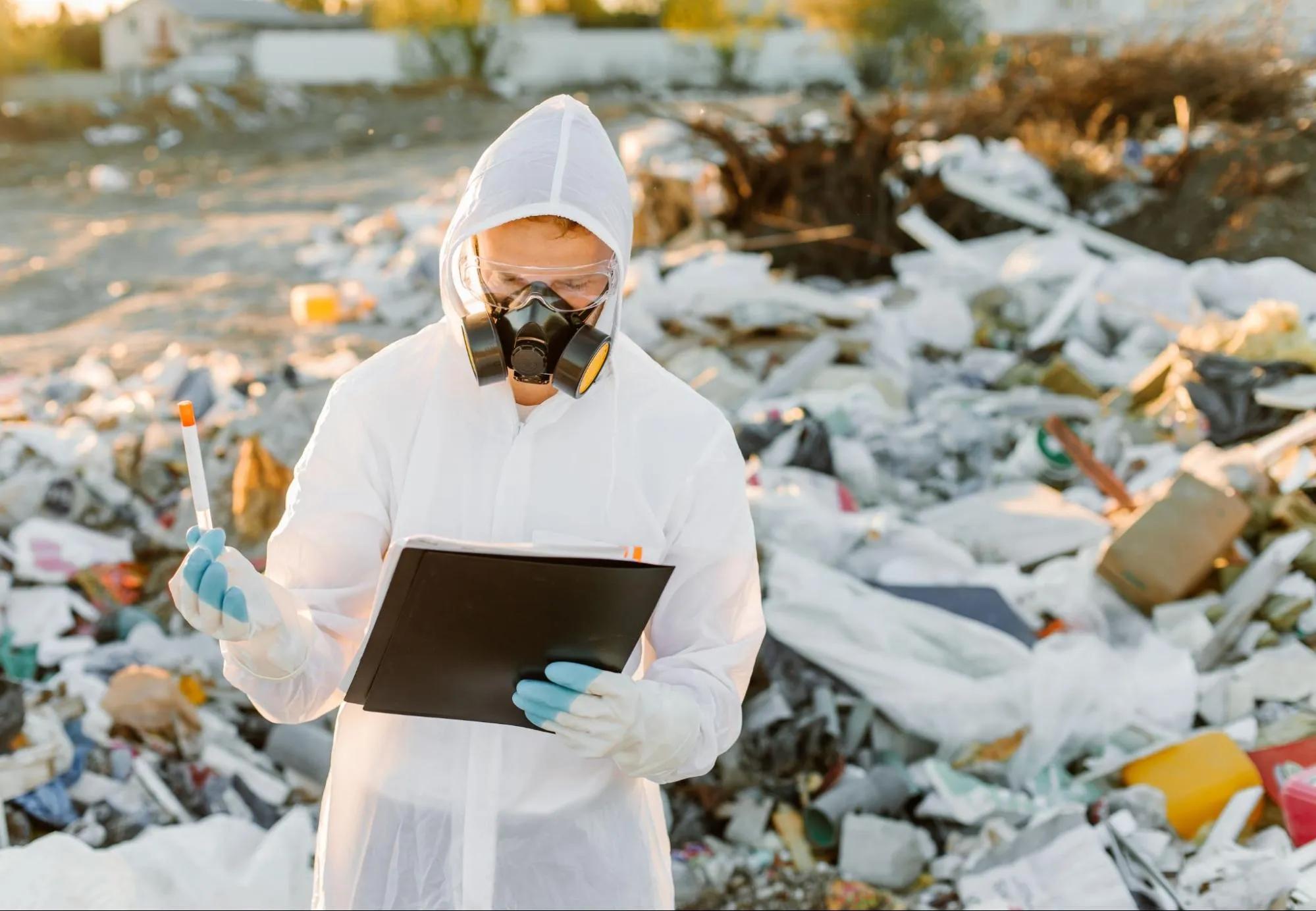
Chemical waste disposal needs a plan before the chemical ever arrives, not after it becomes waste. Getting it wrong can mean fines and environmental damage, and it can leave a paper trail that won't hold up if a regulator asks for it. Getting it right starts earlier than the waste bin, with knowing exactly what you have on hand.
What Is Chemical Waste?
Chemical waste covers any unused, expired, contaminated, or byproduct chemical material that poses a risk to health or the environment when handled carelessly, and that goes well beyond lab reagents.
Leftover reagents and expired stock count. So do rags, filters, and packaging that have touched a hazardous chemical, spent solvents, batteries, non-empty aerosol cans, and cleaning products used past their shelf life.
Whether a material is regulated as hazardous waste depends on its properties, not its name on the label. Two routes get it there. A material can display a hazardous characteristic, such as ignitability, corrosivity, reactivity, or toxicity measured by a leaching test, or it can appear on one of the published lists covering wastes from specific processes and specific discarded commercial chemicals.
The list of acutely hazardous chemicals is why a one-kilogram monthly threshold exists at all: a small quantity of the wrong compound carries the same regulatory weight as a drum of something ordinary.
That's usually where a business's inventory and its safety data sheets come in, or fail to.
Why Disposal Starts With the Inventory, Not the Bin
Most disposal problems trace back to the same gap: nobody had a current, accurate picture of what chemicals were on site, in what quantities, or where. A live chemical inventory tells you what's being generated and which safety data sheet governs handling and disposal for each item. Skip that step, and waste gets misclassified, stored too long, or mixed with materials it shouldn't touch.
This isn't only good practice. Federal rules put the duty of determining whether a waste is hazardous on the business that generated it, at the moment the waste is produced, and allow that determination to be made either by testing the material or by applying accurate knowledge of what it is. Accurate knowledge, in practice, means a current inventory and the safety data sheet that goes with it. No vendor, consultant, or laboratory can take that responsibility off the generator.
Businesses that handle this well treat the safety data sheet as a working reference tied to a running inventory, not a one-time list. Centralized chemical inventory management software keeps that inventory and its linked SDS documents in one place, updating automatically as chemicals are added or used up, so the waste stream is never a surprise.
How Much You Generate Changes What You Owe
Under U.S. federal rules, a business generating 100 kilograms or less of hazardous waste a month, or one kilogram or less of acutely hazardous waste, falls into the lightest generator category, with a 1,000-kilogram cap on what can sit onsite at any time.
Generate between 100 and 1,000 kilograms, and the obligations grow: an EPA identification number, a 6,000-kilogram onsite cap, a 180-day limit on how long waste can be stored (270 days if it travels more than 200 miles), and basic staff training for those who handle it.
Hit 1,000 kilograms, or produce more than a kilogram of acutely hazardous waste, and the storage window shrinks to 90 days, with a detailed contingency plan, a report filed every two years, and a certification on every manifest that a waste minimization program is in place.
Being in the lightest category isn't the same as being exempt. Even the smallest generators still have to determine whether each waste is hazardous and send it somewhere authorized to receive it.
Most states run their own version of this program, and some set stricter limits than the federal baseline, so it's worth checking with a state environmental agency before assuming these thresholds are the whole picture.
Not every state has adopted the 2016 federal update that reorganized these categories, so some state regulations still use older category names and different section numbers for the same obligations.
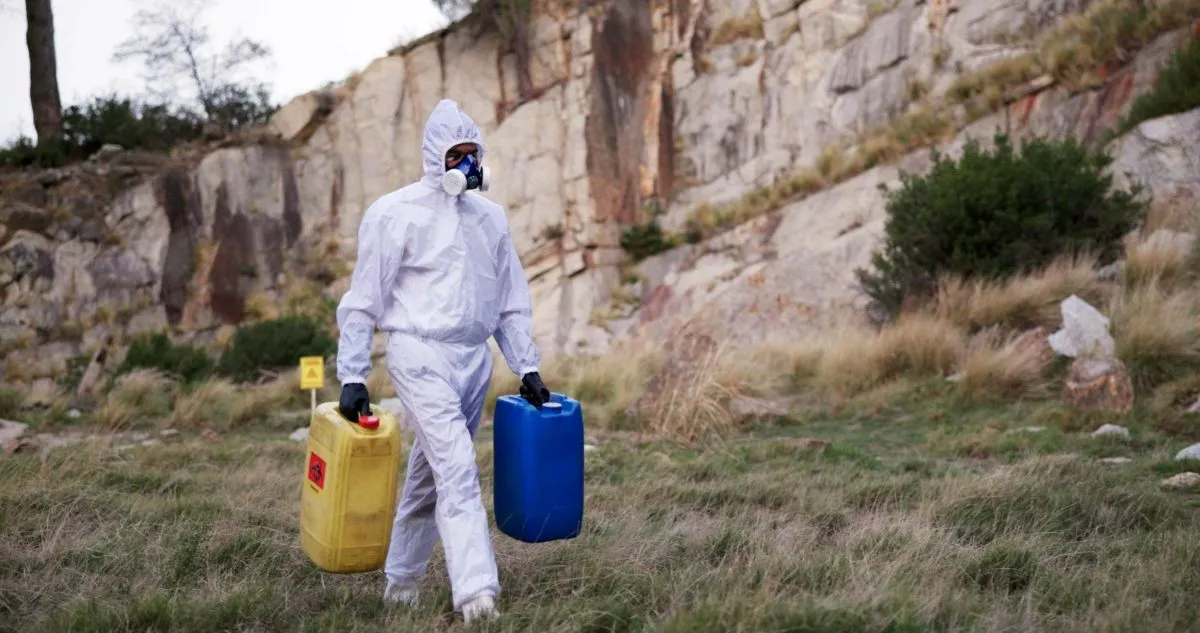
Segregation and Labeling, in Practice
The safety data sheet identifies hazard class before a chemical ever becomes waste, which is where segregation decisions start. A waste handler who can access the SDS library from the collection point confirms the hazard class before the label is applied to the container.
Worth knowing that three separate classification systems are in play:
the GHS hazard class on the SDS,
the waste characteristic that decides whether the material is regulated as hazardous waste, and
the transport class that governs how it ships.
The interesting thing is that they frequently disagree. A product labeled corrosive under GHS isn't automatically corrosive hazardous waste, which turns on a pH of 2 or below, 12.5 or above, or a measured corrosion rate on steel. The SDS informs the call. It doesn't make it.
Acids don't mix with bases. Oxidizers don't sit next to flammables. Waste containers need to be dedicated, closed except when material is being added. They also need to be labeled immediately with the words "Hazardous Waste," an indication of the hazards of the contents, and the date accumulation began.
Containers at the bench or the production line, where the waste is actually generated, fall under a separate allowance: up to 55 gallons of non-acute waste, or a quart of liquid acute waste, can sit at the point of generation without starting the storage clock. Exceed that, and there are three days to move the excess into the main accumulation area or ship it offsite.
None of it goes down a drain or into regular trash without a specific authorization that permits it, and none of it gets stored near heat sources. Skipping any one of these steps is a common reason waste gets flagged during an inspection.
Not Everything Goes Through the Full Program
Batteries, fluorescent and other mercury-containing lamps, mercury equipment, some pesticides, and aerosol cans can usually be handled as universal waste instead. A reduced-burden track with lighter paperwork and a longer accumulation window.
Universal waste also doesn't count toward the monthly totals that set generator category, which for some businesses is the difference between one tier of obligations and a heavier one. Aerosol cans were added to the federal list in 2019, but state adoption varies, so confirm the category applies before relying on it.
What the Safety Data Sheet Actually Tells You About Disposal
Two sections matter most once a chemical becomes waste. Section 10, Stability and Reactivity, flags conditions to avoid, like contact with water or other chemicals, which is where reactive waste gets caught before it's mixed with something incompatible.
Section 13, Disposal Considerations, gives guidance aligned with regulatory expectations, though OSHA's Hazard Communication Standard requires only that sections 12 through 15 be present. It does not enforce what goes in them, since that content falls outside its jurisdiction. .
The level of detail in Section 13 varies by manufacturer, so it's a starting point, not the final word. Confirming the disposal method with a licensed waste vendor or state agency is still necessary.
How Chemical Waste Gets Treated
Treatment method depends on classification, not preference. Chemical treatment, through neutralization, oxidation-reduction, or precipitation, breaks down hazardous properties directly. Physical treatment separates contaminants through filtration, sedimentation, or phase-change methods.
Thermal treatment, usually high-temperature incineration, handles organic solvent blends well, though heavy metal waste should never be incinerated since the metals remain in the ash.
Biological treatment, using microorganisms to break down organic compounds, tends to apply to contaminated soil or wastewater rather than concentrated chemical waste. A licensed disposal vendor makes this call based on what the waste actually is.
The Paper Trail That Protects You
None of the disposal work matters if it can't be documented. A hazardous waste manifest tracks material from the site to its final destination, often described as cradle-to-grave.
Increasingly, that manifest isn't paper. EPA's electronic manifest system has been running since 2018, and in March 2026 the agency proposed retiring paper manifests altogether, with the change taking effect two years after a final rule is published. That rule isn't final yet, but any business still running a paper-only process should plan for the transition rather than wait for it.
The safety data sheet for each waste stream should stay linked to the inventory record rather than filed separately, alongside training logs showing staff received the required instruction and container records showing when accumulation started. Manifests, waste determinations, and training records all need to be kept for at least three years.
Businesses generating enough waste to need an EPA identification number have to obtain one before anything ships offsite. Land disposal restriction notifications are the document most often missing. Generators above the smallest category have to send one with each shipment, identifying the waste codes and the treatment standards that apply. A program with clean manifests can still fail a review on this alone.
Incomplete records are one of the most common findings when a waste program gets reviewed, even when the physical disposal itself was handled correctly.
Disposal Decisions Are Only as Good as the Inventory Behind Them
Every step here, from generator category to the manifest, comes back to knowing what chemicals are in the building right now. A disposal program built on guesswork eventually misses something, whether that's a container held too long, an incompatible mix, or a record that doesn't hold up under review. One built on a current inventory and linked SDS records catches those problems before they become violations.