

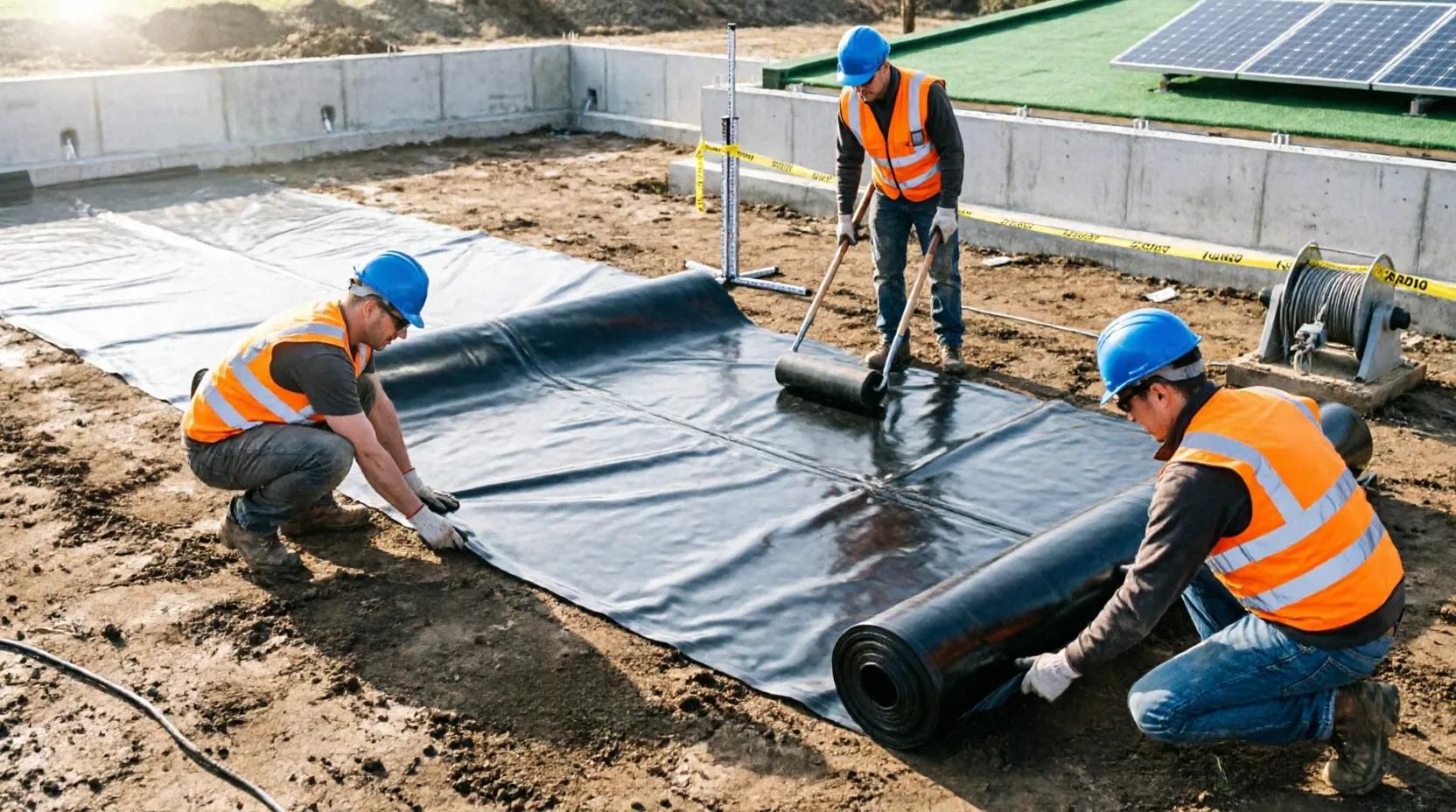
PVC geomembranes are widely used in building construction for sustainable solutions.PVC geomembranes have been used extensively for sustainable building constructions. The construction industry is in a radical transformation. In the face of increasingly severe impacts of climate change, architects, structural engineers and urban planners are shifting away from the traditional process of choosing materials toward sustainable engineering principles.
Today's green building design requires solutions that can maximize energy efficiency, conserve scarce water resources, prevent deterioration of the structures, and prolong their functional life. PVC engineered sheets (PVC geomembranes) have become a vital part of sustainable construction, standing out as one of the many innovative materials contributing to the green revolution in the construction industry. These extremely polymer-based containment barriers are highly known for their performance in heavy civil engineering and containment works and are playing an important role in the vertical and urban green building frameworks. The Ronald Mark Associates offers best quality of PVC Geomembranes for Sustainable Building Construction.
The Core Attributes of Technical PVC Geomembranes
A valuable geomembrane used in sustainable architectures is PVC geomembrane, so its material properties must be studied. High grade PVC geomembranes are highly engineered flexible membranes that are compounded with specific plasticizers, stabilizers and ultraviolet (UV) inhibitors, as opposed to standard plastic sheeting. This exact chemical composition gives a few key benefits: Buildings and underground foundations are dynamic structures that will settle, expand, contract and shift due to seismic forces. To serve as a sustainable barrier, it has to be flexible and conform to irregular substrates without cracking or tearing, while continuously forming a barrier for decades.
The subsoil environment and urban runoff are common areas where fertilizers, hydrocarbons, acidic rain and alkaline ground water are found. PVC is resistant to the degradation of chemicals, so it doesn't allow harmful chemicals to seep through wall construction or into the local water table. In addition, it is also resistant to microbial attack and fungal growth. One of the problems of historic synthetic liners is seam failure, known as Thermal and Seam Stability. By using hot-air and/or dielectrical methods, high-quality PVC geomembrane can be reliably thermoplastic-welded. This fuses the individual sheets at a molecular level, forming a monolithic, homogenous barrier, with seams that may be as strong as the adjoining material.
Understanding Waterproofing of The Structure and Extending Its Lifespan.
Sustainable construction is all about durability. After just twenty or thirty years, a building that has to be demolished or extensively structurally remediated has a huge carbon footprint. Moisture entering the foundation of a building is the most important factor of damage to its structure. Moisture is always pressed into the tiny cracks of concrete foundations, which is known as "subterranean water pressure" or "hydrostatic pressure. This moisture, over time, causes the load-bearing capacity of the concrete to be reduced due to the steel rebar inside the concrete rusting, expanding and spalling. Also, wet basements and crawl spaces conducive to mold and mildew growth which significantly reduces the quality of the indoor air and can have a negative impact on the health of the occupants. Deploying a robust PVC geomembrane along the exterior of below-grade foundations provides an impenetrable, continuous hydrostatic shield.
Know about Mitigation of Green Roofs and Urban Heat Island
The urban sprawl has led to the loss of natural features, such as land, roads and concrete. The result is the “Urban Heat Island” (UHI) effect, which causes cities to be several degrees hotter than the surrounding rural areas. In response, contemporary building codes, including LEED certification, are aggressively encouraging widespread use of intensive and extensive vegetated roof systems (green roofs). As they are being built as living architectural elements, the most important engineering concerns are maintaining drainage away from the foundation, and keeping the root system at bay. This allows plants to grow over the top of the barrier layer and not compromise the safety of the concrete layer beneath it.
Key Water Management Frameworks
Stormwater Detention Vaults: These protect structural concrete from degradation and localised water table contamination with protective barriers and ultimately control the peak rate of runoff, thereby minimising flood risks in urban areas.
Retrieval and Sedimentation Ponds: Using an impermeable lining to stop unchecked water loss to surrounding dry soils is in effect a way of encouraging natural sedimentation and the development of local ecology.
Rainwater Harvesting Liners: A chemically inert, non-leaching containment surface helps to ensure safe retention and helps to save municipal potable water by capturing and storing water safely for non-potable uses.
Engineers are using reliable PVC geomembranes to line these internal and external containment zones, so that the collected water does not leak uncontrollably into surrounding soil layers that would be capable of affecting neighboring foundations, or the untreated urban contaminants would contaminate regional aquifers.
Conclusion
For complex green building systems to be viable, PVC geomembranes of Mark Associates offer a reliable physical separation, which can last for many years. From structural waterproofing for foundations to a root barrier to create urban rooftop gardens to lining advanced stormwater management systems, they are a key building block in contemporary sustainable architecture. The installation of high performance PVC membranes ensures that the green buildings of today will continue to function, are efficient and will be able to withstand for generations to come.