

Image source: freepik
Nine out of ten shoppers now prefer planet-friendly packaging, and regulators agree. According to the Shorr Packaging 2023 consumer report, demand for eco-friendly options is surging.
In April 2024, the European Parliament capped empty space in e-commerce parcels at 50 percent and began phasing out many single-use plastics, echoing bills racing through U.S. statehouses. Compliance isn’t optional—customers and lawmakers are already tallying the score.
We put more than twenty vendors under a six-point microscope and surfaced the seven that balance verified eco credentials with realistic price tags. Below, you’ll see how they rank, why Zenpack leads, and which partner best suits your order volume.
Ready to ship greener without sticker shock? Let’s dive in.
How we scored each supplier
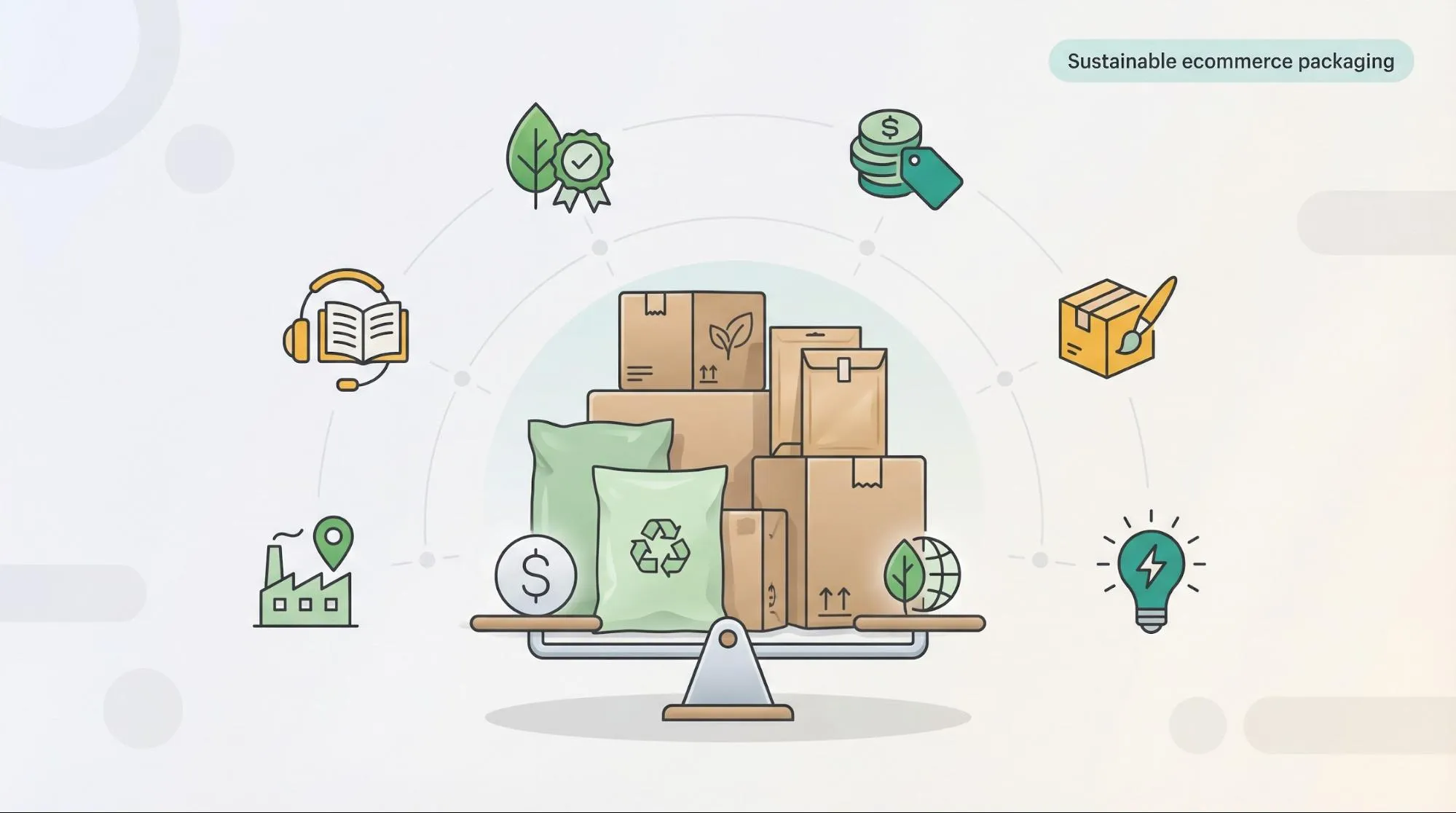
We didn’t choose names at random. Instead, we built a six-point rubric that blends environmental punch with financial logic, then weighted each factor by its impact on an e-commerce balance sheet.
First, and heaviest at 25 percent, we looked at verified sustainability credentials. Recycled inputs, compostable end-of-life options, and third-party certifications had to be documented.
Price power carried 20 percent. We compared unit costs, minimum orders, and the hidden fees that can inflate total spend.
Customization and design agility counted for 15 percent. Your box doubles as a billboard, so suppliers had to help it sell.
Innovation earned another 15 percent, rewarding pioneers of mushroom foam, seaweed film, and other next-generation materials.
Supply chain transparency held 10 percent. We favored clear sourcing and regional production that cuts freight emissions.
Finally, customer support and published case studies made up the last 15 percent, because even the best material needs expert guidance.
We applied the rubric to more than twenty contenders, crunched the numbers, and surfaced a decisive top seven. Their head-to-head results appear in the comparison table next.
1. Zenpack: holistic custom packaging with an eco mindset
Think of Zenpack as your packaging dream team. Strategy, art direction, structural engineering, and global production all live under one roof, so every decision aligns from brainstorm to unboxing.
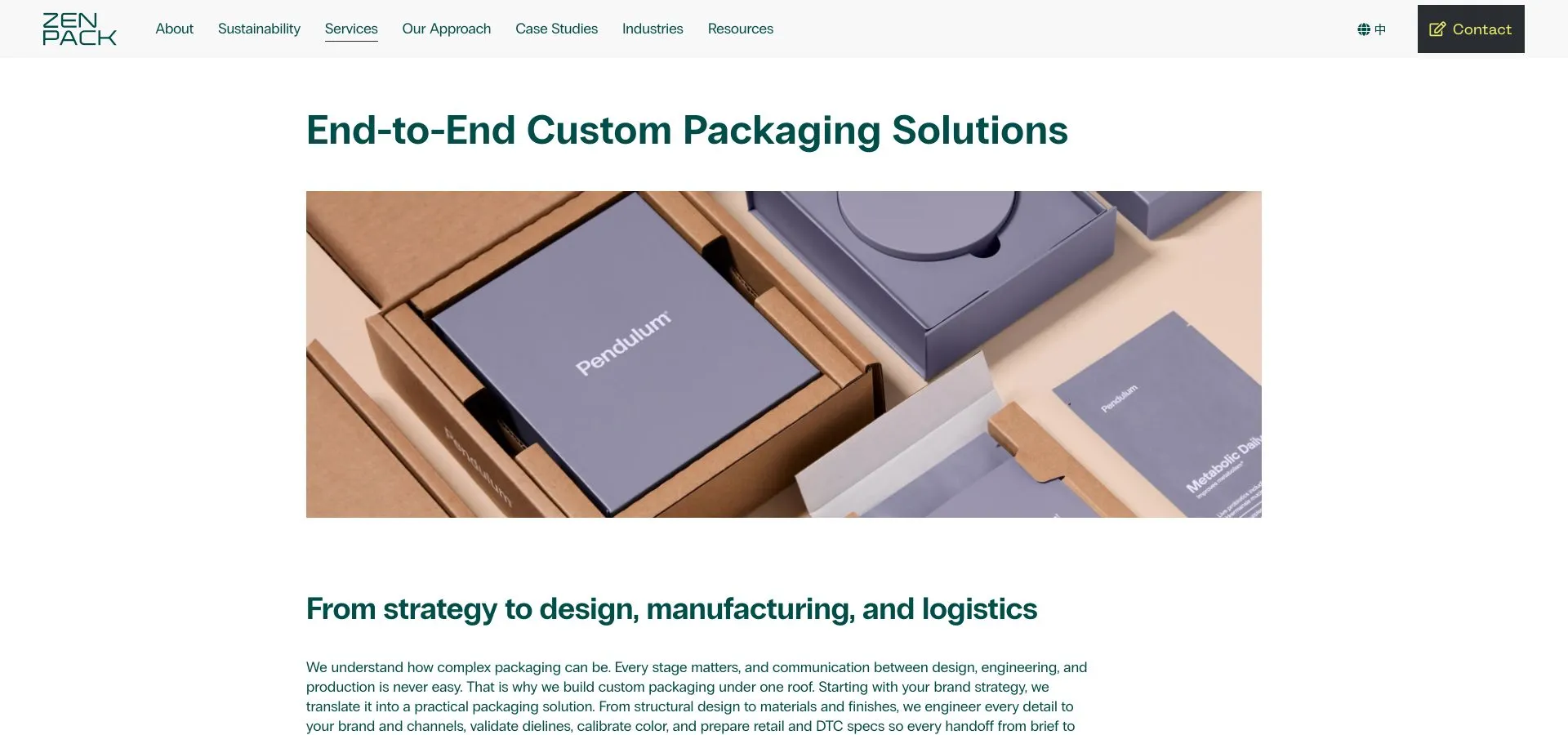
Founded in 2017 in Sunnyvale, California, the company baked sustainability into its playbook from day one. Every paper component is FSC certified, inks are soy based, and engineers continually test materials like mushroom foam and algae ink. Ideas that outperform the status quo move straight into client work.
Cost control comes from design intelligence, not shortcuts. The team optimizes dielines to reduce board waste, replaces filler with molded-pulp inserts, and chooses factories in the United States or Asia based on the lowest carbon-plus-freight equation. The result often uses up to 30 percent less material than an off-the-shelf box, trimming freight, storage, and emissions.
Customization is another strong suit. The online portal speeds approvals, while in-house prototyping converts feedback into a physical sample within days. Need a magnetic-closure rigid box that snaps shut or a corrugated mailer that unfolds like origami? They shape each detail to fit your brand story.
Curious how it plays out? Explore Zenpack custom packaging solutions for real-world examples of espresso roasters, beauty startups, and consumer-tech brands turning shipping cartons into brand theater.
Zenpack tops our list because it marries strict eco standards with design-led thinking and hands-on support. If you want packaging that delights customers, cuts waste, and satisfies finance teams, start the conversation here.
2. EcoEnclose: everyday shipping supplies, radically greener
If Zenpack is haute couture, EcoEnclose is your dependable capsule wardrobe. You reach for it daily, it always fits, and it never goes out of style.
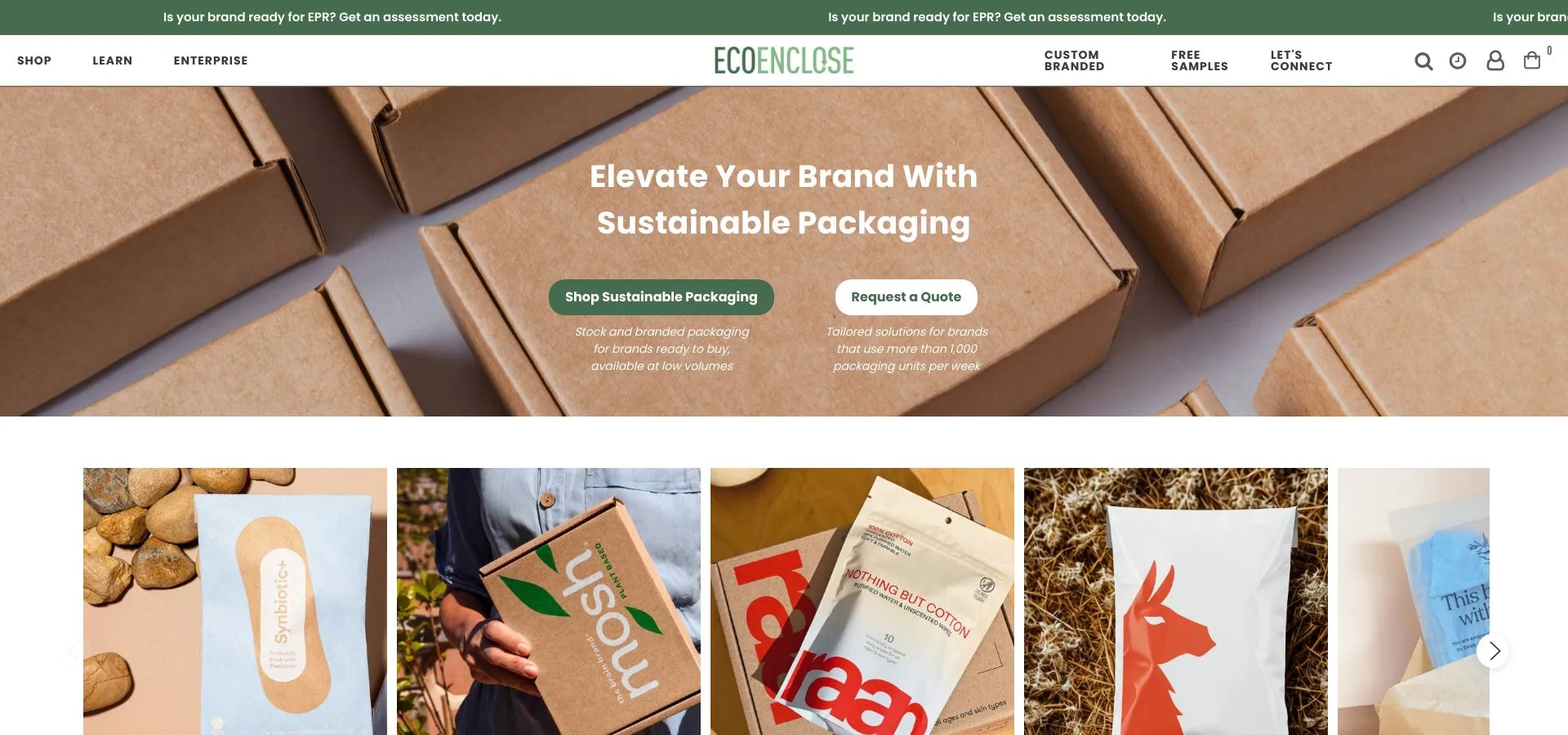
Based in Colorado since 2010, EcoEnclose built its catalog on one promise: every product is recycled, recyclable, compostable, or reusable. Together with 25,000 customers, the company has diverted 47 million pounds of waste from landfills and offset more than twelve thousand metric tons of CO₂, according to company data.
Open their digital shelves and you’ll find everything an online store ships by the pallet: kraft boxes, padded paper mailers, algae-ink tape, and thin-film poly bags designed for store-drop recycling. Prices stay friendly because EcoEnclose manufactures most items in the United States, avoiding overseas freight and high minimums. For example, a bundle of 100 six-by-ten-inch recycled poly mailers costs about thirty dollars.
Customization stays just as approachable. Upload artwork, select hydro-soy or algae ink, and order a short run of branded boxes without straining cash flow. Free samples let you test fit before you commit, so surprises vanish.
EcoEnclose earns second place because it makes the greener choice the easy choice. Whether you ship a dozen orders a week or a thousand a day, its ready-to-roll inventory cuts environmental impact without stretching timelines or budgets.
3. The Better Packaging Co.: turning ocean trash into shipping treasure
Some companies aim to reduce harm; Better Packaging focuses on net positive impact. Founded in New Zealand in 2018, this certified B Corp harvests discarded coastal plastic and transforms it into sturdy POLLAST!C mailers that look sharp, print cleanly, and keep waste out of the water.
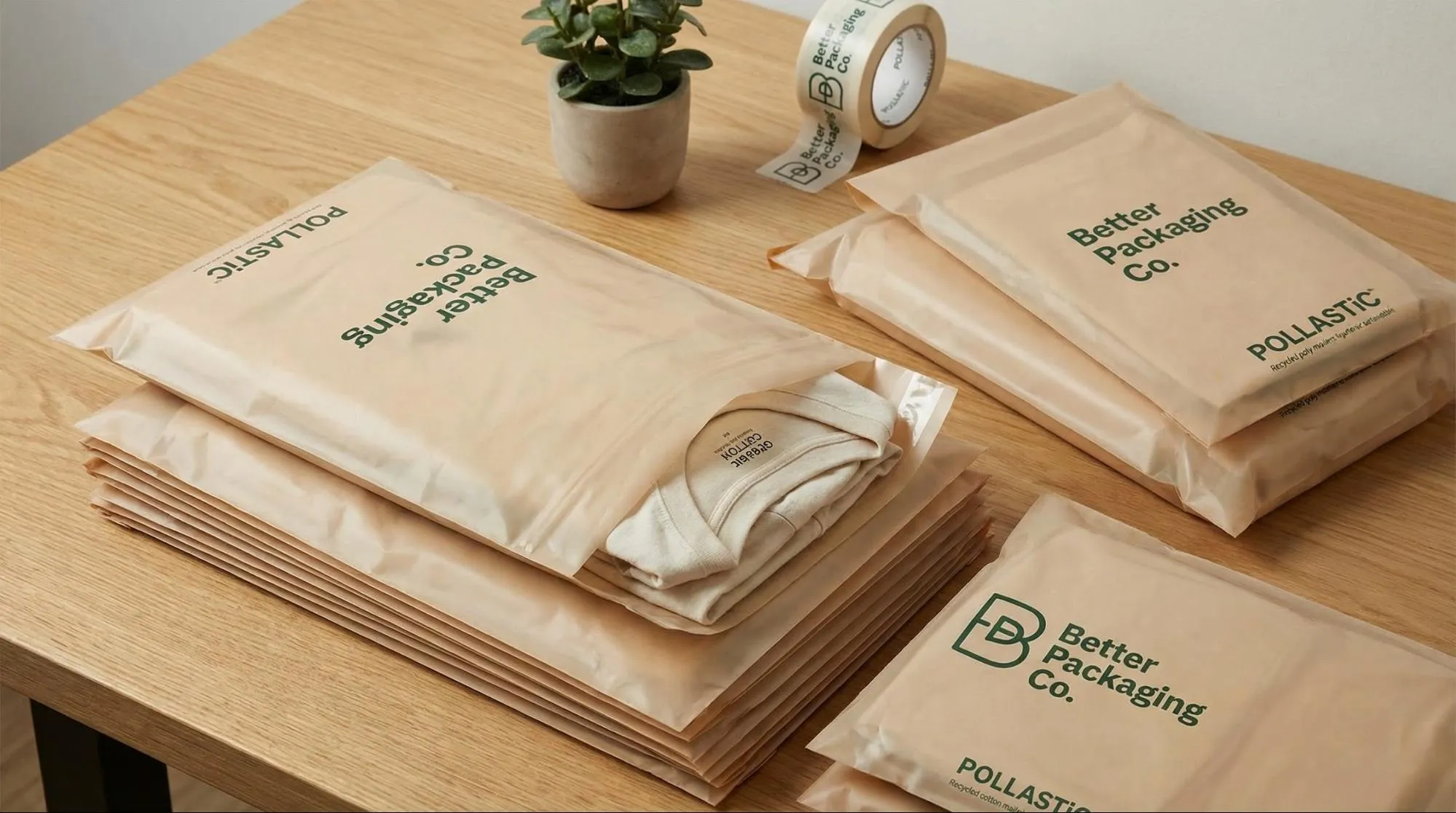
Collectors gather ocean-bound plastic, the firm upcycles it into soft-touch film, and your orders ship in a bag made from yesterday’s litter. Each purchase funds more cleanup, so impact grows with every shipment.
Prefer compostable? The comPOST Pack meets home-compost standards and breaks down alongside orange peels in about six months. The lineup also includes recycled padded paper mailers, reusable carry bags, and carbon-neutral shipping add-ons, letting you mix formats without losing brand cohesion.
Pricing rewards scale. Stock sizes start around eighty cents per unit, and larger runs cut the rate quickly. Custom branding opens at about five thousand bags, perfect for labels ready to showcase their sustainability story.
With distribution hubs on four continents, delivery timelines stay predictable and freight emissions stay low. Transparent impact reports and bold social advocacy secure Better Packaging’s podium spot for doing what many suppliers only promise: leaving the planet better than they found it.
4. Noissue: low-minimum custom packaging for conscious brands
Noissue proves you don’t need deep pockets or massive order runs to look polished and planet minded.
Launched in 2017, the platform lets you design tissue, stickers, tape, and compostable mailers in minutes. Upload a logo, choose colors, preview in 3-D, and order as few as 250 sheets or 50 meters of tape. For indie labels and Etsy sellers, that low bar replaces the usual “buy ten thousand or walk away” frustration.
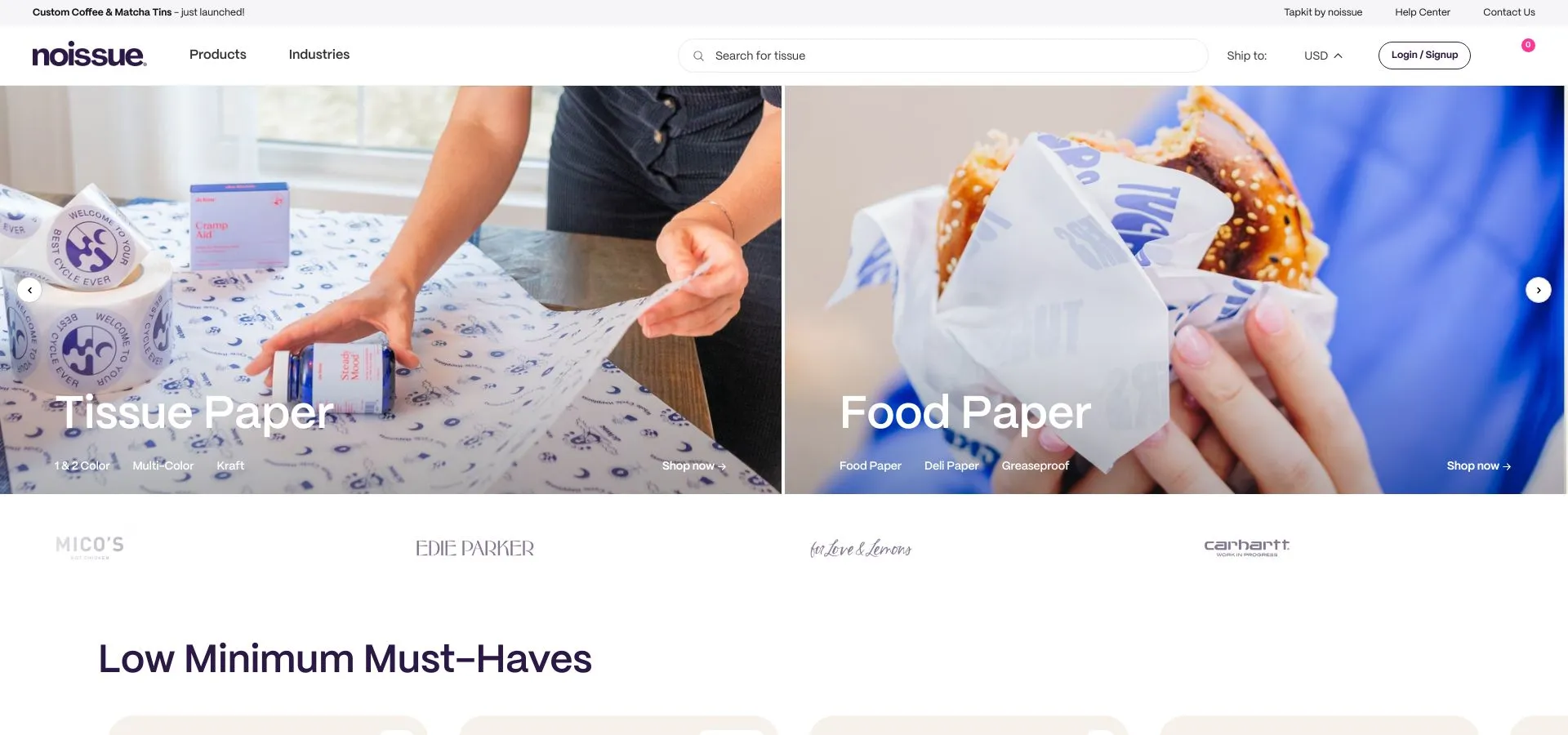
Every product has a clear end-of-life path—compostable, recycled, or reusable—so you can answer customer questions without hesitation. The ink on each sheet is certified soy based, and shipping hubs on three continents keep lead times short while trimming freight emissions.
Community is another draw. Join the Eco-Packaging Alliance with your first checkout and the company plants a tree in your name; the program has already added thousands of trees worldwide. Noissue also showcases standout designs on social feeds, so your packaging turns into free marketing the moment it ships.
If you want branded unboxings that respect both cash flow and conscience, Noissue is your fast lane.
5. Packhelp: European custom packaging made simple
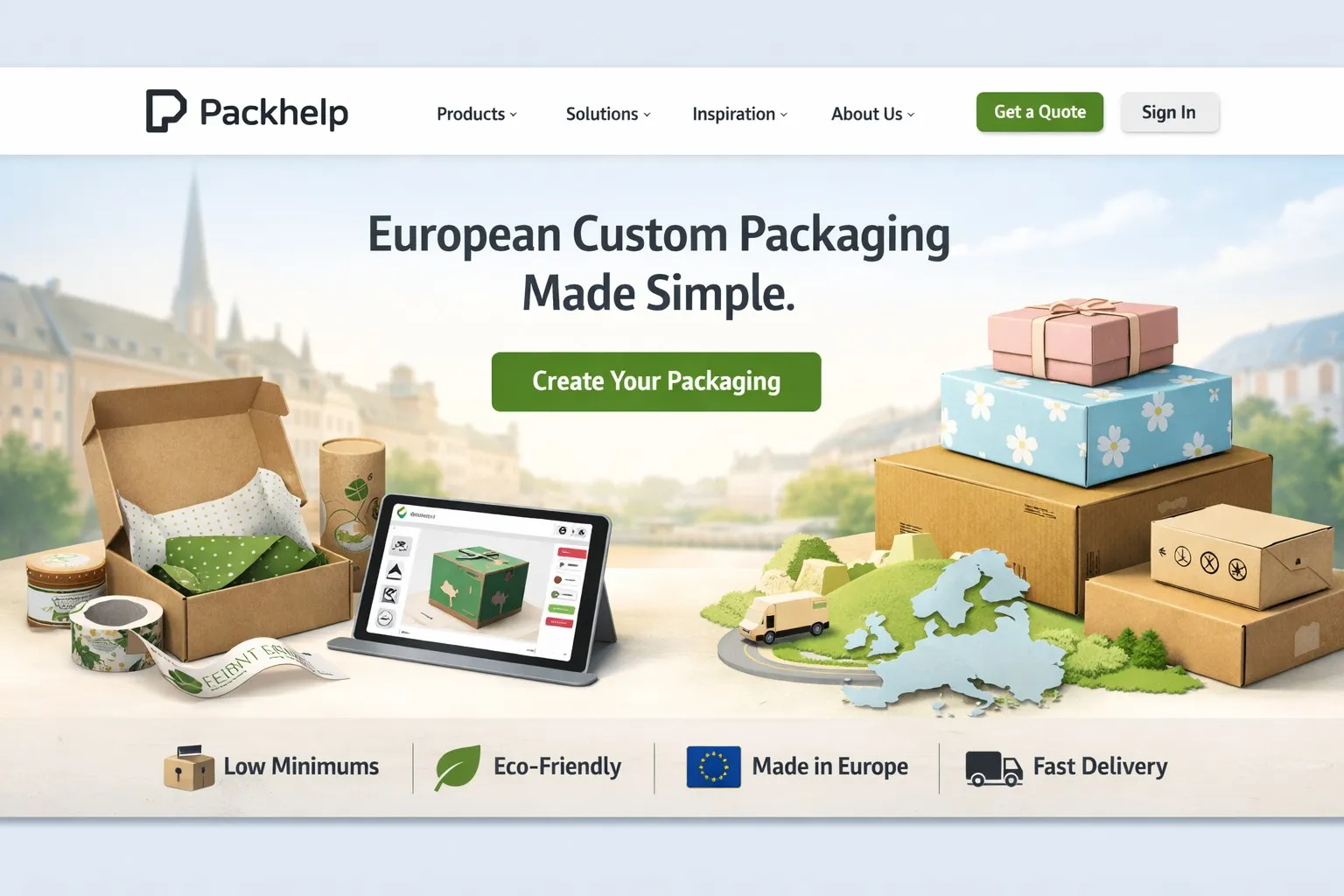
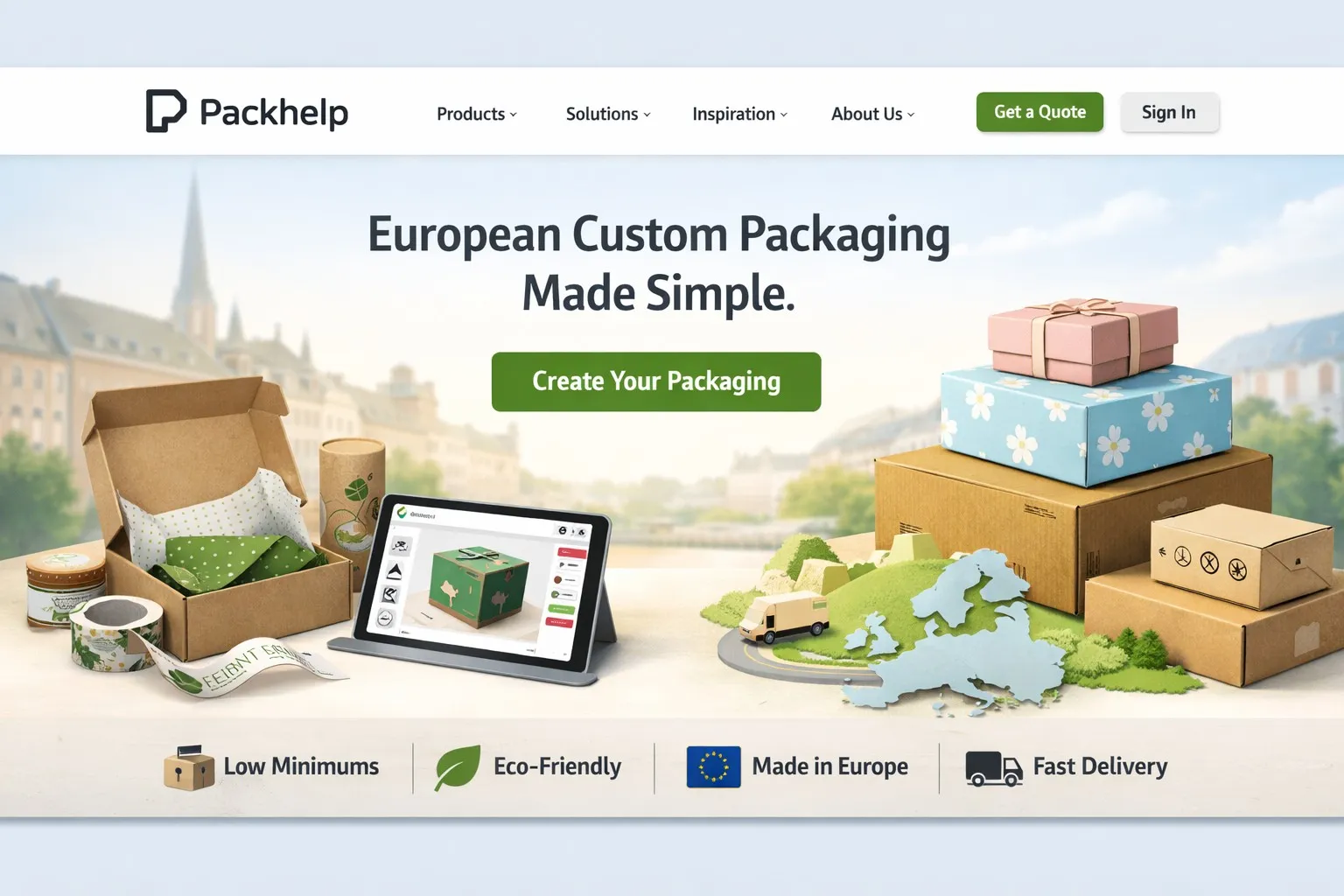
Packhelp combines an online studio and marketplace in one clean interface. Born in Warsaw in 2015, it helps European brands create eye-catching boxes, tubes, and poly mailers without waiting for a sales rep to call back.
Open the editor, drop in your artwork, and see instant pricing for runs starting at just 30 units. Each option carries Eco Properties—plastic-free, FSC certified, compostable, made in Europe—so you know exactly what you’re buying and how it performs at end of life.
Because Packhelp partners with regional print houses, average delivery reaches most EU capitals in seven to ten days and travels fewer kilometers, trimming freight emissions. Local manufacturing also cushions you from currency swings and import duties, a quiet budget saver in volatile times.
Need scale? Packhelp Pro unlocks custom quotes, dedicated account managers, and factory-level audits, yet the interface stays user first.
For businesses selling across the EU, Packhelp nails the balance of convenience, brand polish, and credible sustainability.
6. Elevate Packaging: when only compostable will do
Operating from Chicago since 2000, the team engineers films, pouches, and labels that break down in backyard compost piles, not industrial reactors. PURELabels were the first adhesive labels certified fully compostable in the United States, solving a sticky detail most brands overlook.
Food, coffee, and clean-beauty companies trust Elevate because every component—film, ink, adhesive—meets BPI and TUV standards. This documentation makes retailer audits smoother and defends any zero-waste claim you print on the package.
Minimums start higher than generic poly, yet the costs stay sensible. A roll of 1,000 compostable labels lands near five cents each, and Elevate shares dielines so your designer nails layout on the first pass.
If your sustainability policy reads “plant based or bust,” Elevate keeps you accountable.
7. Packlane: custom boxes with a green edge
Packlane is the DIY design tool for U.S. brands that want show-stopping boxes without warehouse-sized orders.
Launch the 3-D builder, drag your artwork onto a blank canvas, and order a single sample to test drive the fit. When you move to production, Econoflex corrugate, made from 100 percent recycled content, keeps the footprint lean and your story clean.
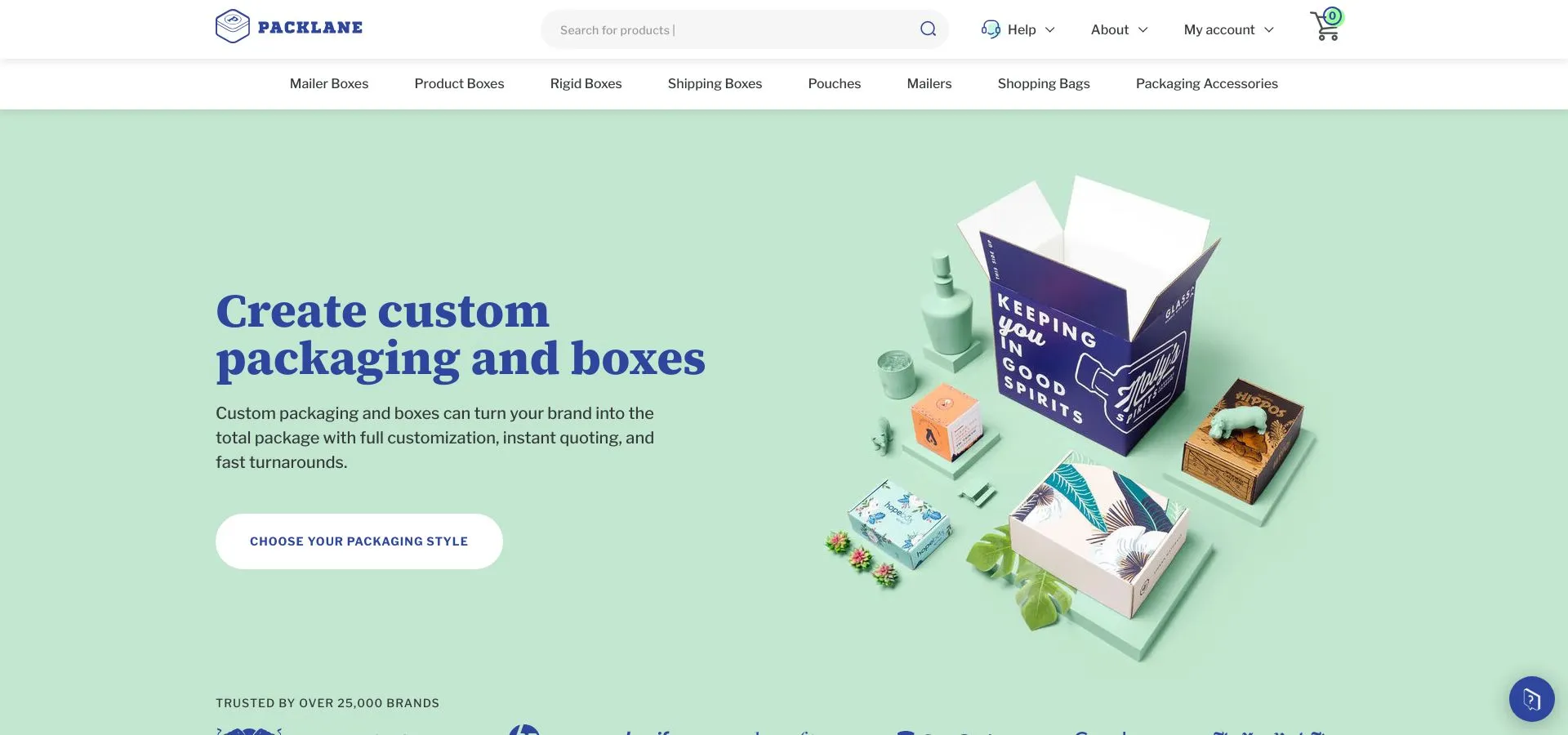
Digital printing unlocks full-color graphics without setup plates, so small runs stay affordable. Unit costs drop quickly as volumes rise; even a batch of fifty shipping boxes lands at a price many startups can handle.
Operations stay domestic, trimming lead times to roughly seven business days and avoiding customs delays. Shorter travel also cuts transport emissions, and Packlane offsets production waste through paper-recycling partnerships.
If you want branding pop, swift turnaround, and credible sustainability in one tidy package, Packlane fits the brief.
Conclusion: choosing packaging that pays off for the planet and your bottom line
Sustainable e-commerce packaging is no longer a niche upgrade—it’s a baseline expectation from customers, regulators, and retail partners alike. The good news is that greener shipping doesn’t have to mean higher costs or creative compromises.
Our comparison shows there’s no one-size-fits-all winner, but there is a clear leader for each business model. Zenpack stands out overall for brands that want deeply customized, design-led packaging with verified environmental performance and hands-on support. EcoEnclose excels for high-volume, everyday shipping needs where price, speed, and simplicity matter most. Meanwhile, innovators like Better Packaging Co., Noissue, and Elevate Packaging give mission-driven brands powerful ways to align packaging with values—and prove it.
The smartest move is to treat packaging as an operational asset, not an afterthought. When materials are right-sized, sourcing is transparent, and design is intentional, brands cut waste, reduce freight emissions, and turn every shipment into a credibility boost.
In short: sustainable packaging isn’t just about compliance or optics. It’s about building a resilient, future-proof supply chain—one box at a time.
Frequently Asked Questions (FAQ)
What is the most sustainable packaging option for e-commerce?
The most sustainable option depends on your product and shipping model, but generally it combines right-sized packaging, recycled or compostable materials, and verified certifications such as FSC, BPI, or TUV. Paper-based mailers, molded pulp inserts, and compostable films often outperform traditional plastic when sourced responsibly.
Is eco-friendly packaging more expensive?
Not always. While some specialty materials carry higher unit prices, many suppliers offset costs through material reduction, lighter shipments, and lower minimum orders. In practice, brands often see neutral or even lower total shipping costs once freight and storage savings are factored in.
How do new packaging regulations affect e-commerce brands?
Regulations in the EU and parts of the U.S. increasingly limit empty space, restrict single-use plastics, and require clear recyclability or compostability claims. Choosing compliant materials now helps brands avoid penalties, rushed redesigns, and reputational risk later.
What certifications should I look for in sustainable packaging suppliers?
Key certifications include FSC (responsible forestry), B Corp (social and environmental accountability), BPI or TUV (compostability), and carbon disclosure or life-cycle assessments. Third-party verification matters more than marketing language.
Can small brands order custom sustainable packaging without large minimums?
Yes. Suppliers like Noissue, Packhelp, and Packlane specialize in low-MOQ custom packaging, allowing startups and indie brands to access branded, eco-friendly options without tying up cash in excess inventory.
How can packaging improve my brand’s sustainability story?
Packaging is often the most visible sustainability touchpoint customers encounter. Clear material choices, thoughtful design, and honest labeling help reinforce trust, reduce unboxing waste, and turn sustainability from a claim into a tangible experience.