


Looking for the best youth camp in Los Angeles? We vetted safety records, camper-choice freedom, activity depth, logistics, and total cost to narrow hundreds of programs to eight standouts that build confidence and independence — whether your child prefers a local day schedule or a week-long mountain or island adventure.
How We Ranked the Best Youth Camps in Los Angeles
Every camp below was scored on the same five measures, weighted toward the things that actually change a child's summer:
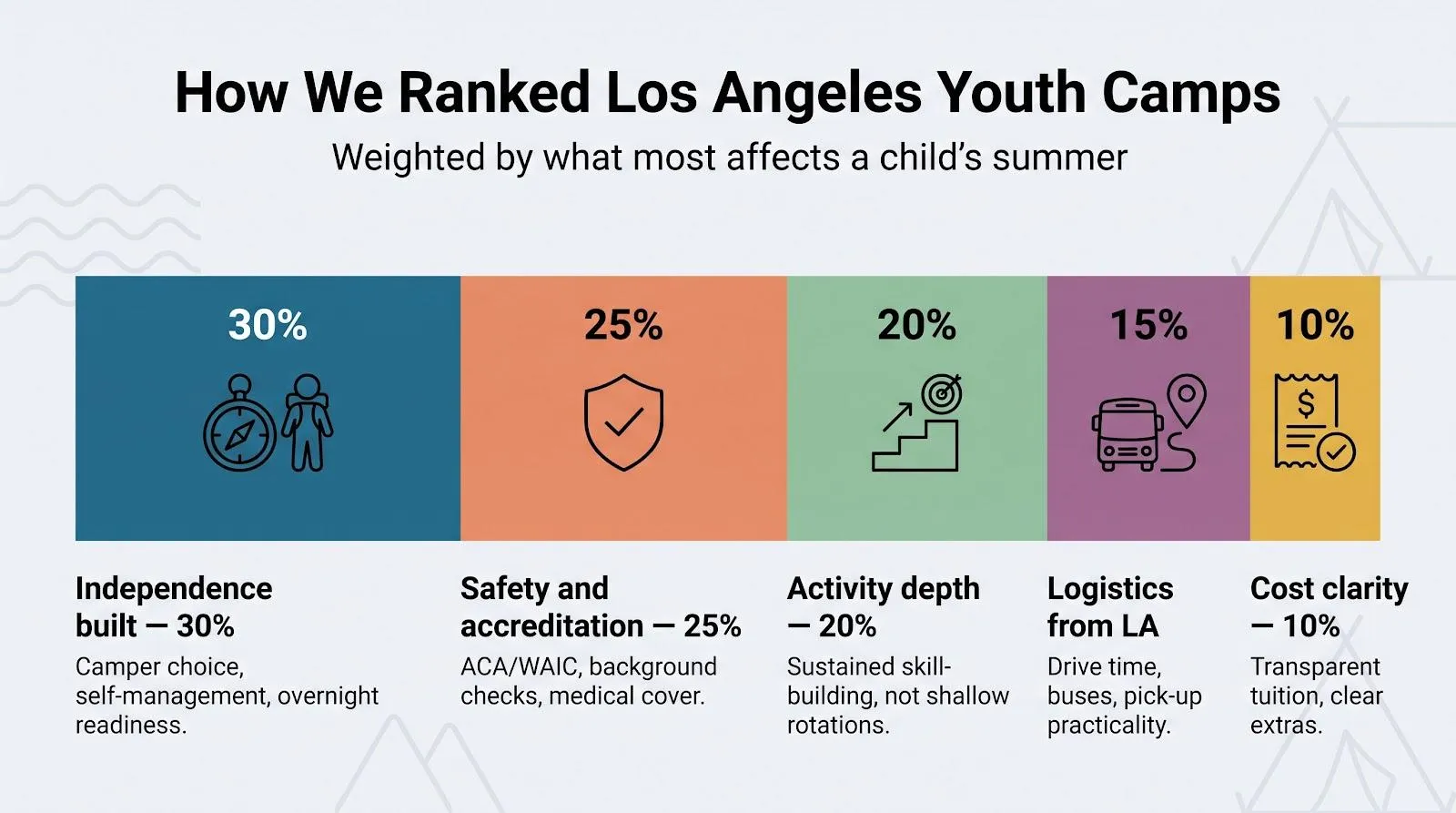
Independence built (30%) — how much the program asks a camper to manage themselves, from choosing a specialty to handling a night away.
Safety and accreditation (25%) — independent oversight such as American Camp Association accreditation, staff screening, and on-site medical cover.
Activity depth (20%) — sustained skill-building rather than a shallow rotation.
Logistics from LA (15%) — drive time, charter buses, and pick-up practicality.
Cost clarity (10%) — whether a family can tell what is included before they pay.
We checked each claim against the camp's own published material. Where a camp does not publish a detail, we say so rather than guess.
1. Pali Adventures: Best Overall for Camper Choice and a Screen-Free Overnight Week
Why Camper Choice Builds Confidence
Imagine your child perfecting Hollywood Stunts through the morning, climbing the high-ropes course after lunch, then racing down the zip line before dinner. That mix-and-match freedom is the standard model at ACA- and WAIC-accredited Pali Adventures, where every camper picks one of 27 specialties across three tracks — Adventure, Creative, and Performance — for a three-hour deep dive each morning, then designs a fresh elective lineup each afternoon. When kids steer their own schedule, ownership replaces nerves.
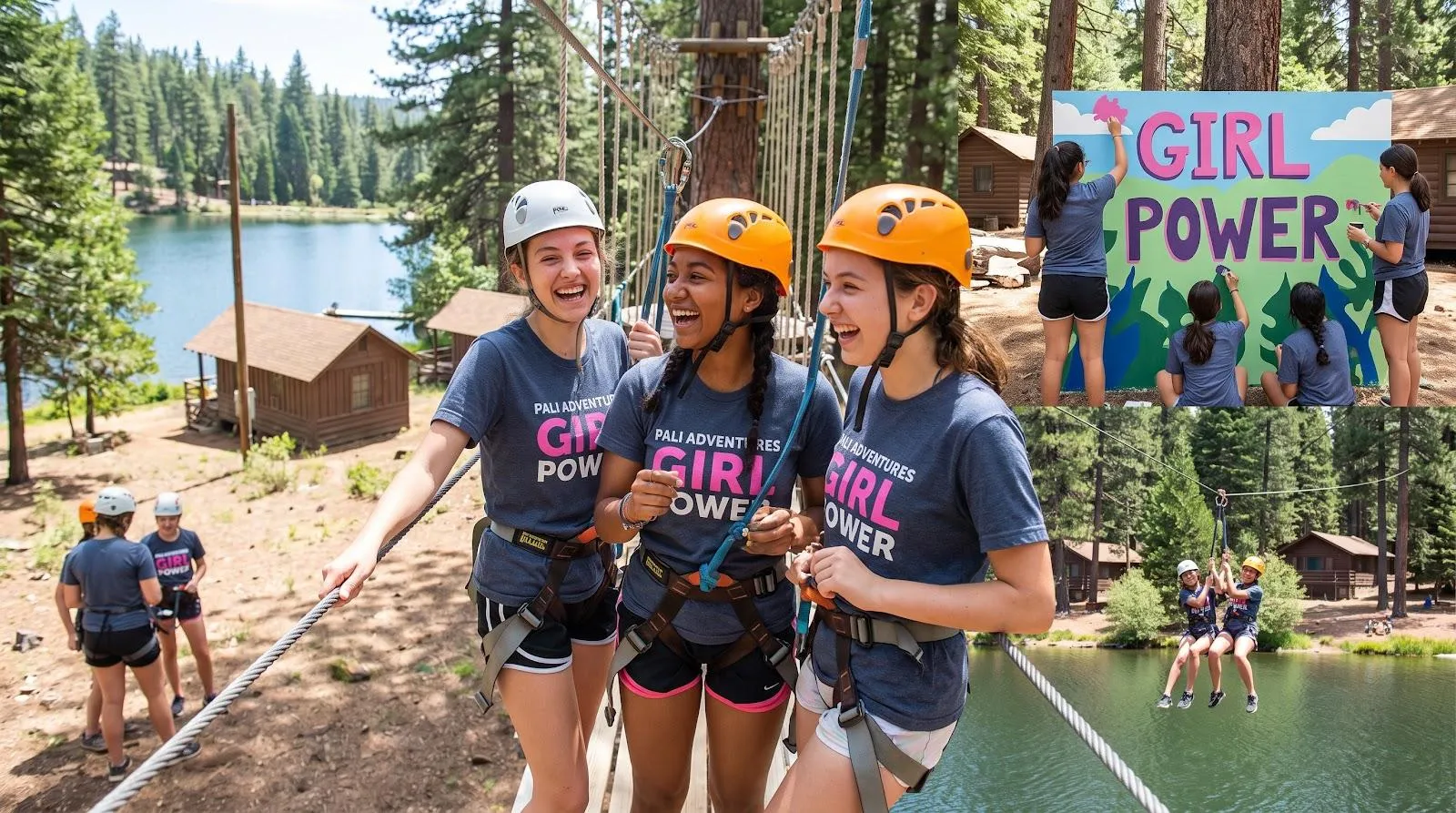
The camp is co-ed but offers leadership-focused opt-ins such as the Girl Power specialty, which pairs ropes-course challenges with small-group confidence work before campers rejoin the wider community. Phones stay locked away; cabin-mates, counselors, and daily photo galleries through the parent portal take their place.
Safety, Age Tiers, and What You Get for the Fee
Pali publishes its safety playbook in plain sight:
Staff-to-camper ratio better than 3:1
Fingerprint-based LiveScan and U.S. Department of Justice background screening
A 14-day on-site orientation covering first aid, CPR, AED, and activity-specific certifications
Resident nurses, a 24-hour radio network, and written evacuation plans
Clear milestones guide growth: Mini Camp (6–8) builds basic away-from-home skills, Juniors (8–12) expand elective breadth, and Seniors (13–16) take on advanced challenges, with a Counselor-in-Training track beyond that.
Tuition is all-inclusive, covering meals, lodging, activities, and the chosen specialty with no specialty upcharge. Pricing is not published, so call for the current rate.
The one caveat: the campus sits in Running Springs, in the San Bernardino Mountains, about a 90-minute drive from Los Angeles. Parents can self-drive or reserve the camp's charter bus.
2. Canyon Creek Summer Camp: Best for a Traditional Multi-Activity Overnight Experience
A Traditional Multi-Activity Model
Canyon Creek delivers the sleepaway image you had as a kid: towering pines, lake breezes, and nights that finish with capture-the-flag under the stars. Located in Lake Hughes, it moves cabin groups through archery, climbing walls, go-karts, arts, and field sports, so every camper samples the full menu without decision fatigue. First-timers do well on a fixed morning rotation followed by free-choice afternoons.
Best Fit and Parent Checks
Choose Canyon Creek when your child wants variety and you want firm guardrails.
Safety and staffing: ACA-accredited, fingerprint-screened staff, 3:1 ratio, on-site registered nurses, CPR and first-aid certification, and a week-long orientation.
Group sizes: 200 campers in 20 cabins of 10, each with two counselors, an assistant, and a CIT.
Transport: Charter buses from West LA and the Valley; parent drop-off remains an option.
Pricing: Core activities and camp-store treats are bundled; horseback lessons cost extra.
Decisive specialists may prefer a sustained-specialty camp higher on this list.
3. AstroCamp: Best for STEM Curiosity and Mountain Adventure
Where STEM Meets Adventure
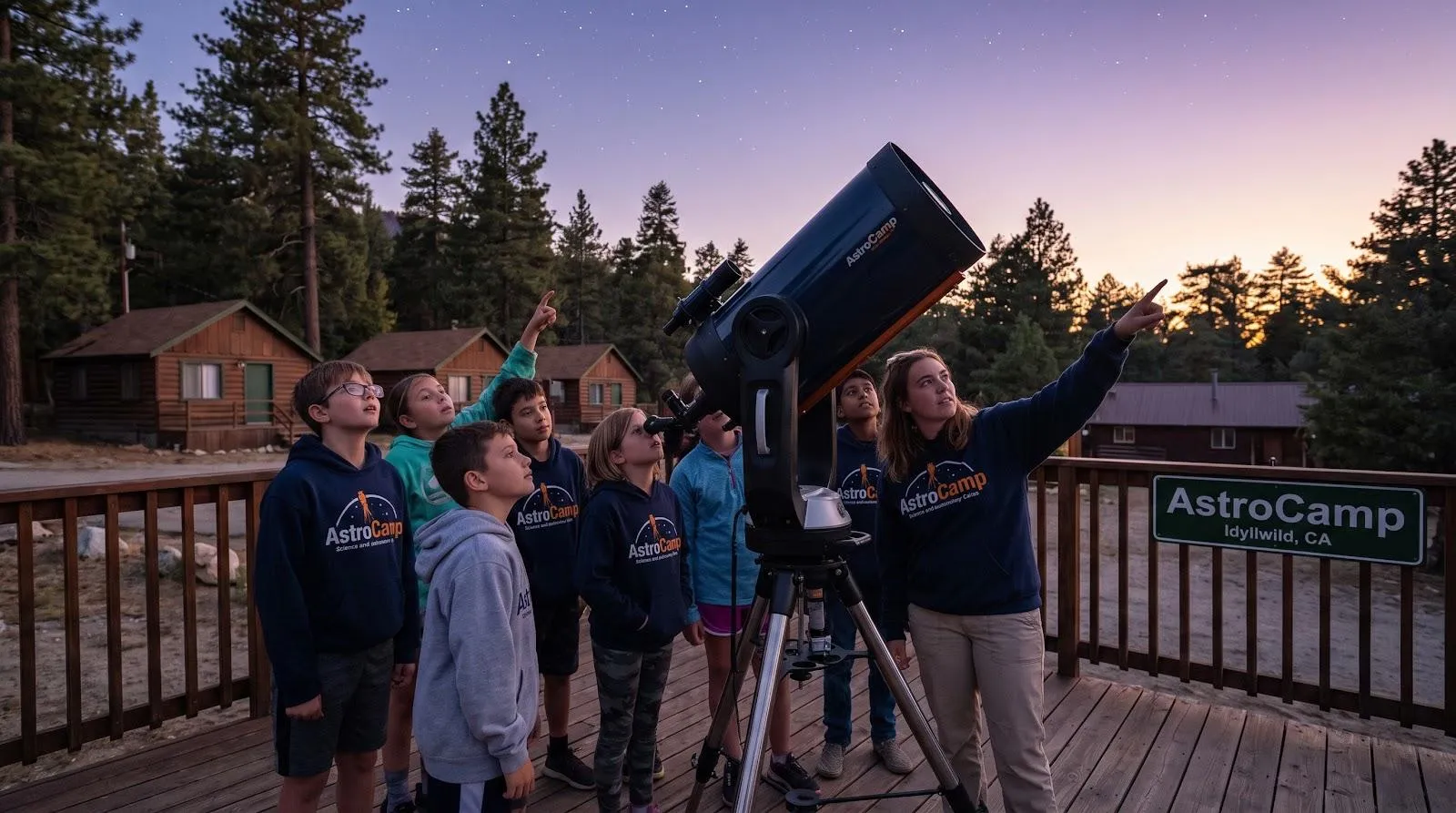
At ACA-accredited AstroCamp, mornings look like a movie set: campers launch weather balloons, wire circuits for robot rovers, and test rocketry designs. Afternoons shift to granite rappelling, mountain biking, and the signature sky-coaster swing. Perched at 5,500 feet in Idyllwild, about two hours from Los Angeles, the cool air and dark skies make stargazing a nightly ritual rather than a one-off.
Best Fit and Parent Checks
Choose AstroCamp if your child cheers as loudly for chemistry as for zip lines.
Safety and staffing: Per the camp's published health and safety information, ACA accreditation, fingerprint background checks, on-site registered nurses, AED units, and local fire and rescue nearby.
Ratio: Roughly 8:1, per the camp's current hiring page.
Cost clarity: Tuition covers lodging, meals, and core STEM labs; scuba training and research-dome telescope time cost extra.
Transport: Self-drive, or reserve the camp's shuttle from Ontario Airport.
Altitude: Staff run hydration and rest checks on arrival.
If your child wants wall-to-wall lab time, the adventure block may feel like an intermission.
4. Catalina Sea Camp: Best for Marine Science and Island Independence
Marine Skills in an Island Setting
The moment the ferry leaves San Pedro, camp becomes a living lab. Morning workshops dissect squid, pilot remotely operated vehicles, and chart plankton counts for real conservation studies. Afternoons pivot to snorkelling through kelp forests, paddle-boarding past harbour seals, or the giant swing over Toyon Bay.
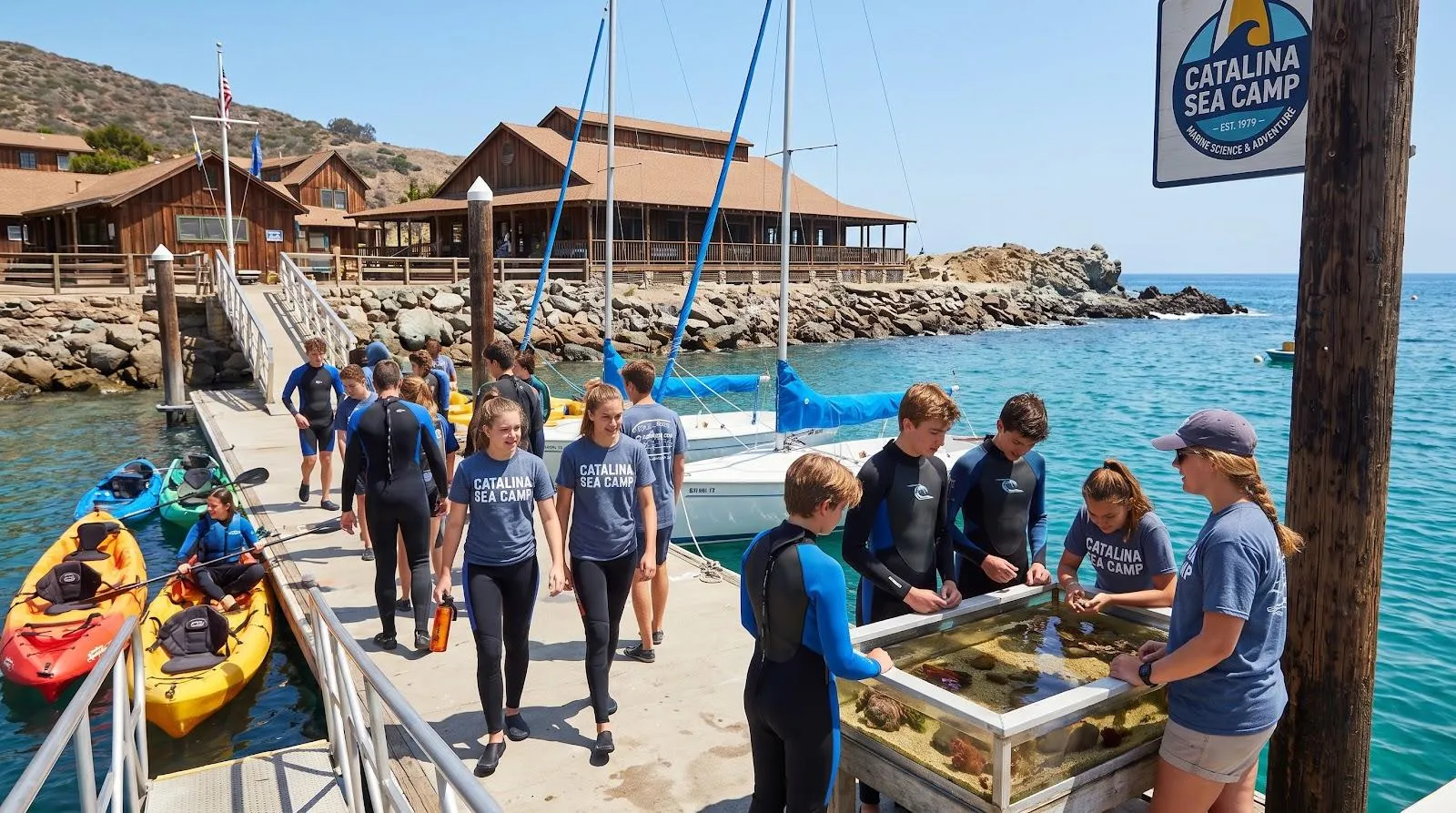
Island living turns routine tasks into self-reliance drills: haul your own dive gear, track tides for sunrise kayak launches, and plan ahead because the nearest shop is a boat ride away.
Best Fit and Parent Checks
Choose Catalina Sea Camp if your child is a confident swimmer, fascinated by ocean life, and ready for real separation.
Safety and staffing: The camp reports full ACA accreditation; instructors hold Waterfront Lifeguard, CPR/AED, first-aid, and emergency oxygen certifications. A registered nurse lives on site.
Ratio: About eight campers per staff member during activities, per a third-party camp directory.
Tuition covers: Lodging, meals, snorkel gear, and the round-trip ferry; scuba certification and specialty dive gear cost extra.
Transport: The camp charters the Catalina Express from San Pedro and meets flyers at LAX.
Weather: Swells sometimes ground afternoon dives; staff pivot to labs, sailing drills, or coastal ecology hikes.
If total separation feels like a stretch, the short intro session is the sensible first booking.
5. Aloha Beach Camp: Best for Ocean Confidence Without an Overnight Stay
Ocean Skills Without an Overnight
At ACA-accredited Aloha Beach Camp, Zuma Beach becomes the classroom. Campers reach the sand early to read rip currents, practise pop-up form, and ride their first foamies before the crowds arrive. By lunchtime they switch to body-boarding, kayaking, or lifeguard drills, with a dedicated county lifeguard and camp staff within whistle distance.
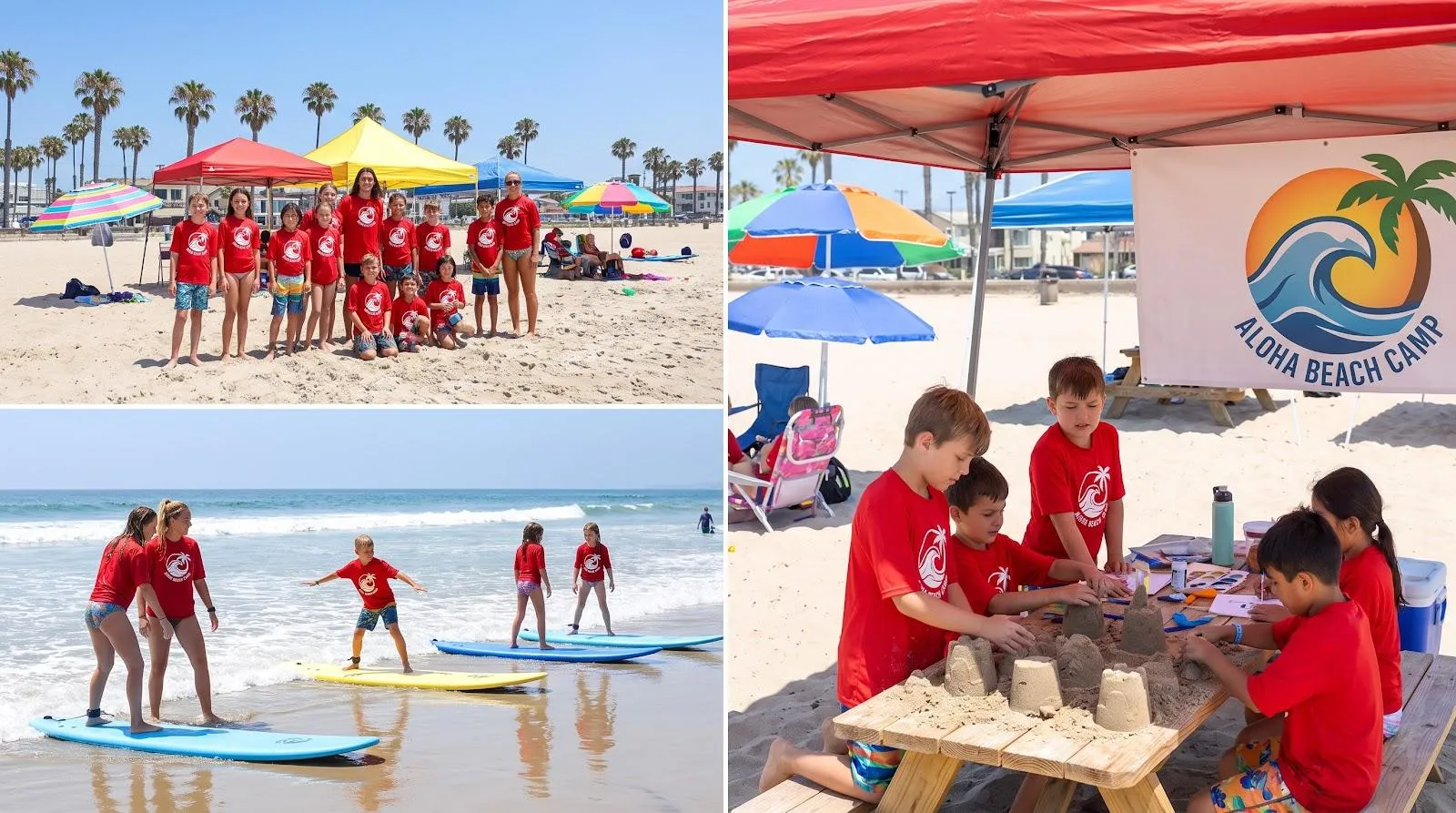
Daily enrolment is the useful part: you choose the exact dates, and directors match activities to swell, tide, and wind.
Best Fit and Parent Checks
Pick Aloha when the beach lights your child up but they sleep best in their own bed.
Safety and staffing: ACA standards, a camp-assigned county lifeguard, and ratios as low as 3:1 overall, dropping to 1:1 during surf lessons.
Swim assessment: Every camper takes a swim test on day one; coloured wristbands mark depth limits.
Tuition covers: Surfboards, wetsuits, rash guards, and round-trip charter buses from several LA pick-up points.
Weather pivots: Big surf or rain triggers tide-pool science, beach art, or lifeguard-for-a-day challenges.
With no overnight, Aloha cannot teach around-the-clock independence — but it sends kids home with genuine ocean competence.
6. Tumbleweed Day Camp: Best for Traditional Outdoor Day-Camp Growth
A Local Path to Outdoor Independence
Fifteen minutes above Brentwood, the city hum fades into 100 acres of chaparral and oak. The ACA-accredited Tumbleweed program drops kids into real terrain without the overnight leap: low-ropes teamwork in the morning, paddling the pond or the archery range after lunch, six activity blocks a day.
Counselors lead cabin groups through a rotating slate from gaga and horseback rides to crafts. With a 4:1 ratio and first-aid-certified leaders on every trail, even the youngest campers learn to trust their own feet. Kids handle their own sunscreen and water bottles, then ride the camp bus home for a familiar bedtime.
Ages 4–14. Tuition includes daily transport from Westside pick-up hubs plus activity gear; ask about extended care if your workday runs long.
7. Camp Hollywoodland: Best for a Girls-Only First Overnight Camp in Los Angeles
A Girls-Only First Step Into Sleepaway Camp
Tucked inside Griffith Park's oak-lined canyon, ACA-accredited Camp Hollywoodland has welcomed Los Angeles girls since 1926. Coyotes yip at dusk and stars outshine the skyline, yet parents remain a 15-minute drive away if nerves flare.
First-timers bunk in rustic cabins run by city-vetted counselors. Days fill with canoeing, friendship-bracelet workshops, and zip-line runs; evenings trade screens for skits and s'mores. Single-gender programming lets campers practise leadership without jockeying for airtime.
Best Fit and Parent Checks
Choose Hollywoodland for the overnight step without leaving city limits.
Safety and staffing: The City of Los Angeles Recreation and Parks department follows ACA standards, runs fingerprint checks, holds a one-week orientation, and keeps a nurse on call. Cabins sleep 10 with two counselors (5:1) for ages 6–14.
Tuition and extras: The city rate bundles lodging, meals, activities, and a snack card; horseback rides and the Griffith Park carousel cost extra.
Logistics: Car-line drop-off only.
Programming skews traditional, which suits first-timers who need structure more than specialty depth.
8. JCamp: Best for an ACA-Accredited Community Day Camp
Community Support With Specialty Choice
On a leafy Westside campus, ACA-accredited JCamp blends pool time and tie-dye with Jewish values such as kindness and tikkun olam. Morning flag-raising leads into specialty tracks including film production, robotics, and culinary arts; afternoons move between swimming and mural painting for the Friday showcase.
A licensed lifeguard watches every swim block, and a full-time mental health professional moves between activity zones.
Best Fit and Parent Checks
Choose JCamp for camp thrills inside a values-driven community, with everyone home by dinner.
Ages and ratios: Kindergarten through eighth grade, at ACA staffing ratios of roughly 6–8 campers per counselor.
Tuition and extras: Published rates include lunch, snacks, specialty supplies, and daily swim; extended care and door-to-door transport add a fee.
Enrolment tip: Sessions fill soon after spring break.
Worth asking: How the mental health lead works with counselors, plus allergy and kashrut policies.
What Accreditation and Safety Credentials Really Mean
ACA Accreditation Versus State Minimums
California law sets the floor: covered youth programs must train mandated reporters, run background checks, and, where practical, keep two trained adults on duty. That is step one, not the finish line.
The American Camp Association raises the bar with up to 300 health-and-safety standards covering everything from meal-prep temperatures to emergency drills. Camps submit written policies and host an on-site visit, repeated every three years. WAIC, the Western Association of Independent Camps, applies its own regional review; camps holding both, as Pali does, clear two separate sets of inspections.
When a camp says only that it "meets California regulations," ask follow-up questions. The law is the minimum; accreditation shows the camp chose to go further.
Staff Screening, Training, and Medical Support
Good camps publish the details.
Background checks. Fingerprint-based LiveScan taps state and federal databases; name-only screens do not. Ask whether seasonal volunteers clear the same bar.
Training hours. Two days is the industry minimum. Pali's 14-day orientation shows what the upper end looks like.
Medical cover. Mountain and island camps need on-site nurses and 24-hour radio links to emergency services; day camps closer to hospitals still need CPR-certified staff and written emergency plans.
Here is how our eight picks disclose those details. Treat any blank as a question for the director.
Camp | LiveScan or equal | Orientation | First aid / CPR / AED | On-site medical | Parent emergency contact |
Pali Adventures | Yes | 2 weeks | Yes | Resident nurses | 24/7 phone hotline |
Canyon Creek | Yes | 1 week | Yes | Registered nurse | Direct line to director |
AstroCamp | Yes | 1 week | Yes | Health-centre nurse | Satellite phone and email |
Catalina Sea Camp | Yes | 1 week | Yes | Registered nurse | Satellite phone, mainland office |
Aloha Beach Camp | Yes | 4 days | Yes | Lifeguard EMT | On-shore phone tree |
Tumbleweed Day Camp | Yes | 3 days | Yes | Health officer | Office phone and text alerts |
Camp Hollywoodland | City LiveScan | 5 days | Yes | Nurse on call | Park ranger dispatch |
JCamp | Yes | 1 week | Yes | Mental-health lead and nurse | Text and email system |
Always verify these details directly before you register.
How to Match a Camp to Your Child's Readiness
Compare Day Camp and Overnight Camp Honestly
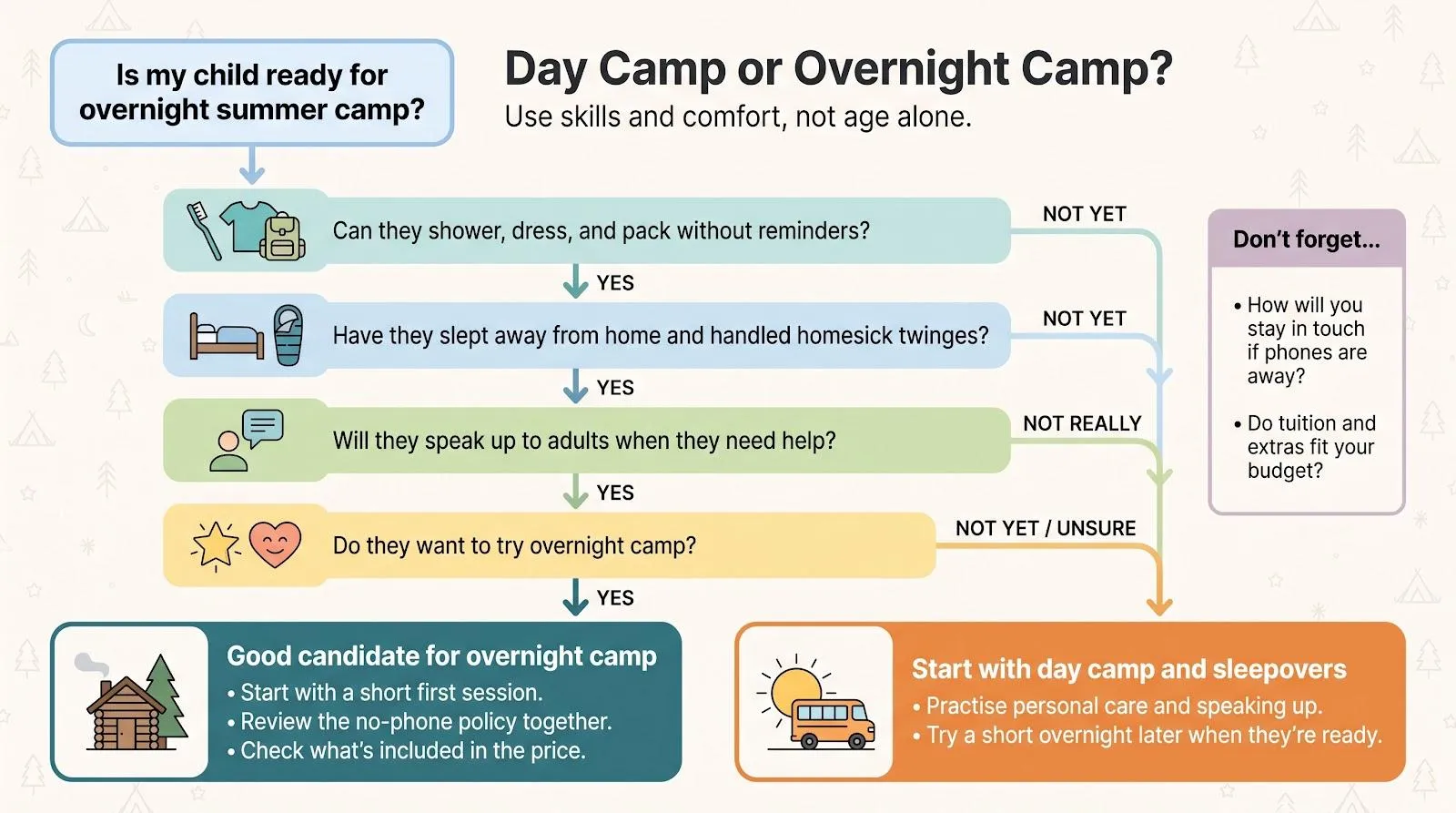
Age is a clue, not a rule. Focus on skills: can your child shower, dress, and pack without reminders? Have they slept at a friend's house and managed the homesick twinges? Will they speak up when they need help?
Day camps build those habits in daylight doses. Overnight programs add the stretch — bedtime routines, cabin chores, and feelings handled without a parent debrief. Many seven- and eight-year-olds thrive; others wait a season. Start where success is likely now.
Letting your child help choose also matters. Shortlist two or three camps, share the schedules, and let them cast the deciding vote. Children who help shape their week tend to settle faster than those handed a fixed one.
Plan for a No-Phone Policy
Most overnight camps lock phones away on day one. Without a screen to retreat into, campers lean on bunkmates, counselors, and their own problem-solving. Daily photo galleries, one-way emails, or letters keep parents in the loop, and every camp here maintains a 24-hour emergency line. Review the plan together so "What if I need you?" becomes "I know how to reach you if it matters."
Check What the Price Includes
Sticker price rarely tells the whole story. Overnight tuition should spell out meals, lodging, activities, gear, laundry, and transport. Extras such as scuba tanks, horseback lessons, and airport shuttles add up. Pali folds electives into the base fee but does not publish tuition, so you will need a direct quote. Day-camp maths follows the same rule: are surfboards, wetsuits, and bus pick-ups included, or billed later? Request a sample invoice if a website is vague.
Frequently Asked Questions
What Age Should a Child Be to Attend Overnight Summer Camp?
There is no magic birthday. Paediatric guidance commonly points to around ages seven or eight, but the real test is skill and desire: can your child manage personal care, speak up to adults, and sleep away from home without panic? If yes, try a short session. If not, build confidence through day camp and sleepovers first.
Are Summer Camps Safe?
Zero risk does not exist, but structured prevention does. Look for ACA accreditation, fingerprint-based LiveScan background checks, certified lifeguards, and on-site medical staff. Ask the director to walk you through emergency drills and parent-notification procedures. Camps that publish their safety playbook usually practise it.
How Much Do Los Angeles Summer Camps Cost?
Day-camp tuition in the LA area commonly runs from roughly $90 to $170 per day depending on gear and transport. Overnight programs vary more widely once lodging and specialty equipment are added. Compare like with like: meals, activities, gear rental, buses, and extras. Pali Adventures does not publish pricing; families should contact the camp directly.
Conclusion
Choosing a camp comes down to your child's interests, readiness, and safety needs. Use the criteria above — and your child's own voice — to pick the program that stretches their confidence by the right amount this summer.