

From Pregnancy to Postpartum: How a Comfortable Daily Pumping Bra Supports Every Stage of Motherhood

Image source: freepik
A comfortable pumping bra can absolutely carry you from pregnancy into postpartum if it has a flexible fit, gentle support, and easy nursing and pumping access.
If your ribs feel tender one week, your cups feel too small the next, and then you are suddenly trying to pump with one hand while holding a hungry baby, you are not imagining it. Research and tester data consistently show that breast size often changes by one to two cup sizes in pregnancy, and many moms need another fit adjustment once feeding starts. The good news is that a few practical features can make one bra work much better through all of those shifts.
Why Comfort Changes So Much From Pregnancy to Postpartum
Your body does not stay the same size for long
Breast changes can start early in pregnancy. NHS guidance, as reported by Mother & Baby, notes that breasts may become larger, more tender, and more sensitive, with nipples becoming more prominent as milk-producing tissue develops.

That matters because the bra that felt fine in the first trimester may feel tight, scratchy, or unsupportive later on. La Leche League International also cites survey data showing that more than 50% of expectant moms saw breast growth of one to two cup sizes during pregnancy, and more than 30% reported increases of more than two sizes.
Postpartum brings another round of changes
Once milk comes in, your size can shift during the day depending on fullness, feeds, and pumping sessions. Breast Cancer Now and maternity bra fitting experts both point out that these changes can continue well after birth, which is why a fixed, rigid fit usually stops working fast.
This is also why so many moms feel confused. Mother & Baby cites figures showing 78% of women struggle to know their bra size postpartum, and 54% were unsure about breastfeeding bra guidance. A bra that can stretch and adjust with you is not a luxury here. It is what keeps daily wear realistic.
What Makes a Pumping Bra Comfortable Enough for Everyday Wear
Soft, seamless, and wireless usually win
For daily use, the best bras tend to be soft, wireless, and easy to forget you are wearing. Across major maternity and pumping listings on Amazon, the most common comfort features are seamless construction, wireless support, adjustable straps, and all-day wear design.
That lines up with expert advice too. Mother & Baby recommends soft, stretchy, seam-free fabrics in the postpartum period, especially when your breasts are changing size and may feel sore. A smoother bra is often less irritating under T-shirts, easier for sleeping, and more forgiving when you are full before a feed.
Adjustable details matter more than they seem
A good daily pumping bra should not rely on the straps alone. Lactation-focused fitting advice from Genuine Lactation emphasizes that the band does most of the support work, especially when you are holding pump parts in place. If the band is too loose, the pump can shift, suction can become less consistent, and the whole session can feel more annoying than it needs to.
Look for practical features like hook-and-eye closures, adjustable shoulder straps, and optional bra extenders. Many moms also like straps that convert to a cross-back style for a little extra stability on busy days.
Can One Bra Really Handle Nursing and Pumping?
A combo style is often the most practical choice
If you want one bra to do the most jobs, a nursing-and-pumping combo style is usually the smartest place to start. PubMed-style product overviews commonly group pumping bras into four types, including pumping-only bras, nursing-and-pumping combo bras, wearable-pump bras, and bustier-style bras worn over another bra.
For everyday life, combo bras tend to be the easiest because you do not have to change bras every time you switch tasks. That matters at 3:00 AM, in the car before work, or when you are trying to squeeze in a pumping session during nap time.
Hands-free access changes the rhythm of your day
A pumping bra is not required to pump milk, but hands-free access can make a huge difference in real life. Expert summaries note that it helps keep suction steadier and lowers the chance of awkward spills. Community discussions from What to Expect echo the same point in a less polished but very honest way: moms value being able to pump without fully changing clothes or standing still with both hands occupied.
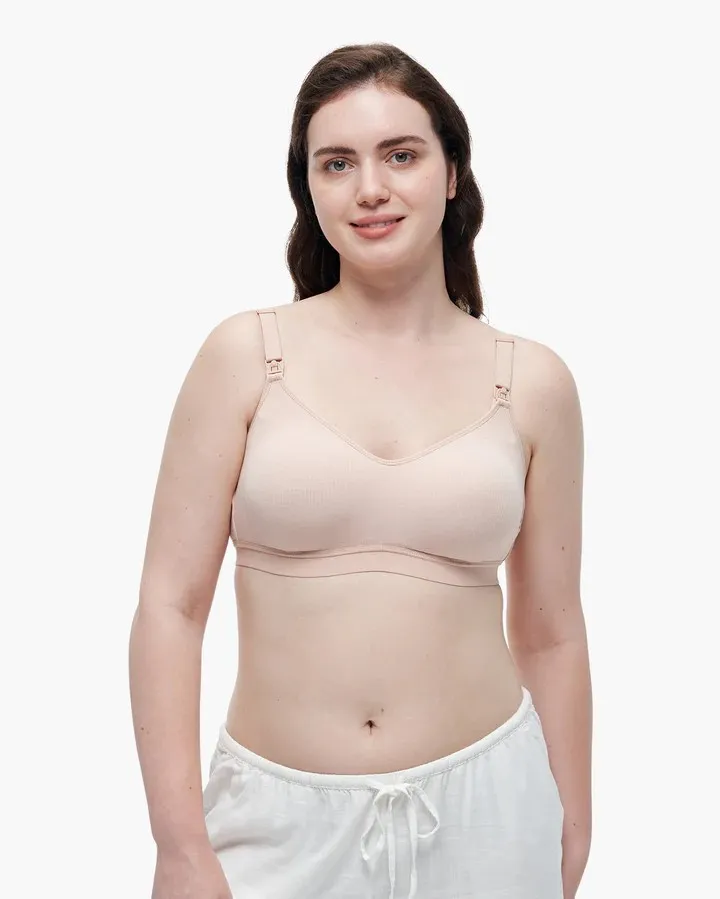
One option many moms find helpful is an all-in-one style with nursing clips plus pump openings built into the cups. On Amazon, one widely used example is a cotton-spandex hands-free bra with an internal “X” support structure, adjustable straps, and one-step nursing clasps. That kind of layout is useful because it supports feeding, pumping, or both without adding another layer to manage.

How to Choose the Right Fit When Your Size Keeps Changing
Start with the band, then check the cups
When fit is off, the band is usually the first place to look. Genuine Lactation’s fitting guidance is very clear on this: if the band is too loose, the pumps move; if it is too tight, the bra can feel restrictive and uncomfortable. A supportive band should feel snug and level without riding up.
Then check the cups. Experts recommend that breast tissue should sit fully inside the cup without bulging, gaping, or pinching. Janice Rose Lingerie uses a simple practical check that many moms find helpful: you should be able to fit a hand snugly inside the cup so there is room for nursing pads and for the extra fullness that can happen before a feed.
Re-measure more often than you think
Brand sizing is not standardized, and community posts show how confusing this gets fast. A size like 44DD may map to completely different lettered sizes from one brand to another, so it is worth checking each size chart instead of assuming your usual size will transfer cleanly.
Mother & Baby recommends remeasuring around three to four months after delivery, ideally around midday before feeding. Many moms also do well with three to five bras in rotation, since leaks, laundry, and daily size changes are all part of the picture.
How a Daily Pumping Bra Helps at Home, at Work, and On the Go
At home, it saves time and mental energy
At home, the biggest benefit is usually not “support” in the abstract. It is fewer outfit changes, less fiddling, and one less thing to think about. A bra that lets you nurse, pump, and move around normally can make the whole day feel less chopped up.
That is especially true if you are pumping several times a day. Community posts from exclusive pumping moms often mention how much easier it is when they can sit down, latch the pump, and keep using their hands for a snack, a text, or baby care instead of holding bottles in place.
At work or out of the house, stability matters
Once you are pumping away from home, secure fit matters even more. Moms in pumping-at-work discussions often mention packing duplicate pump parts, chargers, snacks, hand sanitizer, bottle lids, and a cooler bag, which tells you something important: when your routine is already that packed, your bra should not be the weak link.
A stable bra can also help with movement. One mom in a What to Expect thread said she could pump during her drive and get about the same amount as usual. That kind of routine is not for everyone, but it shows why many parents prioritize a bra that holds everything in place without constant adjusting.
Why Fit Problems Are More Than Just Annoying
Pressure and pinching can create bigger issues
A poorly fitting bra is not only uncomfortable. NCT guidance, cited by Mother & Baby, warns that poor fit can contribute to posture issues, back pain, neck pain, blocked ducts, and mastitis. That does not mean every sore day is caused by your bra, but it does mean your bra is worth troubleshooting if something feels off.
Lactation experts also warn that too much pressure may affect milk flow for some moms. The safest general rule is simple: supportive, yes; compressive, no.
Small signs usually show up first
Watch for red marks that stay too long, cups cutting into tissue, the center front lifting away from your chest, straps digging in, or pump flanges shifting during a session. Those are all signs the bra may not be doing its job well.
If you are suddenly dreading pumping, leaking more because alignment is off, or constantly tugging your bra back into place, that is often a fit problem rather than a “just deal with it” problem. A small size adjustment can make a bigger difference than most moms expect.
Practical Next Steps
Choose a daily pumping bra that is soft, wireless, adjustable, and built for both nursing and hands-free pumping. Prioritize a snug band, flexible cups, and easy-access clips or openings so the bra can keep up with normal pregnancy and postpartum size changes.
If you are buying ahead, do not overcommit to one exact size or one rigid style. Check the brand’s chart, consider extenders, and plan to reassess once your feeding routine settles. In real life, the best bra is usually the one that feels supportive at 8:00 AM, still comfortable by afternoon, and does not make pumping feel like a separate project.