

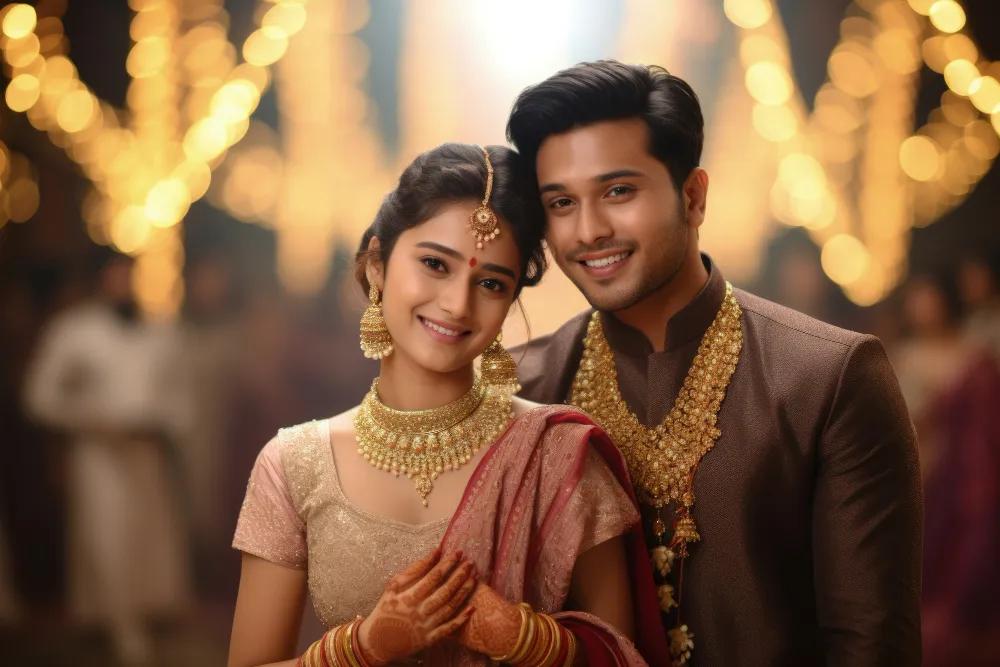
Image source: freepik
Quick Summary
Elite matches have evolved from purely status-driven to ones driven by compatibility, emotional intelligence, ambition, and resources, giving rise to a new form of elite matchmaking.
The upper circles of contemporary Indian marriage practice often show a blend of family tradition spliced with personal choice, followed by a rather liberal attitude.
Premium matrimonial services are all about discretion, personalisation, and curated matchmaking.
Elite matchmaking in India has long been a legacy game. Family names carried weight. Business alliances shaped futures. Social stature signalled stability. Marriage, however, was more than personal; it was also political in influential circles. At the outset, Indian matrimony for the upper class was based on the interplay of reputation, money, and a web of networks that encompassed sectors and communities.
Status still matters. It exemplifies discipline, upbringing, and accomplishment. And so, being on three sides of the world — entrepreneurs, global executives, and heirs to business empires today are striving for something far more nuanced. They are not just seeking a suitable surname but a suitable partner.
The elite Indian matrimony has entered a classier stage. Compatibility, emotional maturity, cross-border experience, ambition, and transparency of values have moved to the front of the line.
When Status Defined the Match
Family reputation ensured social alignment and cultural harmony. Long-term security had been preserved through financial strength and business compatibility. Community ties strengthened shared traditions. Inherited a sensibility that was reflected in educated extraction.
Marriages amongst royal families were expressions of legacy, in community and business ecosystems. The concept of Indian matrimony, especially in upper-class circles, was cemented on the ideals of stability and reputation.
The narrative today is not discarding tradition; it is evolving tradition. The foundation is about the same, but the expectations formed over it have grown more layered and considered.
Success Has An Individual Element
Global socialisation and independent mentality create modern elite humans. They attend international universities, co-found businesses, and operate across borders. They are not just family businesses; they are also brands.
Consequently, marriage is no longer perceived just as a family alliance. This is an incredibly personal relationship. Wealthy people are looking for someone who gets their speed, their stress, and their goals. Lifestyle fit, emotional maturity, intellectual compatibility and a shared long-term vision are now critical aspects of matrimony in the Indian premium segments.
A partner who understands the pressures of boardrooms and travel schedules might appeal to a business leader. Someone who works in a creative industry might appreciate a partner with emotional depth and flexibility. Compatibility goes beyond not just cultural fit, but also mental and emotional fit.
In elite circles, success is no longer an inheritance but a partnership. Furthermore, marriage has greatly evolved into a partnership of equals.
Things That Sustain a Marriage Beyond Wealth
Status might get you into a lot of doors, but compatibility is what keeps those doors open for a lifetime. This accounts for the kind of elite expectations currently held.
Emotional Intelligence
Many high achievers are well acquainted with public criticism, high-stakes negotiation, and busy daily calendars. An emotionally available, kind, patient partner is someone who gets that life is hard but so worth it, and becomes a rare gift. Emotional intelligence is not something that is an option anymore; it is a must.
Shared Ambition
Today, the elite segment wants equals — people with their own track records of accomplishment. They want equals in the boardroom, not just social companions. Collective ambition goes hand in hand with respect.
Aligned Value Systems
In elite Indian matrimony, conversation goes beyond weddings to long-term traditions in the management of wealth, the raising of children, and the pursuit of social impact.
Global Mindset with Cultural Roots
This is how today’s wealthy families cross continents and still stay traditional. This equilibrium is manifested in the perfect partnership — forward-looking, but not at the expense of roots.
And because of all this, compatibility is the silent strength behind lasting influence.
Why Confidentiality Is Non-Negotiable
Wherever there is prominence, visibility too comes — and wherever there is visibility, vulnerability comes. In aristocratic circles, privacy is key. The idea of public matrimonial portals, with profiles available for anyone to open, is probably not suited to their requirement of privacy.
A key focus of modern Indian matrimony services targeting high-end clientele is creating impenetrable ecosystems. Mass listings are to be replaced by verified profiles, invite-only memberships, and matched per individual. Once a potential employee is hired, their background will be verified, which will ensure their authenticity and thus prevent negligent hiring. Communication done in the scenarios can be discreet, ensuring that the reputation of the organisation is maintained.
Trust becomes the cornerstone. It is not browsing; it is orchestrated introductions. Among the top levels, privacy is not a privilege; it is a necessity.
Collaborative Decision-Making
Arranging matches traditionally involved families. Today, this process is more collaborative, although family input is still crucial.
When it comes to image, cultural continuity, and stability, parents do still retain some level of investment. But you know, chemistry, compatibility, mutual life goals or whatever, is cleverly woven into a contemporary Indian marriage scenario.
Their priorities are aligned, not in conflict. Families are seeking solace, while individuals seek companionship.
The result is a refined approach where love and legacy can connect with each other.
From Databases to Discerning Introductions
Matchmaking found a new home in the digital age, but the standards of the elitist demand more than algorithms. There are options with volume-based platforms, but generally they lack both depth and discretion.
To fill this void, VIP matchmaking services have emerged. They have a model that relies on thorough background checks, detailed matchmaking profiles, and a personalised consultation. They do not bombard the client with lots of profiles; they send a few carefully selected matches.
This is elite Indian matrimony, and it is not about probability — it is about precision. It values quality over quantity. Every introduction has a reason and comes with personality, passion, and family values.
Final Words
This sounds like a major change in elite matrimonial culture, where compatibility rather than status has become key for partners. Not to mention, prestige is still relevant too — it signals stability and a bit of unspoken shared history growing up the same way. But a marriage lasts a lifetime because of the principles of self-actualisation, mutual gain, and psychological fusion. The right blend of tradition and individuality forms the best Indian matrimony.
It respects a family history while enabling personal choice. And the guidance of an expert is priceless. VIPShaadi has positioned itself as a trusted matchmaker for respectable families. It is a concept in Indian matchmaking that balances greater compatibility with credibility via verified top-tier profiles, discreet introductions, curated consultations, and invitation-only access.