

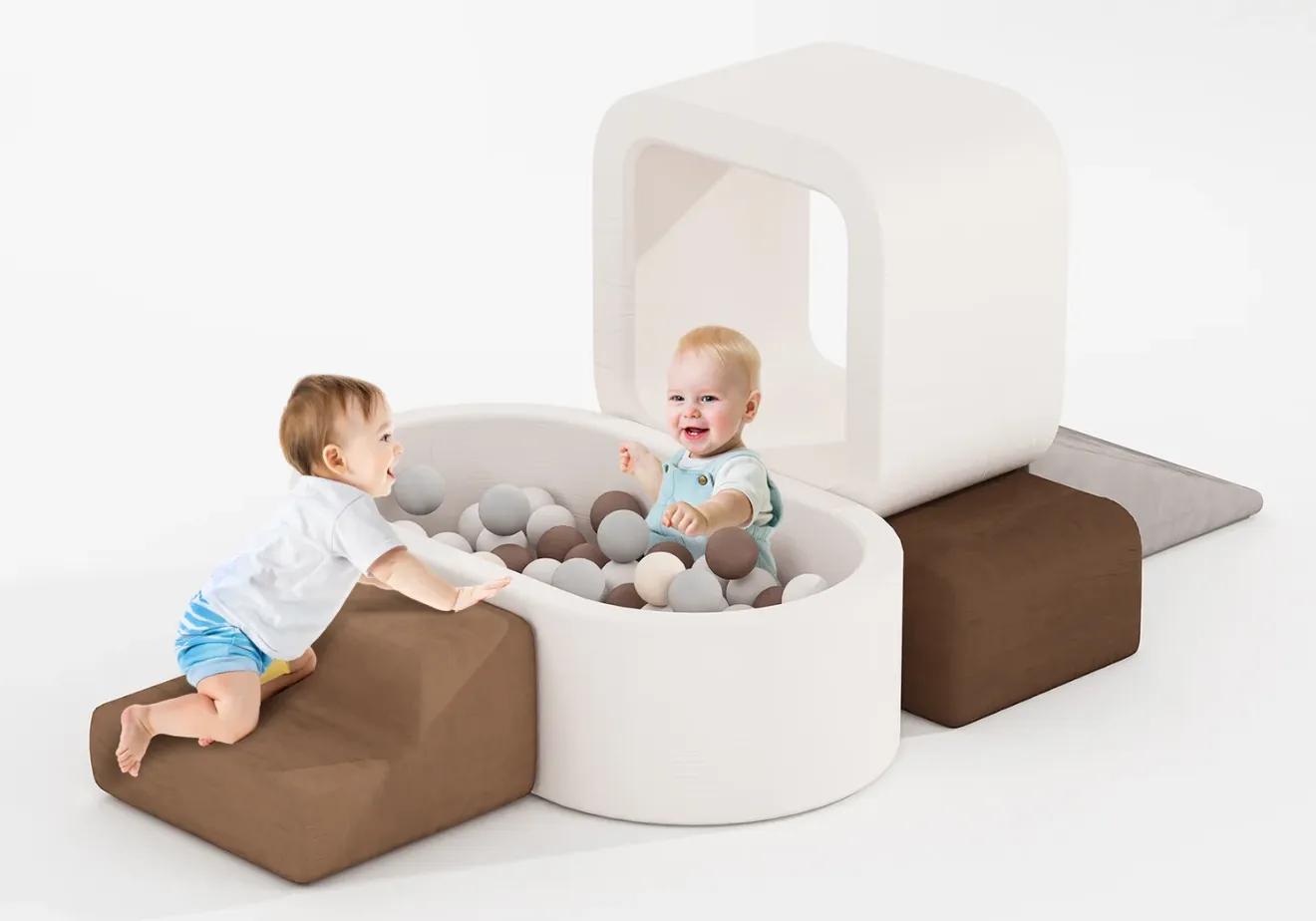
Toddlers learn through their bodies before they learn through words. A wobble on a balance beam, a squeeze of a textured ball, a tumble into a pile of soft blocks — these small moments are doing far more than keeping a child busy. They are wiring the brain. Between the ages of one and three, a toddler's nervous system is racing to connect movement, touch, and emotion into something coherent. Toys aren't just entertainment during this window. They're tools.
Why Movement Comes Before Language
Long before a child can explain what they want, they show you with their whole body. They reach, climb, push, and sometimes lash out. Parents often notice sudden physical behavior and wonder what's behind it. In fact, many caregivers find themselves searching for why does my toddler hit himself when a tantrum turns inward instead of outward. Understanding that this kind of reaction is usually tied to an overloaded, still-developing nervous system — rather than deliberate misbehavior — changes how a parent responds to it.
That's the piece many toy aisles miss. A toy that helps a toddler move, push, climb, and release energy isn't a luxury. It's part of how a young child regulates big feelings that words can't yet hold.
Gross Motor Skills: Building the Foundation
Gross motor development covers the big movements — crawling, climbing, jumping, balancing, throwing. These skills rely on core strength, coordination, and a growing sense of where the body is in space, something occupational therapists call proprioception.
A few toy categories consistently support this stage:
Climbing structures and soft foam sets. Low, padded climbing shapes let toddlers practice balance and risk-taking without the danger of hard edges.
Push and pull toys. These build leg strength and encourage independent walking confidence.
Balance boards and stepping stones. Simple wobble challenges sharpen coordination long before a child could name the skill.
Ball pits. The gentle resistance of dozens of balls gives toddlers deep pressure input while they crawl and dig, which many children find calming.
Brands like Banasuper design their play sets specifically around this stage, using soft, rounded foam pieces that let a toddler fall, climb, and experiment safely indoors. That safety net matters. A child who can move freely without constant "be careful" interruptions gets more uninterrupted practice, and practice is what builds the skill.
Fine Motor Skills: The Small Movements That Matter
While gross motor skills get the big movements right, fine motor skills — the ones that involve fingers, wrists, and hand-eye coordination — are quietly developing in the background. Stacking rings, chunky puzzles, lacing beads, and art supplies all ask a toddler's small muscles to do precise, controlled work.
Play art tables and low, accessible art stations give toddlers repeated chances to grip a crayon, press a stamp, or scoop material with a spoon. These aren't just craft activities. They're rehearsals for skills a child will need for buttons, zippers, and eventually a pencil.
Sensory Play: Meeting a Real Physiological Need
Sensory toys often get filed under "fun extras," but for toddlers they're closer to a basic need. A child's sensory system is still calibrating how much touch, sound, and movement feels comfortable versus overwhelming. Toys that offer squeeze, texture, and varied resistance give a toddler a safe way to explore that threshold.
Soft play mats deserve particular mention here. A textured, cushioned mat gives a toddler a dedicated zone to crawl, roll, and press their palms and knees into a stable surface. For children who seek out strong physical input, that constant, safe pressure can be genuinely soothing rather than just entertaining.
Common sensory-friendly toy options include:
Textured balls with ridges or bumps
Squeeze toys and stress balls sized for small hands
Weighted or textured sensory mats
Soft, chewable teethers for children still exploring the world by mouth
Fabric play tunnels that offer gentle, enclosed pressure
Reading the Signals Behind the Play
Not every toddler needs the same input. A child who seems constantly on the move, crashing into cushions and seeking rough-and-tumble play, is often chasing proprioceptive feedback — their body wants pressure and resistance. A child who melts down in loud, crowded rooms may be the opposite: easily overstimulated and in need of calm, low-sensory spaces to retreat to.
Watching which toys a toddler gravitates toward, and which situations trigger frustration, tells parents a lot. A child who repeatedly seeks out climbing and crashing play may simply need more sanctioned opportunities for big movement throughout the day, not fewer. Scheduling short, active play sessions — even ten minutes on a soft climbing set — before a known trigger point, like right before dinner or after a car ride, can head off some meltdowns before they start.
Building a Simple Sensory-Motor Routine at Home
A predictable rhythm helps more than any single toy. A short morning stretch on a play mat, an afternoon climbing session, and a quiet sensory activity before nap or bedtime cover the full range a toddler's body and brain need in a day. None of this requires an elaborate setup. A soft mat, a small climbing piece, and a basket of textured toys within reach are enough to give a toddler daily access to the input their nervous system is asking for.
The Bigger Picture
Toys aren't the whole answer to toddler behavior, but they're an underused piece of it. A child who gets enough safe, varied physical input during the day often has an easier time regulating emotions when frustration hits. Choosing toys with motor and sensory development in mind — rather than just novelty — gives toddlers a genuine tool for growing calmer, stronger, and more coordinated, one climb, squeeze, and tumble at a time.