

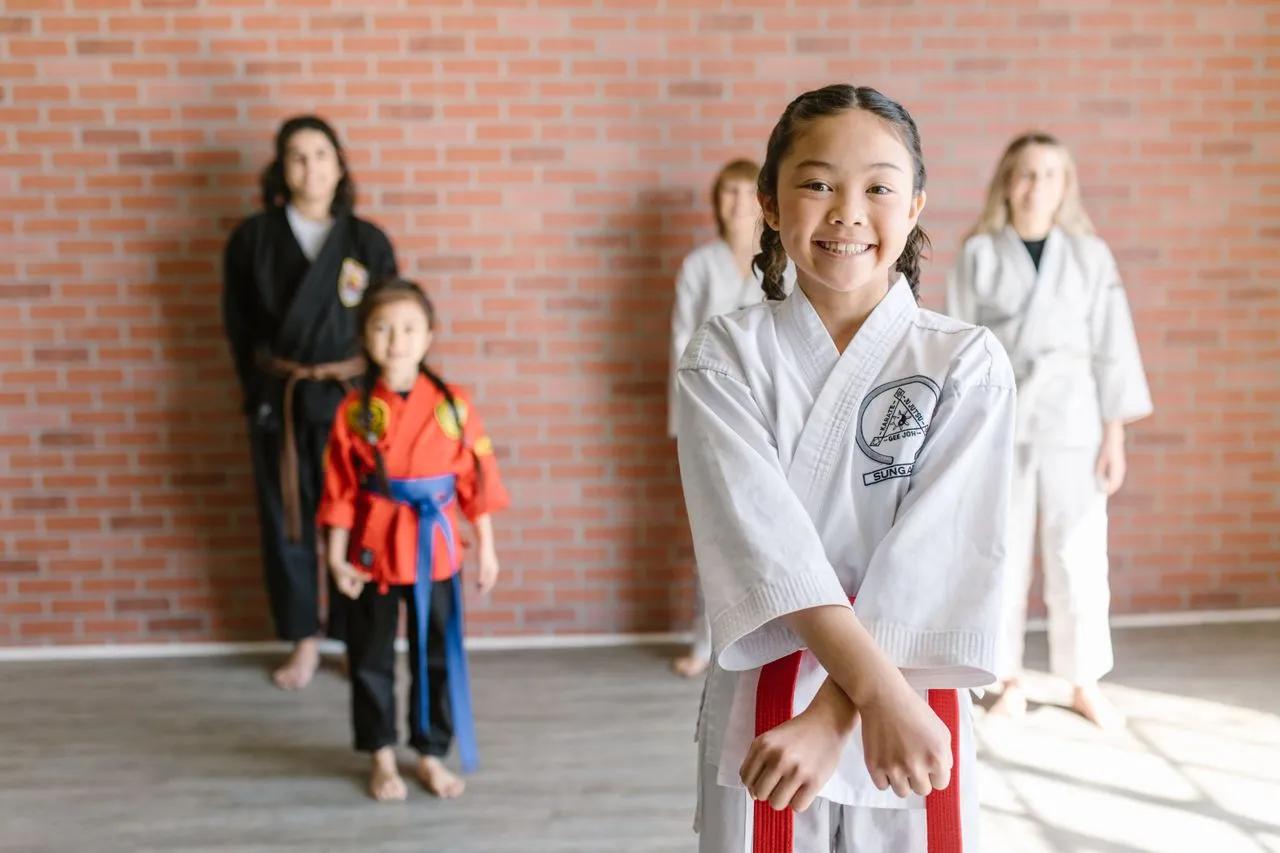
A growing child needs gear for three different lives. There’s the school version, who has to look tidy and sit still for six hours; the sports version, who needs kit that works and shoes that grip; and the weekend version, who is up a tree by ten in the morning.
Buying separately for all three is how a closet ends up full while nobody can find anything that fits. Buying with a bit of overlap in mind means one hoodie covers two of them, and a drawer stays manageable.
Here’s how the three sets usually break down, and where they can share.
School: Comfortable Enough to Forget About
School clothes get worn five days a week for months, so they have to survive a lot of washing and be dull enough that nobody argues about them.
Whatever the uniform rules allow, choose a fabric with a bit of stretch, a dark color that hides a spilled lunch, and a waistband that doesn't need adjusting halfway through the day. Five tops, two or three bottoms, and a couple of sweaters are enough for a term, with a second set only if you do laundry less than twice a week.
Shoes are the item schools are strictest about, and children are hardest on, so check the rules before buying, then check the fit every couple of months, because tight school shoes make for a long day.
Sports: Where the Fit Has to Be Right
Sports gear is the one category where getting it wrong shows up immediately, usually as a blister or a child asking to sit out.
The playing surface determines the right footwear, so a pair of kids' football cleats makes sense for grass fields, while artificial turf calls for turf shoes, indoor courts require flat, grippy soles, and running on pavement is more comfortable in cushioned trainers. Most children only play one or two sports regularly, so it makes sense to invest in the footwear they actually need and borrow equipment for activities they're just trying out.
Everything else is simpler than the shops make it seem. Two sets of practice clothes, proper sports socks with some cushioning, any protective gear required by the club, and a water bottle that doesn't leak will cover most activities. If anything else is necessary, the club will usually let you know.
Buy protective items new and fitted, since a helmet or mouthguard shaped to someone else’s head won't do its job, and look secondhand for everything that only has to work.
Weekends: Built for Mess
Weekend clothes have the easiest job and take the worst punishment, since this is when children climb, cycle, dig, and sit down wherever they happen to be.
Keep this pile cheap and plentiful, because older T-shirts, last season’s joggers, the sweatshirt that stopped being smart enough for school, and a jacket nobody minds getting muddy are all perfect for it, and this is where hand-me-downs earn their keep.
One pair of shoes for mess is worth having, too, so the school shoes and the sports shoes don't go out in the rain. A pair of boots does that job for most of the year.
The Pieces That Cover Two Lives at Once
The useful trick with a growing child is to look for the items that stretch across more than one of those three sets.
A plain dark hoodie works for school if the rules allow it, for warming up before a game and for a Saturday in the yard. Plain joggers do the same, as do sports socks, a rain jacket, and a backpack with a pocket for wet things. Anything in a solid color with no logo tends to travel between all three, while a novelty print belongs in only one.
That overlap keeps the total number of items down, which matters more than the price of any individual piece when everything will be outgrown within a year anyway.
Buying Around a Growth Spurt
Children grow in sudden bursts rather than steadily, which is why a wardrobe can fit in October and be hopeless by February.
The way to handle it is to buy differently depending on the item. Coats, hoodies, and sweatshirts can run a size up without any problem, while shoes, school pants, and anything protective need to fit now, since too big is as uncomfortable as too small.
Put a reminder in the calendar every couple of months to check shoes and waistbands, and keep the next size up stored separately rather than mixed into the drawer. Children almost never mention that something has stopped fitting until the morning it matters.
Keeping Three Sets From Turning Into Chaos
Most of the daily frustration comes from where things are kept rather than from what was bought.
Give each set its own place: school clothes in the drawer, sports kit in a bag that stays packed, and the weekend pile somewhere a child can reach without help. Restock the sports bag the same evening it comes home rather than the next morning.
Then go through the lot every couple of months, move anything outgrown out of the way, and pass it down or sell it while it still has some life in it. Get that right and three sets of gear is no harder to run than one, which is roughly the most any parent can ask for.