

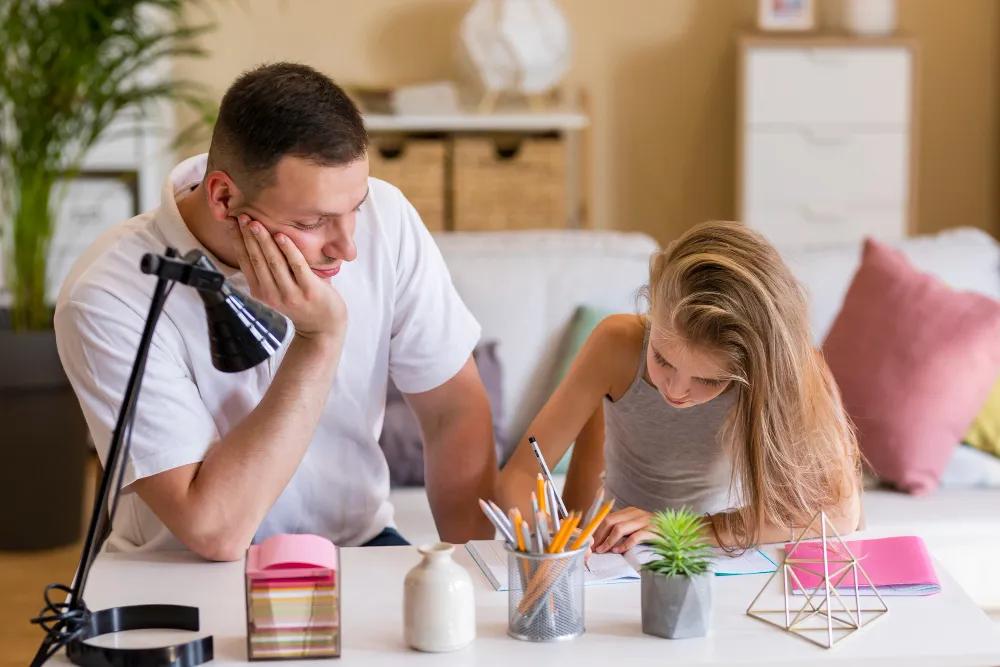
Anxiety rarely stays contained. It doesn't politely wait in one room while the rest of the family goes about their day untouched. When a parent lives with chronic anxiety, it tends to seep into everything — the tone of morning conversations, the rules around the dinner table, the way disagreements get resolved, and the emotional climate that children absorb without even realizing it. What starts as one person's internal struggle can quietly become the operating system for an entire household.
This isn't a story about blame. Parents don't choose to be anxious, and most are doing everything they can to hold things together while feeling like they're barely keeping their own head above water. But understanding how anxiety spreads through a family system — and what can be done about it — matters for everyone living under that roof.
How One Person's Anxiety Reshapes a Family
Anxiety has a way of turning uncertainty into an unbearable feeling that needs to be resolved immediately. For a parent, this often shows up as a need for control. Schedules become rigid. Small deviations from plans feel catastrophic. Questions like "what if something goes wrong" start driving decisions that used to be simple, like whether a child can walk to a friend's house or try out for a team.
Children are remarkably perceptive. They pick up on tension long before they can name it. A child raised by an anxious parent often learns to scan the room for signs of stress, to modulate their own behavior to avoid triggering a reaction, or to suppress their needs because the household simply doesn't have room for one more source of worry. Over time, this can shape how kids relate to their own emotions — some become anxious themselves, mirroring what they've seen modeled at home, while others swing the opposite direction, appearing unusually calm or detached because they've learned that expressing distress doesn't get met with support.
Partners are affected too. A spouse or co-parent often ends up in a caretaking role, constantly managing the anxious parent's emotional state in addition to their own responsibilities. This can create resentment, exhaustion, and a sense of walking on eggshells that erodes intimacy over time. Even well-intentioned attempts to help — reassuring, problem-solving, taking over tasks to reduce stress — can inadvertently reinforce the anxiety cycle rather than break it.
The Ripple Effects Parents Rarely See
Most parents who struggle with anxiety are not oblivious to its cost. Many feel intense guilt watching their children flinch at raised voices or notice their kids becoming quieter around them. But guilt alone rarely changes behavior, and awareness without a plan for addressing the anxiety itself tends to leave families stuck in the same patterns.
A few ripple effects show up consistently in households shaped by an anxious parent:
Communication becomes reactive rather than open. Instead of conversations happening because someone wants to share something, they happen because a worry needs to be addressed or a potential problem needs to be headed off. Kids learn to filter what they say, and honest communication — the kind that builds trust — becomes harder to access.
Household routines tighten around avoiding triggers. Family members start organizing their choices not around what they want, but around what won't set off a stress response. This can look like avoiding certain topics, certain people, or certain activities entirely, narrowing the family's world in ways that aren't always obvious from the inside.
Emotional regulation skills don't get modeled. Children learn how to handle big feelings largely by watching the adults around them. When a parent's own regulation strategies are limited to control, avoidance, or reassurance-seeking, kids miss out on seeing what healthy coping actually looks like.
Physical health can suffer across the family. Chronic stress in a household doesn't stay emotional. Sleep problems, headaches, stomach issues, and a general sense of being "on edge" are common among both the anxious parent and the people living with them.
Breaking the Cycle Without Placing Blame
The good news is that anxiety patterns in families are not fixed. They're learned, which means they can be unlearned — but it usually takes more than willpower or a few deep breaths during a stressful moment. It requires the anxious parent getting real support, and often it requires the whole family learning new ways of relating to stress together.
For the parent at the center of this, individual therapy is often the starting point, particularly approaches like cognitive behavioral therapy that help identify and interrupt anxious thought patterns before they turn into household-wide tension. But for anxiety that's severe, longstanding, or deeply woven into daily functioning, a more intensive approach may be needed. This is where a structured program can make a meaningful difference — one that gives a parent dedicated time and space to work through the roots of their anxiety with professional guidance, rather than trying to manage it in the margins of an already overloaded life.
Family therapy is equally important. It gives everyone in the household — not just the identified "anxious one" — a chance to name what they've experienced, understand the patterns that have formed, and practice new ways of communicating that don't revolve around managing someone else's distress. Children often need their own space to process what they've absorbed, ideally with a therapist who specializes in working with kids and families.
Small, consistent shifts also matter outside formal treatment. Parents can work on naming their anxiety out loud in age-appropriate ways ("I'm feeling worried right now, and that's about me, not about you") rather than letting kids guess at the cause of tension. Building in predictable calm moments — a daily walk, an unhurried dinner without screens, a bedtime routine that isn't rushed — gives the nervous system of everyone in the house a chance to reset.
Moving Forward Together
A parent's anxiety doesn't have to define a family's story. Many households move through this exact struggle and come out the other side with stronger communication, more emotional honesty, and a deeper understanding of one another. The path there usually isn't a straight line, and it rarely happens without support — but it is absolutely possible.
If anxiety has become the quiet organizing force in your household, the most important step is recognizing that it's not something any one person has to solve alone. Reaching out for professional help, whether individual therapy, family counseling, or a more comprehensive treatment option, is not a sign of failure. It's the first real step toward giving your entire family room to breathe again.