

When the Nursery Stays Warm After Sunset, Bamboo Baby Pajamas Keep Things Simple
A warm nursery can make bedtime clothing a little harder to judge. After sunset, the temperature may feel comfortable to an adult standing in the room, while a baby or toddler can feel warmer once they are settled under bedding. Parents often respond by adding layers, removing them later, or changing sleepwear halfway through the night.
A simpler approach is to look at the whole sleep environment before choosing what a child will wear. Room temperature, bedding, the child's usual sleep habits, and the type of fabric all matter. Lightweight sleepwear can be useful when the nursery remains warm, especially when parents want a comfortable bedtime routine without constantly adjusting clothing.
Start With the Nursery, Not the Pajamas
The first step is to understand how the nursery behaves after dark. Some rooms hold heat long after the rest of the house begins to cool, particularly when doors and windows remain closed. Others become noticeably cooler once the heating or daytime warmth fades. Watching how the room changes over several evenings can give parents a better idea of what type of sleepwear makes sense.
It is also helpful to consider where the crib or toddler bed sits. A bed near a window, exterior wall, radiator, or heat source may have a different temperature from the center of the room. The goal is not to find one perfect outfit for every night, but to choose clothing according to the actual conditions in the child's sleeping space.
Keep Bedtime Layers Easy to Adjust
When the nursery is warm, complicated layers can make bedtime unnecessarily difficult. A simple sleepwear setup gives parents fewer pieces to manage and makes nighttime changes easier if they become necessary. This can be particularly useful with babies and toddlers who may wake for feeding, diaper changes, or other routine needs.
Layering can still be useful when temperatures fluctuate, but the layers should be practical. Parents can keep an additional lightweight piece nearby rather than dressing the child too heavily from the beginning. This allows the sleeping setup to respond to changes in the room instead of assuming the temperature will remain exactly the same all night.
Choose Fabric With the Whole Night in Mind
The fabric of sleepwear matters because children can spend many hours in the same garment. A material that feels comfortable when a child first gets into bed should continue to feel suitable after several hours of sleeping, moving, and changing positions. Soft fabrics can therefore be a practical consideration when building a warm-weather or warm-room bedtime routine.
Bamboo pajamas sleepwear is one option parents may consider when looking for soft clothing for nighttime use. The point is not that one fabric automatically works for every child or every room. Instead, parents can look at the feel, weight, fit, and construction of the garment alongside the nursery conditions and their child's individual needs.
Watch What Happens During the First Few Hours
Bedtime temperature can change as the evening progresses. A nursery may feel warm when the child is getting ready for bed but become cooler later, or it may remain warm because the room retains heat. Paying attention to the first part of the night can help parents decide whether the sleepwear is appropriate.
Parents do not need to constantly disturb a sleeping child to check clothing. Instead, they can observe patterns over time and look for obvious signs of discomfort while the child is awake or during normal nighttime care. A consistent routine makes it easier to recognize when something about the sleep setup needs adjustment.
Make the Pajama Change Part of the Routine
Children often respond well when bedtime follows a familiar sequence. Bathing, changing into sleepwear, reading, feeding, and settling down can happen in roughly the same order each evening. Keeping pajamas simple can make that sequence easier to repeat, especially when the child is already tired.
For babies and toddlers, clothing that is straightforward to put on and remove can also reduce unnecessary fuss. Parents may need to make a quick change during the night, so a familiar two-piece set or another uncomplicated design can be easier to manage than clothing with multiple separate layers.
A Bamboo Pajama Set Can Simplify a Warm Bedtime
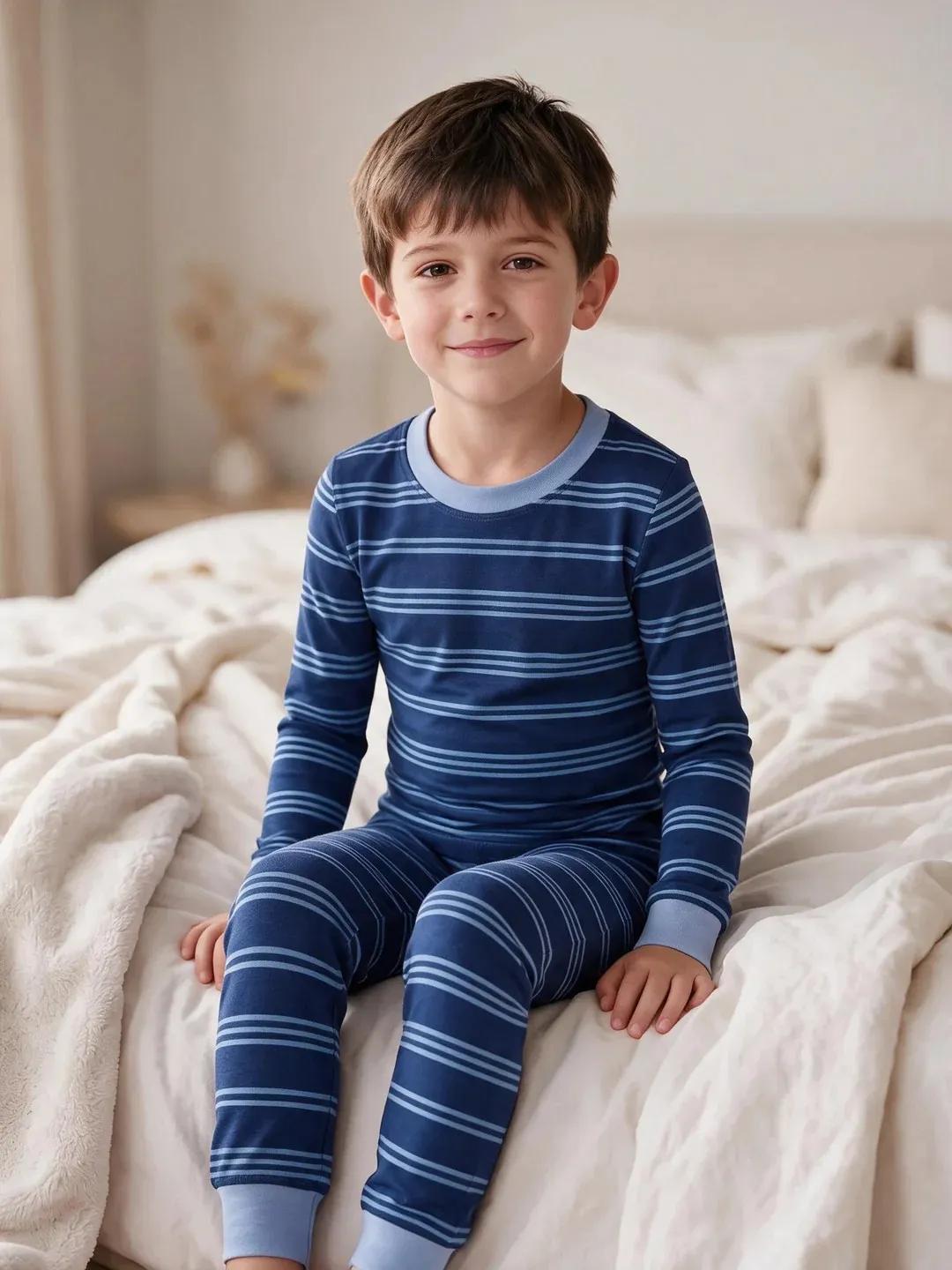
For toddlers and young children, a two-piece bamboo pajama set can fit naturally into a simple nighttime routine. The Christmas Halloween Pajamas 2-Piece Bamboo Pajamas Set With Playful Print features a blue design with a playful print and is made as a snug-fitting sleepwear option for toddlers and kids. Its two-piece format keeps the outfit straightforward for bedtime and nighttime changes.
The design also shows why parents should consider sleepwear as part of the wider routine rather than choosing it based only on appearance. A child can move from the nursery to bed without needing several layers, while the separate top and bottom can make changing more manageable. The exact clothing setup should still be based on the room conditions, bedding, and the child's needs.
Check the Fit Before the Lights Go Out
Sleepwear should allow a child to move naturally without becoming excessively loose or restrictive. A good bedtime check can include looking at the waistband, sleeves, cuffs, and overall length before the child settles down. Clothing that feels comfortable during movement is more likely to remain practical when the child rolls or changes position in bed.
Parents should also pay attention to how the garment fits after washing. Fabric can change slightly depending on care methods, and a set that fit well when new may need to be checked again after repeated laundering. Regularly checking fit is especially important for quickly growing babies and toddlers.
Keep Bedding From Complicating the Setup

Sleepwear is only one part of the nursery environment. Bedding, mattress position, room temperature, and airflow all influence how warm the sleeping space feels. Adding heavier bedding to compensate for thin clothing, or adding extra clothing because of light bedding, can make the overall setup harder to judge.
For that reason, it can be useful to think about sleepwear and bedding together. If the room already stays warm and the child has suitable bedding, adding multiple clothing layers may not be necessary. Parents can make adjustments based on the entire environment instead of treating pajamas as the only way to manage temperature.
Keep a Second Set Within Easy Reach
Nighttime accidents and unexpected spills are normal parts of caring for young children. Keeping a clean pajama set nearby can make these situations less disruptive. Parents do not have to search through drawers or leave the nursery for long while trying to find replacement clothing.
A second set can also be useful when laundry schedules are tight. Rather than buying or packing many different sleep outfits, parents can keep a small rotation of dependable pieces. This keeps the bedtime drawer organized and gives caregivers a straightforward option when one set is being washed.
Bamboo Baby Pajamas Can Fit a Simple Sleepwear Rotation
Parents looking for bamboo baby pajamas can think about them as part of a small rotation rather than as a separate category that requires an entirely new wardrobe. A few comfortable sets can cover ordinary nights while allowing one outfit to be in the wash. This can be particularly practical for babies and toddlers who need frequent clothing changes.
The most useful rotation is one that matches the child's actual routine. Some families may need several sets because of frequent nighttime changes, while others may need only a small number for regular use. Keeping the selection manageable also makes it easier to notice which fits, fabrics, and designs the child seems most comfortable wearing.
Plan for Laundry Before Buying More
Warm-room sleepwear may be used frequently, which means washing and drying become part of the decision. Parents should check the care instructions and consider how quickly a garment needs to be ready again. A small collection that fits the family's laundry routine can be more practical than a large drawer full of sleepwear.
It is also useful to separate heavily soiled clothing from pieces that only need a normal wash. Keeping laundry organized can prevent parents from discovering at bedtime that the child's preferred sleepwear is still waiting in the washing machine. A predictable rotation removes some of the pressure from evening preparation.
Know When the Room Needs More Than a Clothing Change
Sometimes adjusting sleepwear is not enough to make the nursery comfortable. If the room consistently feels too warm or poorly ventilated, parents may need to consider the wider environment rather than simply changing the child's clothes. Curtains, airflow, room position, and the timing of heating can all influence how the space feels.
The same applies when a room becomes unexpectedly cool during the night. Instead of repeatedly changing clothing without understanding why the temperature is shifting, parents can look at the source of the change. A stable environment makes it easier to choose appropriate sleepwear and maintain a predictable bedtime routine.
Keep Bedtime Decisions Practical
Warm nurseries do not have to turn bedtime into a constant process of adding and removing layers. A better approach is to observe the room, consider the child's needs, choose suitable sleepwear, and keep a simple backup nearby. This makes nighttime care easier without relying on complicated clothing combinations.
Bamboo sleepwear can be one part of that approach when its softness, weight, fit, and design suit the child and the sleeping environment. The most useful bedtime wardrobe is ultimately the one that works with the family's routine. When the nursery stays warm after sunset, keeping clothing simple can make the entire evening easier to manage.