


The permanent makeup industry continues to expand rapidly, with more clients seeking long-lasting eyebrow, lip, and eyeliner enhancements. For salon owners, this growth brings both opportunity and responsibility. Every pigment injected beneath a client's skin carries potential risks—from allergic reactions and infections to premature fading that damages your professional reputation. Selecting pigments that meet the highest safety and performance standards isn't just a preference; it's a business imperative.
Biomaser pigments have emerged as a modern solution engineered to address these dual concerns through advanced safety protocols and superior color retention technology. This article provides a detailed comparison of these critical aspects, equipping salon owners with the knowledge needed to make confident purchasing decisions. We'll examine how Gamma-Ray sterilization eliminates microbial threats, why ISO certification serves as your quality guarantee, and how the formulation science delivers lasting vibrancy that keeps clients returning with referrals rather than complaints. Whether you're evaluating new suppliers or upgrading your current pigment line, understanding these factors will directly impact your salon's safety record and bottom line.
Biomaser Pigment Safety: Understanding Protocols and Certifications
Safety in permanent makeup isn't merely a regulatory checkbox—it's the foundation upon which every successful salon builds its reputation. When pigments are deposited into the dermal layer of skin, they bypass the body's primary defense barrier, creating direct exposure to whatever substances those pigments contain. Contaminated or poorly manufactured products can trigger granulomas, allergic reactions, bacterial infections, and scarring that no amount of marketing can overcome. For salon owners, a single adverse reaction can result in liability claims, negative reviews, and irreversible damage to years of brand building.
Biomaser pigments address these concerns through a multi-layered safety framework that begins at the molecular level and extends through every stage of production. Rather than relying on a single safeguard, the brand integrates industrial-grade sterilization with internationally recognized quality management systems, creating redundant protections that minimize risk. This approach reflects an understanding that salon owners need more than promises—they need verifiable, documented evidence that every bottle leaving the production facility meets standards rigorous enough to withstand scrutiny from health regulators and informed clients alike.
Gamma-Ray Sterilization: Ensuring Microbial Safety in Artist Tools
Gamma-Ray sterilization uses high-energy photons emitted from Cobalt-60 sources to penetrate sealed pigment containers and destroy microorganisms at the DNA level. Unlike heat-based sterilization, which can degrade pigment compounds and alter color properties, gamma irradiation works at ambient temperatures, preserving the chemical integrity of the formulation while achieving sterility assurance levels (SAL) of 10⁻⁶—meaning the probability of a single surviving organism is less than one in a million. This method eliminates bacteria, fungi, viruses, and spore-forming pathogens that conventional chemical preservatives may fail to neutralize completely.

For salon owners, this translates into a critical practical advantage. Products sterilized through gamma irradiation arrive in a verified sterile state regardless of storage conditions or shipping variables. There's no reliance on preservative systems that might degrade over time or fail under temperature fluctuations. When you open a Biomaser pigment bottle, you can confidently assure clients that the product meeting their skin has undergone the same sterilization standard applied to surgical implants and pharmaceutical injectables. This level of microbial safety directly reduces infection risk and demonstrates due diligence that protects both your clients and your business legally.
ISO Certification: A Benchmark for Quality and Reliability
ISO certification—particularly ISO 9001 for quality management systems—represents an independently audited commitment to consistent manufacturing processes. When Biomaser holds this certification, it means every batch of pigment follows documented procedures for raw material sourcing, formulation mixing, quality testing, packaging, and distribution. Third-party auditors regularly verify compliance, ensuring that the product you purchase today maintains identical safety and performance characteristics to the one you'll order six months from now.
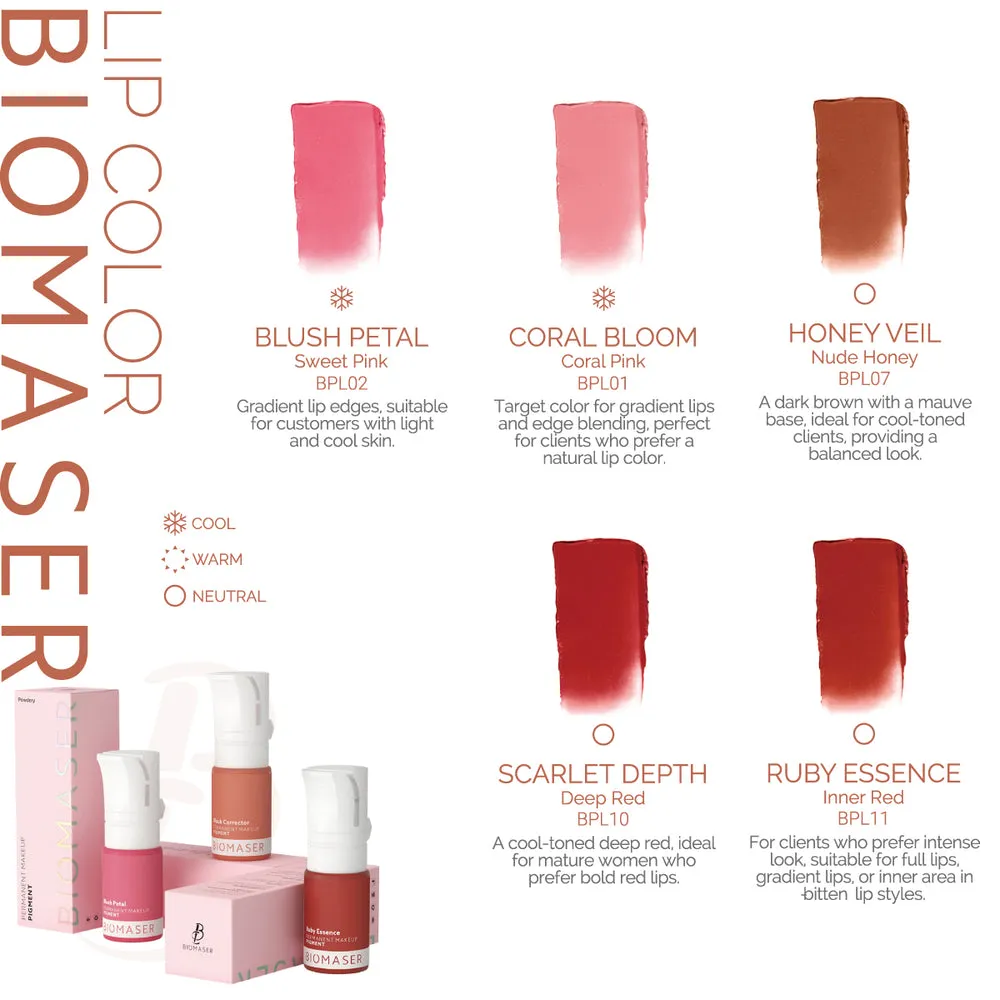
This consistency matters enormously for salon operations. Certified production systems include full traceability, meaning every pigment bottle can be tracked back to specific raw material lots, production dates, and quality control test results. If a concern ever arises, you can provide regulatory authorities with complete documentation demonstrating your supply chain's integrity. ISO certification also requires corrective action protocols—when any deviation occurs, the manufacturer must identify root causes and implement systemic fixes rather than simply discarding a single defective batch. For salon owners evaluating suppliers, requesting and verifying ISO certification documents should be a non-negotiable step in the purchasing process, serving as your most reliable indicator that safety claims are substantiated by operational reality rather than marketing language alone.
The Science of Color Retention in Biomaser Pigments
Color retention determines whether a permanent makeup procedure remains a source of pride or becomes a fading reminder of wasted investment. Clients expect their eyebrow microblading or lip blush to maintain its intended shade for years, not weeks. When pigments fade unevenly—shifting toward unnatural blue, orange, or grey undertones—clients don't blame their own skin chemistry. They blame the artist and the salon. This reality makes pigment longevity a direct revenue factor: superior retention means satisfied clients who return for new services rather than corrective work, and who recommend your salon with genuine enthusiasm.
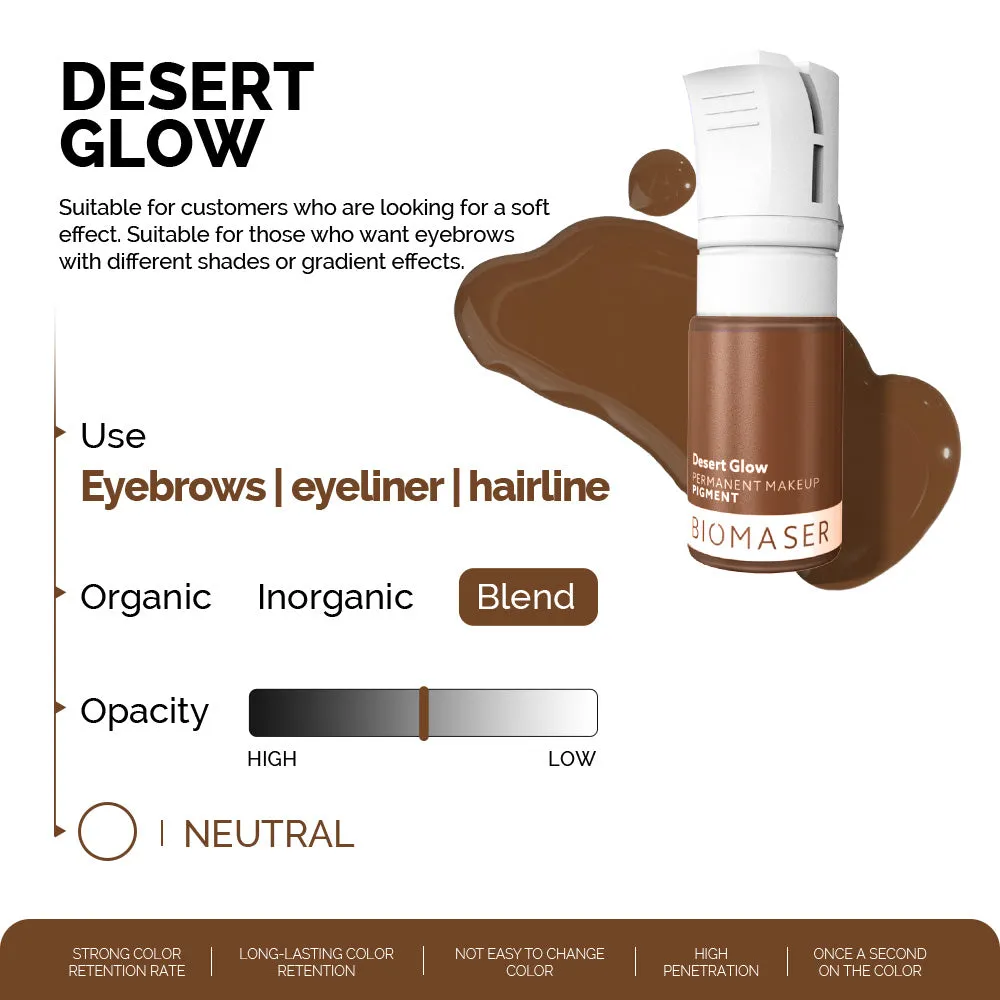
Biomaser pigments are formulated with color stability as a core engineering priority rather than an afterthought. The science behind their retention performance involves deliberate choices in pigment particle size, organic-inorganic compound ratios, and carrier fluid composition—all calibrated to interact predictably with human dermal tissue. These formulations resist the metabolic processes that typically break down and disperse pigment molecules over time, maintaining chromatic integrity through the skin's natural regeneration cycles. For salon owners, this translates into fewer correction appointments consuming chair time, stronger client testimonials, and a measurable competitive advantage over studios using pigments that deliver impressive initial results but deteriorate within months.
How Biomaser Pigments Maintain Color Over Time
The longevity of any implanted pigment depends on how its particles interact with dermal fibroblasts and the body's immune response. Biomaser's formulation science addresses this through optimized particle size distribution—particles large enough to resist phagocytic removal by macrophages yet small enough for smooth, even implantation. This precise calibration means pigment remains anchored in the target dermal layer rather than migrating deeper or being gradually expelled toward the epidermis where it would shed with natural skin turnover.
Equally important is the pigment's chemical stability against UV exposure and oxidative stress. Biomaser employs iron oxide-based compounds with enhanced molecular bonding structures that resist photodegradation—the process by which sunlight breaks chemical bonds and causes color shifting. Traditional pigments often contain organic dyes that are inherently unstable under UV radiation, leading to the notorious blue-grey shift in black eyebrow pigments or the salmon-pink fading in lip colors. Biomaser's inorganic-dominant formulations maintain their original hue because the molecular structure remains intact through thousands of sun exposure cycles. The carrier fluid also plays a role: it's designed to deposit pigment evenly during application, preventing the concentration irregularities that cause patchy fading patterns over time.
Impact on Client Satisfaction and Touch-up Frequency
When color holds true for eighteen to twenty-four months before requiring a refresh—rather than the eight to twelve months typical of lesser formulations—the practical business impact is substantial. Clients perceive longer-lasting results as higher value, justifying premium pricing and generating organic word-of-mouth referrals that cost nothing to acquire. A client who still receives compliments on her brow work a year after her appointment becomes an ambassador for your salon in every social interaction and online review.
Reduced touch-up frequency also restructures your scheduling economics. Instead of blocking appointment slots for correction sessions that often carry lower margins or are offered complimentary to manage dissatisfaction, your calendar fills with full-price new client bookings and elective enhancement services. Artists report that working with retention-stable pigments also reduces the technical complexity of touch-ups when they do occur—refreshing a uniformly faded result is straightforward, while correcting patchy, color-shifted work demands advanced skills and additional time. Salon owners who track their rebooking rates and client lifetime value consistently find that pigment quality correlates directly with both metrics, making the per-bottle cost difference between premium and budget pigments negligible against the revenue implications of client retention and reputation strength.
A Comparative Analysis: Safety and Color Retention vs. Traditional Pigments
Understanding Biomaser's advantages requires examining them against the broader landscape of permanent makeup pigments available to salon owners. Traditional pigments vary enormously in quality—from reputable brands with decent track records to unregulated imports with opaque ingredient lists and no verifiable safety documentation. The gap between premium engineered pigments and conventional alternatives isn't subtle; it manifests in measurable differences across sterilization reliability, manufacturing consistency, and long-term color behavior in skin. For salon owners weighing cost against quality, this comparison reveals why the initial investment in certified, scientifically formulated pigments pays dividends that budget alternatives simply cannot match.
Safety Showdown: Biomaser's Advanced Protocols vs. Conventional Methods
Most conventional pigment manufacturers rely on chemical preservative systems—typically parabens or phenoxyethanol—to maintain sterility after production. While these preservatives inhibit microbial growth under ideal conditions, they introduce variables that Gamma-Ray sterilization eliminates entirely. Preservative efficacy degrades with temperature exposure during shipping, diminishes as containers are opened and resealed, and may prove insufficient against resistant spore-forming organisms like Clostridium species. Some clients also exhibit sensitivity to preservative compounds themselves, creating allergic responses unrelated to the pigment's colorants.
Beyond sterilization, certification gaps present significant risk. Many traditional pigment suppliers operate without ISO-certified quality management systems, meaning batch-to-batch consistency depends on individual operator diligence rather than systemic controls. A salon owner purchasing uncertified pigments has no independent verification that today's batch matches yesterday's in composition, sterility, or heavy metal content. Reports from dermatology literature document cases where traditional pigments contained undisclosed nickel, cobalt, or chromium compounds—known sensitizers that triggered delayed hypersensitivity reactions months after application. Biomaser's certified production chain, with its documented traceability and third-party auditing, provides the accountability structure that conventional suppliers frequently lack, giving salon owners defensible evidence of due diligence should any client concern arise.
Color Durability: How Biomaser Outperforms in Retention and Fade Resistance
Traditional pigments often rely heavily on organic colorants—carbon black mixed with azo dyes for dark shades, or lake pigments for reds and pinks. These compounds deliver vivid initial color but suffer from inherent molecular instability. Azo bonds break under UV exposure, releasing smaller chromophore fragments that shift the perceived color. This explains why many clients with conventional eyebrow tattoos see their crisp brown shade deteriorate into blue-grey within twelve months, or why lip pigments turn an unflattering orange-coral as red organic dyes degrade faster than their yellow counterparts in the mixture.
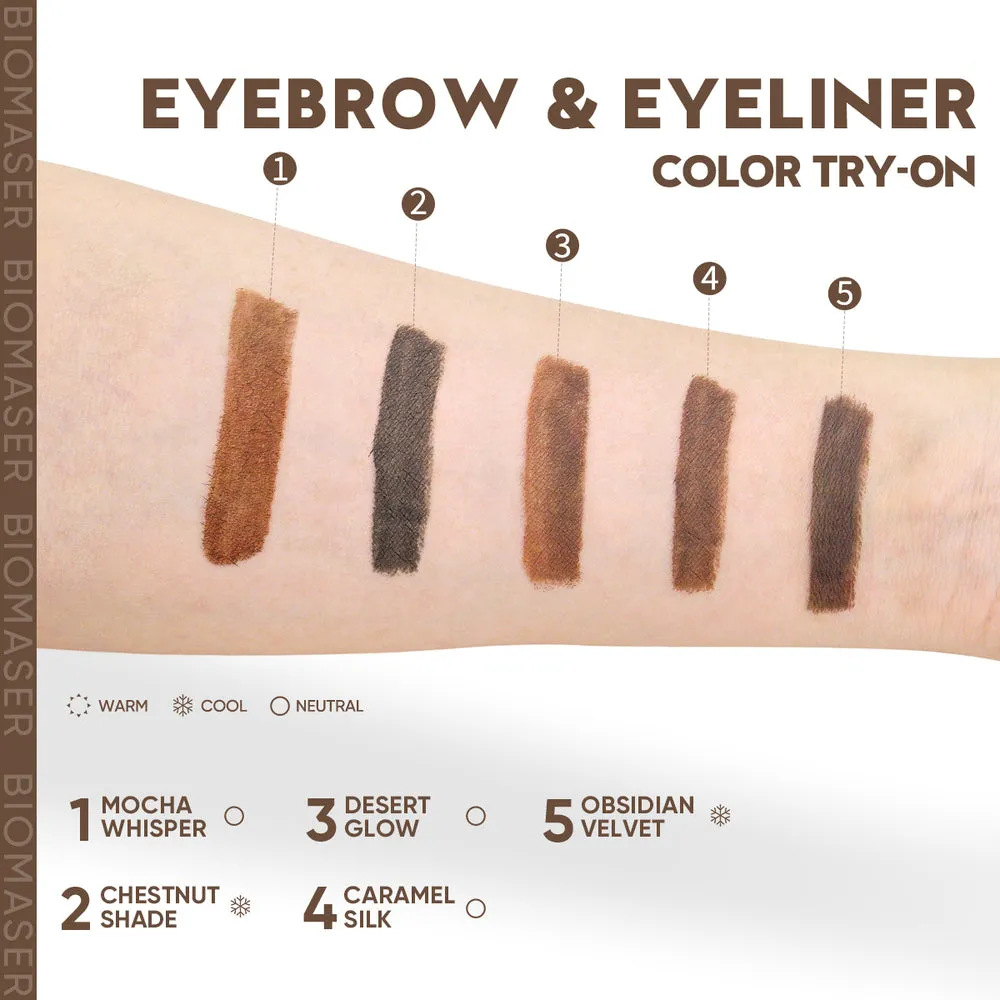
Biomaser's iron oxide-dominant formulations resist this degradation pathway because inorganic pigment molecules maintain structural integrity under environmental stress. Practitioners who have transitioned from traditional to Biomaser pigments consistently report that healed results at the twelve-month mark retain approximately eighty to ninety percent of their original saturation, compared to fifty to sixty percent typical with organic-heavy alternatives. The practical difference is visible: clients return for scheduled refreshes rather than urgent corrections, and the faded result still looks intentional rather than damaged. For salon owners tracking their service mix, this performance gap means fewer unpaid correction sessions, stronger portfolio photos showing aged results, and client testimonials that specifically mention lasting quality—the kind of social proof that converts prospective clients browsing your reviews into confirmed bookings.
Implementing Biomaser Pigments: A Step-by-Step Guide for Salon Owners
Transitioning to a new pigment line requires more than simply placing an order—it demands a structured approach that protects your investment and ensures optimal outcomes from the first application. Salon owners who methodically evaluate, integrate, and optimize their pigment selection consistently achieve better client results and smoother operational workflows than those who switch products impulsively based on a single recommendation or promotional offer. The following steps provide a practical framework for adopting Biomaser pigments in a way that maximizes both their safety advantages and color retention performance within your existing service menu.
Step 1: Evaluating and Selecting Certified Biomaser Pigments
Begin by requesting complete documentation from your supplier before committing to a purchase. Ask specifically for the ISO 9001 certificate with its registration number, which you can independently verify through the issuing certification body's online database. Confirm that Gamma-Ray sterilization is explicitly stated on product labeling or accompanying technical data sheets—vague references to "sterilized" without specifying the method should raise immediate questions. Examine batch coding on individual bottles to ensure traceability is built into the packaging, allowing you to cross-reference any unit with the manufacturer's quality control records if needed.
Evaluate vendor reputation through direct outreach to other salon owners who have used the products for at least six months, prioritizing feedback on healed results rather than fresh application appearance alone. Order a small trial selection across your most-requested shade categories—browns for brows, neutrals for eyeliner, and warm tones for lips—before committing to full inventory. Test these on practice skin first to assess viscosity, flow characteristics, and compatibility with your preferred machine settings. This measured approach prevents costly inventory mistakes while building your confidence in the product's real-world performance before clients are involved.
Step 2: Best Practices for Application and Aftercare to Maximize Results
Optimal color retention starts with proper technique during implantation. Work at consistent depth within the upper dermal layer—too shallow and pigment sheds with epidermal turnover, too deep and it disperses into surrounding tissue causing blurred edges. Biomaser pigments perform best when applied with controlled, even passes rather than aggressive overworking that causes unnecessary trauma and triggers stronger immune responses. Calibrate your machine speed and needle configuration to the specific viscosity of each shade, as thicker formulations may require slightly adjusted power settings to achieve uniform saturation without excessive skin damage.
Client aftercare directly influences how much pigment survives the healing process. Provide written instructions that emphasize keeping the treated area clean with gentle, fragrance-free cleansing, applying a thin layer of recommended healing ointment to prevent scab formation that pulls pigment from the skin, and strictly avoiding sun exposure, swimming pools, and exfoliating products for a minimum of ten days. Educate clients that long-term color maintenance benefits from daily SPF application over treated areas, as this preserves the molecular stability that Biomaser's formulation is designed to deliver. Following up with clients at the two-week and six-week marks allows you to document healing progression, address concerns early, and build the kind of attentive client relationships that generate loyalty and referrals.
Why Certified Pigments Are a Strategic Investment for Your Salon
The evidence is clear: Biomaser pigments deliver measurable advantages in both safety and color retention that directly serve salon owners' most pressing operational needs. Gamma-Ray sterilization provides pharmaceutical-grade microbial elimination without compromising pigment integrity, while ISO certification guarantees the batch-to-batch consistency and traceability that protect your business legally and professionally. On the performance side, iron oxide-dominant formulations engineered for particle size optimization and UV resistance maintain chromatic fidelity far longer than organic-heavy traditional alternatives—translating into satisfied clients, premium pricing power, and calendars filled with revenue-generating appointments rather than complimentary corrections.
For salon owners committed to building sustainable, reputation-driven businesses, adopting certified Biomaser pigments represents a strategic decision rather than merely a product swap. The reduced infection risk, documented compliance evidence, and superior healed results create compounding returns through client loyalty, referral generation, and competitive differentiation. As the permanent makeup industry matures and clients become increasingly educated about ingredient safety and result longevity, staying ahead means partnering with suppliers whose products withstand scientific scrutiny. Investing in advanced, certified artist tools today positions your salon as a trusted authority—ready to meet tomorrow's standards while delivering exceptional outcomes now.