

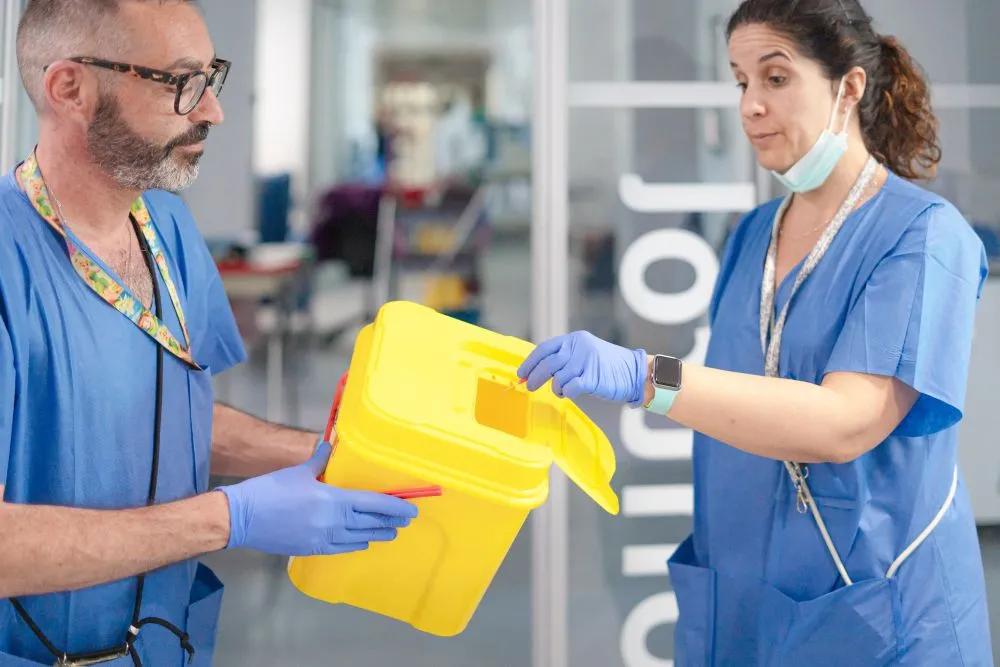
Sharps are part of everyday life for many people, even outside hospitals and clinics. If injections, lancets, or infusion devices are used at home, the responsibility doesn’t end after the needle is used.
A single misplaced needle can injure sanitation workers, family members, or anyone who comes into contact with household trash. Used sharps can carry blood and expose others to infections, turning an ordinary trash bag into a real safety hazard.
This guide explains what sharps are, why proper disposal matters, and how to handle sharps waste safely at home and in the community.
What Counts as Sharps and Why They’re Risky
Sharps include any medical instruments designed to pierce the skin. This category covers hypodermic needles, intravenous needles, pen needles, lancets, and needle connectors used with infusion sets. Used needles may still carry blood or bodily fluids, even when they look clean. One accidental puncture can expose someone to serious infections like Hepatitis C or other blood-borne diseases.
Sharps waste is considered a type of medical waste and, in many cases, hazardous waste. That classification exists for a reason. Unlike regular trash, sharps can easily break through bags and injure anyone who handles the waste later. Recycling staff and trash collection services face especially high risks when sharps end up where they don’t belong.
Why Proper Sharps Disposal Is Non-Negotiable
Safe sharps disposal protects more than just the person using the needle. It safeguards sanitation workers, health care providers, home health caregivers, and the general public. Improper disposal of sharps also creates problems for local waste systems and can violate community guidelines or local policy & regulations.
Many sharps-related injuries occur during routine waste handling. A child reaching into a trash bag or a worker sorting waste at a transfer station shouldn't be put at risk because of careless disposal. Following proper sharps disposal practices keeps everyone safer and supports responsible waste management. You may also consider hiring a medical sharps disposal service to help dispose of the hazardous waste for you.
Using the Right Sharps Disposal Containers
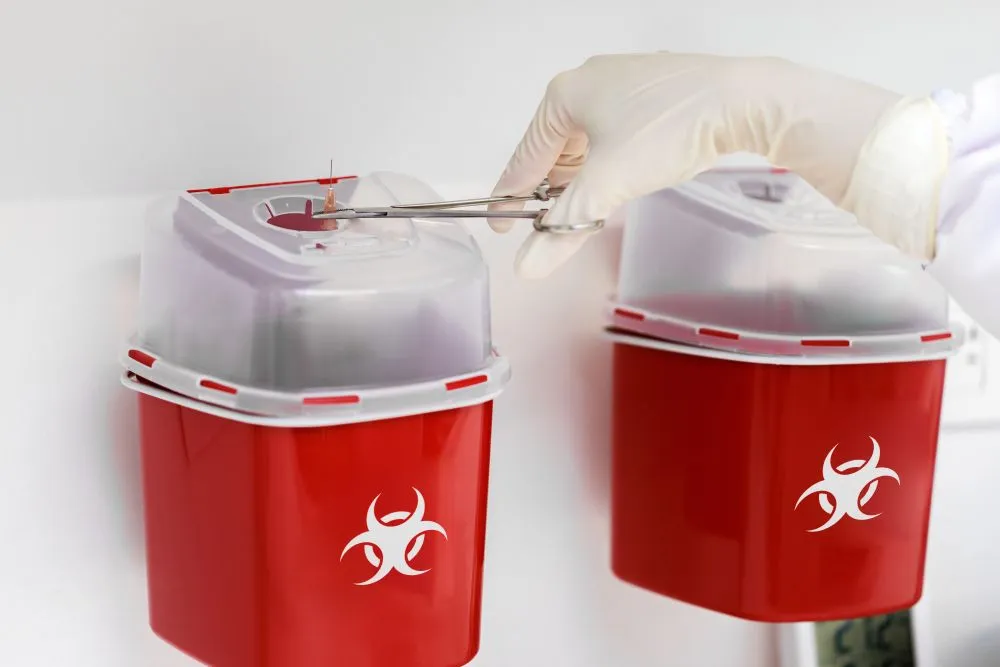
The safest way to manage sharps waste is by using proper sharps disposal containers. FDA-approved sharps container options are designed to be puncture-resistant, leak-resistant, and clearly labeled. They usually include a secure opening that allows needles to enter but prevents hands from going back in.
A rigid plastic container with a puncture-resistant lid is essential. Once a needle goes in, it stays in. Sharps disposal boxes should never be overfilled. When the container reaches the fill line, it’s time to close it and prepare it for disposal.
In case any FDA-cleared sharps disposal containers aren't immediately available, a heavy-duty plastic container can be used temporarily. A plastic laundry detergent container or laundry detergent bottle made from rigid plastic can work if it’s thick, has a tight-fitting lid, and is clearly labeled. The lid should be sealed with duct tape, and a warning sticker or handwritten label using a permanent marker should clearly state that it contains sharps.
Handling Home-Generated Sharps Safely
Home-generated sharps are increasingly common due to self-administered treatments like GLP-1 weight loss medications or insulin therapy. Managing these sharps safely at home requires planning and consistency.
Used needles should never be recapped, bent, or removed from syringes by hand. After use, the needle should go directly into an approved container. Always secure the cap of the container once it’s full, and keep it out of reach of children and pets.
Sharps should never go into a recycling container or loose household trash. Even one needle can injure someone downstream in the waste process. Safe handling protects both the household and the wider community.
Where Sharps Can Be Taken for Disposal
Once a container is full, it needs to go to the right waste disposal site. Many areas offer sharps collection sites or community sharps collection sites that accept sealed containers. Health care facilities often participate in Sharps Collection Program options, allowing patients to drop off containers safely.
Some regions offer a sharps container exchange program, where a full container can be swapped for an empty one. Household hazardous waste collection event schedules may also accept sharps disposal containers.
Mail-back service options are another solution. A mail-back sharps waste disposal program allows containers to be sent directly to a licensed processing facility. This option is especially useful in rural areas or places without nearby disposal box locations.
What Not to Do With Sharps
Avoid the following actions when handling sharps waste:
Don’t flush needles or sharps down the toilet. This can damage plumbing and create problems for water and waste systems.
Don’t place sharps in regular trash or recycling bins. Loose needles can puncture bags and injure trash collection services and recycling staff.
Don’t leave used needles on public property or in public places.
Don’t handle loose sharps with your bare hands. If sharps are found outside a container, report them to the appropriate local authority.
Avoiding these mistakes helps protect workers, families, and the wider community while keeping sharps disposal safe and responsible.
Regulations, Community Rules, and Shared Responsibility
Sharps handling instructions often vary by state or municipality, but the underlying goal stays the same: prevent injury and contamination. Some areas require a state-approved container, while others specify how disposal containers must be labeled or sealed.
Community guidelines exist to protect both individuals and workers in waste management systems. Commercial entities, health care providers, and home users all share responsibility for the proper disposal of sharps. Compliance supports safer neighborhoods and cleaner environments.
Takeaway
Sharps disposal safety protects people, workers, and communities from preventable harm. Using proper disposal containers, handling home-generated sharps carefully, and choosing approved disposal sites all reduce the risk of injury and disease. Safe practices also support environmental responsibility and local waste systems. With the right knowledge and habits, sharp waste can be managed safely and responsibly every time.