

Fresh Shower Routine: How to Smell Good All Day With Body Wash, Deodorant & Fragrance
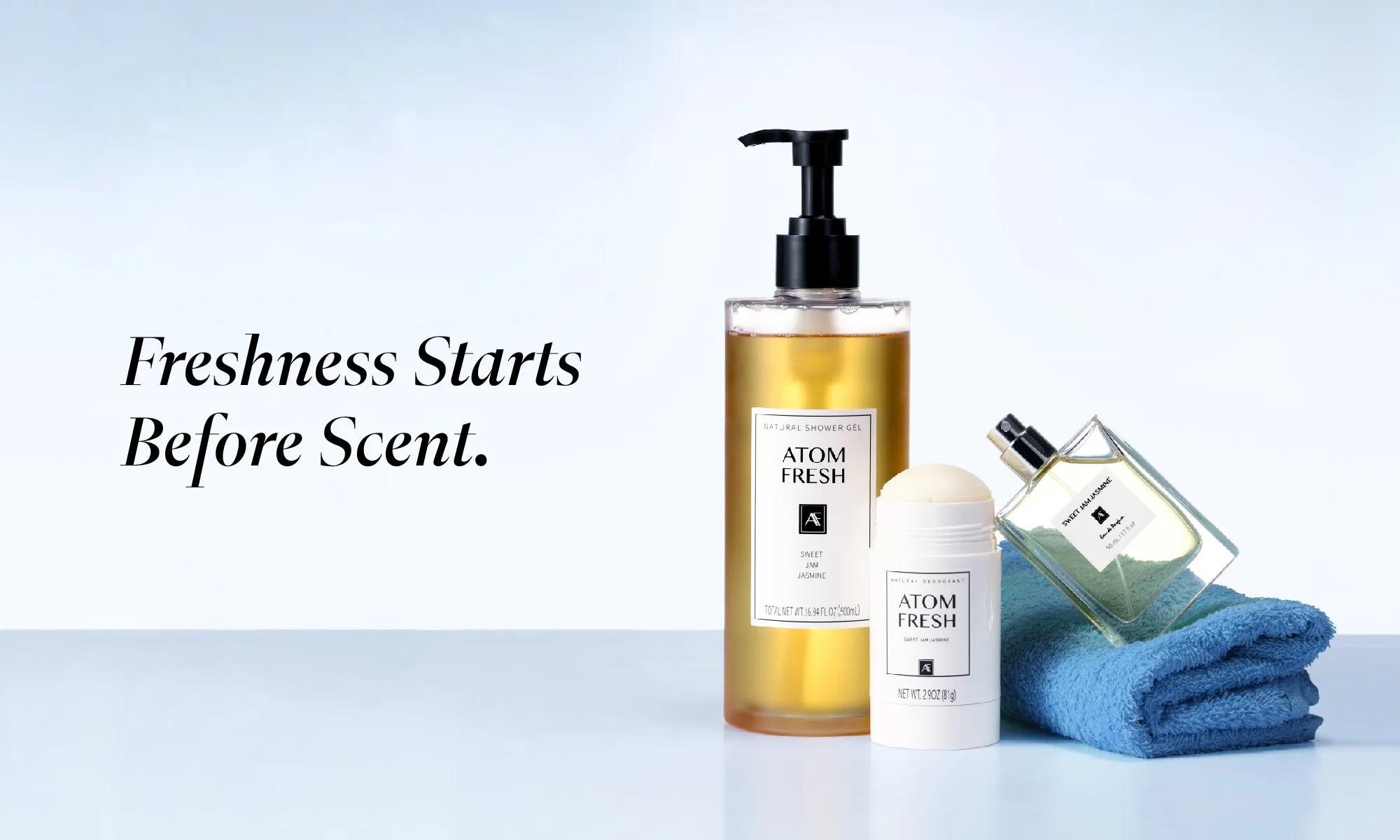
The body wash you used this morning? That scent is already gone. By 10 or 11 am, it's just soap memory. Spraying perfume over it won't bring it back—it just adds another layer on top of whatever your skin is already doing.
Pick a nice perfume, and you're done, right? Not exactly. A fresh-scent routine has three main steps: cleanse, manage odor, and finish with fragrance. Body wash cleans the skin, deodorant helps manage odor, and fragrance adds the final personal touch.
The order is the whole thing.
What Happens Before You Spray
Perfume sits on whatever's already there. Leftover sweat. Old deodorant residue. Body lotion from yesterday. If those are still present, the fragrance doesn't land clean. It mixes.
That's why showering matters—not because clean skin extends perfume life, but because it removes the stuff that interferes. Temperature and humidity and clothing still affect longevity. But those aren't up to you. Rinsing off old products is.
Building a consistent shower routine is about clearing the deck. Nothing more.
How Washing Sets Everything Up
Ever done the rush? Quick shower, slap on deodorant, spritz some fragrance—and you think you're good. But you never actually got clean. So now you've got perfume sitting on top of yesterday's grime. Not a great look.
Warm water, not hot. Hot dries skin out. Pay attention to underarms, feet, places where skin rubs. Those hold odor longer. Rinse completely. Pat dry instead of rubbing.
The goal is neutral, not squeaky. Squeaky means you stripped too much.
Body Wash Doesn't Do What You Think
That strong-smelling body wash? Smells great in the shower. Won't last past your towel dry. It's not supposed to—the scent's there to make the shower nice, not to carry you through your day.
Body wash is a base layer, not the main scent. If you're counting on it to do the heavy lifting like deodorant or perfume, you're going to be let down.
Pairing it right makes a difference, though:
Citrus or fresh scents? Go aquatic, green, or floral.
Light floral? Musk or rose work well with it.
Unscented? That's your move if you're wearing something heavy on top.
If you still smell body wash after you're dry, it's too strong—it'll fight with everything else. Go lighter or use less.
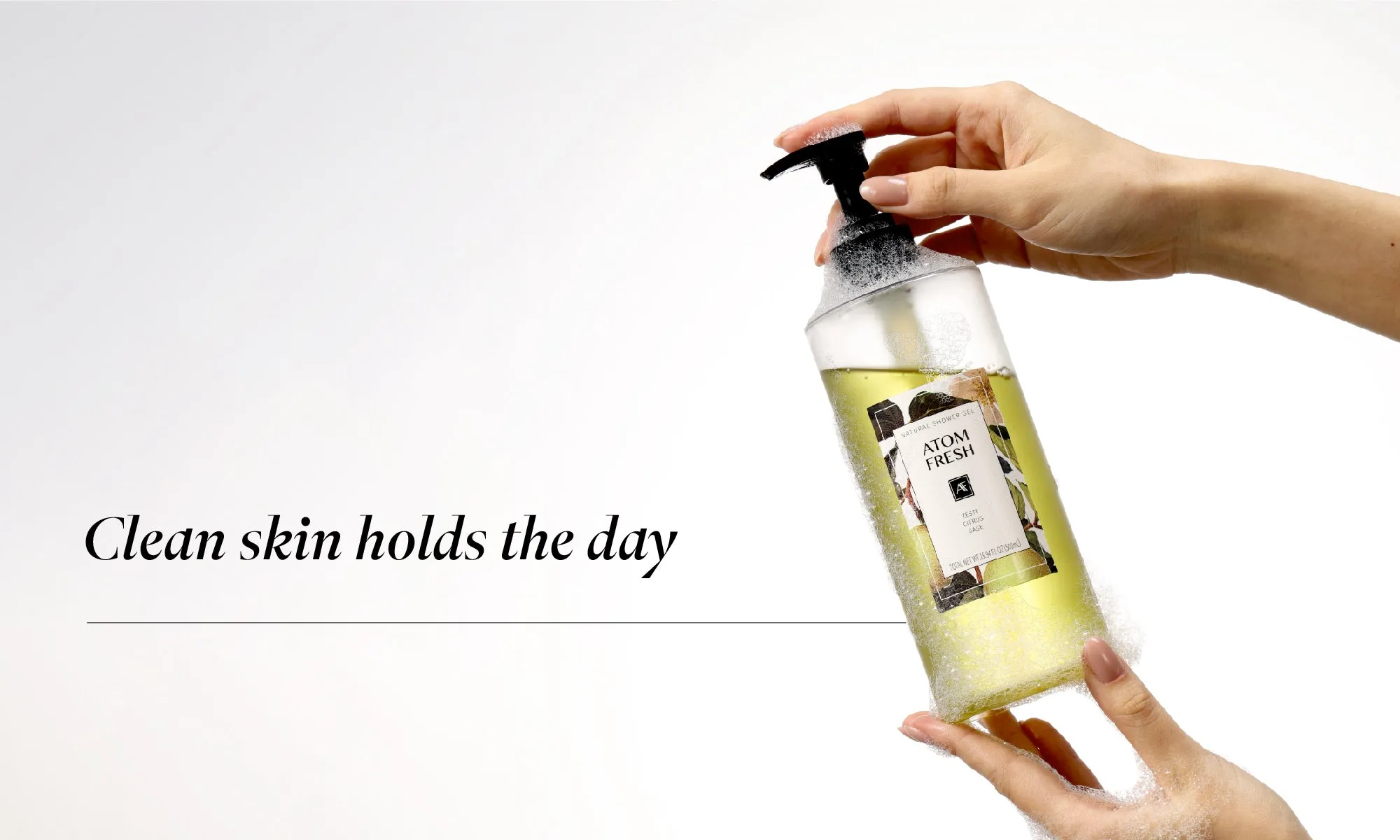
Deodorant Does Heavy Lifting
The real culprit isn't your sweat. It's the bacteria. Sweat's mostly water and a little salt—odorless on its own. But bacteria break down certain proteins in it, and that's when the smell hits. It takes a couple hours. Less if you're moving or stressed or just running warm.
Perfume doesn't stop bacteria. Deodorant does.
Apply on dry skin. Thin layer. Wait a minute or two before putting on a shirt. Too much and it pills up, sticks to fabric, or transfers.
The product types aren't interchangeable:
Deodorant = smell only, no aluminum.
Antiperspirant = sweat control, has aluminum.
Aluminum-free deodorant = smell control, no pore-blocking, gentler.
Daily option? An aluminum-free deodorant option keeps odor gone with no residue.
Still smelling yourself after a couple hours? Might be your shirt. Synthetics trap sweat and re-release it when you warm up. That's laundry, not deodorant failure.
Fragrance Goes Last
Apply deodorant to clean, completely dry underarms. Spray before moisturizer, and you dilute it. If you use moisturizer on your fragrance points, allow it to absorb before applying perfume. Fragrance sits on top. Let it be the last thing you apply.
People overcomplicate this. It's not about the number of sprays or the price tag. It's about timing. Give the perfume room.
For work – soft citrus, clean musk, sheer florals. One spray, let it settle. See if you need more.
For weekends – green notes, aquatic, bright citrus. Stronger application is fine if you're outside. Don't reapply unless it's completely gone.
For evenings – warmer notes. Amber, woods, deeper florals. Apply early. Apply the fragrance before you leave and give the opening notes time to settle. And that's when the good part comes through.
If the body wash and perfume clash, keep one of them neutral. Usually easier to skip scented body wash and let the perfume lead.
A Few Things That Actually Help
There are no guarantees of fragrance. Every formula behaves differently. But these are the things that make a difference consistently:
Moisturize before spraying. Unscented lotion. Let it soak in.
Pulse points—wrists, neck, behind ears. Two is enough, and start with a light amount.
Do not rub your wrists together. Spray the fragrance and allow it to dry naturally.
Let it dry before putting on clothes. Alcohol takes a few seconds.
Apply the spray lightly. Nose fatigue means you can't tell how strong it is.
Check at two hours, four hours, six hours. That tells you the real performance.
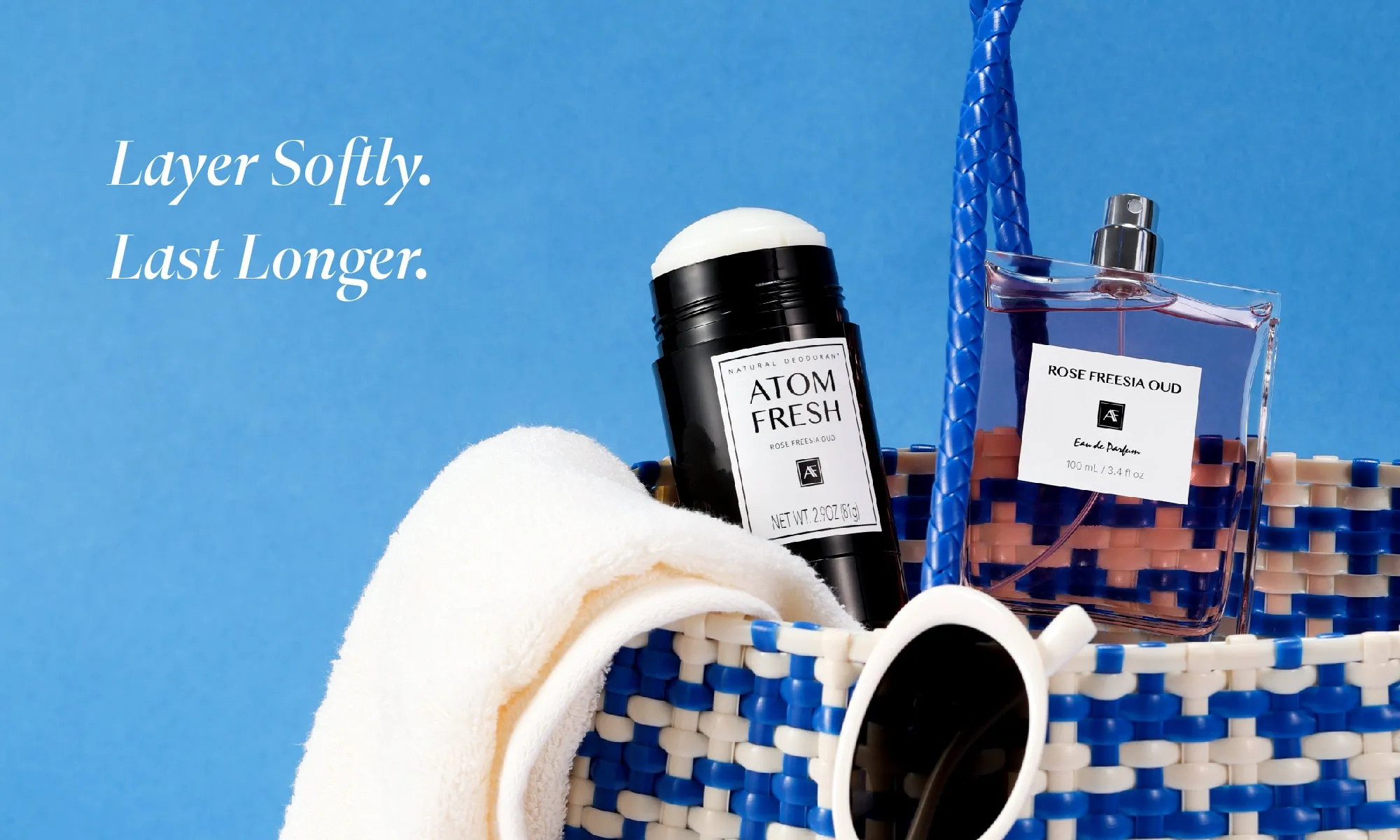
A Simple Three-Step Fresh-Scent Routine
Step 1: Body Wash – Removes sweat, excess oil, and old product residue. Rinse until your skin feels clean rather than coated. Its job is to create a fresh base. It can't replace deodorant or provide the same lasting personal scent as perfume.
Step 2: Deodorant – Manages odor as the day goes on. Apply a thin, even layer to completely dry underarms and let it settle before getting dressed. Unless the label says antiperspirant, don't expect it to prevent normal perspiration.
Step 3: Fragrance – Adds personal style after cleansing and odor control are handled. Start with a light application and give the scent time to move through its top notes, heart, and drydown. It should finish the routine—not cover up odor or replace proper cleansing.
Same order every time. Even when rushed.
What Works
Smell starts in the shower, not the perfume aisle. Clean skin, odor control, then fragrance. Do that, and you may find you won't need to reapply halfway through the day.
A travel-friendly fragrance set can be a practical way to compare scents before committing to a full-size bottle.