

Hemorrhoid pain is one of those things people suffer through quietly for far longer than they should. It is uncomfortable to talk about, easy to dismiss as something that will sort itself out, and surrounded by enough embarrassment that most people spend weeks managing it badly before they do anything useful about it.
The reality is that hemorrhoids are extremely common, the discomfort they cause is real and sometimes severe, and there are effective ways to address both the pain and the underlying problem. Understanding what is actually happening in your body makes it easier to take the right steps instead of guessing.
What Causes the Pain
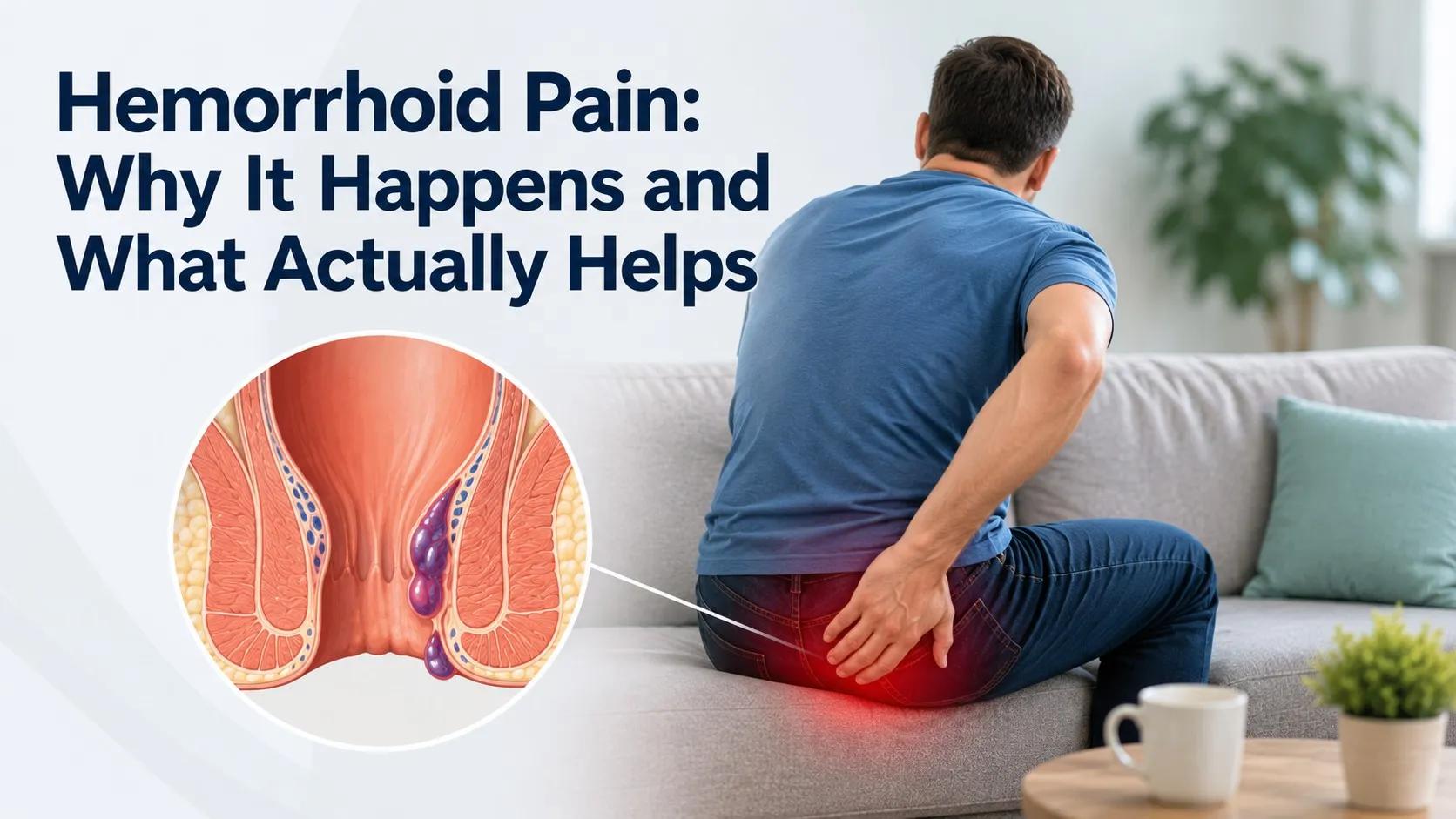
Hemorrhoids are swollen veins in the lower rectum or around the anus. Internal hemorrhoids develop inside the rectum and are often painless unless they prolapse, meaning they push through the anal opening. External hemorrhoids form under the skin around the anus and are typically the more painful of the two types.
The pain associated with external hemorrhoids comes from the sensitive nerve endings in the surrounding tissue. When the veins swell and the tissue becomes inflamed, those nerves register it clearly. Sitting, straining during bowel movements, and even walking can aggravate the discomfort significantly.
Thrombosed hemorrhoids, where a blood clot forms inside an external hemorrhoid, represent the most intense pain in this category. The clot causes sudden, severe pain that does not follow the usual pattern of flaring and settling. If you have experienced a sharp, constant pain around the anus that came on quickly, a thrombosed hemorrhoid is likely what you are dealing with.
What Makes It Worse
Several factors consistently aggravate hemorrhoid pain and slow down recovery. Straining during bowel movements is one of the biggest contributors, both to the development of hemorrhoids in the first place and to the ongoing irritation of existing ones. Hard stools that require pushing put direct pressure on already swollen tissue.
Prolonged sitting, particularly on hard surfaces, applies sustained pressure to the affected area throughout the day. For people with desk jobs or long commutes, this can keep hemorrhoid pain elevated even when other factors are managed well.
Diet plays a direct role. Low fiber intake leads to harder stools and more straining. Dehydration has the same effect. Both are controllable factors that make a meaningful difference when addressed consistently.
Managing the Pain at Home
For mild to moderate hemorrhoid pain, several home approaches provide genuine relief. Warm sitz baths, where you sit in a few inches of warm water for fifteen to twenty minutes, reduce inflammation and relax the surrounding muscle tissue. Doing this two to three times daily, especially after bowel movements, is one of the most consistently effective home remedies available.
Over the counter creams and suppositories containing hydrocortisone or witch hazel reduce inflammation and provide temporary numbing relief. They are not a long-term solution but they make the day-to-day experience more manageable while other measures take effect.
Increasing fiber intake through food or supplements softens stools and reduces the straining that aggravates hemorrhoids with every bowel movement. This is one of the few interventions that addresses the root cause rather than just the symptoms.
USA Hemorrhoid Centers outlines the full range of what hemorrhoid pain involves and what treatment options are available beyond home care, which is worth reviewing if your symptoms are persistent or severe.
When Home Care Is Not Enough
There is a point where home management stops being sufficient and professional treatment becomes the more sensible path. Hemorrhoid pain that has lasted more than a week without improvement, pain that is severe enough to affect sleep or daily function, or any bleeding that is significant or persistent warrants a conversation with a provider.
Minimally invasive treatments like rubber band ligation, which cuts off blood supply to the hemorrhoid and causes it to shrink and fall off, are effective for internal hemorrhoids and performed as outpatient procedures. Infrared coagulation is another option that works similarly with minimal recovery time. For thrombosed hemorrhoids causing severe pain, prompt treatment makes a significant difference in how quickly relief comes.
Most people do not need surgery. What they need is an accurate assessment of what they are dealing with and a treatment plan matched to their specific situation rather than a generic approach that does not account for severity or type.
Hemorrhoid pain is not something you have to just tolerate. It is treatable, and the sooner you stop waiting for it to resolve on its own, the sooner your daily life stops being shaped around it.