

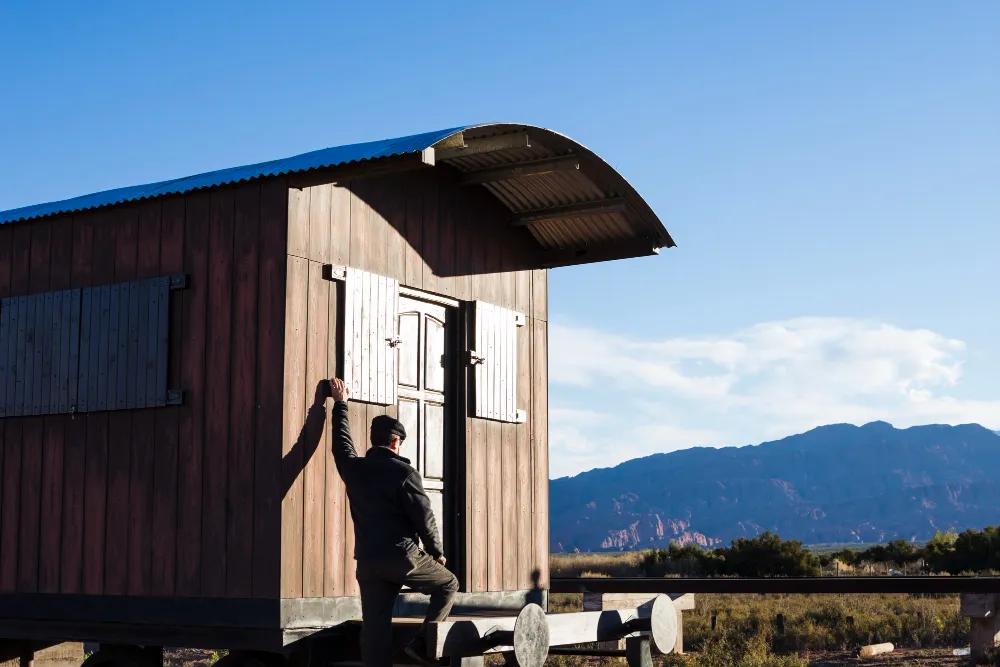
When most people picture a backyard barn, they imagine a place to park the lawnmower and stack a few boxes of holiday decorations. That's fair, but it barely scratches the surface of what these buildings can do. A side lofted barn gives you something a standard shed doesn't: doors on the long side of the building and two full-length lofts overhead. That combination of easy access and vertical space opens up possibilities that go well beyond storing garden tools.
If you've been thinking about adding one of these buildings to your property, or you already have one sitting mostly empty, here are ten ways homeowners are putting them to work.
1. A Backyard Workshop That Actually Has Room
Anyone who has tried to set up a workbench in a cramped garage knows the frustration of pulling the car out every time a project comes up. A side-entry barn solves that. Because the doors sit on the long wall, the entire back wall stays free for shelving, pegboards, and a full-length work surface. Woodworkers, mechanics, and hobbyists can leave projects half-finished overnight without anyone complaining. Add a few windows for natural light and a small heater for winter, and you have a dedicated space that keeps sawdust and paint fumes out of the house.
2. A Home Office or Studio Away From the Chaos
Remote work is here to stay, and trying to take a video call while the dishwasher runs in the background gets old fast. A barn in the backyard makes a surprisingly good office. The gambrel roof gives you tall walls, and the loft space handles all the stuff that would otherwise clutter your desk: old files, backup supplies, and equipment you only touch once a year. Some owners go further and finish the interior with insulation, electricity, and flooring. One buyer in Alabama turned hers into a finished office and recording studio, which shows how far these buildings can go when you put some effort into them.
3. A She Shed or Personal Retreat
The she shed trend has been around long enough now that it's not really a trend anymore. It's just a sensible idea. A barn with side entry works especially well for a retreat because you can face the door toward a garden, patio, or quiet corner of the yard instead of toward the neighbor's fence. Use the lofts for storing off-season items and keep the main floor for a reading chair, a small table, and whatever hobby helps you decompress. It costs a fraction of a room addition and doesn't disrupt your house during the build.
4. A Pool House With Real Storage
If you have a pool, you know the gear problem. Noodles, floats, chemicals, towels, and cleaning equipment pile up fast, and none of it belongs in the house. A side-entry barn placed near the pool can serve double duty as a changing area and equipment storage. The lofts are perfect for floats and inflatables that only come out in summer, while the main floor stays clear for a bench, hooks for towels, and a small fridge if you run power to it. Guests appreciate not dripping through your kitchen for a snack.
5. A Potting Shed for Serious Gardeners
Gardeners spend a lot of time hauling supplies back and forth, and a building that opens toward the beds instead of away from them makes a genuine difference. Set up a potting bench along the back wall, keep soil and fertilizer in sealed bins on the main floor, and use the lofts for seed starting trays, stakes, and dormant-season equipment. When the doors face the garden, you can grab a trowel and be back at the beds in a few steps. Over winter, the loft keeps tender pots and tools out of freezing temperatures.
6. A Home Gym
Gym memberships are easy to skip. A gym twenty steps from your back door is not. A 12 by 20 or 14 by 20 barn gives you enough floor space for a rack of weights, a bench, and a cardio machine, with the lofts absorbing everything you don't use daily, like resistance bands, mats, and seasonal gear. Rubber flooring handles dropped weights, and a window or two keeps it from feeling like a cave. The money you save on a membership and drive time adds up faster than most people expect.
7. A Playhouse That Grows With Your Kids
A small barn, like an 8 by 12, makes an excellent playhouse for young children, and here's the part parents appreciate: it doesn't become useless when the kids outgrow tea parties. The same building becomes a hangout spot for teenagers, then an art or gaming room, and eventually a general-purpose space. The lofts are a dream for kids, who treat them as built-in bunk areas or hideouts. Just keep the loft access supervised for younger children and use it for toy overflow instead.
8. A Hobby Room for the Messy Stuff
Some hobbies don't belong in the house. Painting, ceramics, candle making, fly tying, and model building all involve fumes, dust, or tiny pieces that end up in the carpet. A backyard barn gives those hobbies a permanent home. The side-entry layout means you can carry supplies in without navigating around the building, and the lofts keep bulk materials organized and out of the work zone. When everything has a place, you actually do the hobby more often instead of dreading the setup and cleanup.
9. A Small Business Headquarters
Plenty of small businesses start at a kitchen table and quickly outgrow it. Landscapers, cleaners, craft sellers, and online resellers all need somewhere to store inventory and equipment. A larger barn, in the 14 by 32 range and up, can hold a surprising amount of product, and the lofts double the usable space without doubling the footprint. Before you go this route, check your local zoning rules, since running a business from an accessory building has different requirements in some areas. Where it's allowed, though, it's one of the most affordable ways to get a dedicated workspace.
10. A Storm and Emergency Supply Station
In parts of the country where severe weather is a fact of life, having a organized spot for emergency supplies is practical planning, not paranoia. A barn keeps generators, fuel cans, water storage, tarps, and tools ready and reachable, and the side-entry design means you can get to everything quickly even if the area around the building is cluttered after a storm. The lofts handle the long-shelf-life items you rarely rotate, while the main floor stays clear for the things you'd grab first.
A Few Practical Notes Before You Start
Whatever use you choose, a couple of details will shape how well the building works for you. First, think about placement before you buy. The whole point of side entry is putting the doors where you actually walk, so face them toward the driveway, patio, or garden rather than the back fence. Second, be realistic about weight. The lofts are strong, but they're designed for totes and seasonal items, not engine blocks. Check the point load limits before storing anything heavy overhead. Third, if you plan to finish the interior or run electricity, look into local permit requirements early. Many areas don't require permits for smaller accessory buildings, but rules vary by county, and it's easier to know before delivery day than after.
It's also worth thinking about size honestly. People tend to underestimate what they'll store and overestimate how much floor space they need, and the loft design helps on both counts by pushing storage up instead of out. A building that feels oversized in year one usually feels just right by year three.
The bottom line is that a barn with side entry and loft storage is one of the most flexible structures you can put on a residential property. It starts as a storage building, but with a little planning it becomes whatever your household actually needs: a workshop, an office, a retreat, or a place for the hobbies that never fit inside the house. The best building isn't always the biggest one. It's the one that fits the way you already live.