

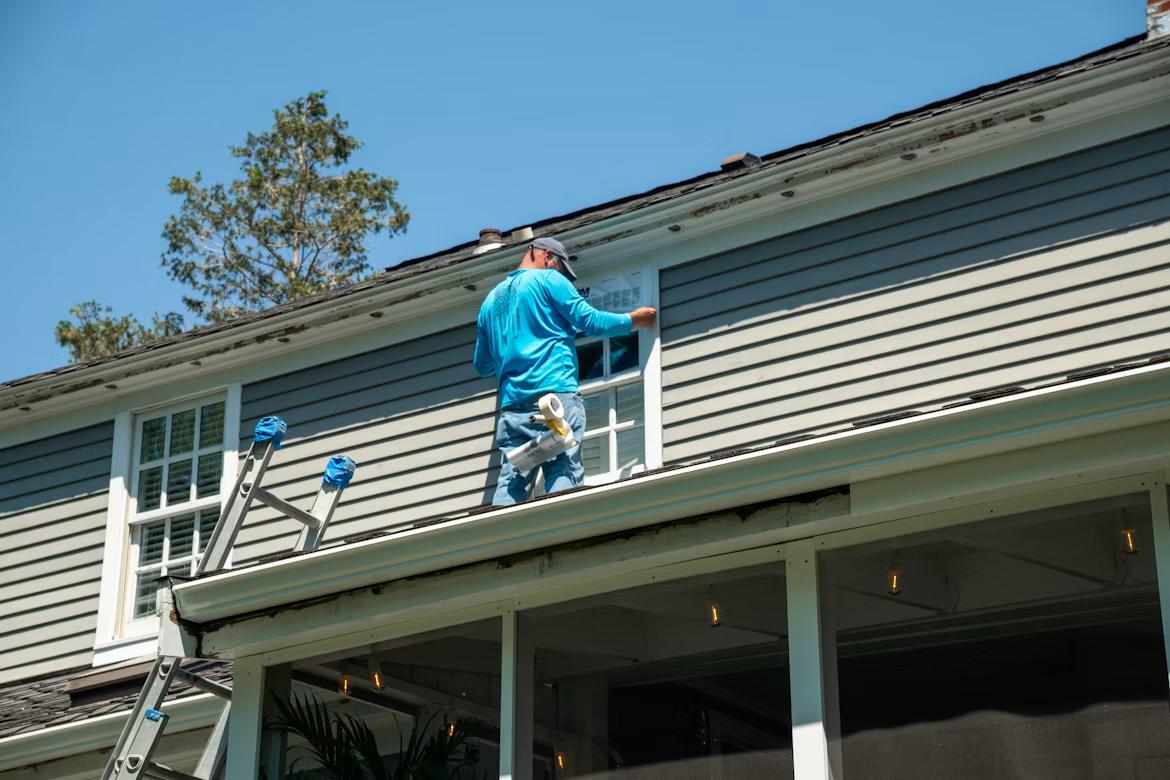
Be it an ambitious home improvement project, a maintenance issue, or aesthetic renovations, the right contractor can be as useful as they are challenging to find. This short-term, intense partnership will impact your space for years to come.
Many homeowners spend hours contacting different companies, waiting days for a response, all while wondering if they made the right choice. The fact that US homeowners are projected to spend about $518 billion on home improvements and maintenance in 2026 tells us how high the stakes are.
Your home is perhaps one of your most precious investments, which is why choosing the right contractor deserves more than a quick search or the lowest quote. A few practical things, when checked thoroughly, can help you determine whether a contractor is qualified and trustworthy. This article will share five things to check before hiring a civil contractor to avoid unpleasant surprises down the road.
A Valid License and Insurance
The first thing you need to know about a contractor is whether they are truly qualified to do their work. At the same time, you want to ensure that you have some kind of protection should things go wrong.
If you plan to hire a local contractor, verify that their license is current and appropriate for the type of work you need. Requirements may vary by location and trade. If possible, confirm the applicable credentials through the relevant state or local licensing authority.
As for insurance, consider what the Hawaii Department of Commerce and Consumer Affairs highlighted in 2025. In a public awareness campaign, it discussed the importance of hiring licensed contractors who carry workers’ compensation and liability insurance.
These types of coverage protect homeowners in case of worker injury or property damage while a project is ongoing. So, here’s a breakdown of what you must check before moving forward:
A current license or credential that proves the professional is authorized for the type of work you want to hire them for
Liability insurance to cover accidental property damage
Workers’ compensation that provides indirect protection should a worker get injured during the project
Permit eligibility, primarily for projects that require one
Rushing this process often leads to costly mistakes later, so take your time. A little upfront verification will help you start on the right foot.
Experience With Similar Projects
Did you know that a contractor can have several years of industry experience and still be a bad fit for your project? That’s largely because the skills, equipment, and materials needed for a roof replacement, plumbing repair, or landscaping differ considerably.
Before you let them take on your project, check whether they have successfully handled work similar to what you need. The type of home project you’re considering can also affect the kind of professional you need. For instance, during Home Depot’s Q2 of 2026, work on smaller home improvement projects rose by 1.5%, while the same on larger projects fell by 2.1%.
The company’s Chief Financial Officer, Richard McPhail, said, “We saw broad-based demand across the business as customers continued to engage in smaller projects.” That explains how varied today’s home projects are, making it important to evaluate a contractor based on experience relevant to your specific project.
Keep the contractor’s overall years in business aside and do the following before making a decision:
Ask the contractor if they have completed projects comparable in type and size to yours.
Ensure they are familiar with the materials, equipment, and techniques your project requires.
Inquire about photos, project descriptions, or references to get a better sense of the work the contractor has handled in the past.
Pay attention to whether they can explain their approach clearly and answer your questions confidently.
We are not encouraging you to choose the contractor that offers the longest list of services. Relevant experience matters a lot more than a general claim.
Reviews and Track Record
A contractor’s past work record can tell you loads about what your customer experience may look like. Reviews offer valuable insights into workmanship, communication, reliability, and the way a business handles problems.
This isn’t to imply that you must base your decision on a star rating alone. What’s important is to look for patterns across multiple reviews to see whether the overall feedback appears to be genuine and specific.
The reason why practicing extra caution matters is that online reviews are not always as reliable as they appear. In May 2026, the Federal Trade Commission (FTC) took action against a company that allegedly created thousands of fake online listings for local home repair businesses. It used fabricated five-star reviews to make itself appear reputable.
The FTC said tens of thousands of customers searching for local home repair services were diverted to these listings. On that note, consider how easy it is to extract clear information about the contractor. If you’re waiting for callbacks or a previous contractor experience has made you hesitant to trust, comparing several businesses can feel like a lot of work.
A platform such as My Licensed Contractor can simplify the initial process because it allows homeowners to submit their project details through one form. Based on that submission, homeowners are matched with local contractors and get contractor responses. The local contractors in its network are vetted for factors such as valid licensing and track record, giving homeowners another starting point to compare their options.
At the same time, do not ignore online reviews altogether. Instead, use them as one part of a broader check in the following ways:
Look for recent feedback, as older reviews may not align with the contractor’s current team or business practices.
See if any specific reviews that describe the contractor’s communication, timing, or problems encountered are available instead of vague praise.
Consider patterns where several customers report the same strength or concern.
See if the contractor addresses concerns professionally, trying to resolve legitimate problems.
Ask for relevant examples of previous work or references that may give you another view of the contractor’s track record.
A Detailed Written Estimate
If a contractor tries to get things settled by a rough price over the phone, be wary. Instead, you should ask for a detailed written estimate that explains what the project will involve and what you are expected to pay.
This will let you have something concrete to review, question, and compare before work begins. Real-world incidents such as the one that recently happened in Chicago highlight why this is important. A Waukegan homeowner hired a contractor for an $8,900 bathroom project and had already paid $7,000.
She said there was little progress on the work. Upon asking for receipts regarding the recent purchases made, the contractor ghosted her. The Better Business Bureau of Chicago told CBS News that consumers can lose leverage once money has been paid.
A detailed written estimate can help you establish clearer expectations before reaching that point. You can look for the following:
A clear description of the repairs, installations, or services the contractor will provide.
The main materials or products included, along with relevant specifications where needed.
The expected start date and approximate duration of the work.
The amount that is due upfront, the time for further payments, and what each of them covers.
Possible additional costs and the circumstances in which they apply.
It's not about choosing the lowest estimate in a heartbeat. Two contractors may quote different amounts because their scopes, materials included, or services differ. Compare the details to see if you are truly getting comparable proposals.
Clear Terms of Contract
Once you have zeroed in on a contractor that meets the above criteria, ensure the agreement spells out the terms clearly before work commences. A contract is not just a record of the project’s price.
It also establishes expectations for payment, responsibilities, timelines, and what happens if something goes wrong. In a July 2026 report, an Eaton Fire survivor said she paid an unlicensed contractor $18,000 but could no longer contact him after he cashed her checks.
The report also noted that California rules generally limit a contractor’s down payment to 10% of the total contract price or $1,000, whichever is less. Further payments are tied to materials used and services performed.
Although payment rules vary by location, the example highlights why homeowners should understand the financial terms before signing. Check whether your contract clearly covers the following:
Responsibilities of the contractor, especially what they will complete and what you must arrange for the project
An organized payment schedule
Expected start and completion dates for the project
Clauses for changes to the work and their approval process
Warranties on workmanship or the products
Project cancellation or termination policies
The process for dispute resolution
Read the entire agreement, including any attachments or additional terms. If something differs from what the contractor told you earlier, ask for the same in writing. A clear contract brings peace of mind, ensuring that the project moves smoothly, so do not compromise on it.
FAQs
What should I verify before hiring a contractor?
Verify that the contractor has the required license, appropriate insurance, and relevant experience for your project. Also, read the contract carefully to understand payment schedules, timelines, responsibilities, and dispute procedures.
How can I tell if a contractor is trustworthy?
Look for consistent recent reviews, specific customer experiences, valid credentials, and clear communication. Do not rely on online ratings alone, as fake listings and reviews can exist. A contractor who is transparent about their experience, pricing, responsibilities, and past work gives you more information to assess their reliability.
What details should be present in a contractor’s contract?
A contract should clearly state each party’s responsibilities, payment schedule, procedures for approving changes, and the dispute resolution process. Read all attachments and additional terms before signing. Also, make sure anything previously promised is reflected in the written agreement.
Five Checks to Choosing the Right Contractor
Area to Review | Key Points to Consider |
License and insurance | Valid credentials and coverage |
Similar project experience | Relevant skills and past work |
Reviews and track record | Recent, consistent feedback |
Detailed written estimate | Scope, cost, and timeline |
Contract terms | Payments and responsibilities |
You don’t just want someone who can get the job done. The aim and the challenge are to find a professional whose qualifications, experience, and working terms give you reasonable confidence.
Since most homeowners are prioritizing essential work now, a careful evaluation becomes all the more necessary. For instance, Lowe’s continued to see demand for home repairs even as consumers became more cautious about larger renovation projects due to higher costs.
When a repair cannot be postponed easily, there may be less room for costly mistakes. This brings us back to the importance of checking the five things this article discusses before hiring a contractor. Do your due diligence to enjoy peace of mind and avoid project delays later.