

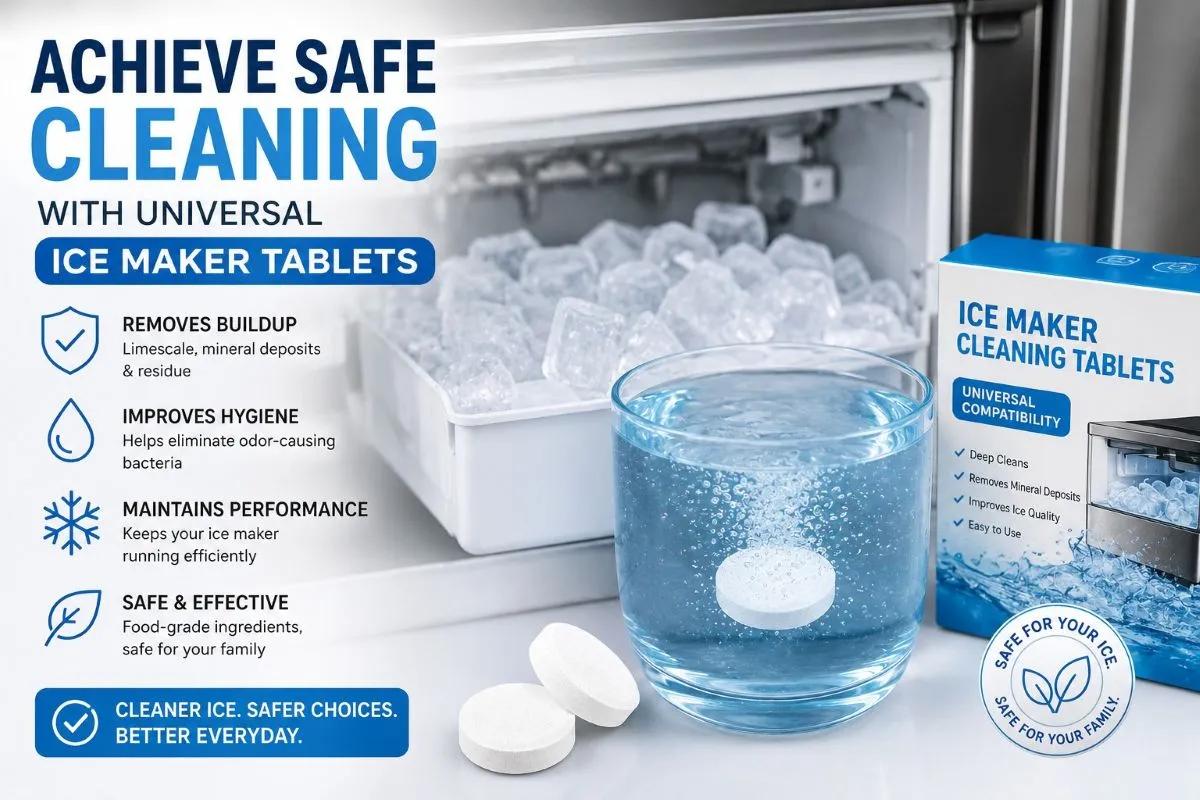
Countertop ice makers have become a staple in modern kitchens, offering the luxury of fresh ice on demand without waiting for freezer trays to do their job. But beneath that convenience lies a hidden problem most owners overlook: mineral buildup, mold, and bacteria silently accumulating inside the machine. These contaminants don't just affect the taste and clarity of your ice—they can compromise the machine's performance and, more importantly, your health. If you've ever searched for a cleaning product that's both effective and safe for your specific ice maker model, you know the frustration of navigating incompatible or overly harsh chemical solutions. So how can you maintain a truly hygienic ice maker without resorting to aggressive cleaners or complicated maintenance rituals? The answer lies in universal ice maker tablets—purpose-built, food-safe formulations designed to work across brands and machine types. This article will walk you through why regular safe cleaning matters, what makes universal tablets so effective, how to choose the right product, and exactly how to use them for consistently clean, great-tasting ice.
Why Your Countertop Ice Maker Demands Regular, Safe Cleaning
Every time your ice maker cycles water through its system, it leaves behind trace minerals—calcium, magnesium, and lime deposits that gradually coat internal components. This scale buildup doesn't announce itself dramatically; instead, it quietly reduces your machine's efficiency over weeks and months. You'll notice ice cubes becoming smaller, production cycles taking longer, and the machine working harder to deliver the same output. Left unchecked, mineral deposits can clog water lines, strain the compressor, and ultimately shorten your appliance's lifespan significantly.
The health implications are even more concerning. Ice makers create a perpetually moist environment—ideal conditions for mold, yeast, and bacterial biofilms to thrive. That pink slime you might spot around the water reservoir or the musty taste in your ice isn't just unpleasant; it represents active microbial colonies that transfer directly into every drink you serve. Studies have shown that neglected ice machines can harbor harmful organisms including coliform bacteria, making safe cleaning not just a maintenance preference but a genuine health necessity.
Many owners reach for vinegar or baking soda as a DIY fix, and while these household staples offer mild cleaning properties, they present real limitations. Vinegar's acetic acid concentration is often insufficient to dissolve heavy mineral deposits, and its strong odor can linger in ice for several cycles afterward. More critically, DIY solutions lack the balanced formulation needed to sanitize effectively without corroding rubber seals or damaging internal components. Purpose-formulated cleaning tablets, by contrast, are engineered to deliver precise concentrations of food-safe descaling and sanitizing agents—strong enough to eliminate contaminants, gentle enough to protect your machine, and designed to rinse completely clean without leaving residual taste or chemical traces behind.
The Game-Changer: Understanding Universal Compatibility in Ice Maker Tablets
Universal compatibility means a single cleaning tablet is formulated to work safely and effectively across a wide range of ice maker brands, models, and internal configurations—eliminating the guesswork of matching a specific cleaner to your specific machine. For households that own multiple appliances, or for anyone who has replaced one ice maker brand with another, this cross-compatibility is genuinely liberating. You keep one product on hand, and it handles everything from your compact countertop unit to a built-in undercounter model.
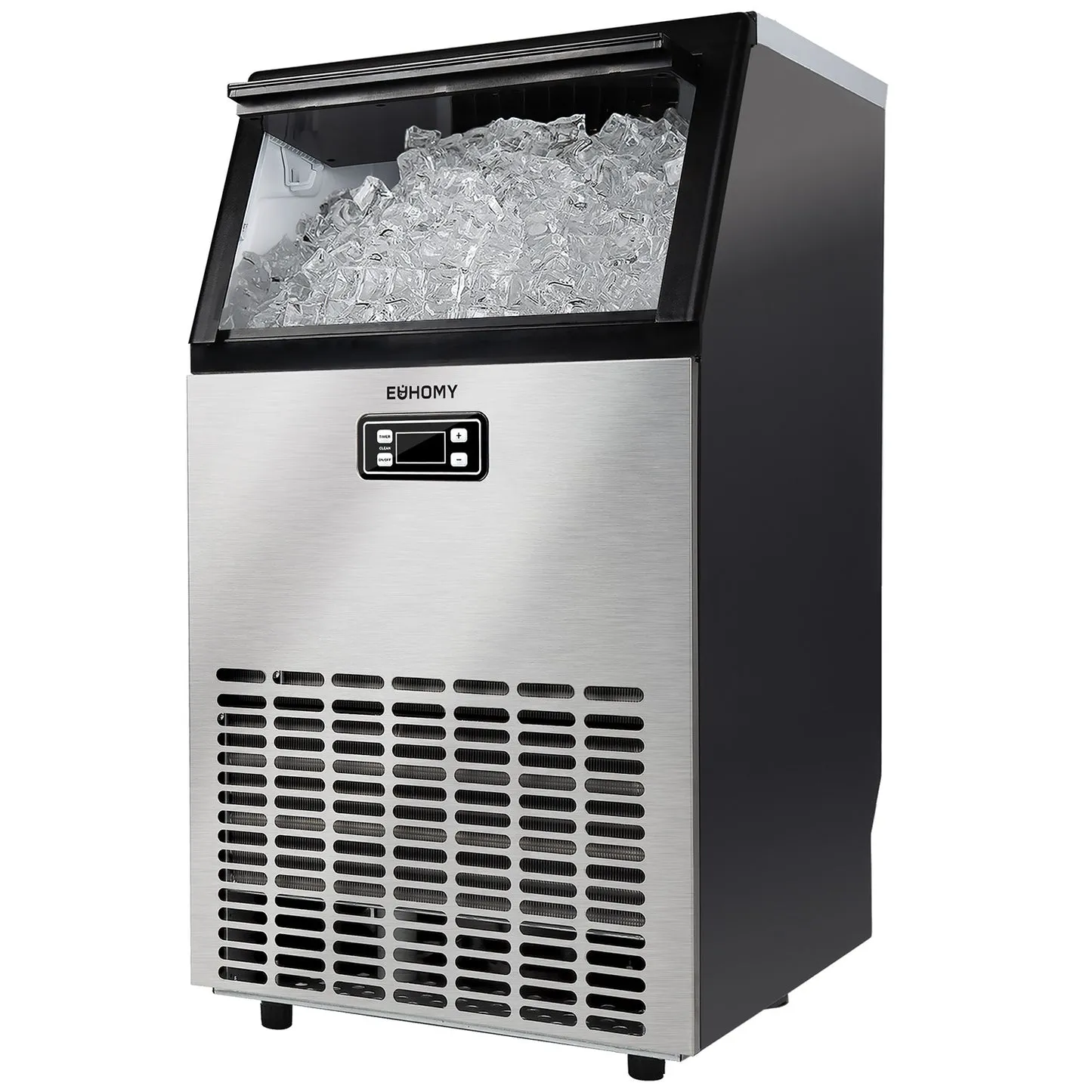
These tablets are engineered to be safe for the diverse materials found across manufacturers—whether your machine uses stainless steel evaporator plates, nickel-plated components, silicone tubing, or plastic reservoirs. Brands like Frigidaire, Igloo, Newair, GE, Euhomy, Opal, and countless others use slightly different internal architectures, yet universal tablets account for this variety through carefully balanced chemistry. The active descaling agents dissolve calcium and lime without attacking metal surfaces or degrading rubber gaskets, while sanitizing compounds neutralize microbial growth without leaving corrosive residues on sensitive pump mechanisms or water distribution lines.
The science behind this versatility comes down to pH-controlled formulations and slow-dissolving tablet technology. Rather than releasing a sudden burst of concentrated acid like some liquid descalers, tablets dissolve gradually during a cleaning cycle, maintaining a consistent and moderate concentration throughout the process. This controlled release ensures thorough contact with all internal surfaces—evaporator plates, water channels, and drainage paths—without overwhelming any single component with excessive chemical exposure. The result is a deep clean that respects your machine's engineering regardless of who manufactured it.
How to Choose the Right Ice Maker and Cleaning Tablets
Selecting the right universal cleaning tablet requires more than grabbing the first product you see on the shelf. Start by checking for food-safe and non-toxic certifications—look for products that comply with FDA or NSF standards, which guarantee the formulation won't leave harmful residues on surfaces that contact your drinking water and ice. This single criterion immediately separates professional-grade tablets from questionable alternatives that might clean effectively but introduce chemical concerns of their own.
Next, verify that the product explicitly states "universal" or multi-brand compatibility on its packaging or product description. Vague claims like "works with most machines" aren't the same as tested compatibility across specific internal materials. Reliable tablets will reference their safety for stainless steel, nickel, plastic, and silicone components—the materials that vary most between manufacturers. If a product can't tell you what it's safe for, it probably hasn't been tested thoroughly enough to trust inside your appliance.
When weighing tablets against liquid cleaners, consider practicality and precision. Tablets offer pre-measured dosing, eliminating the risk of using too much or too little product. They're also more shelf-stable, less messy, and easier to store.
Liquid descalers can work well but often require careful measuring and may not combine descaling and sanitizing functions in one step. The best universal tablets address both concerns simultaneously—dissolving mineral scale while neutralizing microbial contamination in a single cleaning cycle. Finally, seek out products that are biodegradable, phosphate-free, and odorless after rinsing. These features ensure your ice tastes purely like water once the cleaning process is complete, with no chemical aftertaste lingering through subsequent batches.
Step-by-Step Guide: Safely Cleaning Your Ice Maker with Tablets
Before you begin, unplug your ice maker and remove any remaining ice from the bin. Drain the water reservoir completely—most countertop models have a drain plug on the bottom or side that makes this straightforward. Take a moment to remove any detachable parts like the ice basket, scoop, or drip tray, and set them aside for separate hand-washing with warm, soapy water. This preparation ensures the cleaning tablet can focus entirely on the internal components where buildup hides.
Refill the reservoir with fresh water to the maximum fill line, then drop one universal cleaning tablet directly into the water. Turn the machine back on and initiate a cleaning cycle if your model has one—if not, simply run a standard ice-making cycle. As the tablet dissolves, its descaling agents will circulate through the pump, water lines, and evaporator plates, breaking down mineral deposits and eliminating bacterial biofilms along the way. Allow the full cycle to complete without interruption; this typically takes between 15 and 30 minutes depending on your machine. The ice produced during this cycle is cleaning ice—discard it immediately and never consume it.
The rinsing phase is where safe cleaning truly matters. After the cleaning cycle finishes, drain the reservoir completely once more, then refill with fresh water and run two to three additional ice-making cycles. Discard all ice and water from these rinse cycles. This thorough flushing removes every trace of dissolved minerals and cleaning agents from the system, ensuring absolutely no residual taste or chemical presence carries over into your drinking ice. For machines with particularly stubborn scale—visible white crust on the evaporator or slow water flow—repeat the entire tablet cleaning process before moving to rinse cycles.
Once rinsing is complete, wipe down the interior walls and reservoir with a clean, damp cloth. Reassemble any parts you removed earlier, refill with fresh water, and run one final cycle. This first batch of ice should look crystal clear and taste like nothing but pure water. A pro tip: if your water is exceptionally hard, consider using filtered water for daily operation to extend the time between deep cleans. One important safety warning—never use ice maker cleaning tablets in combination with bleach or other household chemicals, as mixing formulations can produce harmful reactions or damage internal seals.
Maintaining Peak Performance: A Simple Routine
Consistency transforms cleaning from a chore into a barely noticeable habit. For most households, running a universal cleaning tablet through your ice maker once every month keeps mineral deposits from gaining a foothold and prevents biofilm from establishing itself. Every three months, perform a more thorough deep clean that includes wiping down all accessible interior surfaces and soaking removable parts. If you use your machine daily or live in an area with particularly hard water, shift to a bi-weekly tablet cycle instead. This simple routine costs minutes of hands-on time yet saves you from expensive repairs, degraded ice quality, and the hassle of dealing with a machine that's lost half its production capacity. Keeping a supply of tablets stored nearby—right next to the machine—removes the last barrier between you and consistent maintenance.
Protect Your Investment with Consistent Ice Maker Hygiene
Keeping your countertop ice maker clean isn't optional—it's the difference between a machine that delivers fresh, crystal-clear ice for years and one that becomes a breeding ground for contaminants while slowly losing its ability to function. Regular safe cleaning with purpose-formulated tablets addresses both the visible problems of mineral scale and the invisible threats of bacterial growth, all without introducing harsh chemicals into an appliance that directly touches what you consume. Universal compatibility removes the last practical obstacle from this process, meaning you never need to research brand-specific products or worry about damaging internal components with the wrong cleaner. One tablet, one cycle, and your machine is restored to peak hygiene and performance regardless of its make or model. The investment is minimal—a few minutes each month and a supply of quality tablets—but the return is substantial: longer appliance life, consistent ice production, and the confidence that every cube in your glass is as clean and pure as the water it came from. That's the kind of peace of mind that makes ownership genuinely effortless. Take control of your ice quality today, and never settle for anything less than perfectly clean, great-tasting ice.