

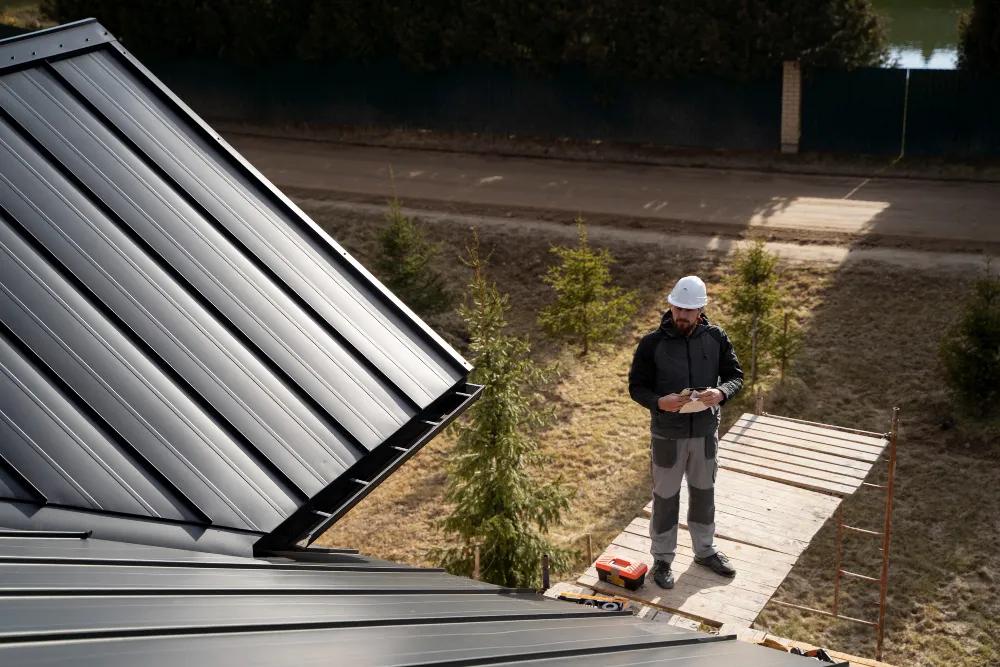
The silence after a hailstorm is deceptive. Once the noise stops, a different kind of pressure begins. Your phone buzzes with alerts, and within hours, trucks might be circling the neighborhood. The temptation is to act fast, to get your home back to normal and put the event behind you. But the decisions you make in the first 48 hours can determine whether your repair is a smooth process or a costly, months-long ordeal.
The most significant risks often appear after the storm has passed. They come from signing a contract under duress or misunderstanding the fine print in an insurance adjustment. A proper assessment is the first step, but it's vital to understand the full scope of potential hail damage roof repair services before committing to a plan. This includes identifying not just the obvious dings on shingles, but also potential damage to gutters, siding, and ventilation systems that an untrained eye might miss. Rushing this stage is the first and most expensive mistake many homeowners make.
Quick answer: The costliest errors in hail damage repair stem from rushed decisions, not the storm itself. Avoiding them requires you to slow down, thoroughly document all damage before any work begins, vet contractors beyond their initial quote, and understand exactly what your insurance policy covers and excludes.
What's inside
· What Are the Financial Risks of a Rushed Repair?
· How Do You Vet a Storm Restoration Contractor?
· What Damage Does a Professional Inspector Look For?
· Frequently Asked Questions About Hail Damage
· Your Goal Is Restoration, Not Just Repair
Examples of missing data needed to frame the stakes for the reader:
· The annual insured losses from severe convective storms (which include hail) in the U.S. (Source: Insurance Information Institute or a major reinsurer like Munich Re).
· The frequency of billion-dollar hail events per year. (Source: NOAA National Centers for Environmental Information).
· The average cost increase for a roof replacement when underlying decking damage is discovered mid-project. (Source: National Roofing Contractors Association or a similar trade body).
What Are the Financial Risks of a Rushed Repair?
A rushed decision often means you're fixing only the visible problems, leaving you exposed to larger, more expensive structural issues and complex insurance disputes later.
The financial scale of storm damage is staggering. These are not rare events. In 2023 alone, the United States experienced a record number of severe storm events that each caused over a billion dollars in damages, according to the National Oceanic and Atmospheric Administration (NOAA). Hail is a primary driver of this damage. When your neighborhood is hit, it becomes part of a massive financial event, triggering a complex response from insurers and contractors.
Insurers pay out tens of billions for severe convective storms annually. These events caused over $50 billion in insured losses across the U.S. in a single recent year, as reported by the Insurance Information Institute. This immense financial pressure means claim adjusters follow strict protocols. They document what they can see from their initial inspection, but their report is a starting point, not the final word on the scope of work. Rushing to accept that initial assessment can mean leaving money on the table.
The most common financial surprise comes from what is under the shingles. Hailstones that crack or puncture a shingle can also fracture the underlying wood decking, known as sheathing. This damage is invisible until the old roof is torn off. Replacing a single 4x8 sheet of OSB decking can add $70 to $120 or more to the final bill, covering both materials and labor. A moderately damaged roof could easily have a dozen or more compromised sheets.
❝ Your first contract is often for the roof cover only. Ask any potential contractor how they handle "supplemental claims" for unseen damage like decking. If they do not have a clear, documented process for pausing work, photographing the new damage, and submitting it to your insurer for approval, that is a major red flag.
If you sign with a contractor who is not prepared to manage this process, you face two bad options. You either pay for the decking repairs out of pocket or halt the project mid-tear-off while you fight with the insurance company yourself. This is why vetting a contractor's process for handling supplemental claims is more important than just comparing the initial price. A low bid that does not account for potential hidden damage can quickly become the most expensive one.
How Do You Vet a Storm Restoration Contractor?
A reputable contractor has a permanent local presence, verifiable insurance, and a transparent contract, while a "storm chaser" relies on high-pressure tactics and often disappears after the work is done.
The term "storm chaser" refers to out-of-state crews that follow severe weather. They move into a damaged area, sign up as much work as possible, and then leave. The primary risk is accountability. If your new roof leaks six months later, a company based hundreds of miles away is unlikely to return to honor a workmanship warranty. You can verify a contractor's local ties with a few direct questions. Ask for their physical business address, not a P.O. box. Request the names of local suppliers they use for materials like shingles and underlayment. A long-standing relationship with a local supplier is a strong signal of stability.
Proper insurance is non-negotiable. A contractor must carry both general liability and worker's compensation policies. Do not just take their word for it. Ask for their Certificate of Insurance (COI) and call the insurance agent listed on the certificate to confirm the policies are active. This single phone call protects you from liability if a worker is injured on your property. The Federal Trade Commission offers consumer advice on avoiding home improvement scams, which often spike after natural disasters. According to the FTC, it is critical to get multiple bids and resist pressure to make an immediate decision.
The contract itself is the most critical document. Be wary of any "contingency agreement" that locks you into using that contractor if the insurance claim is approved. You should always have the right to get multiple bids. The scope of work should be itemized, specifying the exact type and brand of shingles, underlayment, and flashing to be used. A vague contract that just says "repair roof" leaves you exposed.
Finally, examine the payment schedule. A large down payment requested before any materials arrive at your home is a major red flag. A common, fair structure involves three parts: a payment upon material delivery, another at a key milestone like the "dry-in" stage (when the underlayment is installed), and the final payment only after the job is complete and has passed your final inspection.
Feature | Professional Local Contractor | Out-of-State "Storm Chaser" |
Physical Office | Permanent, verifiable local address. | Temporary office, P.O. box, or none. |
Licensing | Holds a current local or state license. | May use another company's license or be unlicensed. |
Insurance | Provides a COI; you can call to verify. | May be underinsured or refuse to provide proof. |
Warranty | Offers a workmanship warranty they can honor. | Warranty is worthless once they leave the state. |
Payment Terms | Phased payments tied to progress. | Demands large upfront payment before work starts. |
Reputation | Established local reviews and references. | High-pressure sales, appears only after storms. |
What Damage Does a Professional Inspector Look For?
A trained inspector looks for "functional damage" that shortens the roof's life, not just cosmetic dings, by checking for shingle bruising, damaged soft metals, and compromised ventilation systems.
The most critical type of damage is often the least obvious. On an asphalt shingle, an inspector is looking for a "bruise." This is more than just a spot where the top layer of ceramic granules has been knocked off. A significant hail impact can fracture the underlying fiberglass mat of the shingle itself. While it may not leak tomorrow, that fractured mat creates a weak point that allows UV rays and moisture to degrade the shingle from within, leading to a failure years ahead of schedule. You can sometimes feel this damage as a soft, spongy spot when you press on the shingle, almost like a bruise on a piece of fruit.
This is the core of the "functional versus cosmetic" debate with an insurance carrier. A small dent in a metal vent cover might be purely cosmetic, meaning it does not affect the vent's ability to function. But a shingle bruise is functional damage because it directly impacts the water-shedding capability and expected lifespan of the roof system. An insurance policy is designed to restore the property to its pre-loss condition, which includes restoring its expected service life.
❝An experienced inspector always checks the soft metals first. Aluminum gutters, downspouts, and turbine vent fins are easily dented. These dents serve as a clear record of the hail's size and intensity. If the soft metals show significant, widespread impacts, it provides strong evidence that the less-obvious shingles likely sustained functional damage as well.
Beyond the shingles, a thorough inspection covers the entire building envelope. This includes checking for cracks in vinyl siding, damage to window screens and glazing beads, and dents in garage doors. On the roof itself, the inspector will look at box vents, plumbing boots, and skylights. A particularly common but overlooked item is the air conditioning unit. Hail can flatten the delicate aluminum fins on the condenser coils, which restricts airflow and forces the unit to work harder, increasing your energy bills and shortening the appliance's life.
Frequently Asked Questions About Hail Damage
Will my insurance policy cover roof damage from hail? In most cases, standard homeowner's insurance policies do cover damage from hail and wind. The key difference lies in whether you have a Replacement Cost Value (RCV) or an Actual Cash Value (ACV) policy. An RCV policy covers the full cost of a new roof, while an ACV policy pays only for the depreciated value of your old one, leaving you to cover the rest.
How much does it cost to fix hail damage on a roof? If your insurance claim is approved, your main out-of-pocket expense is your deductible. The insurance carrier covers the rest of the replacement cost. This is often paid in two parts: an initial check for the actual cash value, and a second payment for the recoverable depreciation after the work is complete and the contractor sends a final invoice.
Can you fix hail damage without replacing the entire roof? It depends on the scope of the damage and the age of the roof. If you have a few damaged shingles and matching replacements are available, a repair might be an option. However, if the damage is widespread across multiple slopes, a full replacement is typically necessary to ensure the entire system's integrity and lifespan are restored.
What are the first steps I should take after a hailstorm? First, safely document the storm's aftermath from the ground. Take pictures of dented gutters, downspouts, window screens, and air conditioning units, as this provides evidence of the hail's size. Next, call your insurance company to report the potential damage and get a claim number. Do not sign any contracts with a roofer until after the insurance adjuster has completed their inspection.
My roof is over 10 years old. Will insurance still pay for a new one? Yes, but your policy type matters immensely. An RCV policy should still cover a full replacement, minus your deductible, regardless of age. If you have an ACV policy, the payout will be significantly reduced to account for a decade of depreciation. Some newer policies may also contain specific clauses that limit coverage for older roofs, so always check your documents.
Your Goal Is Restoration, Not Just Repair
After a hailstorm, the temptation is to find the fastest, cheapest path to a new roof. But this approach overlooks the central challenge. You are not just buying shingles; you are managing a complex insurance claim and a construction project simultaneously. The most costly mistakes happen when homeowners focus only on the final product and ignore the intricate process required to get there. The difference between a successful outcome and a financial headache lies in navigating the claim correctly from the very first inspection.
The most critical decision you will make is not which shingle brand to choose, but who will manage the project. A contractor's real value is not in their initial bid, but in their ability to document unseen damage, justify supplemental claims to your insurer, and ensure the final build restores your home's full value and service life. This requires expertise in insurance negotiation as much as in roofing itself.
Ultimately, your best protection is a contractor with a transparent and battle-tested process. Before signing any contract, your primary question should be about their specific, documented plan for handling hidden damage and communicating with your insurance carrier. A clear process for managing the unexpected is the single best indicator that your home will be made whole, not just patched up.
About the author
Restoration Contractors is a general contracting firm based in Arvada, serving the greater Denver area and Colorado's Front Range since 2018. The company specializes in helping homeowners manage the complex process of property restoration after storm, fire, or water damage. Their scope of work includes everything from initial damage assessment and insurance claim navigation to complete roof replacements and interior reconstruction projects. Restoration Contractors focuses on restoring properties to their pre-loss condition through detailed project management and construction.