

How Can Virginia Beach Homeowners Tell If Crawl Space Support Piers Are Moving?
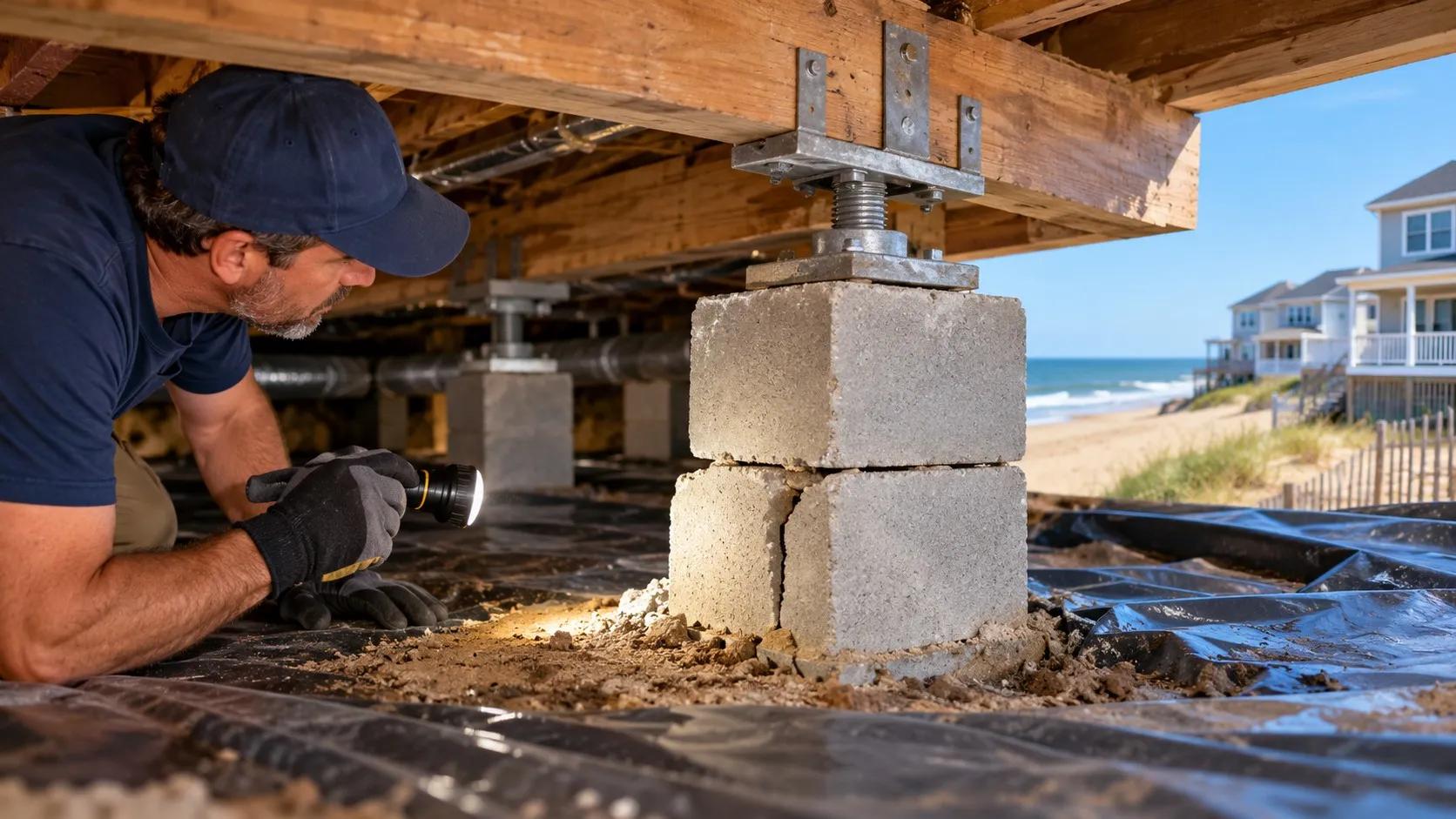
Most people never look under their house unless something feels wrong. A floor starts to slope, a door begins to stick, or a crack shows up above a doorway. In many homes, the cause is the support piers under the floor, and catching them early can keep foundation repair Virginia Beach VA jobs smaller and cheaper.
So how can someone tell if crawl space piers are moving? The main signs are piers that lean or look out of line, cracks in the blocks or mortar, gaps between the top of a pier and the wood beam it holds up, and crushed or slipping shims. Inside the house, sloping or bouncy floors and sticking doors often show up around the same time. Any one of these is worth a closer look.
What Crawl Space Piers Actually Do
Before getting into warning signs, it helps to know why crawl space foundation repair so often comes back to the piers.
Piers are short columns, usually made of concrete block or brick, that sit in rows under the house. They hold up the main wood beams, called girders, which in turn carry the floor joists and everything above them. Each pier is supposed to sit on a solid footing in the soil. Thin pieces of wood or steel, called shims, are often placed on top of the pier to close any small gap between the pier and the beam.
When everything is solid, the weight of the house moves straight down through the piers into the ground. When one pier sinks, tilts or loses its shims, that weight has to go somewhere else, and the floor above starts to show it.
Why Piers Shift in Virginia Beach
Coastal homes deal with some problems that houses inland don’t see as often. A few of the most common causes:
Wet soil. Much of the city has a high water table, and soil that stays damp can soften and lose strength under a pier.
Poor drainage. Gutters that dump water next to the foundation, or yards that slope toward the house, keep the crawl space wetter than it should be.
Storms. Heavy rain from nor’easters and tropical storms can wash soil away from footings or leave standing water under the house.
Rot and termites. Damp crawl spaces are hard on wood. Wood shims and the bottoms of girders can rot or get eaten by termites, which lets the beam drop.
Small or missing footings. Some older homes were built with piers sitting on very small footings, or almost right on the dirt.
Extra weight. Kitchen remodels, heavy tile floors or big furniture can add load the original piers weren’t built for.
Warning Signs Under the House
These are the things worth looking for with a flashlight from the crawl space opening:
Leaning piers. A pier should stand straight up and down. Even a slight tilt can mean the footing under it has moved.
Cracked blocks or mortar. Cracks running through the blocks, or step-shaped cracks along the mortar joints, are a sign of stress.
Gaps at the top. If there’s daylight between the top of a pier and the beam above it, the pier has likely sunk, and it’s no longer carrying its share of the load.
Crushed or loose shims. Wood shims that are split, flattened, rotten or sliding out of place won’t hold the beam steady.
Sinking into the ground. A pier that looks lower than the ones next to it, or has soil pushed up around its base, may be settling.
Sagging beams. Looking down the length of a girder, it should be fairly straight. A dip between piers can mean a pier has dropped or the beam itself is weak.
Washed-out soil. Small ditches or bare spots around a footing usually mean water has been moving through.
One sign by itself isn’t always a big deal. Several of them together, especially around the same pier, usually point to real movement.
Signs Inside the Home
Many times, signs of a pier problem become visible above ground before an inspection is done below ground level. Sagging floors, floors that bounce or appear softer in one area, doors inside that stick or are not able to lock, drywall that has cracks above the door, and floor boards that separate from the walls in kitchens are signs of a moving pier.
These signs can have other causes too, which is why it helps to check the crawl space directly instead of guessing.
How to Check Without Making Things Worse
A quick look from the crawl space access is safe for most people. Taking photos with a phone, and using a small level against the side of a pier, can show whether it’s leaning. A string pulled tight along the bottom of a girder makes sagging easy to spot.
For cracks, marking the ends with a pencil and writing the date next to them is a simple way to see if they grow over the next few months.
It’s best not to crawl deep under the house without the right gear. Crawl spaces can have loose wiring, sharp nails, standing water, mold and pests. And nobody should push on, hit or try to jack up a pier on their own. That can shift the load in ways that cause more damage.
What Repairs Usually Look Like
Most crawl space foundation repair work on piers falls into a few groups. When the pier is solid but the gap above it has grown, the fix is often new steel shims, which don’t rot or crush the way wood does. When a pier is cracked or leaning badly, it may need to be rebuilt on a larger, better footing.
In some homes, adjustable steel support posts are added between existing piers to take weight off a sagging beam. These need their own proper footings to work. If a girder has rotted or split, it may be reinforced by bolting a new beam alongside it, which is called sistering.
Just as important is fixing what caused the problem. Gutter extensions, better grading, a vapor barrier or a full encapsulation can keep the crawl space drier so the repair lasts. Structural work may also need a permit from the city, so that’s worth confirming before work starts.
When to Call a Professional
Inspection can be considered professional if there is obvious evidence of leaning, open space between the top of the piers, or increasing cracks in the foundation. The above applies to any kind of deterioration on the floor, as well as any damages sustained after a flood or storm.
When comparing companies for foundation repair Virginia Beach VA, it helps to ask how they decide between reshimming, adding supports or rebuilding a pier, and what they’ll do about moisture in the crawl space. A good contractor will explain the cause first, not just the fix. Catching pier movement early usually means a simpler repair and a lot less stress down the road.
Frequently Asked Questions
What causes crawl space piers to move? Wet or soft soil, poor drainage, undersized footings and rotting wood shims are the usual causes. In coastal areas like Virginia Beach, a high water table and heavy storms can make these problems worse over time.
Is a small crack in a pier something to worry about? Not always. Hairline cracks can be old and stable. Cracks that are wide, growing, or paired with leaning or a gap at the top of the pier usually need a professional look.
Are shims able to repair a sagging floor?
They might be able to help if the pier is still structurally sound but just needs help with the gap. If it is not structurally sound or damaged, then shimming will not help with the problem.
How frequently does a crawl space need to be examined?
It is recommended that it is examined once per year and then after any major storms or floods. This way you are able to see if there are any signs of moisture, pest infestation or piers that are moving.
Is a permit needed when repairing piers in Virginia Beach?
It is often needed when doing structural repairs but this depends on the extent of the job. It is best to check with the City of Virginia Beach or the contractor.