

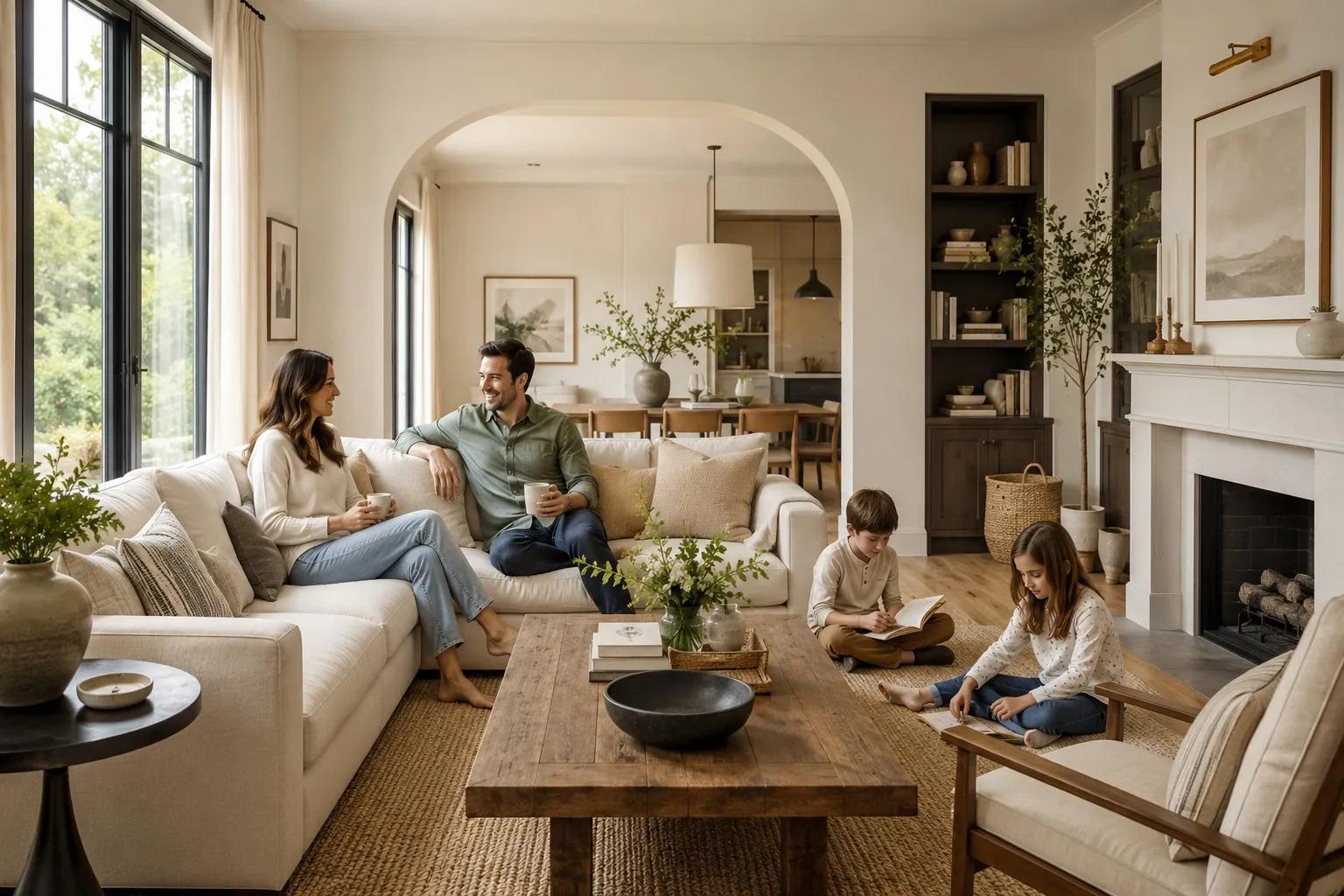
There’s a reason classic homes keep their appeal. Even as trends come and go, people still respond to symmetry, proportion, generous spaces, detailed façades, warm materials and rooms that feel settled rather than showy. A well-designed classic home doesn’t need to shout for attention. It tends to age quietly, which is exactly why so many families are still drawn to it.
The challenge, of course, is making sure the home works for the way people live now. A family doesn’t want a museum piece. They want comfort, storage, connection, flexibility and spaces that can handle busy mornings, relaxed weekends and everything in between. That’s where classic home design with contemporary family living becomes such a strong combination.
Traditional Style Shouldn’t Mean Old-Fashioned Living
The best classic homes borrow from tradition without being trapped by it. They might use pitched roofs, elegant mouldings, balanced windows, stone, timber, soft neutral palettes or a more formal street presence, but inside, the layout still needs to feel open, practical and easy to live in.
Modern families usually want spaces that connect. Kitchens aren’t tucked away in the same way they once were. Dining areas often flow into living rooms. Outdoor entertaining matters. Parents want visibility across shared spaces, especially when children are young, and everyone benefits from a layout that doesn’t make daily routines harder than they need to be.
That balance is what makes contemporary classic design so appealing. You can have the character and warmth of a traditional home, while still enjoying the light, flow and function of a modern floor plan.
Details Make the Difference
Classic design relies heavily on detail, but it’s easy to get wrong. Too little detail and the home can feel plain rather than timeless. Too much, and it starts to feel heavy or overly themed. The skill is in choosing elements that add depth without crowding the space.
This might come through refined cornices, wall panelling, carefully chosen hardware, natural stone, timber flooring, shaker-style cabinetry, feature lighting or a soft palette that lets the architecture do the talking. These details don’t need to feel fussy. Done well, they create rhythm and texture, giving the home a sense of permanence.
It’s also worth thinking about how materials will age. Family homes work hard, so surfaces need to be beautiful but forgiving. Flooring, benchtops, cabinetry, paint finishes and outdoor materials should suit real life, not just a perfect photoshoot. A classic home feels more authentic when it can handle a bit of wear and still look good.
Family Life Needs Flexibility
A home built for one stage of life can quickly become awkward when circumstances change. Young children become teenagers. Spare bedrooms become studies. Formal rooms become playrooms. Work-from-home days become part of the weekly routine. Good design allows for that shift.
Flexible spaces are especially useful in classic homes because they protect the elegance of the design while making the layout more adaptable. A sitting room near the entry might work as a quiet retreat now and a home office later. A larger living zone can support family time, entertaining and everyday mess without feeling chaotic. Built-in storage can keep the home feeling calm even when life’s anything but.
Timeless Doesn’t Have to Mean Frozen in Time
The most successful classic homes feel familiar without feeling dated. They respect traditional design principles, but they’re built around the needs of the people who’ll actually live there.
That’s what gives them staying power. When a home has proportion, warmth, practicality and enough flexibility to grow with a family, it doesn’t need to chase every trend. It already has what matters: a sense of comfort that lasts.