

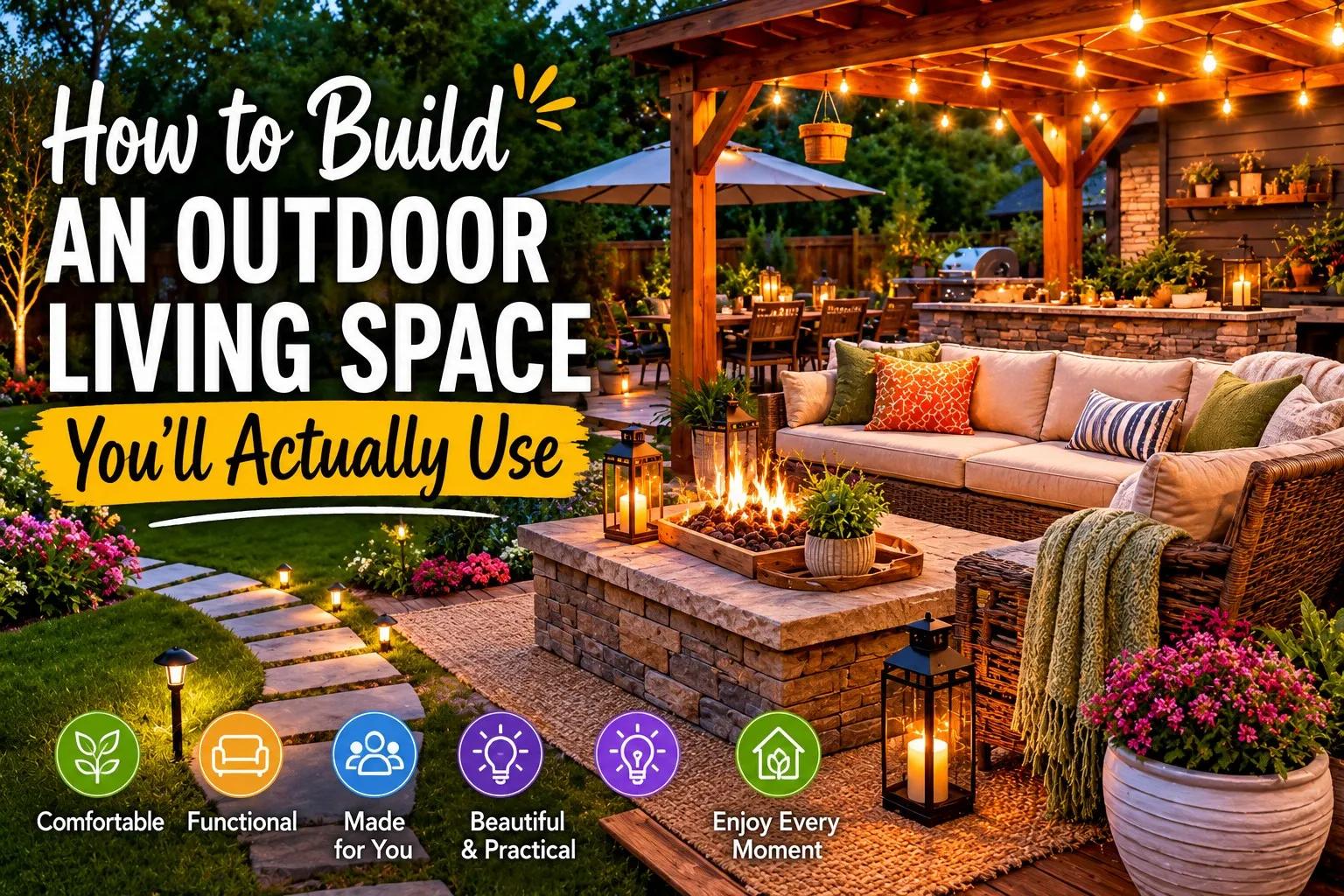
Outdoor living has become one of the most popular home upgrades in the country. People want a place to relax, host friends, and spend time outside without ever leaving home. But there is a catch most homeowners learn the hard way: plenty of people pour money into the backyard and still end up with a space they rarely use.
The difference almost always comes down to planning. A great outdoor space is designed on purpose, built to last, and cared for over time. Here is a practical, step-by-step guide to getting it right — and spending your budget where it actually counts.
Start With a Plan, Not a Purchase
It is tempting to start buying — a fire pit here, some pavers there. That is exactly how backyards end up looking pieced together and disconnected. Start with a design instead.
A good plan maps out how you actually want to use the space. Do you want to host big dinners, give the kids room to run, or carve out a quiet corner to unwind? The answer shapes every decision that follows. Many professional designers provide to-scale drawings and 3D renderings so you can see the finished space before any work begins. That step alone saves money, because it catches problems on paper instead of in poured concrete.
Get the Bones Right First
The hardscape — patios, walkways, retaining walls, and structures — is the foundation of the entire space. It is also the hardest and most expensive part to change later, so it pays to do it well the first time. Focus your quality dollars here:
Patios and walkways built with durable natural stone or pavers
Retaining walls that handle slopes and prevent erosion
Pergolas, decks, or covered areas that create shade and define outdoor rooms
Custom carpentry and metalwork — think pergolas, privacy screens, and iron gates — add character and make a yard feel finished rather than generic. These are the details guests notice first.
Choose Plants That Fit Your Climate
Planting is where a lot of money quietly gets wasted. Plants that do not suit the local soil and weather struggle, die, and need constant replacing — turning your landscape into a money pit.
The smarter approach is simple: right plant, right place. Native and climate-adapted plants need less water, less maintenance, and look better year-round. A designer who knows your region will choose species that thrive instead of just survive, and group them so their watering needs actually line up. The result is a fuller, healthier landscape that costs less to keep alive.
Don't Skip Water and Light
Two systems quietly make or break an outdoor space, and both are easy to overlook until something goes wrong: irrigation and lighting.
Smart irrigation and proper drainage protect everything you have built. Efficient controllers water only when needed, and good drainage keeps heavy rain from washing out beds or pooling on your new patio. Landscape lighting then does double duty — it makes the space usable after dark and keeps steps and walkways safe. A handful of well-placed lights can turn a backyard into an evening destination instead of a space that disappears at sunset.
Hire One Team for Design, Build, and Upkeep
One of the most common and costly mistakes is hiring a different company for each step — one to design, another to build, a third to maintain — and watching the original vision get lost somewhere along the way.
A full-service team keeps everything under one roof, with one plan and one point of accountability from the first sketch to the final walkthrough. In the Austin area, for example, companies like Outdoor Renovations handle landscape design, hardscaping, planting, lighting, and ongoing care together, so the finished space holds together exactly the way it was drawn.
That cohesion shows in the result: the patio flows into the planting beds, the lighting highlights the carpentry, and the irrigation keeps it all healthy — because it was planned as one project from the very start.
Plan for Maintenance From Day One
A landscape is not a one-time purchase. It is a living space that grows and changes with the seasons. Without steady care, even a beautifully designed yard starts to look tired within a season or two.
Decide up front who will handle the upkeep. Many homeowners choose a professional maintenance plan so the space stays sharp without giving up every weekend to yard work. Built into the plan from the beginning, regular maintenance keeps your investment looking its best for years instead of slowly slipping back.
Why the Investment Pays Off
It is easy to think of an outdoor renovation as a luxury, but the return shows up in more than just home value. Time spent outside is consistently linked to lower stress and a brighter mood, and a space that is genuinely comfortable is a space you will actually use. A well-designed yard gives you more room to relax, more reasons to gather the people you care about, and a daily dose of fresh air without ever leaving home.
There is a financial upside, too. A thoughtfully designed, well-maintained landscape boosts curb appeal and can raise the value of your property — but the bigger payoff is the quality of your everyday life. Few home improvements give back as often as an outdoor space you genuinely love to spend time in.
The Bottom Line
A great outdoor space does not require the biggest budget — it requires the right order of operations. Start with a clear plan, build the bones with quality materials, choose plants that fit your climate, and protect it all with smart water, lighting, and steady maintenance.
Do that, and your backyard stops being the project you keep meaning to finish and becomes a space you actually use — one you will enjoy for years to come.