

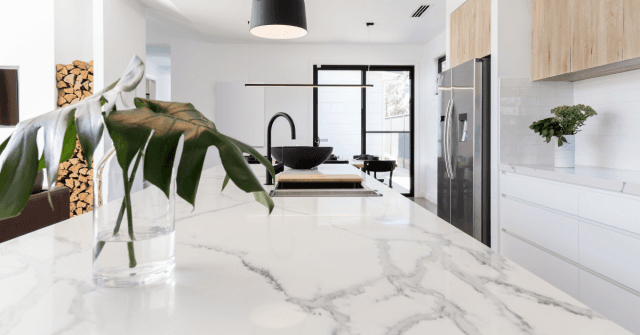
It makes sense to take pride in your home. From keeping it clean and tidy, to decorating, choosing paint schemes and interior design styles, it's all important. And one room that tends to be the centrepiece of your home is the kitchen. It's where you prepare for the day, make breakfast, lunch and dinner, and it's a bustling hub of activity. That's why ensuring everything matches is essential. This helpful article will share how to match your natural stone benchtop with your cabinets and floors, for a cohesive and appealing aesthetic. If you're interested in this topic, continue reading to learn more.
Start with the Benchtop
When it comes to designing your kitchen around your stone benchtop, you want to treat the stone as the hero of the story. You need to understand its base colour, veining and movement to have a cohesive design that flows with the benchtop and the rest of the kitchen.
Choosing Cabinet Colours
Matching your natural stone benchtop with your kitchen cabinets is one of the most important steps in creating a cohesive kitchen layout and design, because stone, as we mentioned above, is usually the hero material that sets the overall tone of the space.
Whether you've chosen marble, granite, quartzite or another natural or engineered stone, the surrounding colours and textures in your kitchen will determine whether your stone benchtop stands out in a refined way or feels visually overwhelming or cluttered.
The first element to get right in this mix is your cabinetry, since this occupies the majority of vertical surface area in your kitchen and provides the background for your stone to truly shine. Light and dark cabinets are going to interact very differently with different types of stone. A light cabinet colour scheme, paired with a light stone benchtop, creates a soft, seamless look that feels clean and airy, whereas a light cabinet scheme combined with a darker stone gives the benchtop more visual weight and helps it become a focal point in the kitchen. Dark cabinets, on the other hand, add a sense of drama and presence to the space. With a lighter stone benchtop, they create a bold contrast that highlights the veining and movement within the benchtop surface. When dark cabinets are paired with a dark stone, the result can be deep, luxurious and moody, but it requires careful overhead lighting to avoid making the room feel closed in or claustrophobic.
The Approach to Colour for Cabinets and Style
Your approach to colour for your kitchen cabinets should also reflect whether you prefer a neutral palette or a more expressive and creative style. Neutral cabinetry is going to work beautifully with almost any natural stone because it allows the vein patterning and natural character of the material to shine. Shades such as white, cream, beige, charcoal and soft greys create a timeless backdrop for your kitchen space, and make it easier to mix in different flooring options (more on this soon). However, bold accent cabinetry instead introduces depth and personality and can make your kitchen feel custom and contemporary. When using colours such as navy, deep green or terracotta, it's essential to consider the undertones of your stone. For instance, a cool-toned marble with blue or grey veining will work much better with deep blues or forest greens, whilst a warm-toned travertine or creamy limestone instead suits earthy, sun-baked colours. The level and depth of pattern in your stone also matter here. Busy stones with dramatic veining or major movement will benefit from simpler cabinet colours so the eye has a place to rest and things don't get overly busy. On the other hand, subtle stone types with fine veining or uniform texture can be paired with more adventurous cabinetry colour palettes without competing for attention.
Flooring Choices
Your choice of kitchen flooring is the next major surface that influences the look of your stone benchtop. Timber, whether hardwood or engineered, tiles and polished concrete will all provide different effects. Timber brings a warmth and softness to the space, offering a natural complement to your stone benchtop. The key here is to match undertones: warm timbers like oak or spotted gum will blend beautifully with stones that have golden, beige or honey-coloured veins, while cooler timber choices like ash or grey-toned species will suit stones with blue-grey veining.
Tiles give you greater control over the space, because they come in many colours and finishes. Stone-look tiles can echo and complement elements of your stone benchtop, while plain porcelain tiles provide a quiet, neutral base that can tie well with many stone types and cabinetry.
Polished concrete, a popular modern flooring choice, lends a contemporary, industrial aesthetic and pairs well with stones that have a strong character, as the smooth, consistent floor allows the benchtop to truly stand out.
Regardless of your choice of flooring material, warm and cool tones must be considered to avoid clashes, and you should be mindful of avoiding visual clutter. Too many competing patterns between your stone benchtop, cabinets and floors can make a kitchen feel overly busy, so aim for at least one surface here to remain visually calm.
Blending Contrast and Harmony
Balancing contrast and harmony in your kitchen is ultimately what ties the overall palette together. Contrast is a powerful tool when you want your benchtop to be a statement piece, and using dark against light or light against dark here will emphasise the stone's movement and depth. Harmony, achieved through combinations of tones where colours share similar intensities and undertones, will create a softer, more cohesive feel. Knowing when to choose contrast and when to embrace harmony depends on your desired vibe for your kitchen, but understanding these principles will help you create a visually stunning kitchen where every element, from cabinetry to floors, supports the beauty of your natural stone.
A Stone Summary
This helpful article has shared how to match your natural stone benchtop with your kitchen cabinets and floors. Matching a natural stone benchtop with these elements involves understanding the stone's colour, veining and undertones. Choose cabinetry that complements or contrasts with the stone, select flooring that aligns tonally without adding clutter, and consider how to balance harmony and contrast in order to create a cohesive, visually appealing kitchen design.