

Household dust is rarely just dirt. It's typically a mix of pet dander, pollen tracked in from outside, dust-mite waste, fabric fibers, and assorted biological particles that settle on surfaces or drift through the air. Managing it well takes more than wiping down what you can see—it also means cutting off the sources of dust, keeping moisture in check, and limiting how much material gets airborne in the first place. A vacuum can certainly help pull dust out of carpets and upholstery, but it works best as one piece of a larger cleaning routine rather than a quick fix on its own. Regular cleaning, adequate ventilation, and moisture control remain the strategies most often recommended for improving indoor conditions.
Understand Where Indoor Dust Comes From
Indoor dust builds up from several directions at once. Outdoor soil and pollen hitch a ride in on shoes and clothing. Skin flakes, hair, and textile fibers shed continuously from both people and furnishings. Pets add dander to the mix, and dust mites—microscopic organisms that feed on organic debris—leave behind waste particles that rank among the most common allergen triggers. Carpets, upholstery, and everyday movement around the house can also kick trapped particles back into the air.
Exactly what's in household dust varies depending on ventilation, flooring, furnishings, pets, and even regional climate. It also helps to draw a distinction between settled dust, which collects on surfaces, and the finer airborne particles that linger longer and are more easily inhaled. Put simply, allergens are substances capable of triggering an immune response in sensitive individuals; people with asthma or allergies often react strongly to the exact same dust that causes no issue for someone else. Not all dust is inherently harmful—its impact comes down to the type of contaminant, how concentrated it is, and individual sensitivity.
Start With Source Control
Reduce Dust-Collecting Surfaces
One of the most practical strategies is source control—limiting the surfaces and materials that trap dust in the first place. Carpets, heavy curtains, upholstered furniture, and general clutter all give particles places to settle and build up over time. Reasonable adjustments include opting for washable rugs where practical, cutting back on unnecessary fabric decor in bedrooms, storing belongings in closed containers, and keeping frequently used surfaces clear enough to wipe down easily. None of this requires replacing furniture; the goal is simply to make regular cleaning less of a chore.
Address Moisture and Humidity
Excess moisture feeds mold growth and helps dust mites survive, making it one of the more common contributors to indoor allergens. Fixing leaks promptly, improving ventilation in bathrooms and kitchens, and keeping an eye on indoor humidity can meaningfully cut down on these conditions. A commonly cited general target is 30–50% relative humidity, though specific household needs and local climate guidance may vary. Humidity control is one piece of allergen management, not a complete solution on its own.
Use a Consistent Cleaning Sequence
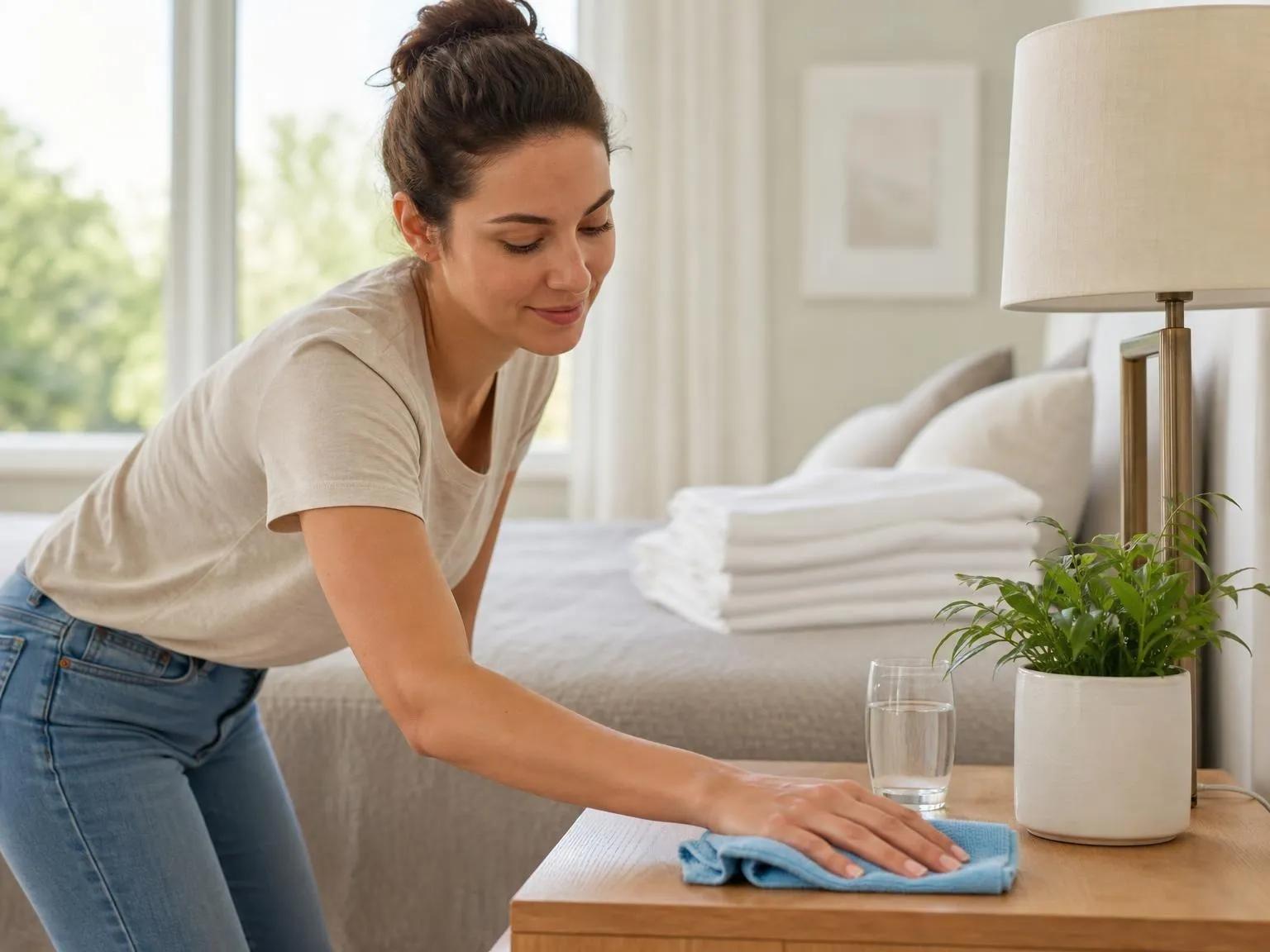
A simple, repeatable order helps keep you from recontaminating areas you've already cleaned: declutter first, then dust hard surfaces with a damp cloth, move on to bedding and washable textiles, address floors and upholstery, and finish by ventilating the space when outdoor conditions allow. Damp dusting is generally preferable to dry dusting because it actually captures particles instead of scattering them into the air, where they just resettle somewhere else. Working from higher surfaces downward also means dislodged particles end up on the floor, where they can be dealt with last.
Key takeaway: Remove dust rather than simply moving it from one surface to another.
Clean Floors, Carpets, and Upholstery Effectively
Carpets and fabric-covered furniture often act as reservoirs, holding onto dust and allergens between cleanings. How often they need attention depends on foot traffic, pets, children, and personal allergy sensitivity—public health guidance commonly calls for regular cleaning, with more frequent sessions in higher-exposure households. When using a vacuum, it matters to follow the manufacturer's maintenance instructions, empty or replace collection systems safely, and keep filters clean. A HEPA filter may reduce the dust released back into the room during cleaning, though no filter catches every particle or replaces the need for a broader routine.
Consider two realistic scenarios: a lightly furnished bedroom with minimal textiles might only need a quick weekly pass, while a heavily furnished living room with pets and upholstered seating will likely call for more frequent, thorough attention using that same basic routine.
Manage Bedding and Bedroom Allergens
Bedrooms deserve particular focus, since people spend so many hours there and bedding collects skin particles, sweat, and allergens over time. Washing sheets, pillowcases, and other washable bedding regularly—according to the care label—helps keep buildup in check. Allergen-resistant covers for mattresses and pillows are an optional measure some people reach for when managing dust-mite sensitivities. Reducing clutter near the bed and cleaning underneath furniture also helps, though routine cleaning reduces exposure rather than eliminating every allergen embedded in fabric and padding.
Improve Cleaning Safety and Avoid Common Mistakes
Certain habits can inadvertently make things worse: dry dusting large areas, shaking rugs or bedding indoors, neglecting filters and collection containers, cleaning visible mold without fixing the underlying moisture problem, or reaching for strong chemical cleaners when they're not needed. Ventilating rooms during cleaning helps, but household chemicals should never be mixed. People with significant allergies or asthma may want to step out during intensive cleaning sessions or ask someone else to handle it, since cleaning itself tends to stir up settled particles temporarily. Routine tidying is a different matter from situations involving extensive mold, persistent dampness, pest infestations, or serious respiratory symptoms—these often call for qualified assistance.
Build a Practical Cleaning Schedule
Wipe visibly dusty surfaces with a damp cloth
Clean high-traffic floor areas
Remove visible pet hair and debris
Clean carpets, rugs, and upholstered furniture weekly
Wash bedding and frequently used fabrics weekly
Check under furniture and along edges
Inspect filters, vents, and damp-prone areas periodically
Review clutter and storage habits periodically
Sticking to a consistent cleaning routine matters far more than the occasional deep-cleaning push.
When Cleaning Is Not Enough
Persistent symptoms, visible mold, recurring dampness, or suspected pest issues may call for professional evaluation rather than more aggressive home cleaning. Anyone dealing with asthma or ongoing allergy symptoms should talk through household triggers with a qualified healthcare professional, since general cleaning advice can't diagnose or treat respiratory conditions. Guidance from organizations such as the U.S. Environmental Protection Agency, the Centers for Disease Control and Prevention, and recognized allergy and clinical organizations can offer additional, situation-specific direction.
Final Takeaway: Create a Routine That Fits the Home
Reducing household dust works best as a layered approach: control moisture, minimize dust-holding clutter, damp-dust hard surfaces, and clean floors, carpets, upholstery, and bedding consistently while keeping filters and equipment well maintained. Every household should adapt frequency and methods to its own mix of pets, flooring, humidity, allergies, and available time. A reasonable starting point is picking two manageable changes—say, damp dusting and a regular floor-cleaning schedule—and sticking with them consistently before adding more. For health-related concerns or significant indoor contamination, rely on manufacturer instructions, established public health guidance, and professional advice.