

A high-end bathroom should support the body as carefully as it pleases the eye. Florida homes face persistent humidity, intense sunlight, and salt-laden air near the coast. Those conditions can affect grout, cabinetry, metals, and natural stone. A thoughtful renovation pairs moisture-resistant materials with clear circulation, supportive fixtures, effective ventilation, and restrained decoration. The result feels restorative after bathing, remains practical in daily routines, and continues to perform well over years of use.
Start With a Clear Plan
Homeowners researching luxury bathroom ideas for Florida homes can compare layouts, surfaces, fixtures, and climate-conscious details before construction begins. Useful planning considers moisture exposure, available floor area, storage demands, lighting, and long-term maintenance. It also accounts for household changes, such as aging, shared routines, or mobility concerns. Early decisions reduce costly revisions and help ensure every element serves a clear purpose.
Prioritize Comfortable Movement
An effective floor plan allows people to move without brushing against cabinetry or fixtures. The space around the toilet, vanity, and shower should be carefully measured before installation. Shared bathrooms benefit from distinct grooming zones, especially during busy mornings. Pocket doors may preserve valuable floor area in compact rooms. Larger spaces can separate bathing, dressing, and storage while keeping circulation direct.
Choose a Walk-In Shower
Frameless glass can make a shower feel brighter and less enclosed. Large porcelain panels reduce grout joints, limiting places where soap residue and mildew collect. A rain head delivers broad coverage, while a handheld sprayer helps with rinsing, cleaning, and seated bathing. Built-in benches support longer showers and provide stability. Textured flooring improves traction under wet conditions.
Add a Freestanding Tub
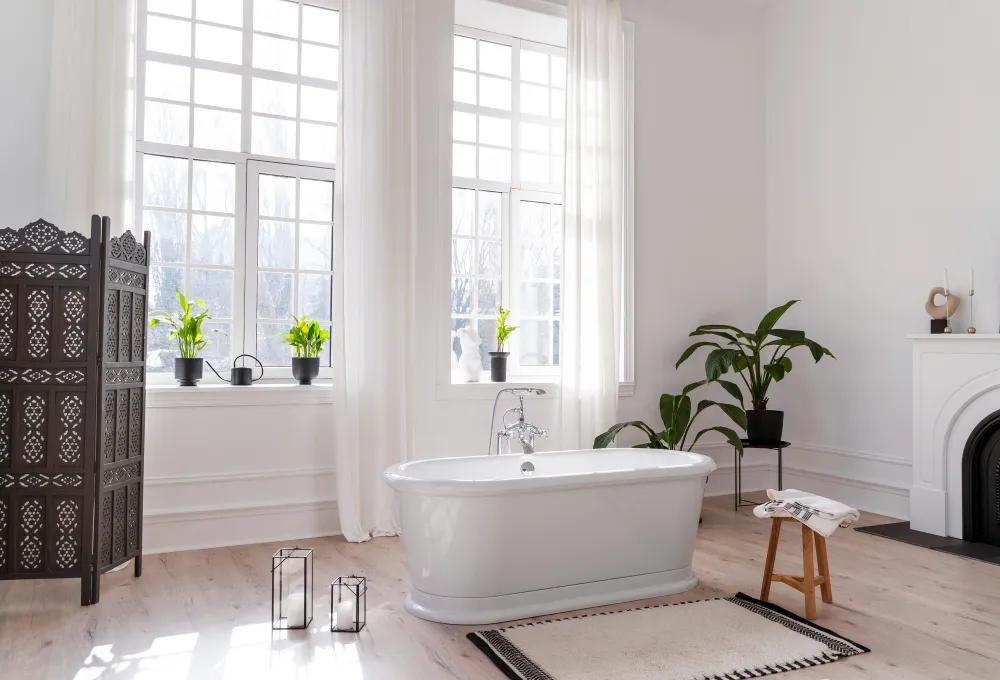
A freestanding tub introduces a softer silhouette beside straight cabinetry and rectangular tile. Its position should allow for comfortable entry, clear access for cleaning, and sufficient distance from nearby walls. A deep soaking basin may ease muscular tension after physical activity. Wall-mounted plumbing keeps the rim uncluttered. Smaller models can preserve the same bathing experience even in rooms with limited square footage.
Upgrade the Vanity
A floating vanity exposes the floor beneath the cabinet, which can make a compact bathroom appear more open. Wall-mounted construction also allows easier cleaning around the base. Double basins help couples prepare simultaneously without competing for counter space. Deep drawers usually store grooming supplies more efficiently than fixed shelves. Integrated outlets keep electrical tools accessible while reducing the number of visible cords.
Improve Airflow and Ventilation
Moisture control protects paint, wood products, grout, and indoor air quality. An exhaust fan should match the room’s volume and operate throughout each shower. A timer can continue extraction after bathing, removing vapor before condensation settles on cooler surfaces. Windows may assist with fresh air, yet mechanical ventilation remains important. Mildew-resistant coatings offer additional protection on ceilings and walls.
Build Better Storage
Visible clutter can make a carefully finished bathroom feel congested. Tall cabinets use vertical space for towels, paper goods, and cleaning supplies. Drawer dividers keep cosmetics and grooming tools separated, visible, and easy to retrieve. Recessed medicine cabinets add capacity without projecting far from the wall. Open shelves suit folded linens or decorative objects, while closed doors conceal daily-use products.
Use a Calming Color Palette
Soft white, sand, pale blue, and light oak tones work well with Florida’s strong daylight. Reflective surfaces can distribute available illumination across smaller rooms. Natural textures add variation without overwhelming the eye. Wood-look porcelain adds warmth while avoiding the issues associated with exposed timber in damp conditions. A restrained foundation also allows towels, artwork, and accessories to change without the need to replace permanent finishes.
Consider Safety and Accessibility
A comfortable bathroom should remain usable as physical needs change. Curbless showers reduce the height difference between dry flooring and wet areas. Strategically placed grab bars can provide support without giving the room an institutional appearance. Lever handles require less finger strength than small knobs. Slip-resistant tile improves footing, while wider entries and generous clearances accommodate mobility devices or future assistance.
Finish With Personal Details
Personal touches should reinforce the room’s purpose rather than create maintenance burdens. Framed mirrors, substantial hardware, textured towels, and carefully selected artwork can add character. A recessed niche may hold candles or decorative objects, keeping them away from direct spray. Humidity-tolerant plants can contribute color when natural light permits. Limiting decorative pieces keeps surfaces easier to clean and preserves visual calm.
Conclusion
A successful luxury bathroom brings physical comfort, visual balance, and reliable performance into one coordinated plan. Florida homeowners should consider humidity, sunlight, salt exposure, ventilation, and cleaning demands before selecting finishes. Clear circulation supports daily movement, layered illumination improves grooming, and accessible fixtures prepare the room for changing needs. Thoughtful storage keeps counters orderly, while personal accents create warmth. Each decision matters because lasting refinement depends on how well the room functions every day.