

What an Outdoor Living Space Adds to Your Home's Resale Value: Kitchens, Fire Features, and Lighting Ranked
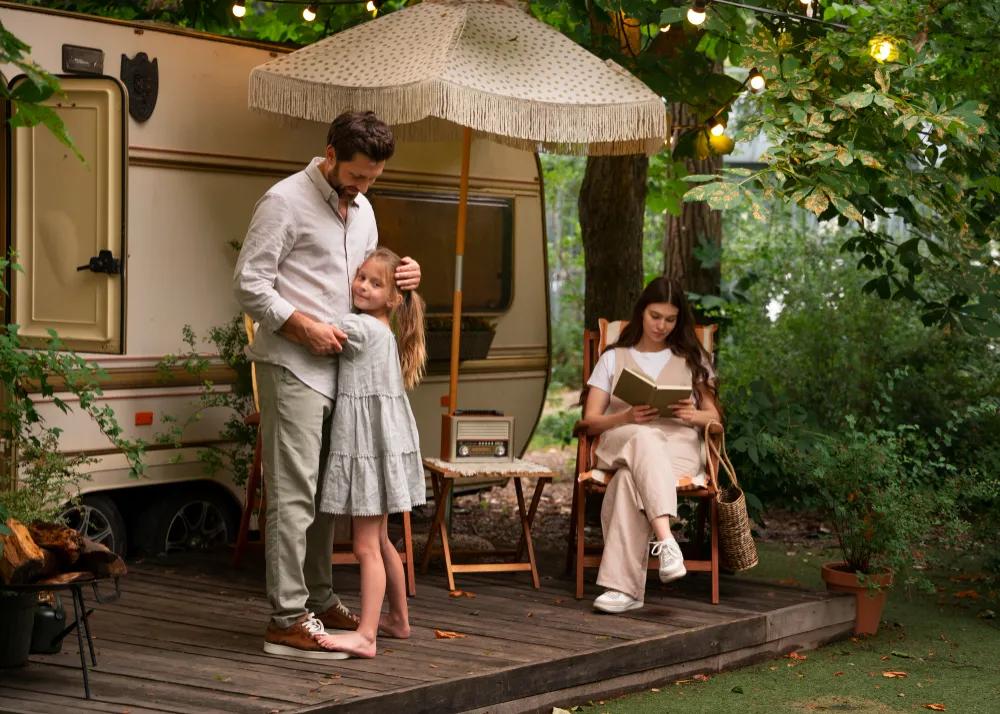
If you have ever stood in your backyard at the end of a long summer evening and thought "this could be so much more," you are in good company. Over the past few years, homeowners have stopped treating their yards as an afterthought and started treating them as actual rooms. The catch, of course, is money. Before you pour a slab or run a gas line, you want to know whether any of it comes back to you when it is time to sell.
The short answer is yes, but not equally. Well-designed outdoor living spaces consistently rank among the features buyers respond to, and appraisers have taken notice. The longer answer is that some upgrades pay you back generously, some roughly break even, and a few can actually work against you if they are built for your taste instead of the market's. Here is how the big three stack up, ranked from the safest bet to the biggest gamble.
First, a Quick Word About How Buyers Value Outdoor Space
Before the rankings, it helps to understand the mechanism. An outdoor upgrade rarely adds value dollar for dollar the way a bathroom addition might. What it does is widen the pool of buyers. A house with a functional, attractive backyard setup gets more showings, more offers, and often a faster sale, and speed has real value. A seller who closes three weeks early because a buyer fell in love with the outdoor kitchen has effectively earned money that never shows up on a closing statement.
There is also a simple square footage argument. If your climate allows you to use the yard for eight or nine months out of the year, a well-built outdoor area functions like an addition to the home without the cost of an actual addition. Buyers in warm markets do the math on that quickly.
Ranked #1: Outdoor Lighting
It might seem strange to put the least glamorous upgrade at the top of the list, but lighting earns the spot for one reason: it costs the least and almost never hurts you.
A professional landscape lighting installation typically runs somewhere between $2,000 and $5,000 depending on the size of the property, and most estimates put the resale recovery somewhere between 50 and 80 percent of that cost. On paper that looks like a loss. In practice, it is the cheapest way to make a home feel finished. Lighting does several things at once: it extends the usable hours of the yard past sundown, it improves curb appeal at the exact moment buyers drive by in the evening, and it addresses a security concern that sits quietly on every buyer's mental checklist.
Real estate agents will also tell you that lighting photographs beautifully. In a market where the first showing happens on a phone screen, a home that glows in the listing photos gets clicks that a dark one does not.
The other advantage is flexibility. If you sell in two years or twenty, the lighting still works. It does not depend on a specific appliance brand holding up or a design trend staying current. Low-voltage LED systems have also become dramatically more efficient, so the operating cost argument that used to scare buyers has mostly disappeared.
If you want one upgrade that improves your daily life now and your sale later, this is it.
Ranked #2: Fire Features
Fire pits and outdoor fireplaces sit in the sweet spot of the value equation. They are emotional, visible, and affordable enough that the numbers usually work.
Industry estimates suggest homeowners recoup around 78 percent of the cost of a fire pit at resale, and that figure can climb past 80 percent for a well-built gas unit. An outdoor fireplace, which costs more, generally returns a smaller percentage but adds more perceived permanence and structure to the yard. Either way, few features photograph as well or draw people outside on a cool evening the way fire does.
The reason fire features rank so well is that they check two boxes at once. For buyers who entertain, a fire pit is a gathering spot. For buyers who do not, it is still a visual anchor that makes the yard feel designed rather than empty. It is one of the few upgrades that appeals to nearly every type of buyer, from young families roasting marshmallows to empty nesters who want a quiet glass of wine outside in October.
There are two cautions. First, placement matters more than people think. A fire feature crammed into a corner or sitting too close to a fence reads as a liability rather than an amenity. Second, skip anything that looks homemade. A stone ring from a weekend project can actually make a yard feel less finished than no fire feature at all. Buy or build something that looks intentional.
Ranked #3: Outdoor Kitchens
Here is where it gets interesting, because the outdoor kitchen has the highest ceiling and the highest risk of the three.
The numbers swing widely depending on who you ask and where you live. Some estimates put the resale recovery for outdoor kitchens between 55 and 150 percent of project cost. In warm regions like the Southeast and Southwest, where the cooking season runs most of the year, well-built outdoor kitchens have been credited with returns of 100 to 200 percent. In colder climates, the same kitchen can sit unused for half the year, and buyers mentally deduct for it.
The pattern to notice is that the return tracks almost perfectly with usable season length. If you live somewhere with mild winters, an outdoor kitchen is close to a no-brainer. If you live where it snows from November to March, you need to be honest with yourself: you are building it for your family's enjoyment first and resale second.
There is also a scale problem. A modest setup with a built-in grill, counter space, and storage tends to hold its value well because it reads as useful. A full outdoor kitchen with a pizza oven, refrigerator, sink, and kegerator can overshoot the neighborhood. Appraisers call this over-improving, and it is the most common way homeowners lose money on outdoor projects. The rule of thumb is simple: keep the outdoor kitchen in proportion to the house. A $60,000 kitchen behind a $350,000 house is a hobby, not an investment.
That said, when the scale is right and the climate cooperates, nothing on this list creates the "wow" moment in a showing like a real outdoor kitchen. Buyers do not just look at it. They picture themselves in it.
A Few Rules That Apply to All Three
Whatever you build, a few principles protect your investment. Match the style and quality of the main house, because a mismatched outdoor feature can subtract value instead of adding it. Use durable, low-maintenance materials, since buyers now ask about upkeep the way they ask about roof age. Keep records of what was spent and when it was installed, because a documented, permitted project reassures buyers and appraisers alike. And if budget forces a choice, remember the ranking: light first, fire second, kitchen third.
The Bottom Line
Outdoor upgrades are one of the few categories where you genuinely get to have it both ways. You improve your everyday life for as long as you own the home, and you hand the next owner a feature they were going to pay a premium for anyway. Just let the climate, the neighborhood, and the math guide the plan. Build what fits, and the value tends to follow.