

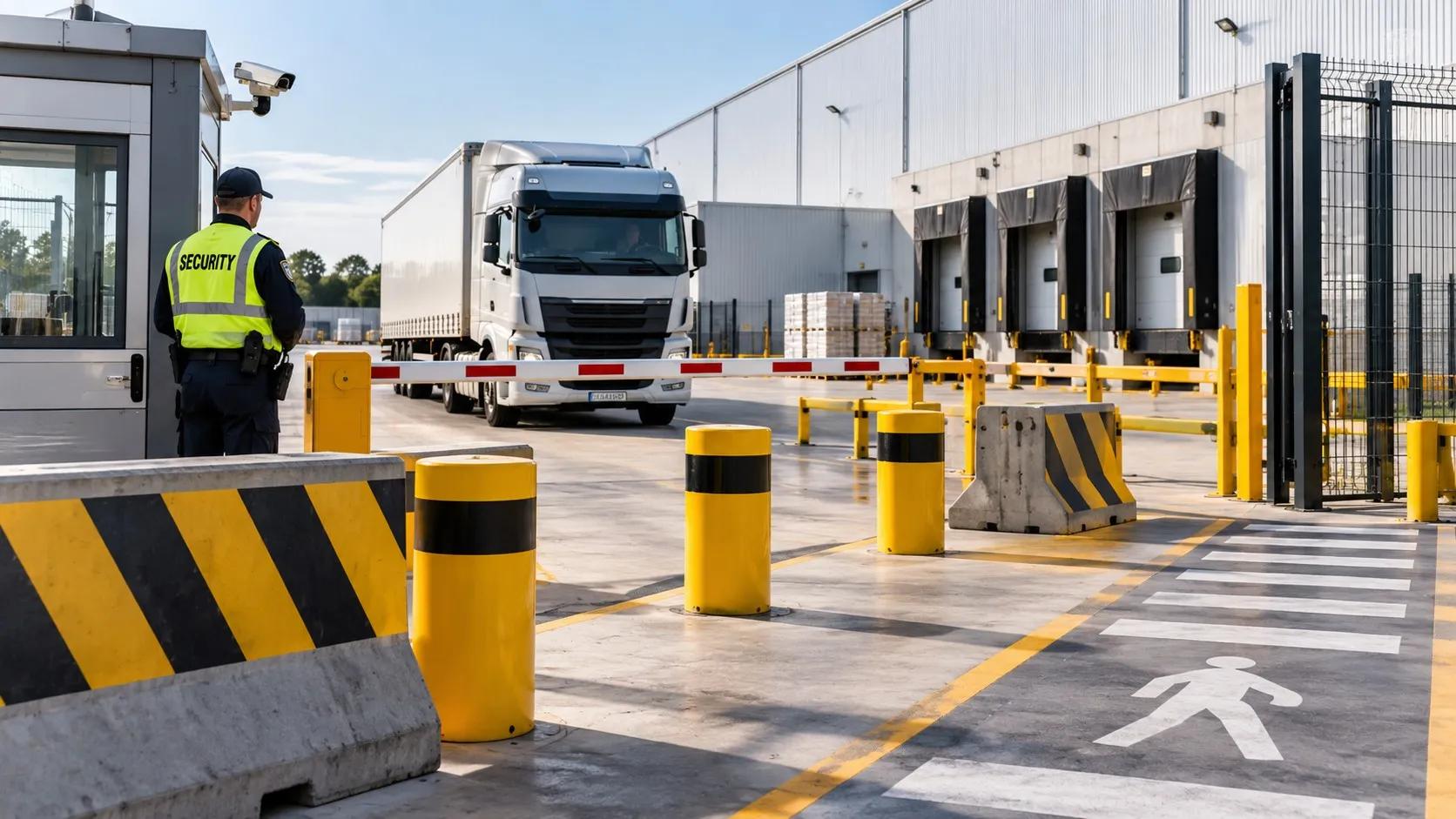
Warehouses and loading bays are designed around vehicle access, which can make security more complicated than sites where traffic can simply be kept outside.
Lorries, vans, contractors and delivery drivers may all need legitimate access throughout the day. That’s why protecting the site against deliberate vehicle attacks is not about shutting vehicles out completely. It is about controlling entry, where they can travel and how close they can get to people and critical infrastructure.
Start with a proper risk assessment
Every site is different, so security measures should begin with understanding the actual risks. Look at entrances, loading areas, pedestrian routes, staff car parks and places where vehicles can approach buildings directly.
Treat hostile vehicle mitigation as a combination of risk assessment, security planning, procedures and physical protection rather than simply installing individual barriers. The assessment should consider when the site is busiest, which vehicles genuinely need access and where employees are most exposed.
Control who can drive onto the site
Vehicle access should be managed rather than assumed. Delivery schedules, vehicle registrations and driver details can be checked before entry, particularly at sites handling high-value or sensitive goods.
Gates, security posts and controlled entry points can help prevent unauthorised vehicles simply following legitimate traffic onto the premises. Limit and control vehicle access as far as reasonably possible, with additional screening considered according to the site's risk assessment.
Use physical protection around vulnerable areas
Physical barriers can help prevent vehicles reaching areas where employees, buildings or important equipment would be particularly vulnerable. Depending on the site, this could include security gates, bollards, barriers or other vehicle restraint systems.
These measures need to be properly specified. A decorative bollard and a security product designed to withstand vehicle impact are not automatically the same thing. Hostile vehicle mitigation products should meet appropriate standards for impact performance, design and installation.
Separate vehicles and pedestrians
One of the most effective improvements is often good traffic management.
Employees walking between warehouses, offices and loading bays should not routinely share the same routes as moving HGVs and vans.
Use clearly defined pedestrian walkways, barriers and crossing points where appropriate.
Vehicle speeds should also be controlled across the site, particularly around loading bays and areas with regular foot traffic.
Traffic exclusion, controlled vehicle access and traffic management as important parts of hostile vehicle mitigation.
Protect loading-bay access
Loading bays present a particular challenge because vehicles have to approach the building closely. That makes procedures around these areas especially important.
Only expected vehicles should be permitted into operational loading areas, and drivers should know exactly where to wait, reverse and park.
Industrial doors and gates should also be maintained properly so they continue to operate as intended.
Damaged barriers or unreliable gates should be repaired quickly rather than accepted as a temporary inconvenience.
Build security awareness among staff
Physical measures are only part of the solution. Employees should understand site access procedures and know how to report unusual behaviour, damaged security equipment or vehicles that appear somewhere they should not be. Similarly, drivers should also secure their own vehicles when unattended, closing windows and doors, switching engines off and retaining keys whenever vehicles are left.
Plan for what happens if something goes wrong
Sites should also have a clear emergency response plan. Staff need to understand how alarms are raised, where they should move and who takes responsibility for contacting emergency services. The strongest warehouse security comes from layers working together.
Controlled access, suitable physical barriers, clear traffic routes, maintained loading equipment and alert staff can all reduce vulnerability. For a site that depends on vehicle movements every day, the goal is not to stop traffic. It is to make sure every vehicle is where it should be, and that people and critical parts of the operation remain properly protected.