

Search this topic and the results arrive in a predictable order: protocols, binders, supplement stacks, and testimonials. Almost none of them start where the evidence does, which is the wall. Mould is downstream of water, and as long as the water problem exists, everything else is treating a symptom that is being continuously replenished. The sequence matters more than the shopping list.
This guide covers:
• Why fixing moisture comes before anything else, including cleanup
• The size threshold where a job stops being a DIY job
• What the research actually says about mould and the gut
• An honest account of what supplements can and cannot contribute
At a Glance
Takeaway | Detail |
Moisture first, always | Remediation without fixing the water source fails and the mould returns |
The window is 24 to 48 hours | Dry wet materials inside it and growth usually does not start |
Ten square feet is the threshold | Larger than roughly three feet by three feet, get a professional |
Testing is usually unnecessary | If you can see or smell it, the response is the same either way |
Porous materials get discarded | Water wicks deep into drywall, carpet pad, and insulation |
Humidity is the long-term control | Below 60 percent relative humidity, ideally 30 to 50 |
Start With the Building, Not the Body
The EPA is unambiguous on this. Mould grows where spores land on something wet, so removing mould without correcting the moisture means it comes back. Finding the leak, the condensation, the failed seal, or the ventilation problem is the first job, and it is frequently a repair rather than a clean.
Speed matters more than most people realise. When water gets into materials, drying them within 24 to 48 hours generally prevents growth from starting at all. After that window the job changes character, from drying something wet into remediating something colonised. That single fact is the most actionable piece of guidance in the entire subject.
Then there is the ongoing control, which is humidity. Keeping indoor relative humidity below 60 percent, and ideally between 30 and 50, removes the conditions mould needs. A humidity meter costs very little and turns a guess into a measurement, which matters in bathrooms, basements, and any room where condensation appears on glass.
One myth worth dispatching. Colour does not indicate danger, and the specific fear attached to so-called black mould is not supported by public health guidance for the general population. The recommendation is the same for all indoor mould: remove it and fix the water.
Knowing When to Stop and Call Someone
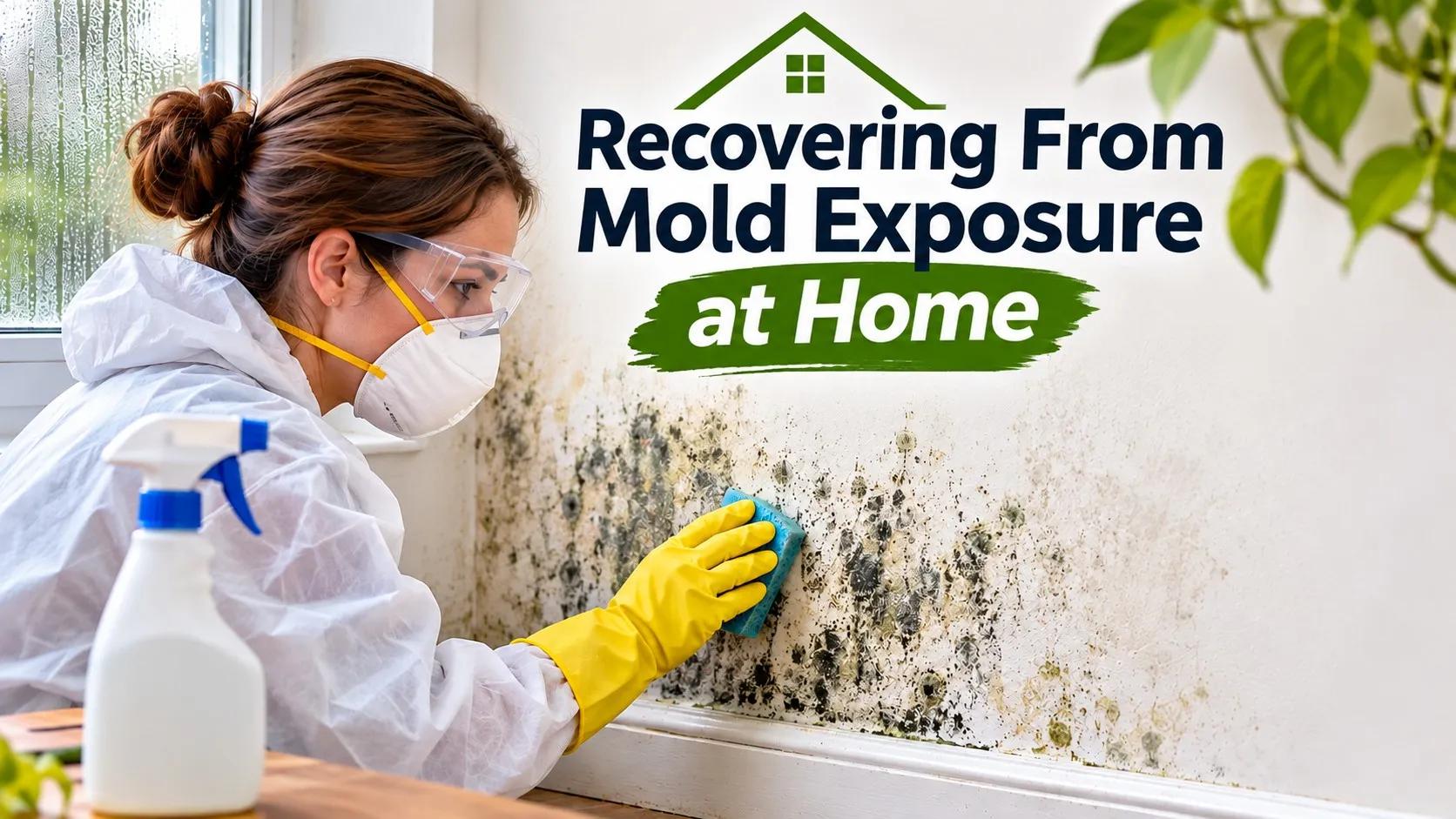
The EPA puts the DIY threshold at roughly ten square feet, about a three foot by three foot patch. Below that, most people can handle it with basic precautions. Above it, or where there has been significant water damage, the guidance points toward professional remediation with proper containment.
Testing is the step people most often take first and usually do not need. EPA guidance notes that if you can see or smell mould, sampling is generally unnecessary, because the response does not change based on the result. There is also no federal standard for acceptable spore counts, which makes test numbers harder to interpret than they look.
Situation | Approach |
Under 10 sq ft, clean water source | DIY with gloves, goggles, and an N-95 respirator |
10 to 100 sq ft | Limited containment, professional advisable |
Over 100 sq ft | Full containment, professional remediation |
Any contaminated water source | Professional, regardless of size |
HVAC system involved | Professional, since spores distribute through the whole building |
Porous materials soaked | Discard rather than clean, water has wicked inside |
The discard rule is the one people resist. Drywall, carpet underlay, ceiling tiles, and insulation absorb water throughout their thickness, and surface treatment cannot reach what is inside them. Cleaning the face of a material whose interior is colonised produces a clean-looking surface and an unchanged problem.
Why the Gut Enters This Conversation
There is a legitimate reason mould discussions drift toward digestion, and it is not the one usually given. Moulds can produce mycotoxins, and a body of laboratory and animal research has examined how certain mycotoxins affect the intestinal barrier, including their effects on the tight junction proteins that control how permeable that barrier is.
That research is mechanistic rather than clinical. It describes what specific compounds do to intestinal cells under controlled conditions. It does not establish that household mould exposure causes a particular syndrome in people, and the broader question of mould-related illness remains contested in medicine, with no established diagnostic test.
What is better established is the general biology of the barrier itself. Butyrate, produced when gut bacteria ferment dietary fibre, is the primary energy source for the cells lining the colon and plays a documented role in maintaining mucus production and tight junction integrity. Readers in the UK looking at that category will find the butyrate supplement at BodyBio UK feeds the gut lining directly rather than working through the bacterial population first.
The honest framing is that barrier support is a reasonable general goal with real evidence behind the mechanism. Positioning it as a treatment for mould exposure specifically goes considerably further than the research does.
What Supplements Can and Cannot Do Here
Be clear about the hierarchy. The intervention with the strongest evidence for recovering from mould exposure is removing the exposure. Nothing taken orally substitutes for fixing a leak, and any protocol that treats supplementation as the primary step has the order backwards.
Within that constraint, general nutritional support is not unreasonable. The body's clearance pathways run continuously regardless of what triggered interest in them, and supporting normal function is a different claim from treating an illness. Products in this space, including a focused range of mold detox supplements at BodyBio, sit in that category, and BodyBio maintains separate UK and US stores so formulations and availability differ by market.
Two cautions belong here. Dietary supplements cannot legally claim to diagnose, treat, cure, or prevent disease, so any product making that claim is telling you about its marketing. And anyone with persistent respiratory symptoms, unexplained fatigue, or a known immune condition should be assessed by a doctor rather than self-managing, since those symptoms have many causes and mould is only one candidate.
The authoritative guidance is free and short. The US Environmental Protection Agency publishes a brief guide to mould, moisture, and your home, covering the ten square foot threshold, the 24 to 48 hour drying window, humidity targets, protective equipment, and when testing is and is not worthwhile.
The Short Version
Fix the water, dry everything inside 48 hours, and discard porous materials that stayed wet. Keep humidity between 30 and 50 percent afterwards. Call a professional above roughly ten square feet or wherever contaminated water or the HVAC system is involved. Treat nutritional support as a supporting measure rather than the plan.
Key Takeaways
• Find and repair the moisture source before cleaning anything, or the mould returns
• Use the ten square foot threshold to decide between DIY and professional remediation
• Discard soaked porous materials rather than attempting to clean them
Recovery from mould exposure is mostly a building problem wearing a health problem's clothes. The health questions are real, and they get easier once the source is gone.
This article is general information and not medical advice. Speak with a qualified healthcare professional about persistent symptoms, and consult a qualified remediation professional for anything beyond a small, contained area of growth.
Frequently Asked Questions
How much mould can you clean yourself?
EPA guidance puts the threshold at roughly ten square feet, about a three foot by three foot patch. Below that, most people can handle it with gloves, goggles, and an N-95 respirator. Above it, or where water damage has been extensive, professional remediation with containment is advised. Contaminated water sources warrant a professional at any size.
Do you need to test for mould before cleaning it?
Usually not. EPA guidance notes that if mould is visible or you can smell it, sampling is generally unnecessary because the response is identical either way: remove it and fix the moisture. There is also no federal standard for acceptable spore counts, so results are harder to interpret than they appear.
How long does it take mould to grow after water damage?
Growth can begin within 24 to 48 hours on damp materials. That is why the guidance is to dry wet, non-mouldy materials inside that window, which in most cases prevents growth from starting. Once the window has passed, the job shifts from drying to remediation and the scope increases.
What humidity level prevents mould?
Below 60 percent relative humidity, with 30 to 50 percent as the preferred range. An inexpensive humidity meter makes this measurable rather than a guess. Bathrooms, kitchens, basements, and any room where condensation forms on glass are the usual problem areas and benefit most from ventilation or dehumidification.
Can mould exposure affect the gut?
Laboratory and animal research has examined how certain mycotoxins affect intestinal barrier function, including effects on tight junction proteins. That work is mechanistic rather than clinical, and it does not establish that household mould exposure causes a specific syndrome in people. The broader question of mould-related illness remains contested, with no established diagnostic test.
Do mould detox supplements work?
The evidence is limited and considerably weaker than for removing the exposure itself, which is the step with actual support behind it. General nutritional support for normal clearance function is a reasonable goal, but it is a different claim from treating an illness. Supplements cannot legally claim to treat or cure disease, and persistent symptoms warrant medical assessment.