

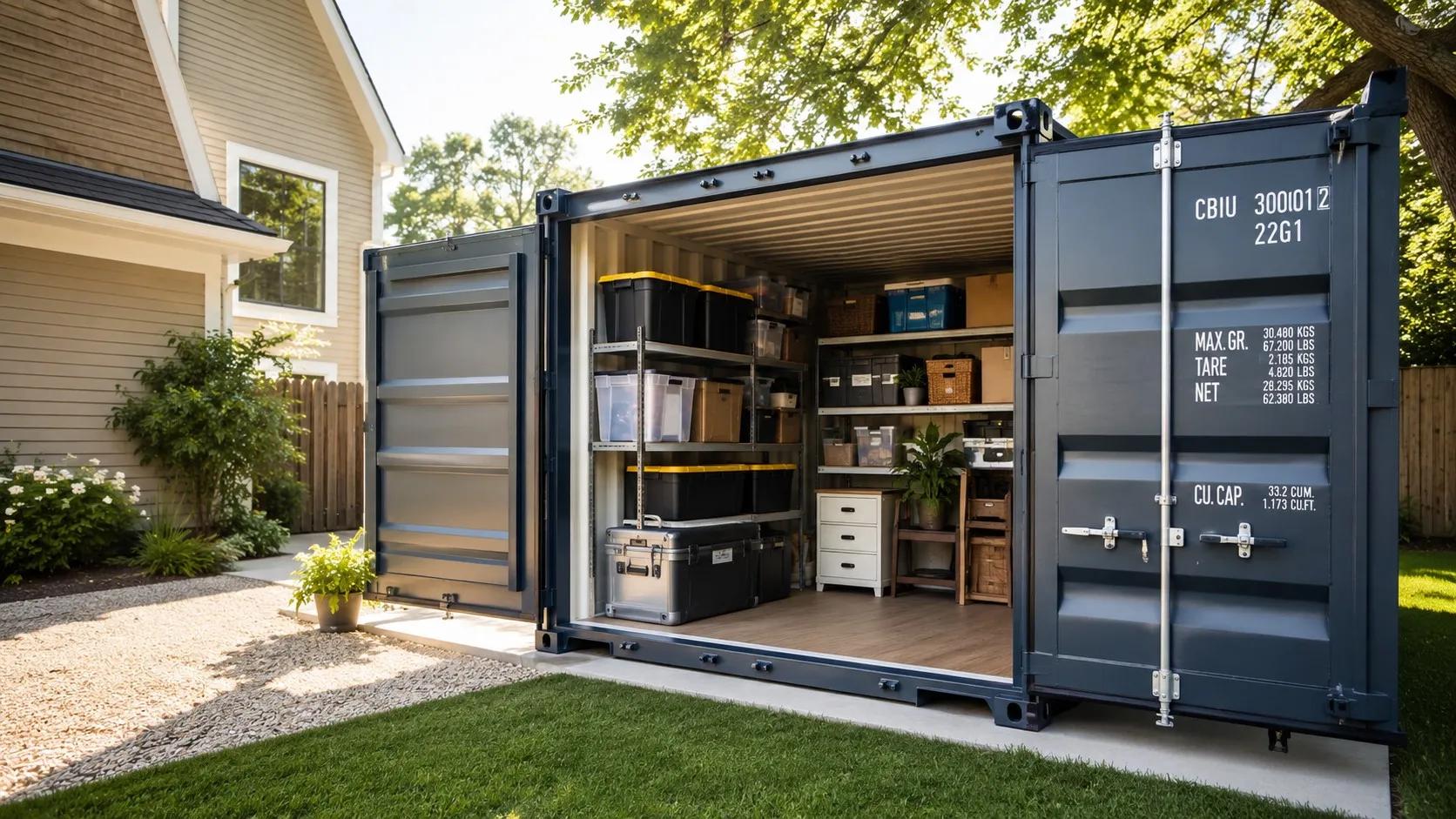
There is a moment most homeowners know well. The garage has become a maze of boxes. The spare room is no longer spare. The basement holds everything except a reason to go down there. Storage creep is real, and it catches up with almost everyone eventually — no matter how many organizer bins or shelving units you add.
The usual solutions are either expensive, inconvenient, or both. Renting a self-storage unit means monthly fees that compound over time, plus the hassle of driving across town whenever you need something. Building a shed or garage extension involves permits, contractors, and costs that quickly escalate. For many households, neither option feels right.
That is where shipping containers have quietly become one of the most practical storage upgrades a homeowner can make. More families, small business owners, and property managers are turning to new and used shipping containers for sale as a permanent, cost-effective alternative to everything else on the market. Once delivered to your property, the container stays where you need it — no monthly fees, no trips across town, no weather concerns.
Why Homeowners Are Choosing Shipping Containers
The appeal comes down to a few things that traditional storage options simply cannot match.
Security. A standard shipping container is built from Corten steel and designed to withstand ocean voyages. That same construction translates to a storage unit that is far more resistant to break-ins, pests, and weather damage than a wooden shed or a self-storage facility with a padlock on a roll-up door.
Space. A 20ft container offers 160 square feet of usable floor space. A 40ft unit doubles that to 320 square feet. For context, that is enough room to store the contents of a three-bedroom house during a renovation, a full season of landscaping equipment, or the inventory of a small business — comfortably, with room to move around.
Ownership. When you buy a container, you own it outright. There are no recurring monthly fees eating into your budget year after year. A quality used container can last 20 to 25 years with minimal maintenance. Over that timeline, the cost per month is a fraction of what you would spend on a rental unit.
Fitting a Container Into Your Property
One of the most common concerns homeowners have is whether a container will actually work on their property. The good news is that the delivery process is more straightforward than most people expect.
Containers are delivered by tilt-bed truck and can be placed on a gravel pad, concrete slab, or even level ground with railway sleepers underneath for drainage. The key requirements are access for a truck roughly 60 to 70 feet long and a reasonably level surface at the placement site. Most suburban and rural properties meet both criteria without any major preparation.
Local zoning and permit requirements vary by county and municipality, so it is worth a quick call to your local planning office before ordering. Some areas treat containers as temporary structures, others as permanent — the classification affects whether a permit is needed. In many residential zones, a container placed at the rear of a property requires no permit at all.
New vs. Used: What to Expect
Containers come in two main conditions: new (also called one-trip, since they have made a single ocean voyage from the manufacturer) and used (which have accumulated more miles and may show surface rust or minor dents).
One-trip containers arrive in near-new condition, with clean interiors, tight seals, and minimal cosmetic wear. They are ideal if you plan to store items that are moisture-sensitive or if the container will be visible from the street and you care about appearance.
Used containers are structurally sound and weatherproof — any unit sold as cargo-worthy or wind-and-watertight has passed inspection — but they will show their age. For most storage applications, a used container is entirely sufficient and comes at a lower price point, often several hundred dollars less than a comparable one-trip unit.
A Practical Solution for More Than Just Homeowners
While the home storage use case is the most common, shipping containers have found their way into a wide range of practical applications across the US.
Small business owners use them as secure, on-site inventory storage — eliminating the need to lease warehouse space for stock that only needs to be accessible a few times a week. Contractors use them on job sites to secure tools and materials overnight. Farms and rural properties use them for equipment, feed, and seasonal supplies. And increasingly, homeowners are converting them into workshops, hobby rooms, and home offices with insulation, electricity, and climate control added after delivery.
The versatility is part of what makes them appealing. A container is not a one-use purchase — it can evolve alongside whatever you need it to be.
Getting the Right Container Delivered
Delivery is included in the purchase price when you buy from a nationwide supplier, and most deliveries take place within one to two weeks of ordering depending on your location and the depot nearest to you. A standard 20ft container weighs around 4,800 pounds empty, so the delivery driver handles all the placement — you simply point to where you want it.
If you are not sure which size or condition is right for your situation, most suppliers will walk you through the options before you commit. The right container for a family storing seasonal furniture is a different specification than the right container for a contractor needing secure tool storage — and a good supplier will help you get there without overselling.
For anyone who has been putting off solving a storage problem because the usual options feel too expensive or too inconvenient, a shipping container delivered directly to your property might be the most straightforward solution you have not considered yet.