

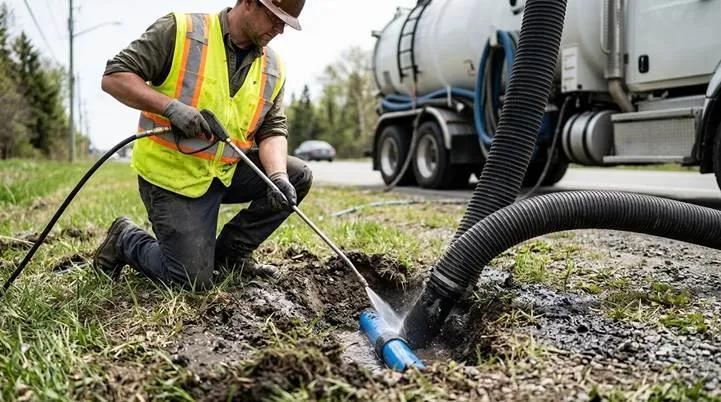
Hydro excavation uses pressurized water and a vacuum to safely expose underground utilities.
A single mistake with a backhoe can cut a fiber optic cable and shut down businesses for an entire block. Hitting a gas line is even worse, putting public safety at risk right away. The costs to fix the damage are just the start. Soon after, you can face project delays, fines, and damage to your company's name.
This is why being precise is so important in digging today. The ground under any job site is a complex network of important utilities. To dig safely, you need more than just a set of plans. You need a method that can uncover buried lines without the risk of hitting them. For projects near sensitive utilities, many contractors now use hydro excavation. Finding good hydrovac truck services near me is the first step. But knowing how to check a provider is what really protects your budget and schedule.
Quick answer: Hydro excavation uses high-pressure water and a large vacuum to safely uncover underground utilities. It is much safer and gentler than digging with heavy machines. To pick the right company, you need to look at more than the hourly price. You should check their operator training, safety rules, and equipment repair records.
What's inside
· How Does This Method Prevent Costly Damage?
· Key Questions to Ask a Potential Provider
· Are All Hydrovac Trucks and Crews the Same?
· Frequently Asked Questions
· Beyond the Hourly Rate: Making a Smarter Choice
How Does This Method Prevent Costly Damage?
Hydro excavation prevents damage by using water and a vacuum, not heavy machines. This uncovers underground utilities safely without the risk of hitting them.
Normal digging with backhoes and trenchers is strong but imprecise, often breaking buried pipes and cables. Hydro excavation, also called safe digging, works differently. An operator uses a high-pressure water wand to turn soil into mud, which a powerful vacuum hose on the same truck then sucks into a tank. This process removes soil layer by layer with great care, leaving utilities untouched. For this reason, many property owners and contractors now look for local hydrovac crews.
The risks of hitting a utility line by accident are huge, both in cost and safety. The ground under most towns and cities is a crowded network of gas, water, electric, and phone lines.
❝ A key safety step is to use hydro excavation for "daylighting" before any heavy machines start work. Daylighting means digging a few small, exact holes to see the precise depth and location of each utility line. This gives you a real-world check that plans alone can't provide. It makes the whole project safer before the first scoop of dirt is moved.
The benefits are bigger than just preventing a major utility break. This precise method makes the dig site smaller. Instead of a wide, messy trench, the work can be done through a small, neat hole. This saves time and money on refilling the hole and fixing the surface, whether it's a road, sidewalk, or lawn. It also causes fewer problems for nearby traffic and businesses.
Key Questions to Ask a Potential Provider
You can check a provider’s quality by asking for their safety records, operator training info, and equipment maintenance logs.
A low hourly rate might look good, but it can hide dangers like untrained workers or machines that are not well-cared-for. A professional hydrovac company is built on safety and skill. Before you sign a contract, do a careful check of the company's qualifications and work standards. This will protect your project from accidents and expensive delays.
❝ Ask a potential contractor for their safety scores, like their Experience Modification Rate (EMR) and Total Recordable Incident Rate (TRIR) for the last three years. An EMR score below 1.0 is a sign of a good safety record. A low TRIR score means they have had fewer injuries on the job. If a company can't give you these numbers or explain them, they might not have a strong safety program.
Operator skill is also very important. Driving the truck requires a Commercial Driver's License (CDL), but running the digging equipment safely takes special training. Ask about their training process. Do their operators learn safety rules that meet or beat government standards for digging? The Occupational Safety and Health Administration (OSHA) has strict safety rules for all dig sites, like 29 CFR 1926.651, which covers locating utilities before digging and daily inspections for cave-in hazards. A good provider will have training programs that cover these rules.
Finally, ask about the equipment. A fleet of well-kept trucks is a sign of a professional company. Ask about their maintenance schedule and what checks they do before a job. For work in cold weather or near fragile utilities, ask if their trucks have heated water tanks and water systems with adjustable pressure. This lets the operator change the water force for different types of soil.
Here is a simple checklist for your review process:
Vetting Area | Key Question to Ask | What a Good Answer Looks Like |
Safety Record | "Can you provide your EMR and TRIR for the past three years?" | Gives you the numbers quickly and can explain what they mean. |
Operator Training | "What training and certifications do your operators have beyond a CDL?" | Describes a formal training program covering OSHA standards and how to use the equipment. |
Equipment | "What is your equipment maintenance schedule and inspection process?" | Explains a regular, written maintenance plan and daily pre-trip checks. |
Insurance | "Could you provide a certificate of insurance (COI) for review?" | Sends a current COI showing they have enough insurance to cover your project. |
Are All Hydrovac Trucks and Crews the Same?
No, what the trucks and crews can do are very different. The right mix of equipment and skill is key for a project's safety and success.
At first glance, most hydrovac trucks look the same. But what's inside them affects how well they work. One big difference is the vacuum system. Some trucks use a fan system. It's good for moving a lot of air but can have trouble with heavy material or when pulling mud over a long distance. More powerful trucks use a positive displacement (PD) blower. A PD blower creates a much stronger vacuum. This makes it better for digging in hard-packed soil or pulling material from deep, tight spaces. The difference in power can change how fast a job gets done.
The water system is just as important. Professional hydrovac trucks have boilers to heat the water. This is necessary for working in frozen ground during the winter. They also have water pumps with adjustable pressure. An operator needs to be able to change the water pressure (measured in PSI) to fit the job. High pressure might be needed for hard clay, but it could easily break a plastic pipe or a thin fiber optic cable. A skilled operator will use the lowest pressure that works to keep utilities safe.
❝ When checking a provider, ask what kind of vacuum system their trucks use and the pressure range of their water wands. For work near sensitive utilities, you want to hear that they can turn the pressure way down to dig safely. A crew that only uses full power is a risk.
Finally, think about the size of the debris tank. A truck with a small tank will have to leave the job site often to legally dump the material it collected. These trips for dumping and refilling with water add wasted time to your bill. For big projects, a truck with a large tank can save several hours, which directly lowers the final cost. The combination of a powerful vacuum, an adjustable and heated water system, and a large debris tank, all run by a skilled operator, is what makes a great hydrovac service.
Frequently Asked Questions
How much does a hydrovac truck cost per hour? The hourly rate for hydrovac services covers more than just the truck and operator. The price you pay usually includes the operator's pay, fuel, and travel time to and from your site. This is often called "portal-to-portal" billing. It also includes the high cost of legally dumping the collected dirt and refilling the truck with clean water. Because of this, a very low hourly rate may hide extra fees for travel or disposal, so always ask for a complete cost breakdown.
Do you need a CDL for a hydrovac truck? Yes, a Commercial Driver's License (CDL) is required by law to drive a hydrovac truck on public roads. These trucks are much heavier than the limit for a standard driver's license. But a CDL is just the starting point. A truly skilled operator has a lot of extra training in digging safety, finding underground utilities, and using the high-pressure water and vacuum systems safely.
How much does a new hydrovac truck typically cost? While you are hiring a service, not buying a truck, knowing the equipment cost helps you understand the service's value. A new, fully equipped hydrovac truck is a very expensive purchase, often costing hundreds of thousands of dollars. The price depends on its features, like the vacuum's power, the size of the debris and water tanks, and if it has a boiler to heat water for work in frozen ground. This high cost is a key reason why checking a provider's maintenance plan is so important.
What happens to the excavated material? The mix of soil and water is vacuumed into the truck's debris tank. When the tank is full or the job is done, the operator drives to a special facility to dump it. The material can't just be dumped anywhere. If the soil is known to be dirty or unsafe, it must be handled and disposed of following local, state, and federal environmental rules to keep pollutants from spreading.
Can hydro excavation be used in the winter? Hydro excavation works very well in winter, but only if the company uses trucks with onboard boilers. These systems heat the water, letting it cut through frozen ground easily. This makes it a better choice for winter work than regular excavators, which can struggle to break through frozen soil and may cause more damage to the hard ground.
Beyond the Hourly Rate: Making a Smarter Choice
Choosing a hydrovac contractor is about more than just looking at prices. The technology itself, which uses high-pressure water and a powerful vacuum to dig, is only as good as the team and equipment using it. A low price might look good, but it can hide serious risks from poor training, badly-kept equipment, or a weak safety culture. The real cost of a bad choice isn't the hourly rate, but project delays, going over budget, and the serious problems that come from hitting a utility line.
The key is to judge providers on how well they lower risk, not just on their price. By asking for safety scores like EMR and TRIR, learning about their operator training, and understanding what their trucks can do, you are doing more than just comparing prices. You are checking a contractor's level of professionalism and their promise to protect your project and schedule.
In the end, the goal is to hire a team that is a partner in safety and precision. Asking the right questions turns the hiring process from a simple purchase into a smart decision. A good provider will be happy to answer detailed questions to show you their skill. This careful checking ensures the team on your site can handle the challenge of digging around important, hidden utilities, protecting the entire project from start to finish.