

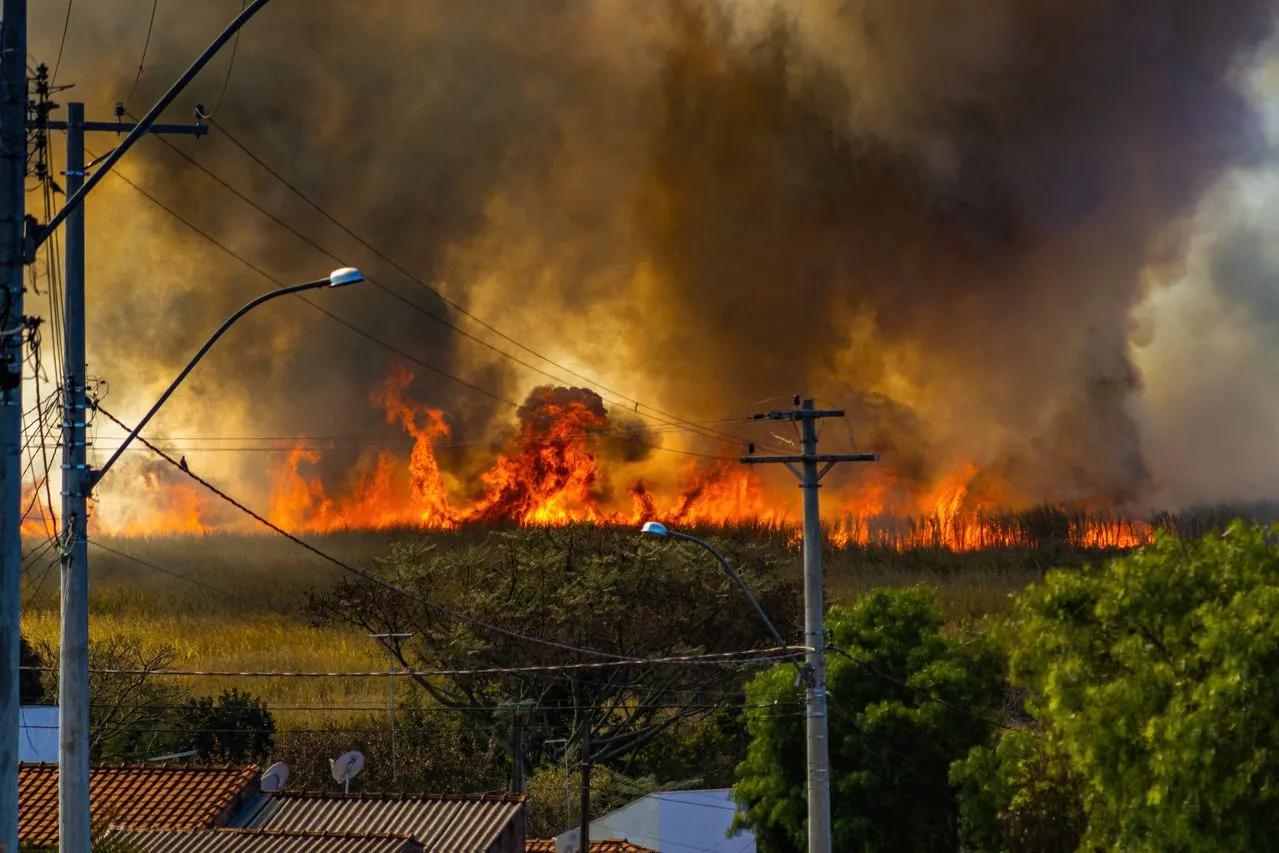
News reports and distressing visuals of wildfires in the US have unsurprisingly caused panic among residents in the affected regions.
In 2025, Alaska and California recorded approximately 1 million acres and 500,000 acres burned, respectively, due to wildfires. In North Carolina, over 31,000 acres burned that year, double that of the previous year.
This alarming rise in wildfires has also stirred anxiety over the resulting air pollution. The associated smoke, high in particulate matter and gaseous pollutants, can impact the health of nearby communities. Moreover, since wildfire smoke can travel considerable distances, people in farther areas may also be affected.
In this context, the role of HVAC systems now stretches beyond keeping residents comfortable. New research is focusing heavily on HVAC systems’ capabilities to filter indoor air and minimize the health impact of wildfire smoke.
How Exactly is Wildfire Smoke Dangerous?
Visuals of fires raging through forests often bring to mind that distinct smoky smell. But the smell is hardly the most worrying consequence. The damage to life, property, and long-term health can be far more severe.
According to the US EPA, wildfire smoke contains PM2.5, or fine particulate matter that human beings and animals can easily inhale. Prolonged exposure can cause inflammation and oxidative stress in the body. Over time, it may also impact the autonomic nervous system and the heart.
The CDC warns that people with chronic conditions, such as asthma or kidney disease, are more susceptible to these problems. Wildfire smoke can also be harmful for pregnant women and children.
Can HVAC Systems Help, and Is It Safe to Use Them?
When an emergency like a wildfire strikes, one’s instinct may be to turn off all electronic devices and other home systems. However, that may not be necessary or even the right call for HVAC systems.
A 2024 study published in Pollutants considered one residence during an extreme wildfire in the Pacific Northwest. The team highlighted the impact of using a central forced-air system with a high-capture filter during this wildfire.
The PM2.5 concentrations fell, with the indoor/outdoor ratio reaching 0.55. When the research team added a portable air cleaner, the ratio reduced further to 0.22. So, the HVAC system helped, and additional air cleaning provided an extra layer of protection.
The US EPA’s recommendation on this is also clear. Using central air conditioning or forced-air furnaces can capture fine particles from smoke and reduce your exposure. Filters trap some of the particulate matter that may be suspended in the air during a wildfire.
Notably, a filter’s ability to work in adverse conditions is determined by its MERV rating (Minimum Efficiency Reporting Value). It determines how well a filter captures particles of different sizes.
Typically, properties that have higher MERV filters (ideally MERV 13) can expect greater filtration efficiency. However, this does not mean that every household must install the highest-rated filter. Fitment to local needs and requirements also matters.
HVAC Safety and Maintenance Are Interlinked
Although central air conditioning systems can be beneficial during wildfires, their safety depends on maintenance. HVAC systems with ductwork leaks can affect airflow and allow unconditioned air to enter indoors. Beyond leaks, systems with incompatible filters or malfunctioning blowers limit your home’s ability to keep out wildfire smoke.
HVAC maintenance is also crucial in regions that face the aftermath of indirect wildfires or those affecting neighboring areas, with their smoke carried in by strong winds.
For example, in March 2025, Asheville and Flat Rock in North Carolina faced wildfire smoke to the extent that the air quality was declared “Unhealthy for Sensitive Groups.”
The FOX Forecast Center reported that Asheville was getting considerable smoke from a wildfire in Cruso, North Carolina, about 30 miles away. Keeping up with HVAC repair in Asheville can help local communities manage these situations in the future.
Considering the unpredictable nature of these natural calamities, a proactive approach can work better than emergency or last-minute servicing. Smoky Mountain Heating & Air recommends preventive maintenance programs and advanced system diagnostics to identify issues early.
Academicians are steering research into limiting the dangers of inhaling wildfire smoke. In a feature on The Conversation, Colleen Reid, a researcher on this subject, recommends limiting smoke exposure by staying indoors and keeping air cleaners maintained.
“When wildfire smoke reaches unhealthy levels, stay indoors as much as possible, with doors and windows shut to keep the wildfire smoke out. If you have an air cleaner, use it, but check the filter, as filters can fill up quickly.” - Colleen Reid, Environmental Health Researcher, University of Colorado.
Further, Ms. Reid also recommends caution when staying in a home with ductwork leaks as wildfire smoke builds up outside. If your HVAC system is poorly maintained, you can consider going to a public space or a designated clean-air area instead.
Your HVAC Smoke-Readiness Checklist
Check | Why It Matters |
MERV 13 compatibility | Improves particle filtration |
Fresh-air intake | Helps limit smoky outdoor air |
Filter fit | Prevents air from bypassing the filter |
Airflow | Keeps the system working efficiently |
Blower operation | Ensures air circulates properly |
Duct leaks | Can compromise filtration |
Thermostat settings | Controls recirculation and fan operation |
FAQs
Is a MERV 13 filter safe for every HVAC system?
Not necessarily. MERV 13 is recommended when the system can accommodate it. But a higher-efficiency filter can also increase airflow resistance. You must check your manufacturer's specifications carefully.
Should I run my HVAC fan continuously during wildfire smoke?
Running the fan can increase the amount of indoor air passing through the filter. However, the optimal setting depends on your HVAC system, so follow manufacturer guidance and consider professional advice.
Can HVAC completely remove wildfire smoke from my home?
No. HVAC filtration can reduce indoor particle levels, but it cannot guarantee smoke-free air. Combining central HVAC filtration with measures such as portable air cleaners can provide additional protection.
Preparing For Increasing Wildfire Threats
The large number of wildfires and the devastation they cause have made preparation essential. The associated triggers, from global warming to wild winds, may not be in our immediate control. But we must at least ramp up our preparation to reduce and contain the damage.
Properly installed and maintained HVAC systems have been proven to mitigate our exposure to wildfire smoke. Sticking to a regular inspection and servicing schedule can help make residential and commercial establishments better prepared.