

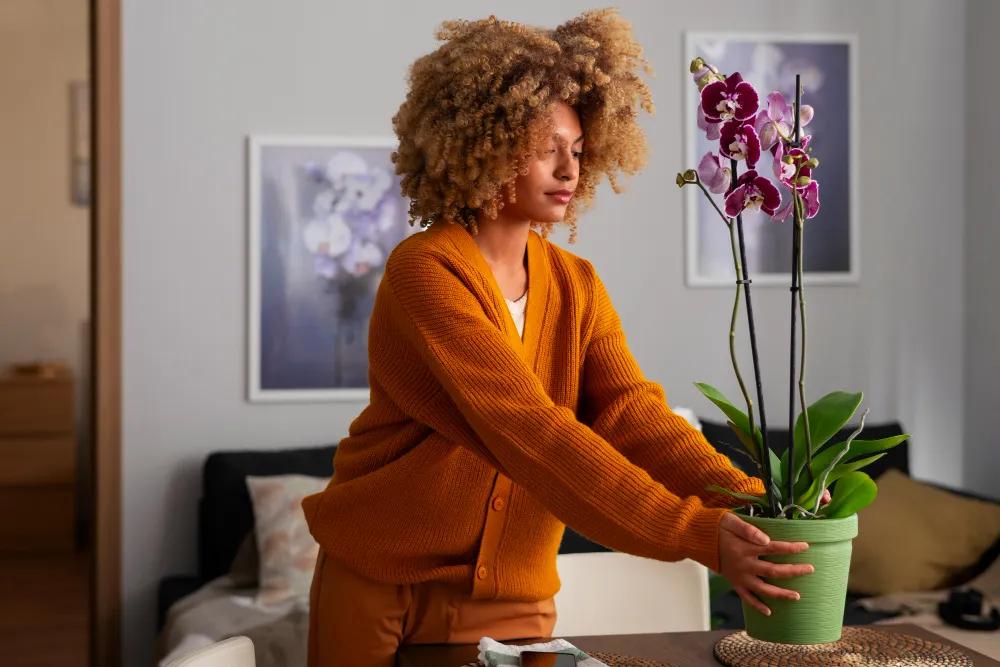
Ask any interior designer in Sydney or Melbourne what their clients tend to lean towards before they even get to choosing a couch, and many will say greenery, including realistic artificial plants. Developers and designers are increasingly incorporating greenery into residential and commercial spaces.
In this post, we’ll explore the value that plants bring to a room and how to get the most out of them in an Australian home.
Plants Can Soften the Feel of Modern Interiors
Modern homes, in an effort to appear more contemporary, have opted for sleeker designs using glass and metal. What you might not have noticed is that with the removal of thicker walls and the addition of open-concept living areas, modern homes have also taken on the characteristic of sounding echoey and empty. Plants to the rescue! Artificial rubber tree and fiddle-leaf fig are great options, as their large leaves can make a strong visual impact without taking up too much floor space.
Artificial designer plants make excellent room dividers too. Since modern home floor plans have done away with barriers and walls, plants have an added effect of giving a space some extra volume. Since artificial greenery helps fill empty space, it is also great to use on staircases, behind sofas and in other areas where live plants may be difficult to maintain.
Biophilic Design is Set to Stay in
Biophilic design is a buzzword that has become pretty ingrained in building circles. While it started as just an aspirational concept, it has since filtered down into real estate agents' marketing speak, as well as the design briefs of cafes and retirement villages. Green Star ratings and wellbeing-focused building regulations also encourage designers to think about bringing nature into built environments from the get-go.
Biophilic-inspired interiors are easy to create with greenery. Place an artificial plant on a desk, add leafy greenery to a lounge room, or use hanging plants to bring a nature-inspired element to higher areas. However, it's worth noting that the benefits are mostly aesthetic. Greenery can enhance the look and feel of an office, but it shouldn’t be considered a substitute for proper ventilation or air-quality measures.
Choose Greenery Based on Space
Consider the space when choosing greenery. Think about the room’s size, its style, available space and the amount of visual impact you want the greenery to create. Larger rooms can handle statement trees and bigger arrangements, while smaller spaces can benefit from compact plants on shelves, consoles or side tables. Tall plants work well in empty corners, while hanging plants can add greenery to higher areas without taking up valuable floor space.
The style of the room matters as well. Choose greenery and planters that work with your existing furniture and colour palette. This helps the plants feel like part of the room rather than something that has simply been added at the end.
Pots are Stylish, But Do Half the Work
The pot is only half the equation. Terracotta and travertine are a good fit for warm neutral-toned interiors, while matte black pots fit right in with a modern cool apartment. If you're all about colours, a glazed ceramic pot will anchor any room. Choose a pot or planter that complements the greenery and protects the floor, especially timber flooring.
Group plants together in odd numbers, and vary the height as well so that it doesn't look like you've just bought a pack of identical succulents. One big potted plant can be a showstopper in a room, so avoid putting a tiny plant on a big console table if you can. The eye will always be drawn to the large leaves in the middle of the wall, so use this to your advantage when styling.
If you're renting, you can get plants in stands so that they don't mark the floor. Wall mounts or standalone hangers are also a good way to hang plants without having to drill as many holes as you would for picture frames.
Conclusion
Now that you know the benefits of buying plants for your home, you're probably thinking of buying a couple of lucky ones today. However, take our advice and start by choosing greenery that suits the space where you want it.