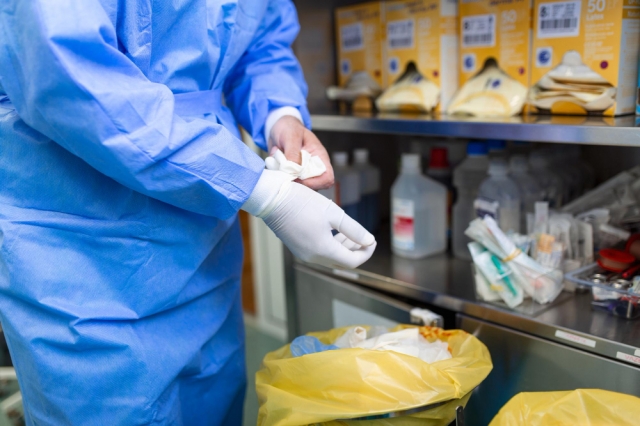
Infectious waste management keeps hospital administrators up at night. One mistake; a mislabeled container, an overfilled bin, or a confused staff member can trigger disease outbreaks, regulatory fines, or serious injuries. Yet hospitals generate tons of this dangerous material every single day. Surgical wards produce contaminated dressings and fluids. Labs discard culture plates teeming with pathogens. Emergency departments deal with blood-soaked materials from trauma cases.
From medical surgical supplies used in operating rooms to isolation ward materials, every department contributes to the infectious waste stream. The challenge isn't just disposing of this waste. It's doing it safely, cost-effectively, and consistently across hundreds of daily procedures while keeping staff protected and regulators satisfied.
Why Infectious Waste Volumes Keep Growing?
Hospitals now produce 30-40% more infectious waste than they did ten years ago. Patient loads have increased. More single-use disposable items have replaced reusable equipment. Either way, facilities struggle to keep up.
This volume problem creates a cascade of issues. Storage areas fill up faster than waste haulers can empty them. Staff spend more time managing containers instead of caring for patients. Disposal costs climb as hazardous waste volumes increase.
How Over-Classification Inflates Your Waste Costs?
Here's what makes the volume problem worse. Many facilities overclassify waste. Unsure staff members toss items into infectious waste bins "just to be safe." This turns regular trash into expensive hazardous waste that requires special treatment. Some hospitals have seen their infectious waste management budgets double in just five years.
What you can do about it:
- Run waste audits to identify what's actually infectious versus what staff are over-classifying
- Set clear volume benchmarks for each department and track monthly trends
- Invest in compaction equipment that reduces storage space needs
What Makes Transporting Infectious Waste So Risky?
Moving infectious waste from bedside to final disposal involves multiple risky handoffs. Nurses and doctors place waste in bedside containers. Housekeeping collects it and moves it to central holding areas. Waste handlers transfer it to secure storage. Finally, specialized haulers transport it off-site for treatment.
Each transfer point creates opportunities for spills, exposures, or regulatory violations. Containers leak during transport through hallways. Storage areas lack proper temperature control, allowing bacteria to multiply. Bins sit too long before collection, creating overflow situations.
Where Temperature Control Goes Wrong
Some infectious waste needs refrigeration to prevent bacterial growth and odor. But many hospitals lack adequate cold storage capacity for waste. Room temperature storage works temporarily, but materials can't sit for days without creating biohazard conditions.
Smart fixes that work:
- Map your waste flow routes and identify high-risk transfer points
- Install dedicated service elevators for waste transport to avoid public areas
- Use leak-proof secondary containers for moving waste between floors
- Schedule pickups based on actual generation rates rather than fixed weekly schedules
Why Staff Training Fails in Real-World Situations?
Every hospital trains staff on infectious waste protocols. Yet violations happen constantly. New employees don't retain information from orientation sessions. Long-term staff develop bad habits over time. Float workers moving between departments don't know location-specific procedures.
The training problem goes deeper than knowledge gaps. Staff understand the rules but ignore them under pressure. During emergencies or high patient volumes, shortcuts happen. Busy nurses don't walk to the proper disposal area. Rushed technicians don't seal containers properly.
How Language Barriers Complicate Compliance?
Language barriers make training even harder in diverse workplaces. Housekeeping and dietary staff might not speak English as a first language. Technical terminology and written procedures don't translate well. Visual aids help, but they're not enough when procedures have multiple steps.
Training approaches that actually stick:
- Replace annual training sessions with monthly 10-minute refreshers focused on one specific issue
- Use scenario-based training where staff practice actual decisions they'll face
- Create department-specific quick reference cards showing what goes in each container
- Implement buddy systems pairing experienced staff with new hires
Which Regulations Do You Need to Track?
Federal, state, and local regulations create a maze of requirements. OSHA mandates bloodborne pathogen standards. EPA regulates medical waste transportation and disposal. State health departments add their own rules. Local ordinances pile on additional requirements.
Regulations also change frequently. New pathogens emerge, triggering updated handling protocols. Court decisions shift liability standards. Environmental concerns lead to stricter disposal requirements.
How Documentation Requirements Eat Up Your Time?
Every infectious waste container needs tracking from generation through final disposal. Manifests must accompany shipments. Treatment facilities must provide disposal certificates. Records must be retained for years. One missing document during an inspection can trigger violations and fines.
Ways to simplify compliance:
- Subscribe to regulatory update services that monitor changes across all relevant agencies
- Designate one person as the infectious waste compliance coordinator
- Create standardized documentation templates that meet requirements from all regulatory bodies
- Conduct internal audits quarterly using actual inspection checklists
How to Control Costs Without Cutting Corners?
Infectious waste disposal costs significantly more than regular trash, often 10 to 15 times as much per pound. This creates pressure to minimize waste volumes, but cutting corners on classification risks safety and compliance.
Disposal contracts present their own complications. Some haulers charge per pickup, encouraging facilities to let waste accumulate longer. Others charge by weight, creating incentives to compress waste and potentially damage containers.
What Treatment Options Cost You
Treatment technology choices affect costs dramatically. Incineration works reliably but costs more and raises environmental concerns. Autoclaving costs less but doesn't work for all waste types. Chemical treatment offers another option but requires careful handling.
Cost control strategies that work:
- Separate low-risk infectious waste that can use less expensive treatment methods
- Negotiate contracts with multiple disposal vendors for different waste types
- Invest in on-site treatment equipment for high-volume generators
- Track disposal costs by department to identify opportunities for targeted improvements
Why Your Containers Keep Causing Problems?
Proper containers matter, but they create ongoing headaches. Sharps containers must be puncture-resistant yet easy to seal. Infectious waste bags need strength without tearing but must clearly show contents for verification.
Size mismatches plague many facilities. Small containers in high-volume areas fill too quickly, leading to overflow. Large containers in low-volume areas sit partially full too long. Getting the right size in the right location requires constant adjustment.
Where to Place Containers for Maximum Compliance?
Container placement affects compliance dramatically. Bins placed inconveniently get ignored while nearby incorrect containers get used instead. Mounting systems fail, sending containers crashing to the floor. Labels fade or peel off, creating confusion about proper use.
Container solutions that reduce errors:
- Standardize container types across the facility while varying sizes by location
- Use mounting systems with backup safety features to prevent falls
- Replace labels quarterly before they deteriorate
- Place containers at natural stopping points in workflow rather than against walls
How to Make Staff Actually Care About Waste Management?
The biggest challenge isn't technical. It's cultural. Creating an environment where everyone takes infectious waste management seriously requires leadership commitment and sustained effort. When administrators treat waste management as a low priority, staff pick up on that attitude.
Blame-focused approaches backfire. Punishing violations makes staff hide mistakes instead of reporting them. This prevents learning and improvement. Fear-driven compliance works temporarily but doesn't create lasting behavioral change.
What Recognition Does for Compliance Rates?
Departments with excellent infectious waste practices rarely get acknowledged. Staff who consistently follow protocols go unnoticed. This absence of positive reinforcement means the only attention paid to waste management is negative.
How to build better habits:
- Include infectious waste metrics in leadership scorecards alongside clinical quality measures
- Celebrate departments with zero violations for consecutive months
- Share near-miss stories where proper protocols prevented incidents
- Give front-line staff input into procedure design rather than imposing top-down mandates
Conclusion
Managing infectious waste effectively requires addressing multiple challenges simultaneously. Volume, transportation, training, compliance, costs, equipment, and culture all interconnect. Improvements in one area often create benefits in others. Better training reduces volume through proper classification. Proper equipment placement improves compliance. Strong culture drives cost control without compromising safety.
The key is starting somewhere and building momentum. Pick one challenge your facility struggles with most. Implement focused solutions. Measure results. Learn what works. Then tackle the next challenge. Progress happens through consistent attention, not one-time fixes. Every hospital faces these challenges, but successful facilities commit to continuous improvement rather than accepting problems as inevitable parts of healthcare operations.