

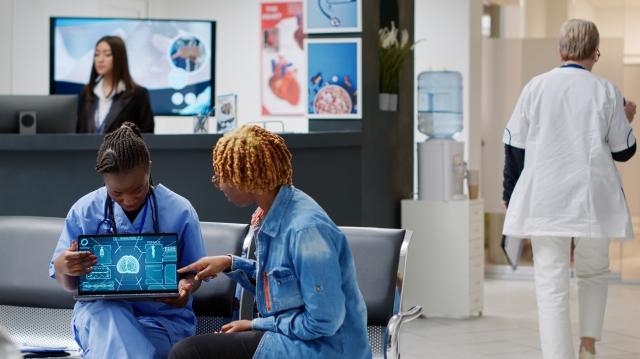
How AI Is Helping Healthcare Organizations Run Home Health Operations
The integration of artificial intelligence (AI) in healthcare is revolutionizing the way home health operations are managed. Innovative AI solutions are enabling organizations to enhance efficiency, improve patient outcomes, and elevate the quality of care provided. For instance, ioHealth's AI integrates with EMRs to improve home health OASIS documentation, cutting errors, rework, and documentation time to boost revenue. These technological advancements are pivotal in addressing the complex needs of both patients and care providers.
Streamlining Patient Scheduling and Staff Allocation with AI

AI-driven solutions are revolutionizing the way patient scheduling is handled in home healthcare. By taking into account various factors such as caregiver availability, patient location, and required care plans, these systems are able to dynamically schedule appointments and ensure optimal coverage. In doing so, AI helps to minimize wait times for patients and maximizes the productivity of the healthcare team.
Staff allocation is another area where AI is making a marked difference. The technology can predict patient care needs and align them with the appropriate staff member's qualifications and availability. This not only ensures that patients receive care from the most suitable caregiver but also enhances job satisfaction among staff by aligning their expertise and preferences with their assigned tasks.
The agility offered by AI in response to last-minute changes or call-offs is particularly valuable. Traditional manual processes would struggle to efficiently reconfigure schedules and redistribute resources, but AI systems can swiftly adapt, rearrange appointments, and inform relevant parties with minimal disruption.
Overall, the adoption of AI in patient scheduling and staff allocation demonstrates how technology can create a more fluid and responsive home health care system. By prioritizing both patient care needs and staff utilization, these intelligent systems contribute to a better-structured and well-managed healthcare service.
Enhancing Patient Care Through AI-Powered Remote Monitoring

AI-powered remote monitoring systems stand at the forefront of improving patient care in the home health sector. These innovative solutions enable continuous tracking of patient health data, such as vital signs and activity levels, providing caregivers with detailed insights to react promptly to any concerns. This technology is particularly crucial for chronically ill or elderly patients who require constant observation but wish to maintain their independence.
The capability of AI systems to analyze data in real-time facilitates the early detection of potential health issues. Anomalies found in patient data can trigger instant alerts to healthcare providers, who can then take appropriate measures to prevent complications. The timely response can mean the difference between a simple intervention and a more serious medical situation.
With the utilization of machine learning algorithms, these monitoring systems can also predict and prevent adverse health events. They learn patterns and can suggest modifications to treatment plans, helping both patients and healthcare professionals manage the disease more effectively. This level of predictive care can dramatically improve patient outcomes and reduce hospital readmissions.
Remote monitoring tools with AI capabilities not only foster safer home environments for patients but also support caregivers in managing their caseloads more effectively. This symbiotic relationship between technology and human expertise lays the foundational approach for next-generation patient care within the home.
AI-Driven Analytics for Improved Home Healthcare Decision Making
Data analytics powered by AI is transforming the decision-making process in home healthcare. With the ability to process and interpret large volumes of data, AI systems provide healthcare professionals with meaningful insights into patient health trends, treatment efficacy, and overall operational performance. This data-driven approach is crucial for formulating strategic plans and making informed clinical decisions.
AI analytics can infer broader health patterns within the home care population, assisting in population health management and the prevention of widespread health issues. It also plays a crucial role in personalized care, where treatment can be tailored to the individual needs of a patient based on their unique health data profile, thus optimizing the outcome of their healthcare journey.
The analysis extends beyond patient care and into the operational sphere, where AI algorithms can evaluate the performance of care teams, the utilization of resources, and financial health. This holistic view of operations allows management to make improvements where necessary, ensuring that the organization runs smoothly and continues to provide high-quality care.
Ultimately, AI-driven analytics are crucial in maintaining a culture of continuous improvement in home health care. By offering deep, actionable insights and predictive capabilities, these tools equip healthcare teams with the power to refine, innovate, and deliver excellent patient outcomes more consistently than ever before.
Overall, AI is ushering in an era of more manageable and effective home health care operations. The potential of AI in home healthcare is boundless, and as the technology continues to evolve, so too will the strategies for its implementation in the sector.