

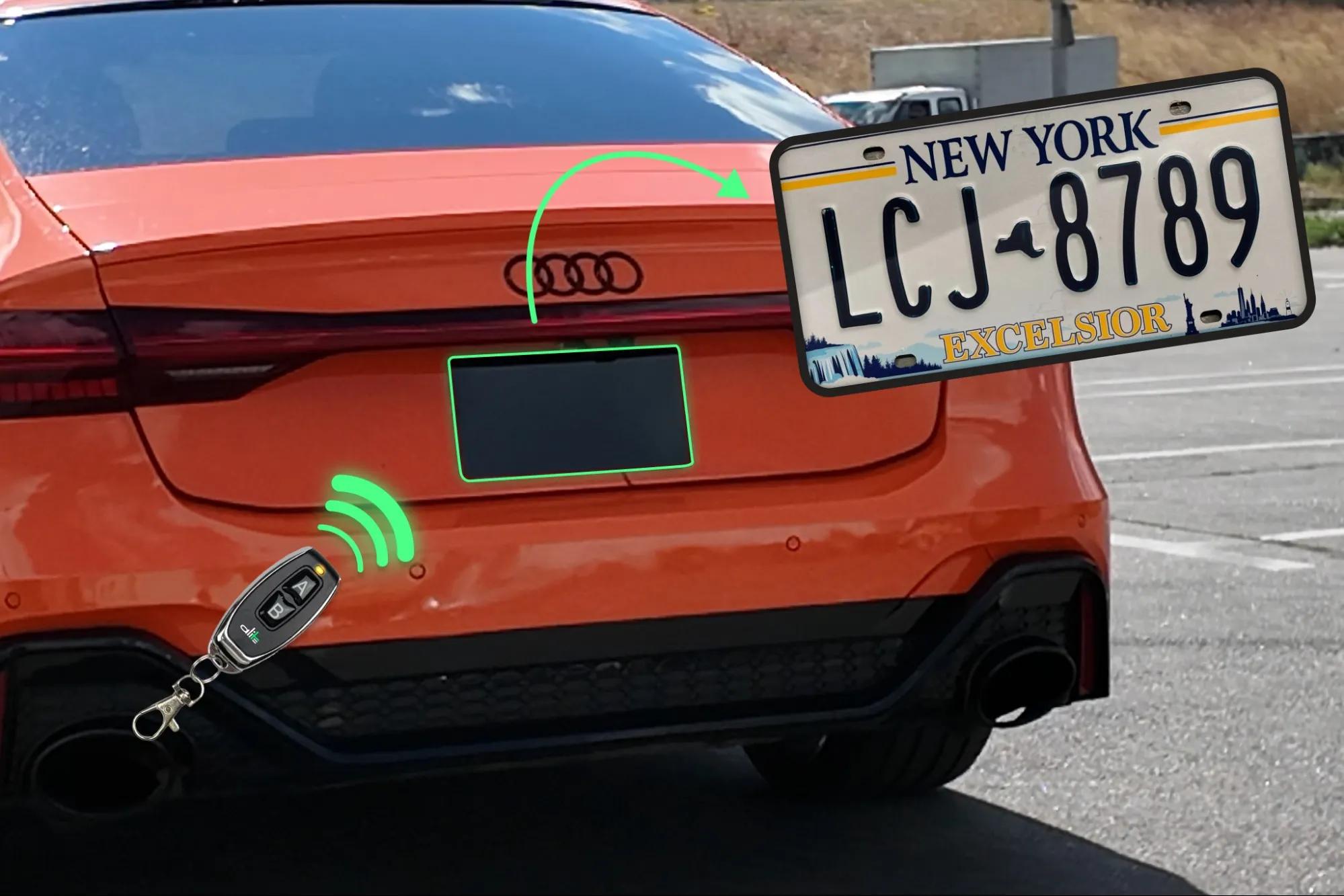
Remote technology has changed the way drivers interact with many vehicle accessories. Functions that once required direct manual adjustment can now be controlled electronically. This development has also reached specialized license plate mounting systems, where compact motors and remote controls can work together with moving frames.
A license plate switcher from Alite combines a folding mechanism with remote operation. Instead of manually changing the position of the plate, the system uses an electrical drive that responds to a control signal. This turns a conventional mounting area into a compact electromechanical system.
From Manual Frames to Remote Operation
Traditional license plate holders have a straightforward purpose. They keep the registration plate securely attached to the vehicle. Folding systems introduce movement, while remote technology adds another layer of control.
Several components are required for this type of system:
a moving license plate frame;
an electric drive mechanism;
a power connection;
a control unit;
a compatible remote.
These elements need to work together. The frame provides the structure, the drive creates movement, and the controller sends the command that starts the process.
Remote operation reduces the need to physically reach the frame each time its position needs to change. The plate remains attached to the moving assembly throughout the process.
How a Remote-Controlled System Works
The basic operating sequence is relatively simple. When a command is sent, the control system activates the electric mechanism. The drive then moves the frame into its designed position.
A typical sequence includes four stages:
The user activates the remote control.
The control unit receives the signal.
Electrical power activates the drive.
The frame moves with the plate attached.
Compact electronic components make it possible to integrate this process into a relatively small area around the registration plate.
This reflects a wider change in transportation technology. The U.S. Department of Transportation notes that technological innovation is transforming vehicles and transportation systems, including through automation and new electronic technologies.
Why Design and Compatibility Matter
Adding remote control does not remove the need for accurate mechanical design. The frame still has to support the plate and move without unnecessary obstruction.
License plate dimensions vary between countries and vehicle categories. Width, height, mounting points, and available installation space can therefore affect compatibility.
Alite folding frames are designed around supported plate formats. This allows the moving mechanism, electrical components, and frame dimensions to function as one system rather than as unrelated parts.
Installation is equally important. Wiring and moving components need appropriate positioning so they do not interfere with normal operation.
Remote Technology in Modern Plate Accessories
Remote-controlled plate systems show how even relatively simple vehicle components can adopt electronic functionality. A fixed frame can become a moving system through the addition of a compact drive, controller, and remote interface.
The technology does not replace the mechanical structure. Instead, electronics and mechanics work together to make movement remotely controlled.
Alite license plate systems demonstrate this transition from passive mounting hardware to compact electromechanical accessories. Regulations governing plate position and visibility vary between jurisdictions, so users should always consider local requirements. As remote automotive technology continues to develop, smaller vehicle accessories are likely to become increasingly integrated with electronic control systems.