

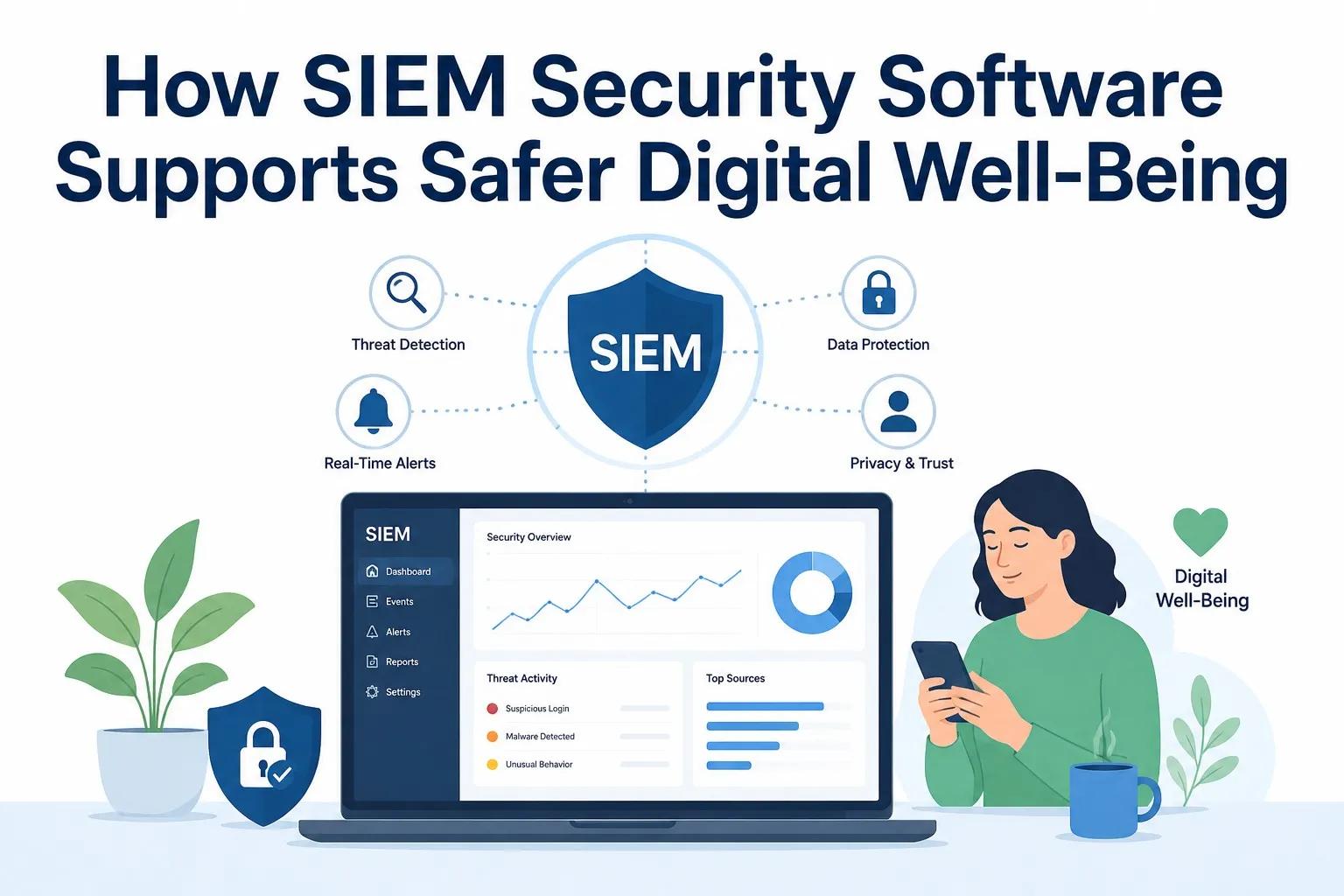
Most people discuss digital well-being through screen limits, notification settings, and healthier online habits. Although important, those habits exist inside a much larger digital environment.
When that environment remains poorly protected, users may face account takeovers and privacy breaches. They may also receive malicious messages and live with persistent uncertainty.
SIEM security software helps reduce that background risk. It does so by giving security teams a clearer view of suspicious activity across connected systems.
That connection matters more than it first appears. In fact, a cybersecurity incident does not end when a password changes or a compromised device gets cleaned. It might leave employees, customers, and families questioning whether their personal details remain safe.
Consequently, better security monitoring supports more than operational continuity. It also creates a calmer, more trustworthy relationship with technology.
Digital Well-Being Begins With a Safer Environment
Primarily, healthy technology use depends partly on confidence. People need reasonable assurance that the following actions will not expose them to preventable harm:
Logging in
Sharing information
Completing routine digital tasks
SIEM security software for organizations adds a layer of protection. It does so by centralizing security information and helping analysts spot threats before they spread widely.
Without centralized visibility, warning signs sit in different corners of the network. For instance, a failed login appears in one application. Also, an unusual download appears somewhere else. Meanwhile, an endpoint records a configuration change.
In this case, each event may look harmless on its own. However, when combined, they might reveal an active intrusion.
A SIEM platform collects and correlates those signals. Therefore, security teams no longer have to investigate every system as a separate island. From a more unified position, they can examine -
Patterns
Timelines
Affected identities
Related devices.
So, there is less guesswork and faster context. Also, there is more room for sound judgment.
How SIEM Monitoring Changes the Security Picture
Usually, traditional security tools concentrate on a particular layer. These include -
Endpoints
Firewalls
Email
Identity services.
Meanwhile, SIEM technology takes a broader view. It gathers logs and security events from those sources. Then, it normalizes the information. After that, it applies detection rules or analytical models to support detection and response to cyber threats.
Still, collecting more logs does not automatically create better protection. For instance, a poorly configured platform might produce noise, duplicate alerts, and unnecessary stress for analysts.
In fact, effective implementation requires -
Carefully selected data sources
Realistic detection rules
Clear ownership
Regular tuning.
Otherwise, the dashboard becomes another crowded inbox.
Earlier Detection Reduces Digital Disruption
In most cases, security incidents become psychologically disruptive. This is because they create uncertainty. Users may not know -
What information was accessed
Which accounts remain trustworthy
Whether normal activity can continue.
Therefore, early detection carries a human benefit as well as a technical one.
For example, repeated authentication failures followed by a successful login from an unfamiliar location may suggest credential misuse. Likewise, an unusual volume of file access combined with an unexpected outbound connection may indicate data theft.
SIEM security software connects these activities. This way, it gives analysts a more complete incident narrative.
That context supports proportionate action. So, instead of shutting down entire services, teams may do the following:
Isolate one device
Suspend one account
Block one communication path.
As a result, fewer people experience unnecessary lockouts, interruptions, and alarming blanket messages. The response becomes precise rather than panicked.
Stronger Security Can Ease Alert Fatigue
Digital well-being also applies to the people defending the environment. For instance, security analysts routinely face
Urgent notifications
Ambiguous signals
The possibility that one overlooked alert could become a serious incident.
Over time, that pressure weakens concentration and decision-making. Meanwhile, a responsibly managed SIEM program reduces some of that strain through:
1. Alert Correlation
It groups several related warnings into one investigation rather than presenting them as disconnected tasks.
2. Risk-Based Prioritization
The following alerts can receive attention first -
Sensitive systems
Privileged accounts
Known attack patterns.
3. Structured Workflows
Documented escalation paths help analysts decide -
Who should respond
What evidence to preserve
When containment becomes necessary.
Although automation helps here, restraint matters more. Automatically disabling accounts or blocking systems on weak evidence interrupts legitimate work and damages trust.
Therefore, human review should remain part of consequential decisions. This is important particularly when the available evidence remains incomplete.
Privacy Must Remain Part of the Design
Centralized monitoring creates its own responsibility. For instance, security logs may contain the following:
Usernames
Device identifiers
Network addresses
Access histories
Other sensitive details.
So, collecting everything “just in case” is not a mature strategy. Frankly, it creates a larger privacy burden without improving detection.
Therefore, organizations should define why each data source is needed and for how long records will remain available. They must also define which roles may access them as part of effective log management practices.
In addition, administrators should protect stored logs against alteration and unauthorized viewing. Clear retention policies also matter. Old information should not remain indefinitely simply because storage is available.
Meanwhile, transparency strengthens the arrangement. Employees should understand that monitoring exists to protect systems and investigate security events. It is not merely about measuring every ordinary workplace action.
When boundaries remain visible, cybersecurity controls are more likely to support trust rather than quiet suspicion.
Safer Digital Experiences Require Shared Responsibility
SIEM technology cannot repair every weak process. It cannot replace -
Secure configurations
Multifactor authentication
Software updates
Access reviews
Thoughtful employee training.
Also, it cannot decide what level of risk an organization should accept. In fact, those choices still require responsible governance.
However, the platform might reveal whether those controls work as intended. It may show -
Repeated attempts to bypass authentication
Continued use of abandoned accounts
Unusual administrative activity outside approved hours.
As a result, leaders gain evidence to improve policies instead of relying on assumptions.
Reviewing Detection Performance
Security teams must regularly review detection performance. In this case, useful questions include -
Whether alerts identify meaningful behavior
Whether analysts have enough context
Do response steps create avoidable disruption?
This kind of tuning feels unglamorous. Even then, it separates reliable monitoring from expensive noise.
Better Visibility Creates a Healthier Digital Space
Digital well-being is not merely about spending less time online. It also involves using technology without persistent fear, confusion, or preventable exposure.
When organizations detect suspicious behavior early, investigate it carefully, and respond with precision. This way, users can interact with digital services more confidently.
Ultimately, SIEM security software supports that healthier environment. It does so by turning scattered technical activity into usable security insight. Of course, it does not remove every risk. It should also never operate without privacy safeguards or human oversight.
Even so, properly managed visibility can make digital life safer and steadier. It is also a little less exhausting.